Transform Your Garden Shed into a Functional Laundry Room Now
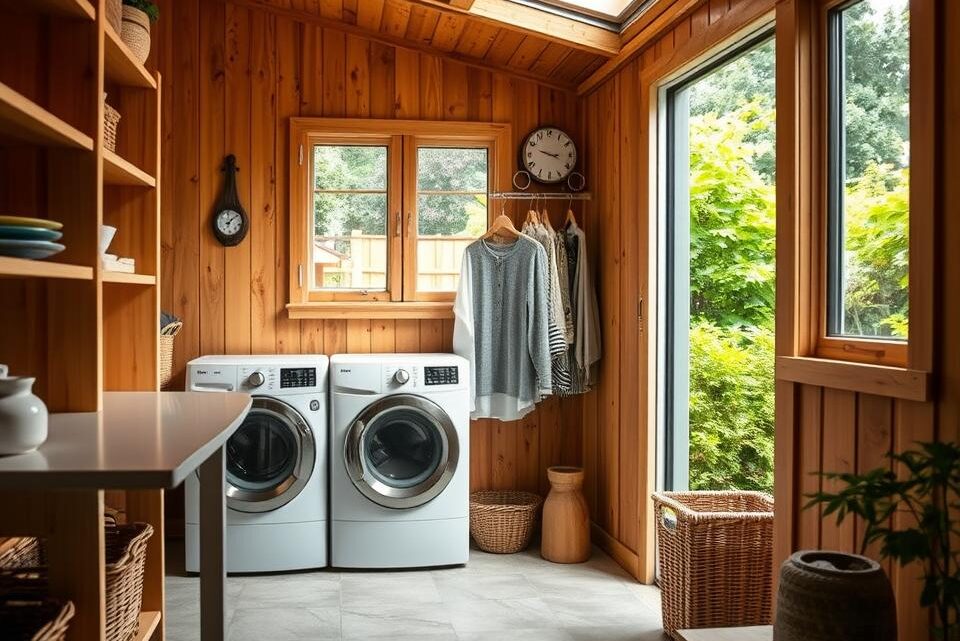
Many homeowners across the United Kingdom seek clever ways to maximise their property’s potential. An often-overlooked opportunity lies just outside the back door. Repurposing an underutilised outdoor structure can unlock significant practical benefits for the entire household.
This guide explores a practical solution for creating a dedicated area for washing chores. Moving laundry operations to a separate building frees up valuable square footage inside the home. It also effectively contains the noise from appliances, leading to a more peaceful living environment.
The process requires thoughtful planning to ensure a successful and efficient conversion. Key considerations include appliance selection, utility connections, and clever storage solutions. This article provides a clear, step-by-step approach to achieving a well-organised and highly functional new space.
Inhaltsverzeichnis
Key Takeaways
- Converting an outdoor building creates a dedicated laundry area away from main living spaces.
- This project can free up considerable room inside your home for other uses.
- It helps reduce household noise by isolating washing machines and dryers.
- Careful planning for utilities, ventilation, and storage is essential for success.
- A well-executed conversion adds functional value and organisation to your property.
Getting Started with Your Shed Conversion
Converting existing garden buildings offers homeowners a smart approach to laundry management. This process creates a dedicated zone away from main living spaces.
Overview of Benefits and Considerations
A separate laundry area provides significant advantages. It reduces noise disruption in the home and makes efficient use of underutilised space.
Homeowners should assess their specific needs before starting. Consider household size and washing frequency. Also think about whether you need extra storage for other items.
Practical tips include evaluating the structure’s condition and proximity to the house. Accessibility during different weather conditions is crucial.
Understanding Shed Limitations and Possibilities
Different types of sheds offer varying conversion potential. Small structures work well with stackable appliances. Larger buildings can accommodate side-by-side units with workspace.
The conversion requires time and careful planning. Key factors include foundation stability, roof condition, and utility connections.
Professional assessment may be necessary for structural modifications. This ensures the building can handle appliance weight and moisture levels safely.
Planning Your Space and Layout
The foundation of any successful conversion project lies in meticulous assessment of the structural space. Proper planning ensures every element fits comfortably while maintaining easy movement throughout the area.
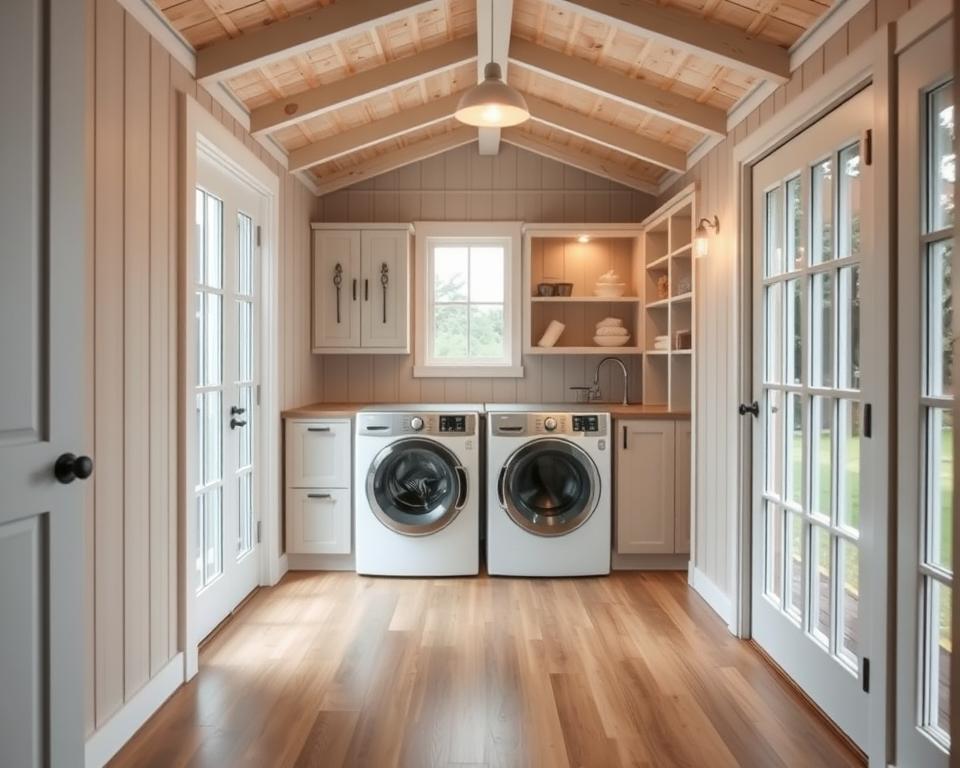
Assessing Shed Dimensions and Vertical Space
Accurate measurements form the basis of effective space utilisation. Homeowners should record width, length, and ceiling height before selecting appliances.
Vertical space offers valuable storage opportunities without consuming floor area. Wall-mounted shelves and overhead cabinets maximise capacity in compact rooms.
Designing an Efficient Floor Plan
A logical workflow guides the placement of appliances and storage. The layout should follow the natural sequence of laundry tasks from sorting to folding.
Clearance around appliances is essential for door operation and maintenance access. Strategic positioning optimises movement within the confined space.
| Layout Approach | Best For Shed Size | Key Advantages | Considerations |
|---|---|---|---|
| Linear Layout | Small to medium | Maximises wall space, simple workflow | Requires adequate length for appliance sequence |
| L-Shaped Design | Medium to large | Creates distinct zones, efficient corner use | Needs careful planning for corner access |
| U-Shaped Configuration | Larger spaces | Excellent workflow, ample counter space | Requires significant floor area |
Adjustable storage solutions provide flexibility as household needs evolve. The final design should balance functionality with comfortable access to all areas.
Essential Appliances and Utility Fixtures
Appliance selection and utility installation represent critical steps in creating a functional external laundry space. The right equipment choices ensure efficient operation within the available area.
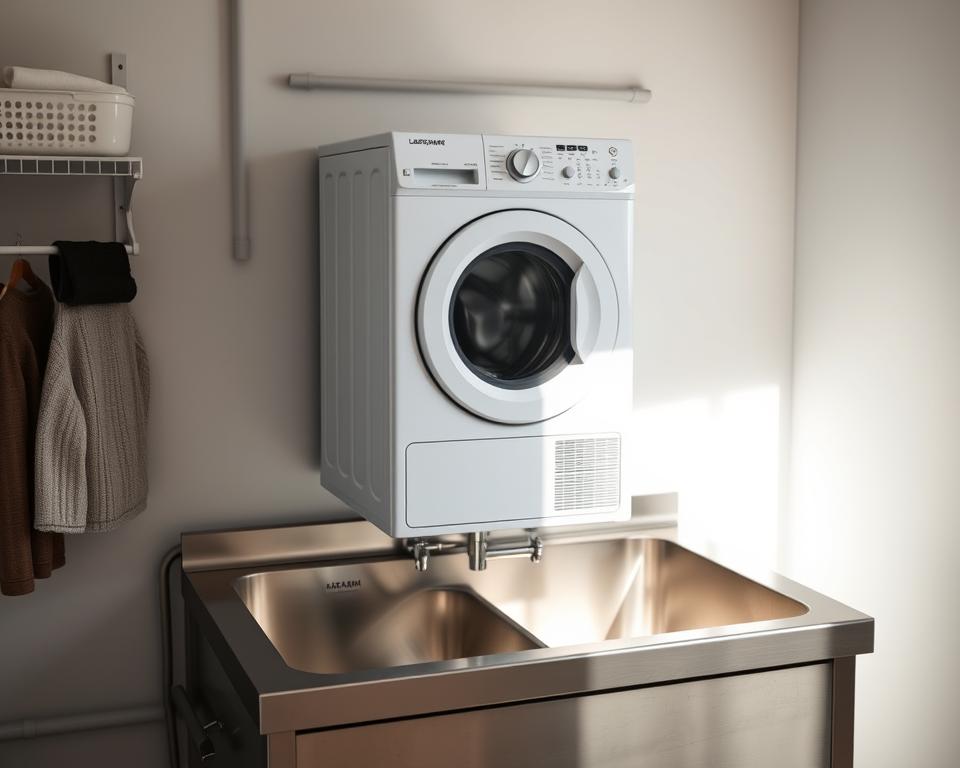
Selecting Compact Washer and Dryer Units
Choosing energy-efficient models designed for smaller spaces maximises flexibility. Front-loading machines offer distinct advantages for shed conversions.
These units can be placed side-by-side, creating valuable workspace on top. Alternatively, stackable configurations make optimal use of vertical space. This approach conserves floor area in compact sheds.
Incorporating a Utility Sink for Versatility
A utility sink adds remarkable functionality to the laundry area. It provides a dedicated space for hand-washing delicate items that cannot withstand machine washing.
The sink serves multiple practical functions beyond basic laundry needs. It’s ideal for pre-treating stained clothing and cleaning various tools. Strategic positioning near the main plumbing line minimises installation complexity.
| Configuration | Best For Space Size | Key Benefits | Installation Notes |
|---|---|---|---|
| Side-by-Side | Medium to large sheds | Creates counter space on top | Requires adequate width |
| Stacked Units | Small spaces with height | Maximises floor area | Needs secure mounting |
| Combination Washer-Dryer | Very compact areas | Single unit solution | Limited capacity |
Custom Cabinets, Counters and Ventilation Ideas
Tailored storage solutions and proper airflow management are essential components for an efficient outdoor laundry area. These elements work together to create a functional environment that handles moisture effectively while keeping supplies organised.
Building Bespoke Storage and Work Surfaces
When standard cabinets don’t fit the unique dimensions of an outdoor structure, customisation becomes necessary. Homeowners can choose DIY construction or professional bespoke designs that maximise available space.
Well-designed cabinets provide organised storage for essential laundry items. They keep detergents, fabric softeners, and cleaning supplies conveniently accessible. Foldable drying racks and ironing equipment also find their place in these tailored storage solutions.
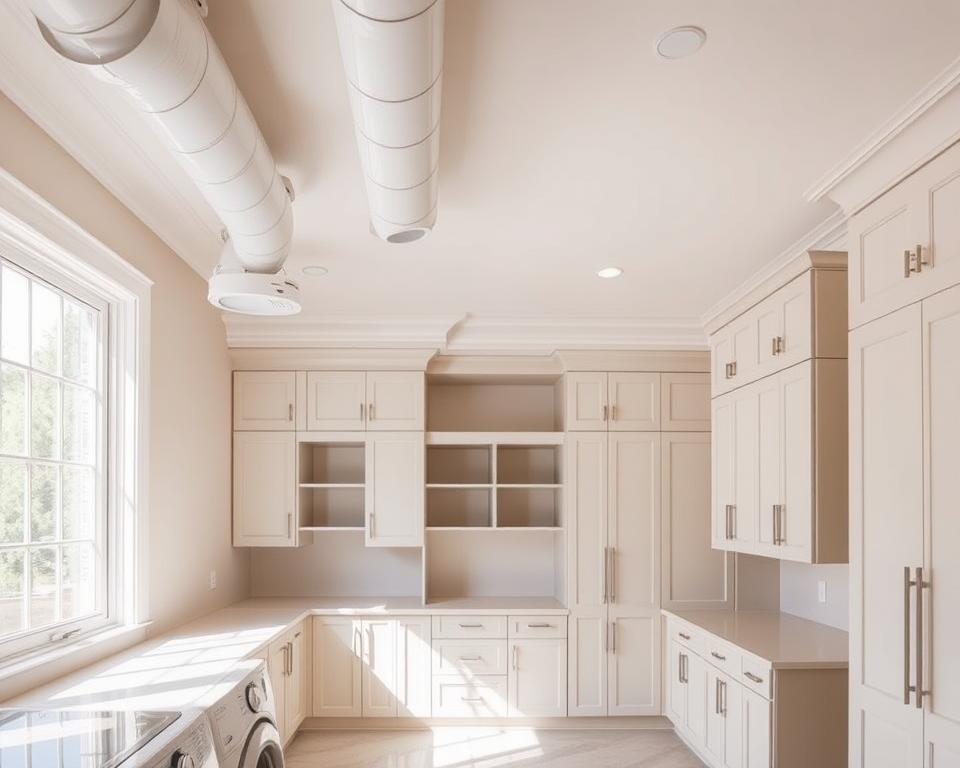
Custom countertops create valuable work surfaces for folding clothes and sorting items. The right counter space serves multiple functions, including temporary ironing stations with appropriate heat-resistant mats.
Ensuring Adequate Ventilation and Natural Light
Proper ventilation is critical for preventing damp conditions in the enclosed space. Washing machines generate significant moisture that can accumulate without adequate air circulation.
Installing intake and outlet vents establishes continuous fresh air flow. This system accelerates the drying process and minimises musty odours. In high-humidity areas, dehumidifiers may be necessary to maintain optimal conditions.
Windows that can be opened provide additional ventilation options and natural light. Adequate airflow ensures clothes dry efficiently, preventing prolonged dampness that could damage fabrics.
Transform Your Garden Shed into a Functional Laundry Room
The final stage of creating an efficient outdoor laundry space focuses on smart storage and environmental details. These finishing touches transform the basic structure into a fully functional area that meets household needs.
Maximising Storage with Custom Solutions
Wall-mounted shelves at various heights provide excellent storage for detergents and cleaning tools. Custom shelving solutions fit awkward corners and narrow gaps between appliances.
Strategic placement of storage baskets offers flexible organisation for sorting clothes. This system maintains easy access to essential items throughout the washing process.
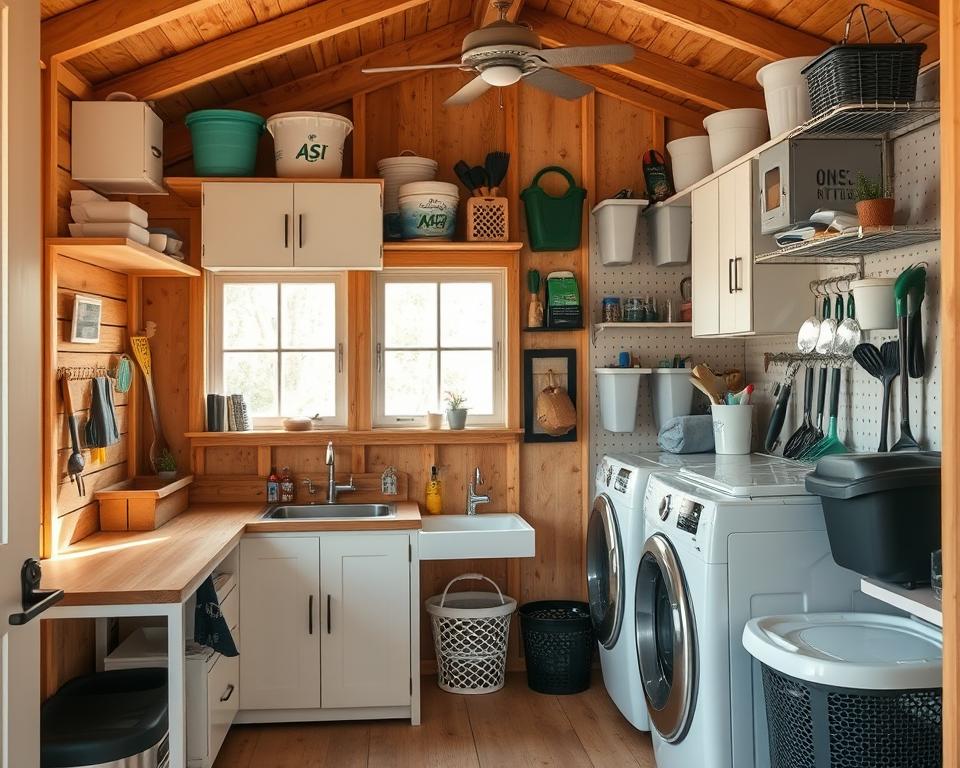
Integrating Lighting, Plaster and Plumbing Details
Proper lighting combines overhead fixtures with task illumination near work surfaces. Natural sunlight through windows reduces electricity use during daytime hours.
An indoor washing line or retractable drying rack provides weather-protected drying. This solution offers gentle air-drying for delicate fabrics without tumble dryer heat.
Professional plumbing installation ensures reliable water supply and drainage. Light paint colours create a bright atmosphere, while plants introduce natural elements.
Comfortable furniture and soft textiles complete the transformation. The design balances practical functionality with aesthetic appeal for an enjoyable laundry experience.
Conclusion
An outdoor laundry setup can revolutionise how families manage their washing routines throughout the year. When property space allows but interior room is limited, converting a garden structure simplifies household chores significantly.
This practical approach eliminates weekly trips to commercial facilities. Homeowners gain the convenience of fresh laundry whenever needed. The comprehensive tips and ideas presented ensure a successful conversion process.
Careful planning yields long-term benefits through reduced noise and dedicated workflow space. A well-designed shed laundry room adds tangible value while serving household needs efficiently.
Following these guidance principles creates an organised, functional area that enhances daily living. The investment in proper utilities and storage solutions pays dividends in convenience and property enhancement.
FAQ
What are the primary benefits of converting a garden shed into a laundry area?
The main advantages include freeing up valuable space inside the home, creating a dedicated zone for washing tasks, and reducing noise and humidity within the living areas. It also offers an opportunity to design a highly efficient and organised room tailored specifically to laundry needs.
What are the key limitations to consider before starting a shed conversion?
Important factors to assess are the shed’s structural integrity, its exposure to weather conditions, and access to essential utilities like plumbing and electrical wiring. The existing floor space and headroom will also dictate the layout and the size of appliances that can be installed.
How can one make the most of a small shed’s layout?
Utilising vertical space is crucial. Installing wall-mounted shelves, cabinets, and a drying rack above the appliances maximises storage without cluttering the floor area. A well-planned floor plan that allows for easy access to the washer, dryer, and sorting baskets is essential for workflow.
What should one look for in a washer and dryer for a shed laundry room?
Compact or space-saving models are ideal. Ventless condenser dryers are often a better choice as they do not require external venting, simplifying installation. Stackable units are also excellent for saving floor space in a compact area.
Why is incorporating a utility sink recommended?
A utility sink adds significant versatility, providing a space for hand-washing delicate items, pre-soaking stains, or cleaning gardening tools. It is a highly practical addition that enhances the functionality of the laundry space.
How can adequate ventilation and lighting be ensured in a garden shed?
Good ventilation is vital to prevent dampness and mildew. This can be achieved by installing an extractor fan or ensuring windows can be opened. For lighting, a combination of overhead LED lights for general illumination and task lighting under cabinets creates a bright, workable environment. Maximising natural light through windows is also beneficial.
What storage ideas work well in a shed laundry room?
Bespoke cabinets and open shelving offer excellent storage for detergents, cleaning supplies, and baskets. Using furniture like a fold-down counter provides a work surface for folding clothes that can be tucked away when not in use, keeping the area tidy.