Secure Your Shed: Anchoring a Metal Garden Shed to the Ground
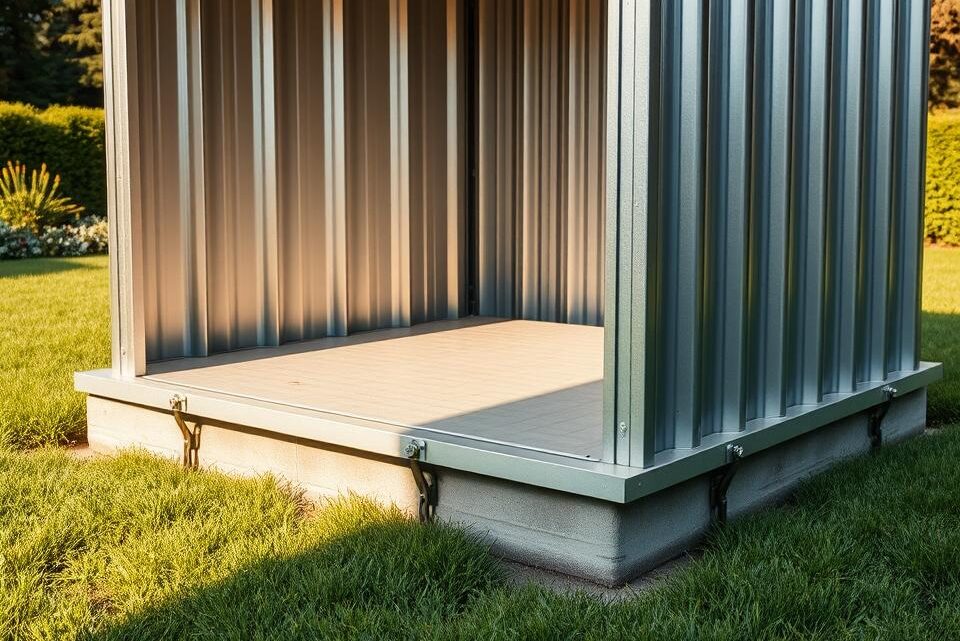
This concise guide explains practical steps for anchoring a metal garden shed to the ground so you end up with a secure shed suited to UK gardens. It is written for homeowners installing prefabricated metal sheds from recognised manufacturers such as Arrow, Lasita Maja or Keter-style metal sheds, and focuses on typical backyard situations rather than commercial or industrial sites.
You will find clear advice on site assessment, choosing the right shed foundation, metal shed anchoring methods and corrosion protection. The guide covers ground screws, concrete anchors and baseframes so you can judge which option gives the best shed stability UK-wide. It also explains simple legal and insurance points to check before you start.
Safety is a priority: always check for underground utilities using Dial Before You Dig or local utility maps, and wear suitable PPE before any excavation or drilling. For complex ground conditions or electrical concerns, consult a qualified tradesperson.
Inhaltsverzeichnis
Key Takeaways
- Anchoring a metal garden shed to the ground improves safety, longevity and shed stability UK-wide.
- Choose an anchoring method—ground screws, concrete anchors or baseplates—based on soil type and shed base.
- Prepare a level shed foundation before metal shed anchoring to prevent movement and water ingress.
- Check for underground services and use Dial Before You Dig; consult a professional for complex sites.
- Use galvanised fixings and regular maintenance to reduce corrosion and preserve anchor performance.
Why anchoring a metal garden shed is essential for UK gardens
A metal garden shed sits exposed to British weather. Strong gusts, heavy rain and frost can all work against an unanchored structure. Knowing the risks and the practical benefits of a secure fix helps homeowners avoid costly repairs and meet basic shed insurance requirements.
Risks of an unanchored shed in British weather
High winds and coastal gusts can lift or shift a poorly secured shed, creating danger to people and nearby property. Storms may cause panels to warp or fasteners to loosen, increasing the chance of shed wind damage UK. Movement of the base encourages water ingress, which speeds corrosion and weakens fixings.
Clay soils and frost heave can bend frames and distort doors. That twisting leads to misaligned hinges and gaps that invite damp. These unanchored shed risks add up to higher repair bills and unexpected hazards in severe weather.
Benefits: safety, longevity and insurance compliance
Firm anchoring cuts the risk of uplift and collapse, improving safety for family and visitors. A stable base minimises movement that causes chafing at joints, which prolongs the life of metal panels and fixings. These shed anchoring benefits reduce long-term maintenance and protect your investment.
Insurers such as Aviva and Direct Line expect reasonable measures to secure outbuildings. Clear documentation showing proper anchors can be crucial when making a claim under shed insurance requirements. A bolted shed also presents a tougher target for thieves, lowering the chance of theft.
Common problems caused by poor anchoring
Poorly anchored sheds often show misaligned doors, jammed locks and uneven floors. Movement lets water pool inside, encouraging rust and internal dampness. Fasteners can abrade where parts rub, creating corrosion points that spread quickly.
Repeated repairs from shifting frames may void manufacturer warranties and complicate insurance claims. Planning and fitting appropriate fixings early prevents these avoidable headaches and keeps the garden tidy and safe.
Understanding the main keyword: Anchoring a Metal Garden Shed to the Ground
This phrase covers the practical steps homeowners and gardeners take to fix a metal garden shed to the ground or to a prepared base. It includes site preparation, choice of fixings, installation techniques and protection against corrosion. Clear guidance helps avoid movement, uplift and long-term damage.
What the phrase covers for homeowners and gardeners
Homeowners expect a rundown of mechanical fixation options. That means anchors, bolts, ground screws, concrete pads and baseframes. It also covers preparing the ground, marking anchor points and securing the shed frame rather than relying on thin panels. Practical tips on galvanised or stainless fixings feature in this topic.
Search intent and what readers expect from this guide
Most readers want step‑by‑step instructions, a tool and materials list, and safety pointers. They look for shed anchoring methods tailored to hard, soft or sloping ground. DIYers want clear stages they can follow. Others want to know when to hire a pro for complex foundations.
How this method differs for metal sheds versus wooden or resin sheds
Metal sheds are light and face greater wind uplift. Anchoring focuses on preventing uplift and lateral movement by fixing the baseframe securely to the ground. Corrosion resistance matters; galvanised or stainless fixings reduce rust and avoid galvanic reactions with concrete.
Wooden sheds often attach to timber bearers and treated timbers, so anchor spacing and methods can differ. Resin sheds use proprietary fixings or benefit from their ribbed structure and weight, which may need fewer or different anchors. Comparing metal vs wooden shed anchoring highlights those practical contrasts and helps readers choose the right approach.
Assessing your site: ground type, level and planning considerations
Before fixing anchors, spend time assessing the plot where the shed will sit. A quick survey of ground type, drainage and slope prevents costly repairs later. Confirm planning limits for a permitted development shed and make a note to check underground services before any excavation.

Clay holds water and can heave in frost. On clay, plan a stable, well drained base such as a concrete slab or extended foundations to reduce movement.
Sandy or gravelly soils drain well but can lack lateral strength. These sites often need compaction or deeper ground screws to secure a shed.
Loam and topsoil are soft and compressible. Remove topsoil and replace with compacted hardcore or lay a raft or slab for a solid footing.
Peat and other organic soils are unstable for light foundations. Seek engineered solutions or raise the base on a timber or composite frame.
Locate underground services
Always check underground services before digging. Use the national Dial Before You Dig services and contact local utility companies to locate gas, water, electricity and telecom lines.
Mark any service runs on your site plan and avoid placing anchors or deep foundations over them. If in doubt, hire a registered utilities locator.
Permissions and planning notes
Most small garden buildings qualify as a permitted development shed. Confirm size limits, proximity to boundaries and any restrictions for listed properties.
Local covenants or neighbourhood rules may add constraints. Building Regulations rarely apply to freestanding sheds under set sizes, but check if anchoring alters structural safety.
Levelling the site
Clear vegetation and remove topsoil across the footprint. Use stringlines and a spirit level to set a flat datum for levelling the shed site.
For slight unevenness, lay and compact a 50–150mm layer of compacted hardcore, MOT Type 1 or crushed stone. Use a plate compactor to achieve a firm finish.
For larger differences, build a timber or composite frame base or pour a levelling concrete screed or slab. Ensure the finished base is graded away from buildings to avoid water pooling.
| Soil type | Key issue | Recommended base or fix |
|---|---|---|
| Clay | Shrink-swell, frost heave | Concrete slab or extended foundations; good drainage |
| Sandy / Gravel | Poor lateral stability | Compacted hardcore; deeper ground screws or helical anchors |
| Loam / Topsoil | Compressible, weak | Remove topsoil; compacted hardcore or raft slab |
| Peat / Organic | Very unstable | Engineered foundations or raised base; professional assessment |
| All sites | Underground hazards and permissions | Always check underground services and confirm permitted development shed status |
Types of anchors and fixings suitable for metal garden sheds
Choosing the right shed fixing types starts with site conditions and how permanent you need the installation to be. Below is a practical guide to common anchors and fixings used for metal garden sheds, with clear notes on use, strength and what to expect during installation.
Concrete anchors and baseplates
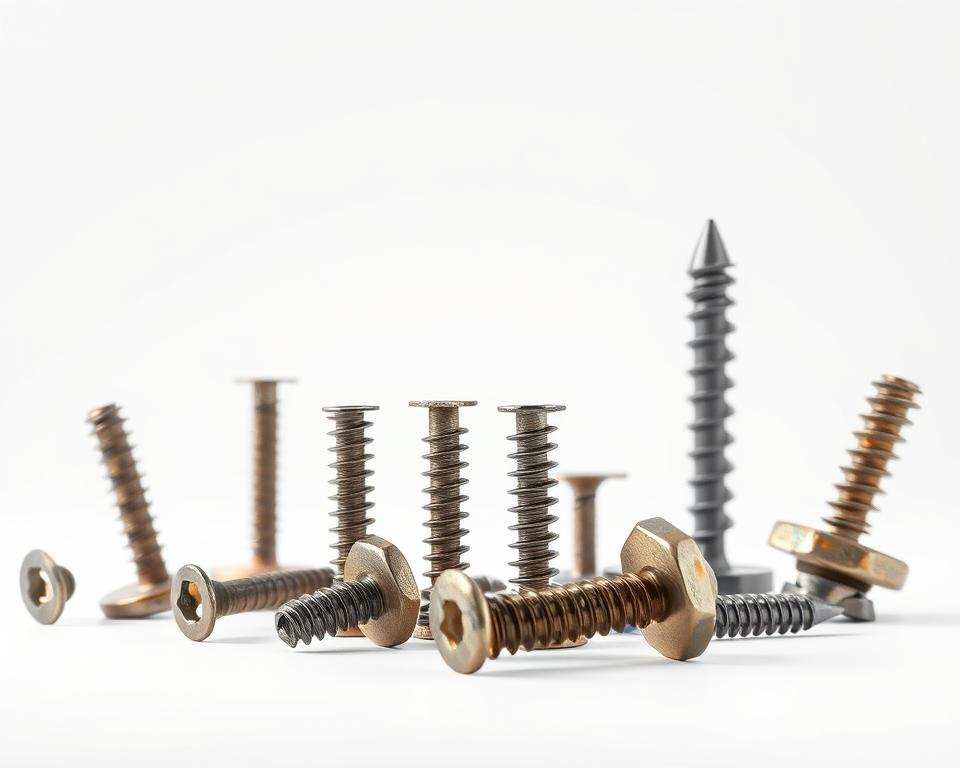
Concrete anchor bolts are used to bolt a shed baseframe to a poured slab or concrete pad. Use chemical anchors, through-bolts or expansion anchors with baseplates to secure the frame solidly to the slab.
These fixings give very high uplift and lateral resistance when installed correctly. They suit sites where permanent stability is the priority.
Expect formwork, mixing and curing time. Once set, the slab makes relocation difficult without breaking concrete.
Ground screws and helical anchors
Ground screws for sheds are screw-in anchors that avoid concrete. Brands like Goliath Ground Screws and other helical anchors are driven or screwed into the ground to support baseframes.
They offer good uplift resistance if installed to the correct depth and torque. Ground screws are quicker to fit and often removable for relocation.
Performance depends on soil type and layering. Very soft peat or loose sand may need deeper screws or specialist drivers to reach firm strata.
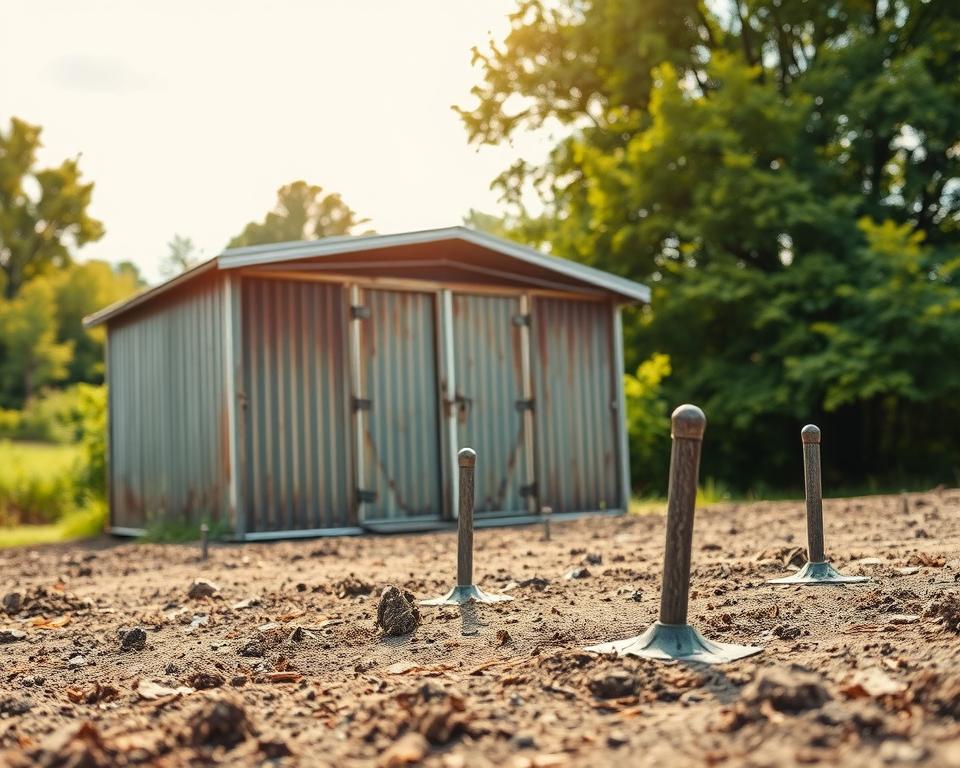
Rebar stakes and earth anchors
Rebar stakes are simple steel rods driven into the ground and tied to the frame. Earth anchors use plates or toggles that grip soil when set, connected to the baseframe by rod or cable.
These are cost-effective and useful where budgets are tight or for temporary sheds. Properly set earth anchors can give decent pull-out resistance.
Risk of corrosion is higher unless components are galvanised. Visible stakes can be untidy and insurers may prefer concrete anchors or certified ground screws.
Pros and cons at a glance
| Anchor type | Strength | Speed & disturbance | Durability & permanence |
|---|---|---|---|
| Concrete anchor bolts / baseplates | Very high uplift and lateral resistance | Slow; requires formwork and curing | Very durable; permanent installation |
| Ground screws for sheds / helical anchors | Good if driven to depth and torque | Fast; minimal ground disturbance | Durable; removable and reusable |
| Rebar stakes & earth anchors | Variable; economical for soft soils | Quick; low-cost installation | Less durable unless galvanised; may corrode |
When selecting between concrete anchor bolts, ground screws for sheds or earth anchors, weigh the trade-offs between permanence, installation time and ground conditions. Match the shed fixing types to soil type, intended lifespan and any insurer expectations before you start work.
Tools and materials checklist for anchoring a metal garden shed to the ground
Before you start, gather the correct kit to make the job safe and efficient. Use the right shed anchoring tools and materials to match your chosen anchor type and ground conditions. A clear list saves time and reduces trips to the hardware store.
Essential hand tools and power tools
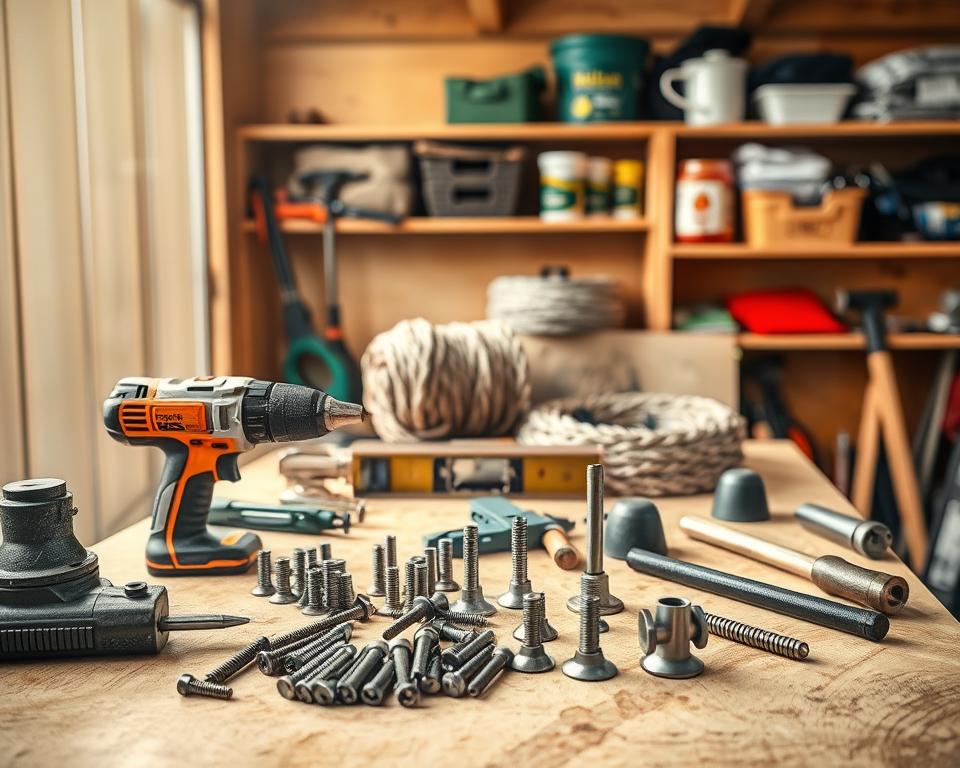
- Spade, shovel and garden fork for digging and removing turf.
- Spirit level, plumb line or laser level and a tape measure for accurate setting out.
- Hammer, rubber mallet, adjustable spanner set, socket set and screwdrivers for general assembly.
- Drill with masonry bits for concrete anchors and an impact driver for screws and coach bolts.
- Plate compactor for compacting hardcore and a concrete mixer or ready-mix delivery for larger slabs.
- Ground screw driver or auger attachments when installing ground screws; consider hire of specialist kit if needed.
Materials: anchors, bolts, baseframes and concrete
- Choose anchors for metal shed: ground screws, helical anchors or expansion anchors sized to the shed’s weight and local wind loads.
- Galvanised or stainless steel coach bolts, nuts and washers to resist corrosion in British weather.
- Concrete mix suitable for the base, for example C25/30 for small slabs, or ready-mix bags for minor pours.
- Timber or composite bearers plus damp-proof membrane when using a framed base; use MOT Type 1 hardcore and sharp sand for compacted sub-bases.
- Paving slabs or concrete blocks where an alternative to a full slab is chosen.
PPE for shed installation and safety considerations
- Safety boots with steel toe caps, sturdy gloves and eye protection when cutting, drilling or handling heavy parts.
- Hearing protection for prolonged use of power tools and dust masks when cutting metal or drilling concrete.
- Be mindful of manual handling when moving shed panels; use mechanical assistance, trolleys or at least one helper to reduce strain.
- Ensure good ventilation when using chemical anchors or sealants and follow manufacturer instructions for torque and embedment depth.
Use this checklist to cross-reference materials and tools before starting. Picking the correct shed anchoring tools and anchors for metal shed, and wearing suitable PPE for shed installation, will keep the job efficient and safe.
Preparing and assembling a base or foundation for a metal shed
Start by choosing a base type that suits ground conditions and the shed’s size. A solid shed concrete slab offers the most permanent support for heavier metal structures. A timber shed base or a paving slab shed base on a compacted hardcore foundation can be quicker and cheaper for smaller buildings.
Concrete slab foundation: step-by-step overview
Excavate to the required depth, typically 150–200mm plus a formation layer, removing topsoil until firm subsoil appears. Lay and compact MOT Type 1 hardcore in a 50–100mm layer to form a stable sub-base. Set timber formwork to the slab outline, position a damp-proof membrane and place reinforcement mesh or rebar where specified.
Mix and pour concrete to the chosen thickness, commonly 75–150mm for most garden sheds. Use a float to level and finish the surface. Allow the slab to cure; expect around seven days for light use and 28 days for full strength before bolting the shed down. Fit cast-in anchor bolts while pouring, or use chemical anchors drilled and fixed after curing for secure hold.
Timber or composite frame bases for levelling
Construct treated timber bearers, such as tanalised C16 or C24, or opt for composite joists laid on a compacted sub-base or on concrete sleeper pads. Position adjustable galvanised base plates or joist hangers to attach the shed’s baseframe securely. Support timber at regular centres to prevent sagging and extend lifespan.
Place a damp-proof membrane beneath the timber and elevate the frame slightly to encourage drainage. Use heavy‑duty joist drains or plastic pedestals under composite bases when extra ventilation is needed. A timber shed base is lighter, faster to install and simpler to remove than a full slab.
Using paving slabs or compacted hardcore as alternatives
For small or budget-conscious projects, spread a compacted hardcore foundation of 50–150mm and add a bedding layer of sharp sand. Lay paving slabs or concrete blocks on top and check each for level. Use slabs on edge beneath a baseframe or cover the full footprint depending on shed size.
Secure slabs together with mortar or resin where movement is a concern. Tie the shed down with ground screws or bolts through the baseframe to resist uplift from wind. A paving slab shed base on compacted hardcore foundation works well for light storage and can be upgraded later if needs change.
Step-by-step guide to anchoring a metal garden shed to the ground
This practical walkthrough shows how to anchor a metal garden shed step by step so your shed sits square, secure and weatherproof. Read each short task before you begin and keep tools, galvanised fixings and safety kit to hand.
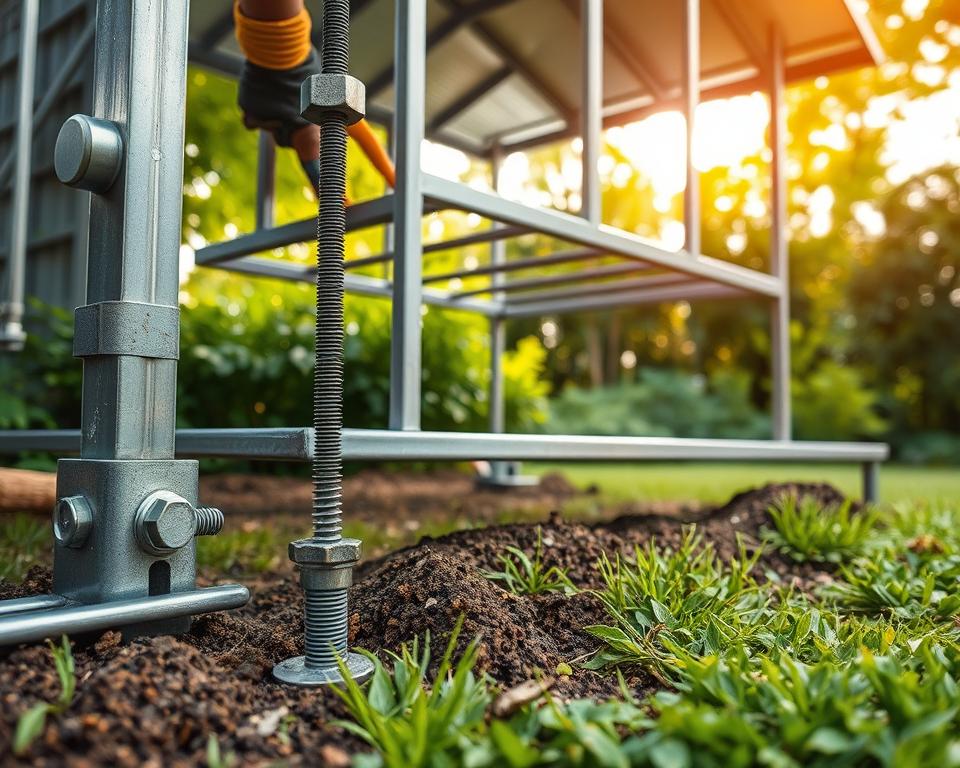
Positioning the shed and marking anchor points
Place the shed on the prepared base with the door and drainage orientation correct. Use a spirit level and a straight edge to check the baseframe is level and the shell is square.
From inside the shed or under the baseframe, mark the fixing holes or anchor locations. Typical positions are each corner and midpoints along longer sides. Confirm access for a drill or driver before you transfer marks to the base material.
Installing ground screws or anchors
If you plan to install ground screws shed, pre-mark each drive point. Use a powered driver or a hand ratchet bar for manual models. Drive screws vertical and to the manufacturer’s depth and torque recommendations.
For concrete anchors, drill to the correct diameter and depth, then clean holes thoroughly with a brush or blower. Fit expansion bolts or chemical anchors as specified by the anchor maker. For earth anchors or rebar stakes, follow the supplier’s instructions and, where possible, test pull-out resistance once set.
Securing the shed to a concrete or frame base
Align the baseframe over the installed anchors. Use galvanised bolts, washers and locknuts for metal bases and tighten to torque recommendations. Avoid over-tightening thin panels to prevent distortion.
On timber frames, drive corrosion-resistant coach screws with suitable embedment. Use baseplates or brackets to resist lateral loads on sloping sites. For variable-quality slabs, consider chemical anchors for increased holding capacity.
Final checks and tightening fixings
Work around the shed and check every fixing is tight and the baseframe remains level. Confirm the shed is square and doors open freely without binding.
Seal any exposed penetrations with a suitable silicone or sealant to keep moisture out and reduce rust risk. Photograph the completed installation and note anchor types and locations for insurance and future maintenance.
Weatherproofing and corrosion prevention for anchored metal sheds
Anchored metal sheds need simple, regular care to stay weathertight and secure. Small checks and the right materials protect fixings and metal panels from wet UK conditions. The advice below covers protective coatings, correct fastenings and ways to limit trapped moisture.
Protective coatings and galvanised fixings
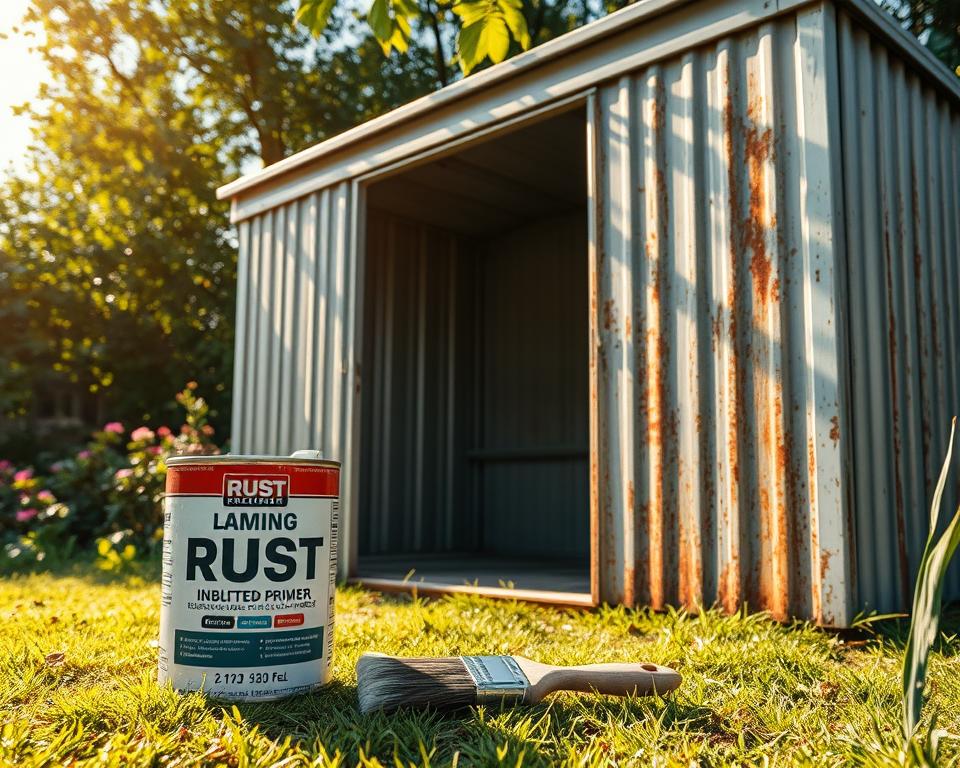
Choose hot-dip galvanised or stainless steel bolts and brackets to resist corrosion in the British climate. Galvanised fixings for sheds offer cost-effective protection for most garden use. Treat any cut edges or abrasions with a rust-inhibiting primer and a metal paint such as Hammerite or a manufacturer-approved coating.
Avoid direct contact between dissimilar metals like aluminium panels and steel anchors. Use isolating materials such as nylon washers or bitumen tape to prevent galvanic corrosion at joints and fixings.
Drainage and ventilation to reduce rust risk
Ensure the ground and base slope away from the shed so standing water does not collect at the perimeter. For larger roofs fit guttering or simple channel drains to divert runoff. Good shed drainage ventilation stops internal condensation from forming on panels and fixings.
Fit passive vents — roof, eaves or louvre vents — to maintain airflow. Keep a small air gap between the baseframe and foundation where possible to prevent trapped moisture and encourage drying.
Maintenance schedule to prolong anchor life
Inspect anchor points, bolts and baseframes every six to twelve months and after severe storms. Re‑tighten bolts, check for vertical movement in ground screws and re-torque fixings where needed. For concrete anchors watch for slab cracks that could weaken attachments.
Clear debris and vegetation from the base perimeter to avoid moisture retention. Touch up damaged coatings and repaint cut edges as soon as corrosion starts to appear to prevent spread and to help prevent rust on metal shed components.
| Task | Frequency | Materials or tools | Expected outcome |
|---|---|---|---|
| Visual inspection of fixings and anchors | Every 6–12 months and after storms | Spanner set, torque wrench, torch | Detect loose or corroded fastenings early |
| Touch up coatings and cut edges | As required, after damage seen | Rust inhibitor primer, metal paint (e.g. Hammerite) | Prevent spread of surface rust and extend life |
| Check drainage and perimeter | Annually and after heavy rain | Garden spade, brush, guttering tools | Maintain proper shed drainage ventilation and avoid pooling |
| Re-torque ground screws or inspect concrete anchors | Every 12 months | Torque wrench, concrete repair kit | Ensure anchors remain secure and load-bearing |
| Clear vegetation and debris | Seasonally | Brush, shears, weedkiller if required | Reduce moisture retention and limit corrosion sites |
Dealing with uneven or sloping sites when anchoring a shed
Working on a slope need not prevent a safe, long-lasting installation. Small adjustments and the right groundwork protect the shed frame and avoid water pooling. Below are practical approaches to create a level footprint and keep loads well distributed.
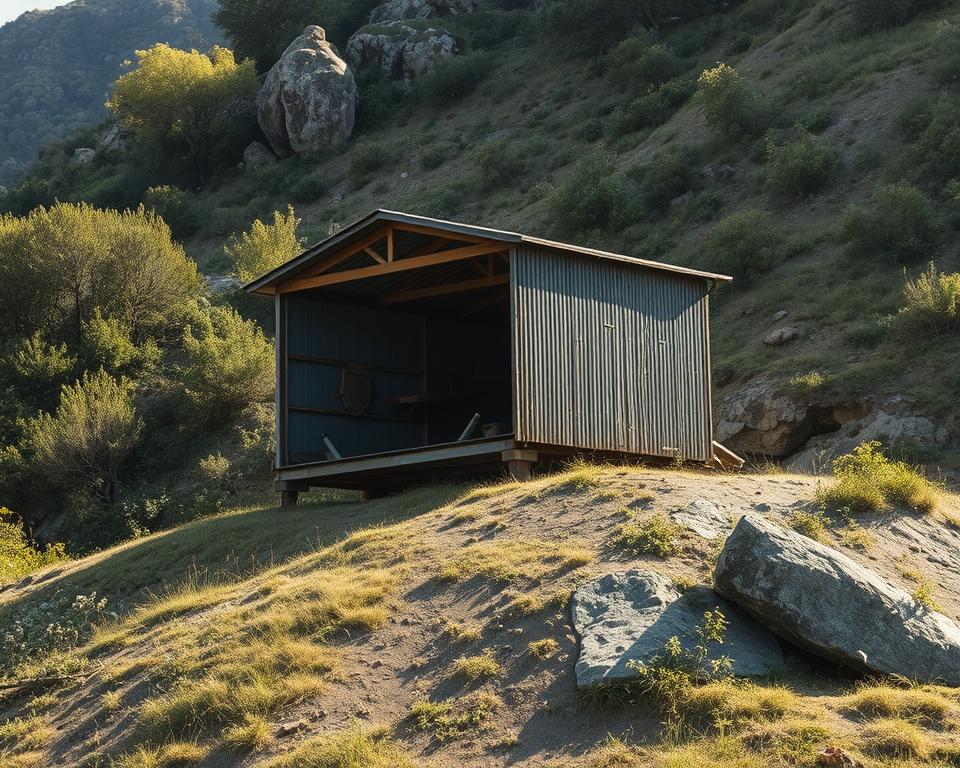
Options for terraces, retaining low walls and raised bases
Cut-and-fill and terracing can produce a stable, level area. Use railway sleepers, gabions or short poured concrete walls to retain soil and form a flat pad. Ensure drainage behind any retaining structure to prevent saturation and pressure on the retained slope.
A raised platform made from treated timber or composite on compacted supports or concrete pier blocks avoids major earthworks. This approach suits modest slopes and reduces disturbance to the garden while providing a firm base for the shed.
Where the gradient is significant, engineered sleepers or a reinforced short retaining wall for shed installations may be necessary. Make sure the wall is keyed into firm ground and includes a suitable drainage layer to relieve hydrostatic pressure.
Adjustable feet and shimming techniques
Adjustable screw feet or jackable baseplates under the shed baseframe let you fine-tune level on modest inclines. Use them to raise low corners and lock each foot once the frame sits square to avoid movement over time.
Treated timber shims or plastic pedestals under bearers give a simple way to level timber support beams. Spread supports along the bearer length so the load is shared and the frame is not bent by point loading.
When using adjustable shed feet, check that each adjustment keeps the frame evenly supported. Uneven load distribution causes stress on fixings and can warp doors or panels.
When to consult a groundworks professional
Call in a groundworks contractor or structural engineer for steep slopes, peat or very loose soils, and where subsidence is a risk. Professionals can advise on foundation depth, drainage and the correct specification if a retaining wall for shed support is required.
Complex sites may need reinforced concrete footings, drained retaining walls or formal calculations for lateral loads. A professional will ensure the solution meets building regulations and reduces long-term maintenance.
| Situation | Recommended approach | Key benefit |
|---|---|---|
| Modest slope (under 150mm rise) | Adjustable shed feet or shims under bearers | Quick, low-cost levelling with minimal digging |
| Moderate slope (150–500mm rise) | Raised timber/composite platform on pier blocks | Protects soil, good access, limited earthworks |
| Steep slope (over 500mm rise) | Shed terracing options: cut-and-fill with sleepers or small retaining wall for shed | Stable, permanent level area with controlled drainage |
| Poor or organic soils (peat, soft clay) | Consult groundworks professional for deep footings or piled supports | Reduces subsidence risk and long-term settlement |
Compliance, safety and insurance considerations for anchored sheds
Anchoring a garden shed brings practical benefits beyond stability. This short guide outlines the planning, insurance and record-keeping steps to protect your property and demonstrate due care.
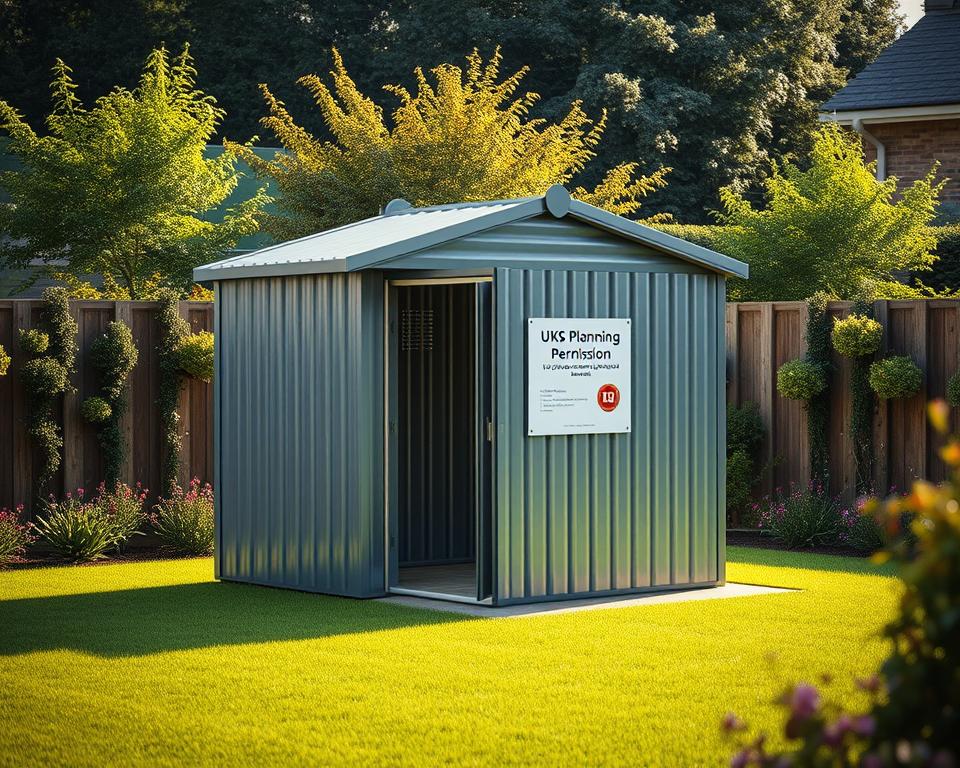
Local planning rules and permitted development in the UK
Most small garden buildings fall under permitted development when they meet size, height and siting rules. Check gov.uk and your local council guidance before fixing a permanent base. Sheds forward of the principal elevation, those sited close to boundaries, or buildings in conservation areas may need explicit consent.
Properties that are listed or lie within conservation areas face stricter controls. For these, contact your local planning authority. Installing a concrete slab or adding services can affect the scope of permitted development, so take care with permanent work.
How anchoring affects insurance and liability
Insurers appreciate visible precautions. A correctly fitted shed insurance anchor can strengthen a claim for storm damage or theft. Some insurers ask whether outbuildings are secured, so note which anchor type you use and keep receipts.
Poor anchoring that causes damage to a neighbour’s property can lead to liability claims. Consider public liability cover if the shed is used for business or hosts frequent visitors. Using recognised fixings and following manufacturers’ instructions reduces the risk of disputes.
Record keeping and photographs for proof of installation
Photograph each stage: site preparation, anchor insertion and final fixings. Keep invoices for anchors, bolts and any contractor work. These items form essential proof of shed installation when you make an insurance claim or sell the property.
Maintain a short written log of inspections and maintenance. Note the type and grade of fixings used, for example hot-dip galvanised M12 expansion bolts, to aid future repairs and to show the diligence expected by insurers.
Conclusion
This anchoring metal shed summary highlights the essentials: secure the shed to resist wind uplift, prevent movement and reduce corrosion, and meet common insurance expectations in the UK. Start by assessing soil type, level and any underground services, then choose a suitable foundation such as a concrete slab, timber frame or paving on compacted hardcore.
Select anchors that suit your ground and base — concrete anchors for permanence, ground screws for speed and earth anchors or rebar for economy — and fit galvanised or stainless fixings to cut corrosion risk. Maintain good drainage and ventilation and inspect anchors regularly to extend service life.
Document the work with photographs and receipts, and seek a professional where ground conditions are complex or planning rules apply. For a practical, safe outcome follow shed anchoring best practice: use correct PPE, check for utilities before digging and get local council advice if unsure to ensure a secure shed UK conclusion.
FAQ
What is the safest way to anchor a prefabricated metal garden shed in the UK?
The safest method for most UK gardens is to bolt the shed’s baseframe to a properly prepared concrete slab using galvanised or stainless steel anchors. A concrete slab provides high uplift and lateral resistance, reduces frost heave risk in clay soils and creates a stable, level platform. For faster or less intrusive installs, purpose‑sized ground screws driven to manufacturer torque are a good alternative, provided the soil profile offers adequate holding capacity. Always use corrosion‑resistant fixings, check for underground services before digging and wear appropriate PPE. Consult a professional for complex sites or poor soils such as peat.
Can I anchor a metal shed directly to paving slabs or compacted hardcore?
Yes. For small sheds, a compacted hardcore sub‑base with paving slabs or concrete blocks can form a satisfactory base. Ensure the hardcore (MOT Type 1) is well compacted and the slabs are level and continuous under the baseframe. You should still secure the baseframe with ground screws, coach bolts into concrete pads or specialist resin anchors through slab joints to resist uplift. This approach is cost‑effective but may require additional anchoring compared with a full concrete slab to meet insurer expectations.
What fixings are best to prevent corrosion in the British climate?
Use hot‑dip galvanised or stainless steel fixings (bolts, washers, brackets and anchors). Galvanised fixings are usually cost‑effective for garden use; stainless steel is preferable near coasts or in very damp conditions. Protect cut edges with rust‑inhibiting primer and metal paint such as Hammerite, and avoid direct contact between dissimilar metals by using isolating pads to prevent galvanic corrosion. Regularly inspect and touch up coatings to prolong life.
When are ground screws or helical anchors appropriate instead of concrete?
Ground screws are appropriate where you want a quicker, less disruptive install without pouring concrete. They suit many soil types—sandy, gravelly or reasonably compacted loam—and are removable if you relocate the shed. They must be driven to the correct depth and torque recommended by the manufacturer, and their performance depends on soil stratigraphy. Avoid ground screws in very soft peat or loose sand unless long screws or specialist installation is used. For heavy sheds, exposed coastal sites or insurance requirements demanding permanence, concrete anchors may still be preferable.
How do I check for underground services before excavating for anchors or a slab?
Contact utility companies or use the UK’s Dial Before You Dig services and consult local utility maps to locate gas, water, electricity and telecoms. Many councils offer guidance, and private utility locators can provide on‑site surveys. Always call 811 or your regional service numbers if required and use a CAT scanner to verify locations before drilling. Failing to check risks dangerous strikes, legal liabilities and costly repairs.
What depth and type of concrete slab do I need for a typical metal shed?
For most garden sheds a concrete slab of 75–150mm thickness over a compacted MOT Type 1 sub‑base is appropriate. Excavate to include a formation layer, compact 50–100mm of hardcore, set DPM and install reinforcement mesh if recommended. Thicker slabs or higher strength concrete (C25/30) are advisable for larger sheds or poor ground. Allow curing—typically seven days for light use—but wait 28 days for full strength before subjecting anchors to maximum loads or heavy use.
How many anchor points does a shed need and where should they go?
Anchor at each corner plus midpoints along longer sides as a common rule of thumb. Mark through the baseframe holes or select positions beneath the frame where anchors will transfer uplift and lateral loads. Ensure anchors are evenly distributed to avoid point loading and distortion. For larger or high‑wind sites, add additional anchors per manufacturer guidance or structural advice.
How should I protect anchor penetrations and fixings from water ingress?
After fixing, seal bolt holes and penetrations with a suitable exterior silicone or polyurethane sealant to exclude moisture. Apply rust‑inhibiting primer and top coat to any exposed metal near fixings. Grade the surrounding ground to fall away from the shed and, where relevant, install perimeter drainage or simple guttering to divert water. Ensure a small air gap between baseframe and foundation to promote ventilation and reduce trapped moisture.
Is anchoring a shed necessary for insurance purposes?
Many insurers expect reasonable precautions to secure outbuildings from wind damage and theft. Proper anchoring improves the chance of a successful claim for storm damage or theft. Policies vary; check your insurer’s terms. Keep photographic records, receipts and details of the anchors and fixings used to demonstrate due diligence if required.
How do I deal with an uneven or sloping site when anchoring my shed?
For modest slopes, use a timber or composite raised platform with adjustable feet or shims to level the shed. For greater slopes, terrace the site with retaining sleepers, gabions or build a raised concrete pier system. Ensure drainage and stability—retaining walls or engineered sleep‑ ers may be needed. Consult a groundworks professional when slopes are steep, soils are unstable or structural retaining is required.
What maintenance should I carry out on anchor points and baseframes?
Inspect anchor points, bolts and baseframe connections every 6–12 months and after storms. Re‑tighten loose fixings, replace any corroded bolts with galvanised or stainless equivalents and touch up damaged coatings. Remove vegetation and debris from the perimeter to prevent trapped moisture. For ground screws, check for vertical movement and re‑torque as necessary. Keep a log of inspections and repairs for insurance and resale purposes.
Can I use rebar stakes or earth anchors for a permanent fix?
Rebar stakes and earth anchors can be economical and effective in many soils when driven to sufficient depth. However, they are more susceptible to corrosion unless galvanised, can be visible above ground, and may not offer the same long‑term assurance insurers expect compared with concrete anchors or properly installed ground screws. Use galvanised variants, follow installation guidelines and consider them for temporary or budget installations rather than for exposed, high‑wind or coastal sites without specialist advice.
When should I call a professional rather than attempt DIY anchoring?
Hire a professional if you discover buried services, have peat or highly unstable soils, face steep slopes needing retaining works, require complex concrete foundations, or if local planning/conservation issues are involved. Also consult an engineer or experienced groundworks contractor for large sheds, coastal locations with high wind loads, or when insurance requires certified installation. Professionals can advise correct anchor sizing, foundation depths and drainage solutions.