Create a Gravel Garden: Paths and Planting Beds
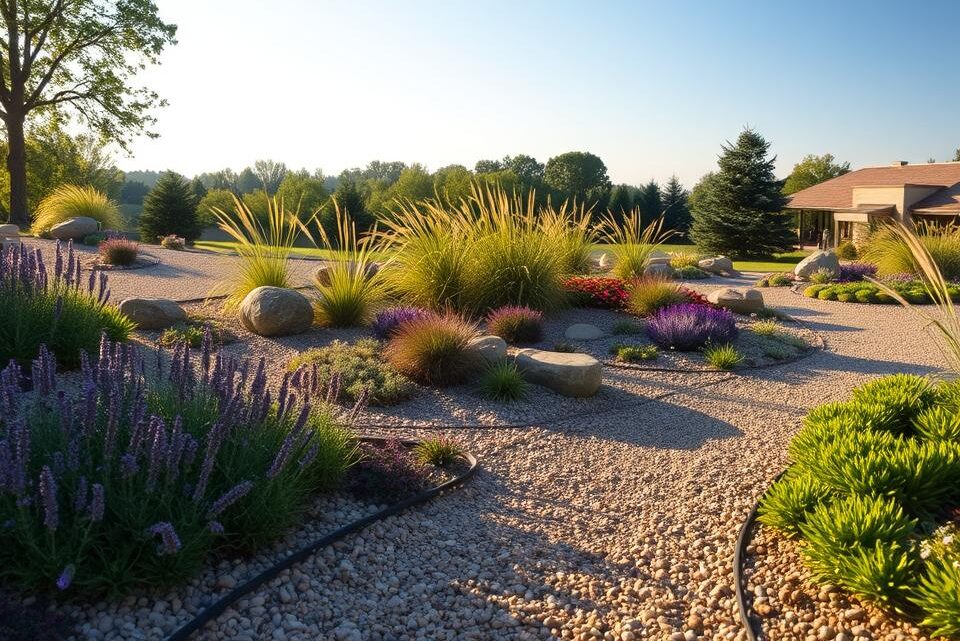
Transforming your outdoor space into a beautiful and low-maintenance gravel garden can be a rewarding project. By incorporating well-designed paths and planting beds, you can create a visually appealing landscape that is both functional and sustainable.
A well-planned gravel garden design not only enhances the aesthetic of your garden but also simplifies maintenance. Effective landscaping involves choosing the right plants and materials that thrive in your local climate, making your garden more resilient.
Through careful garden planning, you can ensure that your gravel garden is not only beautiful but also meets your needs, whether you’re looking for a peaceful retreat or an entertainment area.
Inhaltsverzeichnis
Key Takeaways
- Understand the benefits of a gravel garden.
- Learn how to design effective paths.
- Discover how to create thriving planting beds.
- Explore sustainable landscaping practices.
- Plan your garden for low maintenance.
What Is a Gravel Garden?
Gravel gardens offer a unique and water-efficient solution for gardeners in the British climate. These gardens utilize gravel or other aggregates as a primary landscaping feature, creating a low-maintenance and visually appealing outdoor space.
Origins and Mediterranean Inspiration
The concept of a gravel garden originates from Mediterranean regions, where drought-tolerant plants thrive in dry conditions. Mediterranean plants such as lavender, rosemary, and thyme are well-suited to gravel gardens, bringing a touch of southern European flair to British gardens.
Benefits of Gravel Gardens in British Climate
Gravel gardens provide several benefits in the British climate, including reduced water consumption and lower maintenance requirements. By using drought-tolerant plants and minimizing lawn areas, gravel gardens can help conserve water and reduce the need for frequent mowing and watering.
| Benefits | Description |
|---|---|
| Water Efficiency | Reduced water consumption through drought-tolerant plants |
| Low Maintenance | Minimized lawn areas reduce mowing and watering needs |
| Aesthetic Appeal | Visually appealing outdoor space with Mediterranean flair |
Planning Your Gravel Garden
To create a gravel garden that thrives, it’s essential to start with a well-thought-out plan tailored to your specific needs and space. Effective garden planning involves several key steps that help in achieving a beautiful and functional outdoor area.
Assessing Your Space and Soil Type
Begin by assessing your available space and understanding your soil type. This assessment is crucial for determining the suitability of your garden for gravel landscaping. Consider factors such as drainage, sunlight, and existing vegetation to make informed decisions about your garden design.
Determining Your Garden Style
Deciding on a garden style that suits your taste and complements your home is vital. Whether you prefer a formal, structured look or a more natural, relaxed atmosphere, your garden style will guide your choices for plants, paths, and other features.
Creating a Layout Plan
With your space assessed and style decided, create a detailed layout plan. This involves:
- Sketching your design to visualize the overall layout
- Considering sun patterns to ensure plants and features are appropriately placed
Sketching Your Design
Start by sketching a basic outline of your garden, including existing features and proposed paths and planting beds. This visual representation will help you make adjustments before implementation.
Considering Sun Patterns
Observe and note the sun patterns in your garden throughout the day. Understanding sunlight distribution is crucial for selecting the right plants and designing functional areas within your gravel garden.
Essential Tools and Materials
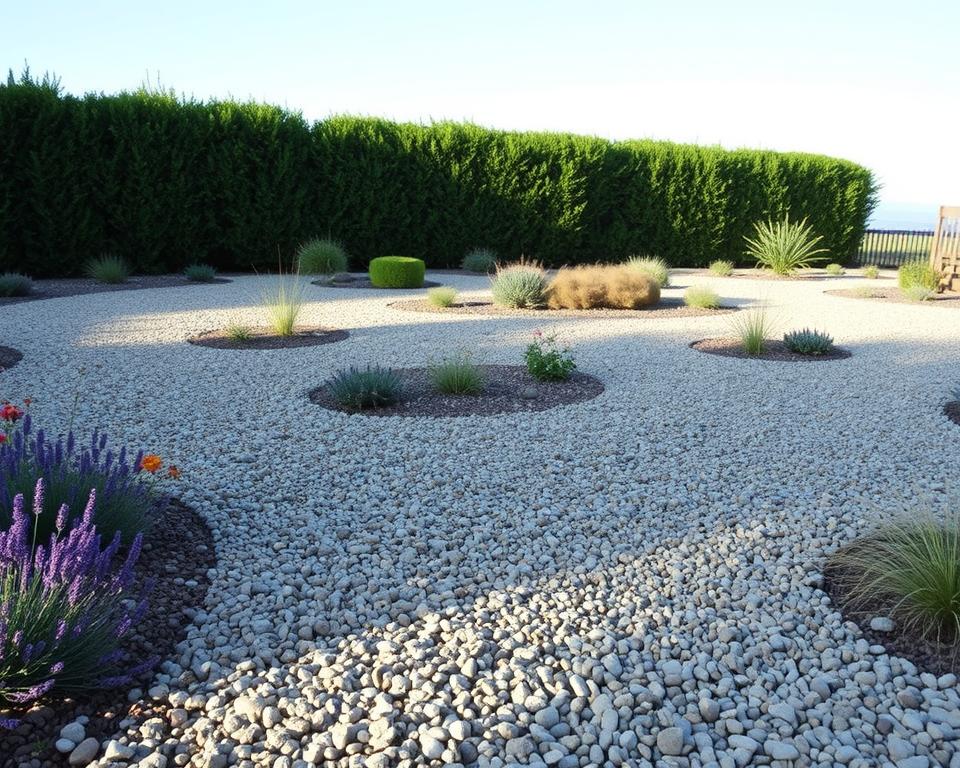
To construct a beautiful and functional gravel garden, you’ll need to gather the essential tools and materials. The right equipment will make the construction process smoother and ensure that your garden is durable and easy to maintain.
Tools for Construction
The basic tools required for constructing a gravel garden include a shovel for digging, a rake for levelling, and a wheelbarrow for transporting materials. You may also need a spirit level to ensure that your paths and planting beds are even.
Types of Gravel and Aggregates
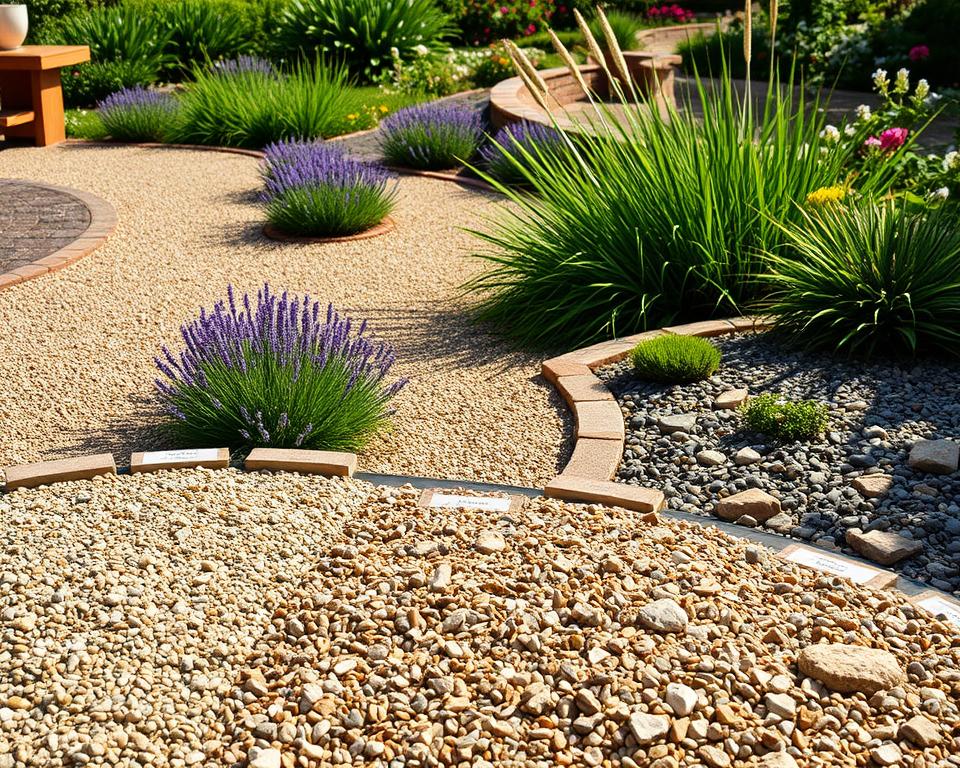
Gravel and aggregates are the backbone of your garden. They come in various sizes and types, each suited for different purposes.
Decorative vs. Functional Gravels
Decorative gravels are chosen for their colour and texture, adding visual appeal to your garden. Functional gravels, on the other hand, are selected for their durability and drainage properties.
Local Sourcing Options
Consider sourcing materials locally to reduce your carbon footprint and ensure that your garden blends in with the surrounding landscape.
| Type of Gravel | Size | Use |
|---|---|---|
| Fine Gravel | 2-5 mm | Pathways, decorative areas |
| Medium Gravel | 5-10 mm | Driveways, general landscaping |
| Coarse Gravel | 10-20 mm | Drainage, large decorative features |
Additional Materials Needed
In addition to gravel, you may need landscape fabric to prevent weeds, edging materials to define your paths and beds, and possibly some decorative elements like rocks or sculptures.
Site Preparation Techniques
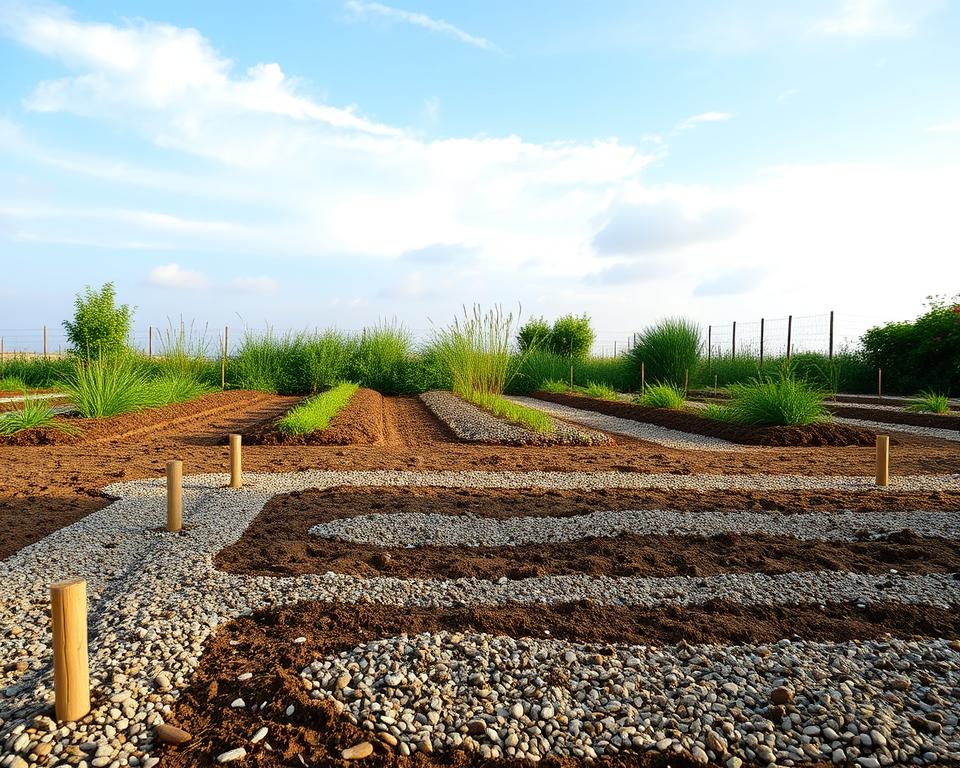
A well-prepared site is the foundation of a thriving gravel garden, requiring careful consideration of several factors. Proper site preparation ensures that your gravel garden not only looks great but also drains well and requires minimal maintenance.
Clearing and Levelling the Area
The first step in site preparation is clearing the area of any debris, weeds, or obstructions. This can be done manually or with the help of machinery, depending on the size of your garden. Once cleared, the area needs to be levelled to prevent water from pooling in certain spots. Levelling is crucial for both aesthetic and functional reasons, as it helps in achieving a uniform appearance and facilitates proper drainage.
Soil Testing and Amendments
Testing your soil is vital to understand its composition and pH level. Based on the test results, you may need to make amendments to improve soil quality. For a gravel garden, it’s often desirable to have good drainage, so adding organic matter or sand can be beneficial. Soil testing kits are readily available at most gardening stores, making it easy to determine your soil type.
| Soil Type | Amendment Needed | Drainage Improvement |
|---|---|---|
| Clay | Add sand or organic matter | Significant improvement |
| Sandy | Minimal amendments needed | Good drainage |
| Loamy | Add organic matter for fertility | Moderate drainage |
Dealing with Drainage Issues
Drainage is a critical aspect of gravel garden design. Poor drainage can lead to waterlogged soil and damage to plants. There are several strategies to improve drainage, including creating proper runoff and installing French drains.
Creating Proper Runoff
Ensuring that your garden has a slight slope can help in creating a natural runoff. This slope directs water away from planting areas and towards designated drainage paths. It’s essential to calculate the slope carefully to avoid erosion while ensuring effective water flow.
French Drains for Problem Areas
For areas with persistent drainage problems, a French drain can be an effective solution. This involves digging a trench, filling it with gravel, and placing a perforated pipe that directs water away from the problem area.
“French drains are a simple yet effective way to manage waterlogging in your garden.”
They are particularly useful in low-lying areas where water tends to accumulate.
Creating a Gravel Garden – Paths and Planting Beds
The success of your gravel garden depends on how well you integrate its different elements. A well-designed gravel garden is not just about the plants or the gravel; it’s about creating a harmonious balance between all its components.
Defining Boundaries Between Areas
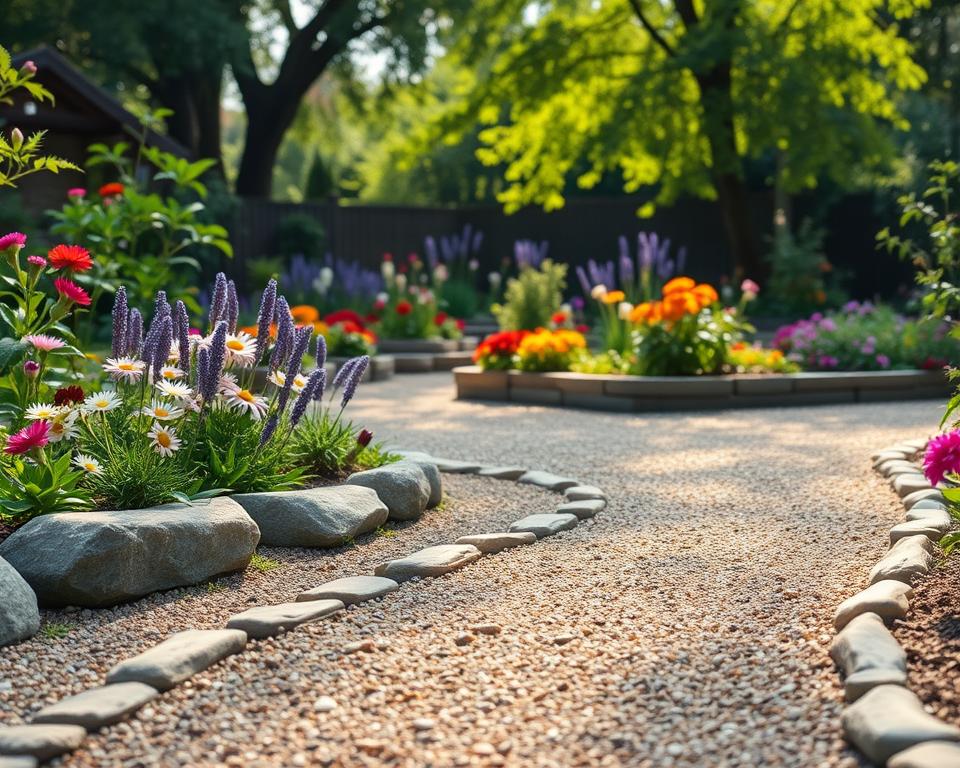
Defining boundaries between different areas of your gravel garden is crucial for its overall aesthetic and functionality. You can use a variety of materials to demarcate different sections, such as:
- Low walls or edging stones
- Changes in gravel colour or texture
- Planting beds with distinct plants
These boundaries help guide the eye through the garden and create a sense of order.
Establishing the Base Structure
Establishing a solid base structure is vital for the longevity and appearance of your gravel garden. This involves laying down a weed barrier to prevent weeds from growing up through the gravel and creating a stable base for your paths and planting beds.
Key considerations include:
- Using a durable landscape fabric
- Ensuring proper drainage
- Compacting the gravel to prevent settling
Transitional Elements
Transitional elements play a significant role in tying together the different parts of your gravel garden. These can include stepping stones that connect paths, or gradual changes in planting beds that lead the eye from one area to another.
By incorporating these elements, you can create a cohesive and visually appealing garden that invites exploration.
Designing Effective Gravel Paths
Creating effective gravel paths requires careful consideration of several factors, including width and design style. The paths in your gravel garden are not just functional; they also contribute significantly to the overall aesthetic.
Path Width and Accessibility Considerations
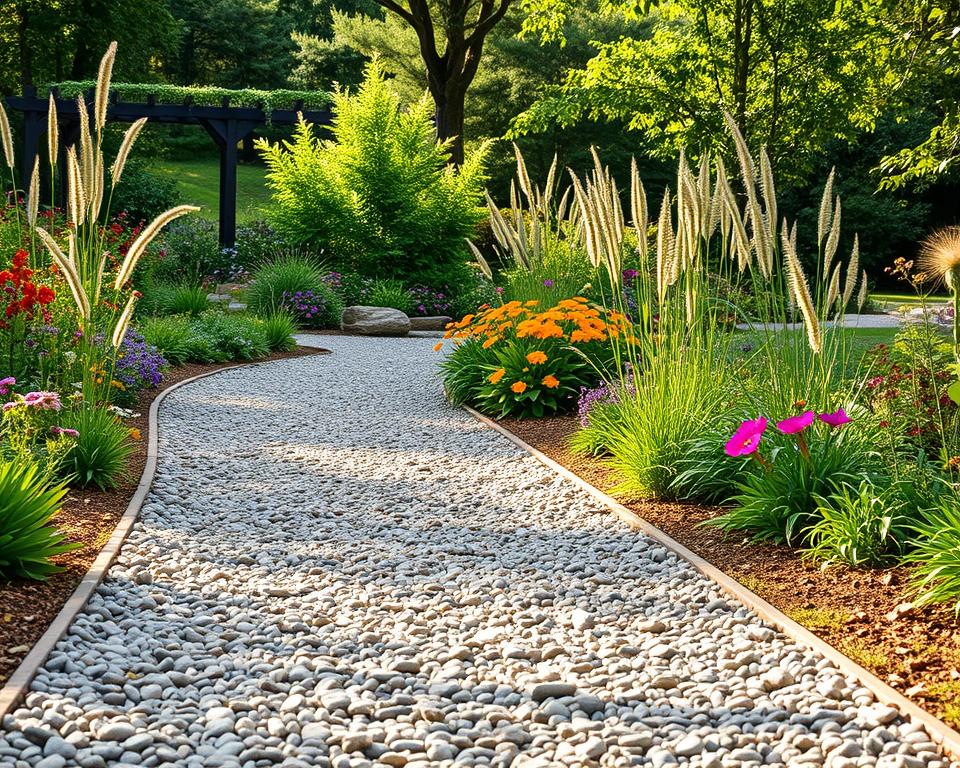
The width of your gravel paths is crucial for accessibility and flow. A path that is too narrow may be difficult to navigate, especially for those with mobility issues. Typically, a width of 3 to 4 feet is recommended to allow for comfortable passage.
Consider the purpose of each path. For example, paths leading to frequently visited areas, such as a garden shed or seating area, should be wider and more straightforward.
Curved vs. Straight Path Designs
The design of your gravel paths can greatly impact the overall feel of your garden. Curved paths can create a sense of journey and discovery, encouraging visitors to explore the garden. On the other hand, straight paths can provide a clear direction and make the garden feel more spacious.
As noted by gardening expert, “Curved paths can add a sense of mystery and adventure to the garden, while straight paths can create a sense of order and simplicity.”
“The path is not the destination; it’s the journey that matters.”
Creating Focal Points and Destinations
Effective gravel paths can guide visitors to focal points and destinations within the garden. This can be achieved by carefully planning the path’s direction and curvature.
Using Paths to Guide the Eye
Paths can be used to guide the visitor’s eye towards specific features or areas of interest. For example, a path that leads to a beautiful statue or a tranquil water feature can create a sense of anticipation and enjoyment.
Creating Journey and Discovery
By incorporating twists and turns, or by leading to hidden areas, paths can create a sense of journey and discovery. This can make the garden feel larger and more engaging.
In conclusion, designing effective gravel paths involves a thoughtful consideration of width, design style, and the role they play in guiding visitors through the garden. By carefully planning your paths, you can enhance both the functionality and the beauty of your gravel garden.
Path Construction Techniques
When constructing gravel paths, several key techniques must be employed to ensure durability and aesthetic appeal. A well-built gravel path can significantly enhance the overall look and feel of your garden.
Excavation and Base Preparation
The first step in constructing a gravel path is excavation and base preparation. This involves removing the top layer of soil to the required depth, typically around 5-7 cm, depending on the expected foot traffic. The base is then prepared by laying a layer of compacted hardcore or aggregate, which provides a stable foundation for the gravel.
Edge Restraints and Borders
Edge restraints are crucial for maintaining the shape and integrity of your gravel path. They prevent the gravel from spreading and provide a clean finish.
Metal Edging Options
Metal edging is a popular choice for gravel paths due to its durability and flexibility. It can be easily bent to create curved paths and is available in various heights to suit different designs.
Natural Stone Borders
Natural stone borders offer a more rustic and organic look, blending seamlessly with the garden environment. They can be used to create a variety of edge designs, from simple to complex patterns.
Laying and Compacting Gravel
Once the base is prepared and edge restraints are in place, you can proceed to lay the gravel. It’s essential to spread the gravel evenly and compact it thoroughly to prevent settling and shifting over time.
| Material | Depth | Purpose |
|---|---|---|
| Hardcore/Aggregate | 5-7 cm | Base preparation for stability |
| Gravel | 3-5 cm | Surface layer for drainage and aesthetics |
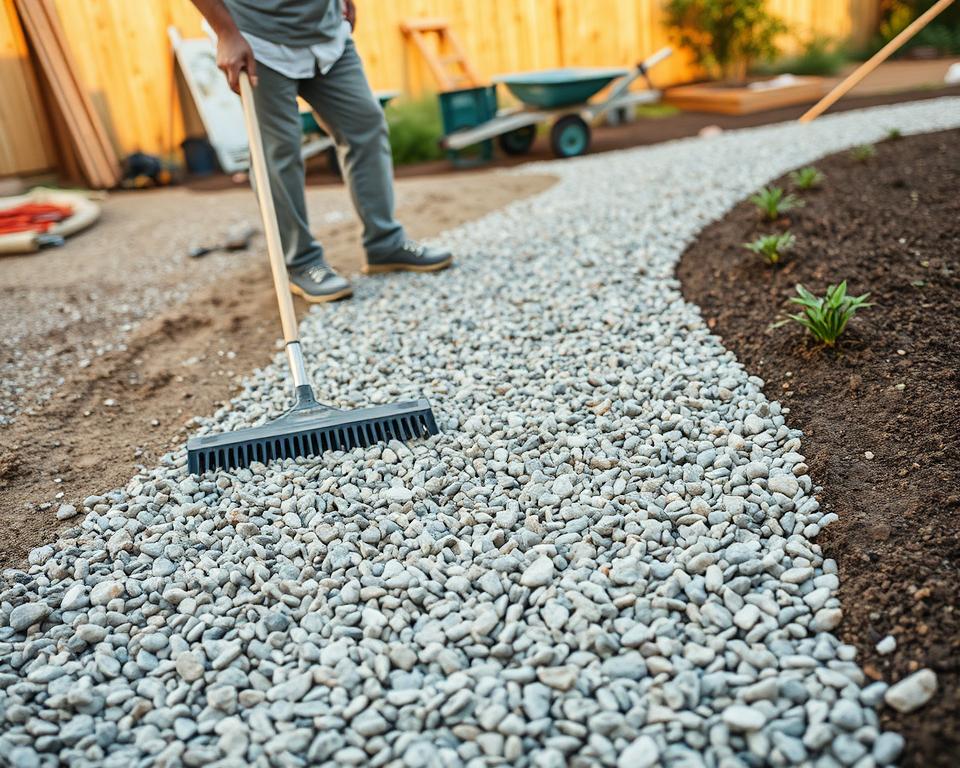
By following these path construction techniques, you can create a beautiful and durable gravel path that enhances your garden’s overall appeal.
Selecting the Right Gravel for Paths
Selecting the appropriate gravel for your garden paths involves considering several key factors. The right gravel can enhance the aesthetic appeal of your garden while ensuring the paths remain functional and safe to use.
Gravel Sizes and Applications
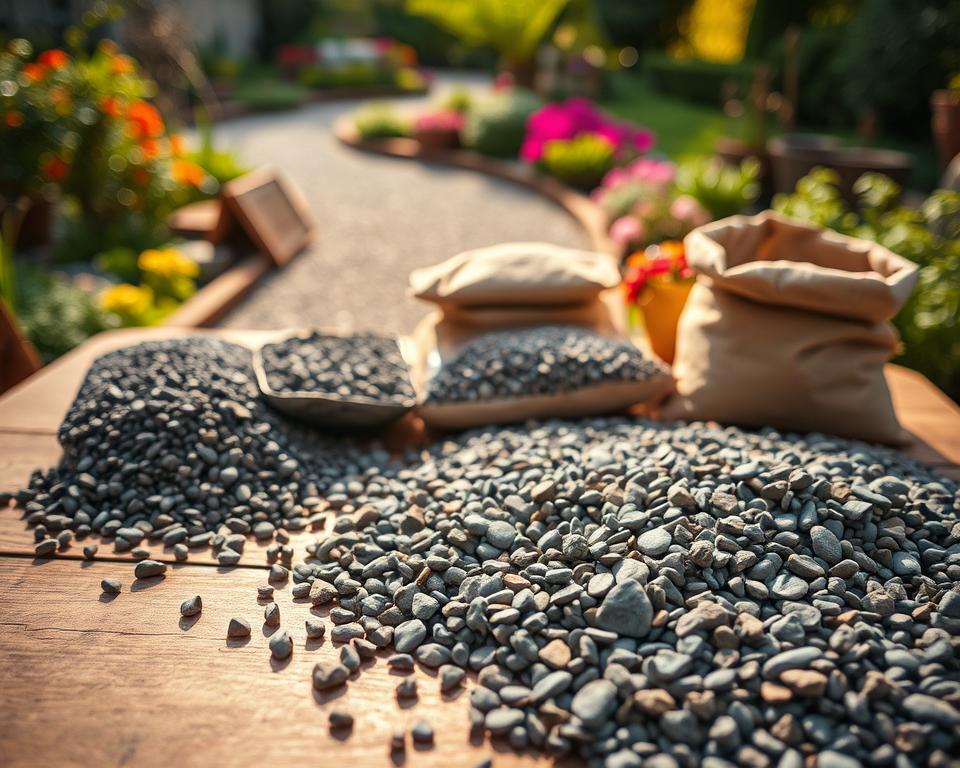
Gravel comes in various sizes, each suited to different applications. For paths, you typically want gravel that is not too fine, as it can become muddy when wet, nor too coarse, as it can be difficult to walk on. Sizes between 6mm and 10mm are often recommended for a good balance between stability and drainage.
Colour and Aesthetic Considerations
The colour of the gravel can significantly impact the overall appearance of your garden. You can choose gravel that complements your garden’s design, whether it’s a natural, muted tone or a more vibrant colour. Consider the colour of your plants, garden furniture, and other features when making your selection.
Practical Considerations for Foot Traffic
When selecting gravel for paths, it’s essential to consider the amount of foot traffic the path will receive. For high-traffic areas, self-binding gravels can be an excellent choice as they provide a more stable surface.
Self-Binding Gravels
Self-binding gravels are a type of gravel that contains a higher proportion of fines, which helps to bind the gravel together when compacted. This results in a more stable surface that is less likely to shift underfoot.
Wheelchair and Pushchair Accessibility
For gardens that need to be accessible to wheelchairs or pushchairs, it’s crucial to choose gravel that is compact and stable. A well-compacted gravel path with a smooth surface can provide easy access. Consider using smaller gravel sizes for a smoother surface.
| Gravel Size | Application | Accessibility |
|---|---|---|
| 2-4mm | Decorative mulching | Not suitable for paths |
| 6-10mm | Path construction | Good for foot traffic |
| 10-20mm | Drainage and heavy-duty paths | Can be challenging for wheelchairs |
Creating Planting Beds in a Gravel Garden
The success of your gravel garden depends on the quality of your planting beds, which provide a foundation for your plants. A well-designed planting bed can elevate the overall aesthetic of your garden while ensuring that your plants thrive.
Raised vs. Ground-Level Beds
When deciding on the type of planting beds to create, you have two primary options: raised beds or ground-level beds. Raised beds offer improved drainage and can be particularly beneficial for plants that are sensitive to wet conditions. On the other hand, ground-level beds can blend seamlessly with the surrounding gravel, creating a more natural look.
Bed Shapes and Configurations
The shape and configuration of your planting beds can significantly impact the visual appeal of your gravel garden. Consider creating beds with curved lines or irregular shapes to add visual interest. You can also experiment with different bed sizes and configurations to create a unique and dynamic landscape.
Soil Requirements for Planting Areas
The soil used in your planting beds should be carefully selected to meet the needs of your plants. For Mediterranean plants, a well-draining soil mix is essential. Improving drainage can be achieved by incorporating organic matter such as compost or perlite.
Improving Drainage for Mediterranean Plants
Mediterranean plants are adapted to dry conditions and can be susceptible to root rot if the soil is too wet. To improve drainage, consider adding a layer of gravel or sand at the bottom of your planting bed.
Soil Amendments for Success
In addition to improving drainage, you may need to amend your soil to provide the necessary nutrients for your plants. Consider adding organic fertilizers or compost to create a nutrient-rich soil environment.
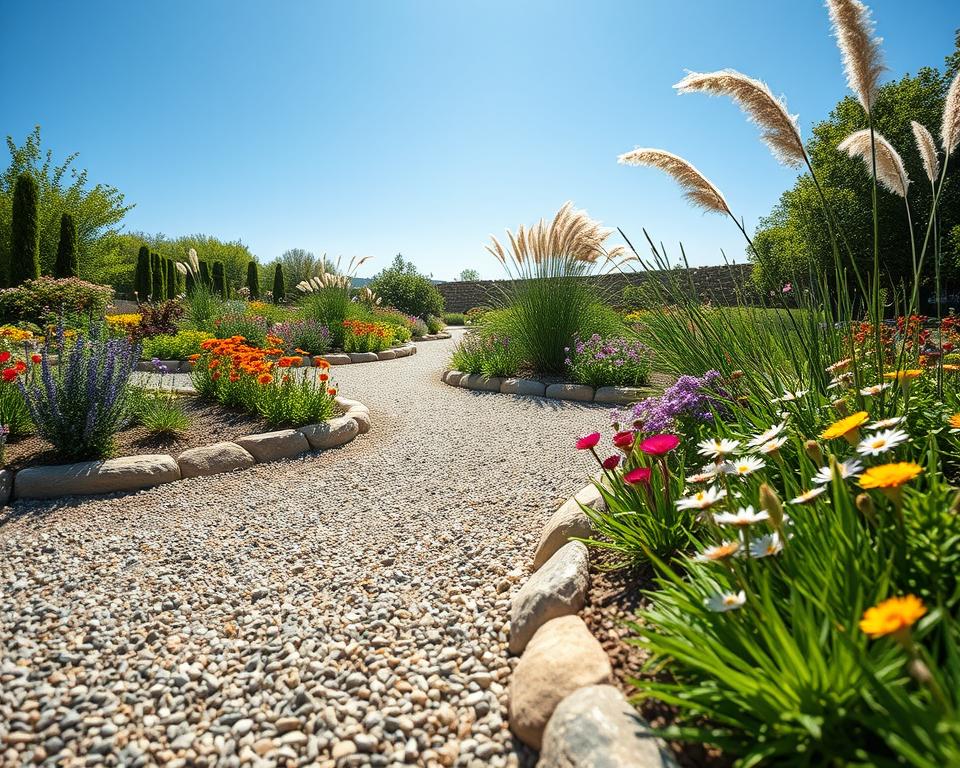
By carefully designing and constructing your planting beds, you can create a thriving and beautiful gravel garden that showcases your plants to their full potential.
Plant Selection for Gravel Gardens
To create a stunning gravel garden, you need to select plants that are not only beautiful but also resilient. The right plants will thrive in the gravel garden’s challenging conditions, providing a low-maintenance yet visually appealing outdoor space.
Drought-Tolerant Plants for British Gardens
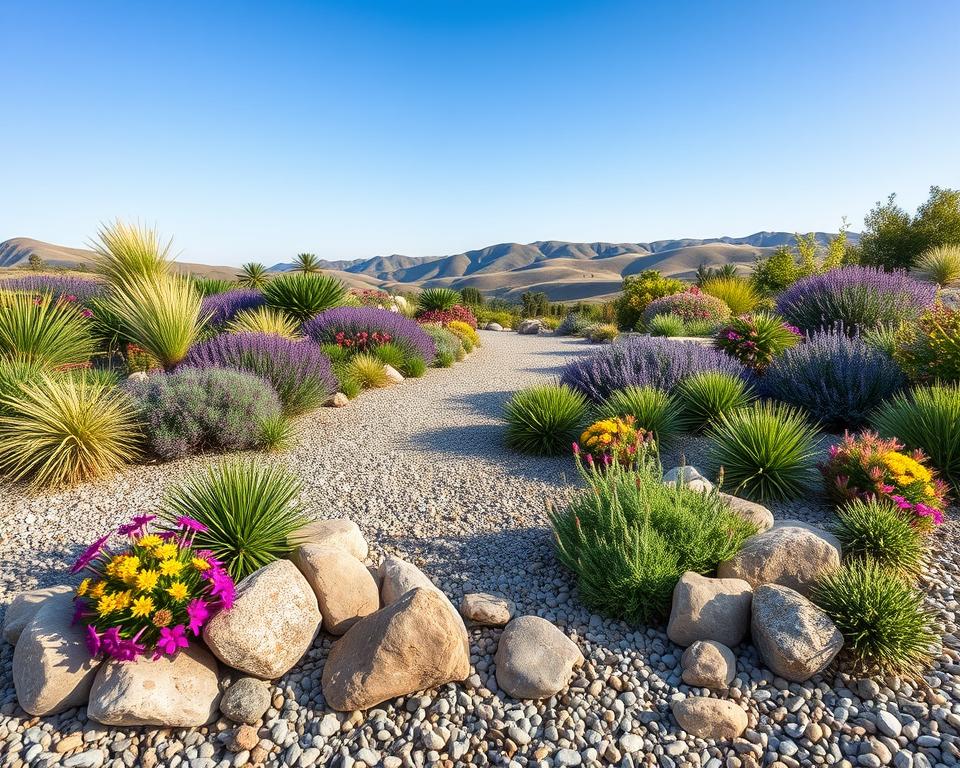
British gardens often experience varying weather conditions, including dry spells. Drought-tolerant plants are ideal for gravel gardens as they can survive with minimal watering. Examples include sedum, delosperma, and certain varieties of lavender. These plants have adapted to store water or have deep roots to access water deep in the soil.
Mediterranean and Alpine Species
Mediterranean and Alpine plants are well-suited for gravel gardens due to their ability to thrive in well-drained soil and full sun. Mediterranean plants like rosemary and thyme add fragrance and flavor, while Alpine species such as gentian and edelweiss provide unique beauty. These plants are accustomed to the dry conditions often found in gravel gardens.
Structural Plants and Focal Points
Structural plants and focal points are crucial for adding visual interest to your gravel garden. They can provide height, texture, and color, creating a dynamic landscape.
Grasses and Movement
Grasses like stipa and festuca add movement and texture to the garden. Their foliage can rustle in the wind, creating a soothing, dynamic effect.
Year-Round Interest
To ensure year-round interest, incorporate plants that offer different seasons of appeal. For example, heathers provide winter color, while grasses and perennials offer summer interest. By choosing a mix of plants, you can enjoy your gravel garden throughout the year.
Planting Techniques for Gravel Environments
When planting in a gravel garden, it’s crucial to adopt techniques that ensure the health and longevity of your plants. Gravel gardens, with their excellent drainage and warm microclimate, offer a unique environment that requires thoughtful planting strategies.
Proper Spacing and Arrangement
Proper spacing is vital to prevent overcrowding and allow for air circulation. Planting at the correct density also helps in reducing weed growth. Consider the mature size of your plants when determining their spacing.
Planting Through Landscape Fabric
Using landscape fabric can significantly reduce weed growth and retain moisture. Landscape fabric allows water to penetrate while suppressing weeds. Cut slits in the fabric where you want to plant, and then cover the fabric with gravel.
Initial Care and Establishment
Initial care is critical for the establishment of plants in a gravel garden. This includes careful watering regimes and mulching considerations.
Watering Regimes for New Plants
New plants in a gravel garden require consistent moisture, especially during their first growing season. Water them regularly, but avoid overwatering, which can be detrimental.
Mulching Considerations
Mulching around plants helps retain moisture and suppress weeds. Organic mulches like gravel-friendly mulches can be effective. However, be cautious with the type of mulch used, as some may not be suitable for gravel gardens.
| Planting Technique | Benefits |
|---|---|
| Proper Spacing | Prevents overcrowding, reduces weed growth |
| Landscape Fabric | Suppresses weeds, retains moisture |
| Careful Watering | Promotes healthy establishment |
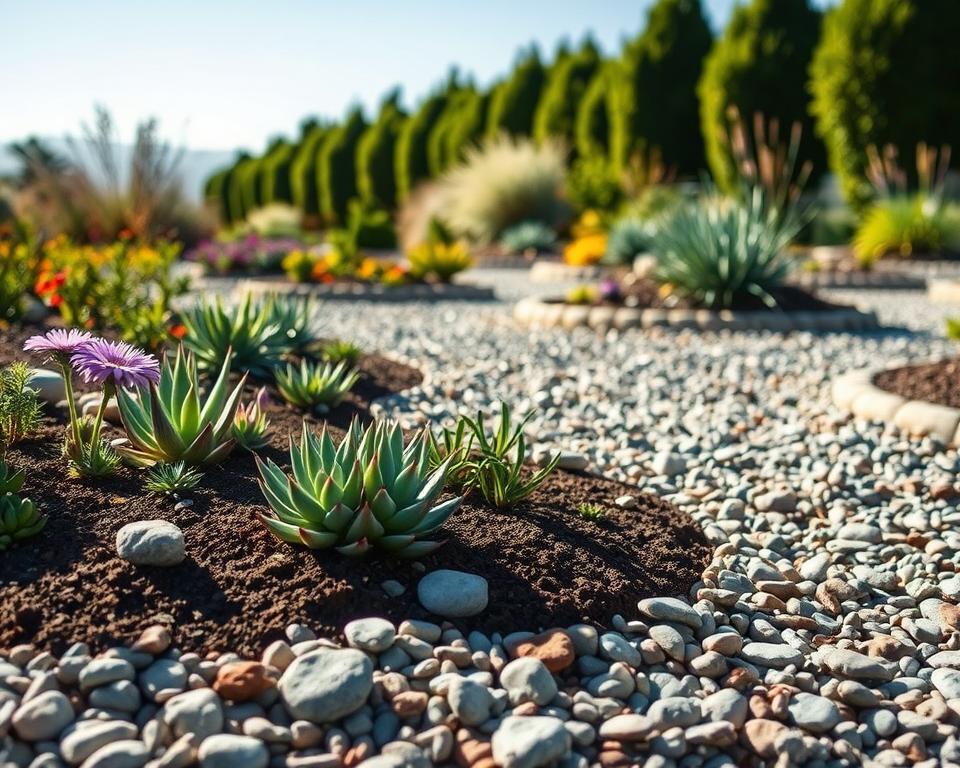
By adopting these planting techniques, you can create a thriving and beautiful gravel garden that requires minimal maintenance.
Adding Features and Focal Points
To create a truly captivating gravel garden, consider incorporating various focal points and decorative elements. These additions can significantly enhance the visual appeal and character of your outdoor space.
Incorporating Rocks and Boulders
Rocks and boulders can add a natural, dramatic element to your gravel garden. When selecting rocks, consider their size, shape, and colour to ensure they complement the existing landscape. Larger boulders can serve as striking focal points, while smaller rocks can be used to create subtle, textured pathways.
Water Features in Gravel Gardens
Water features, such as small ponds or fountains, can introduce a soothing, auditory element to your gravel garden. When incorporating a water feature, consider the scale and style to ensure it harmonizes with the overall design. Proper installation is crucial to prevent issues like waterlogging or erosion.
Sculptures and Decorative Elements
Sculptures and other decorative elements can add personality and visual interest to your gravel garden. When choosing these elements, consider the material’s durability and weather resistance.
Selecting Weather-Resistant Materials
Opt for materials that can withstand the British climate, such as stone, metal, or recycled plastic. These materials will ensure that your decorative elements remain in good condition over time.
Positioning for Maximum Impact
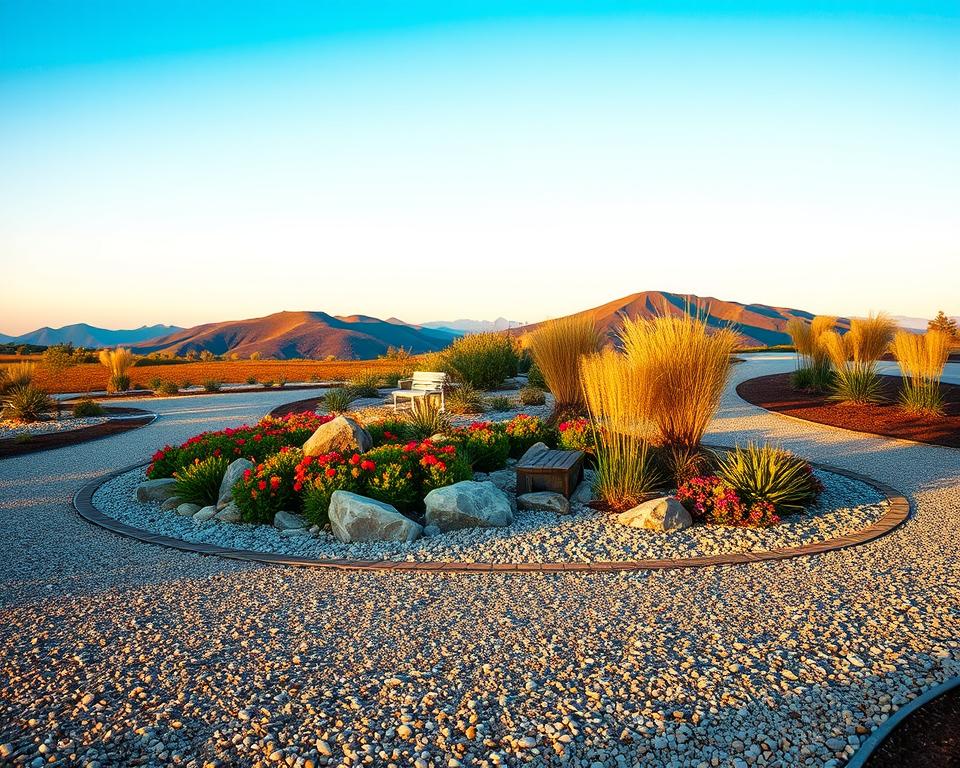
Carefully position your decorative elements to maximize their impact. Consider creating a focal point by placing a sculpture at the end of a path or integrating it within a planting bed.
Seasonal Aspects of Gravel Gardens
To keep your gravel garden thriving, it’s essential to understand the seasonal aspects of its care. Effective seasonal garden care ensures that your garden remains healthy and visually appealing throughout the year.
Spring and Summer Management
During spring and summer, your gravel garden will require regular maintenance to prevent weeds and keep plants healthy. Regularly inspect your garden for weeds and remove them promptly. You should also ensure that plants receive adequate water during dry spells, although many gravel garden plants are drought-tolerant.
Refreshing the gravel may be necessary if it becomes compacted or dirty. Use a rake to loosen the gravel and remove any debris.
Autumn Preparations
As autumn approaches, prepare your gravel garden for the changing weather. Clear away dead plant material and any debris that has accumulated. Consider adding a layer of mulch or compost to protect the soil and improve its structure.
Winter Interest and Protection
In winter, your gravel garden can still offer visual interest, especially if you have included plants with attractive winter stems or berries. To protect your garden, avoid using salt or other de-icers directly on the gravel, as they can damage plants and contaminate the soil. Instead, use sand or grit for traction on paths.
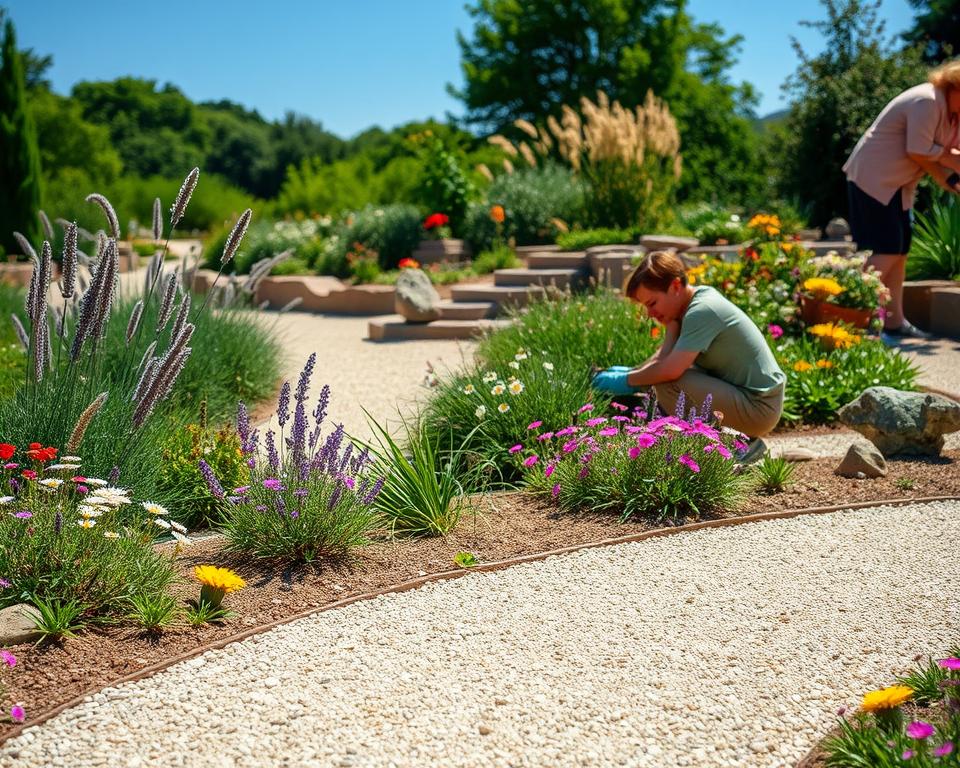
By following these garden management tips, you can enjoy a beautiful and thriving gravel garden year-round.
Maintenance of Gravel Gardens
Keeping your gravel garden in top condition involves a combination of regular tasks and seasonal checks. Effective maintenance ensures that your garden remains healthy, visually appealing, and requires less effort over time.
Weed Control Strategies
Weed control is a critical aspect of gravel garden maintenance. You can adopt either manual or chemical methods, depending on your preference and the severity of the weed infestation.
Manual vs. Chemical Methods
Manual weeding involves physically removing weeds, which can be time-consuming but effective for small areas. Chemical weed control uses herbicides to kill weeds, offering a quicker solution but requiring caution to avoid harming desired plants.
Preventative Measures
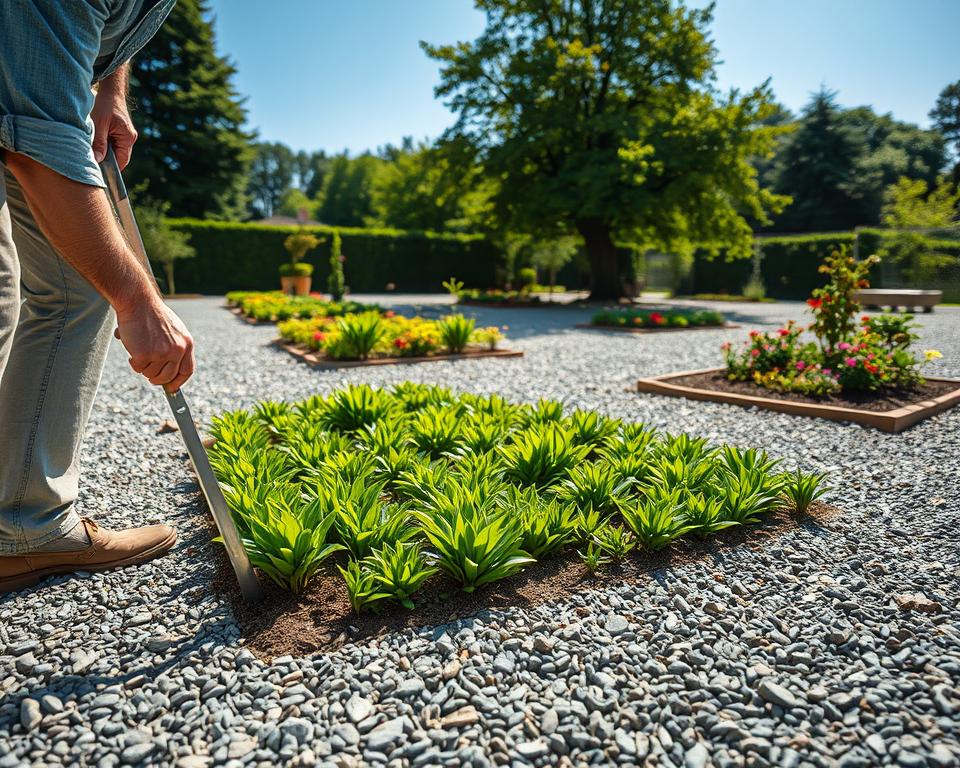
Using a landscape fabric under your gravel can significantly reduce weed growth. Regularly inspecting your garden and removing weeds before they spread is also crucial.
Refreshing and Topping Up Gravel
Over time, gravel can become displaced or compacted, losing its aesthetic appeal. Periodically raking and topping up the gravel helps maintain its appearance and ensures good drainage.
| Task | Frequency | Benefits |
|---|---|---|
| Raking Gravel | Monthly | Maintains appearance, improves drainage |
| Topping Up Gravel | Annually | Restores depth, enhances visual appeal |
| Weed Control | As needed | Prevents weed growth, reduces maintenance |
Seasonal Maintenance Tasks
Different seasons bring different challenges. In spring, check for winter damage and replenish gravel as needed. Summer requires regular weeding and watering of plants. Autumn involves clearing leaves, while winter may require protecting plants from frost.
Conclusion
You now have a comprehensive guide to creating a stunning gravel garden, complete with beautiful paths and planting beds. By following the steps outlined in this article, you can create a low-maintenance, drought-tolerant garden that brings joy and serenity to your outdoor space.
A well-designed gravel garden offers numerous benefits, including reduced water consumption and a unique, Mediterranean-inspired aesthetic. As you plan and construct your gravel garden, you’ll be creating a beautiful outdoor space that requires minimal upkeep.
In this gravel garden summary, we’ve covered the essential elements of designing and maintaining a thriving gravel garden. From selecting the right gravel and plants to constructing paths and planting beds, you’ll be well-equipped to create a garden conclusion that is both beautiful and functional.
With careful planning and attention to detail, your gravel garden will become a haven for relaxation and enjoyment. So, get started on your gravel garden project today and reap the rewards of your hard work for years to come.
FAQ
What is a gravel garden?
A gravel garden is a type of garden that uses gravel or aggregate as a primary feature, often incorporating drought-tolerant plants and Mediterranean-inspired design elements.
What are the benefits of a gravel garden?
Gravel gardens offer several benefits, including water conservation, low maintenance, and a unique, visually appealing aesthetic that can thrive in British climates.
How do I plan a gravel garden?
To plan a gravel garden, start by assessing your space and soil type, determining your garden style, and creating a detailed layout plan that considers sun patterns and other environmental factors.
What tools and materials do I need to create a gravel garden?
Essential tools and materials for creating a gravel garden include a variety of gravels and aggregates, landscape fabric, edging materials, and plants suitable for gravel gardens.
How do I prepare the site for a gravel garden?
Site preparation involves clearing and levelling the area, testing the soil, and addressing any drainage issues to create a stable and well-draining base for your gravel garden.
What types of plants are suitable for gravel gardens?
Drought-tolerant plants, Mediterranean and Alpine species, and structural plants that can serve as focal points are all suitable for gravel gardens, offering a range of textures, colours, and year-round interest.
How do I maintain a gravel garden?
Maintenance tasks for gravel gardens include weed control, refreshing and topping up gravel, and seasonal tasks such as pruning and mulching to keep the garden looking its best.
Can I incorporate water features into my gravel garden?
Yes, water features can be incorporated into gravel gardens to add visual interest and create a soothing, peaceful atmosphere, using materials that are weather-resistant and suitable for outdoor use.
How do I ensure accessibility in my gravel garden?
To ensure accessibility, consider path width and surface material, using self-binding gravels or other stable surfaces that can accommodate wheelchairs and pushchairs.
What are the advantages of using landscape fabric in a gravel garden?
Landscape fabric helps suppress weeds, reduces maintenance, and prevents gravel from becoming mixed with soil, making it a practical and effective solution for gravel gardens.