Moisture Barrier for the Floor of a Wooden Gardenroom: Essential Protection

Your garden room represents a significant investment in your property. It serves as a versatile space for relaxation, work, or entertainment throughout the year. Proper protection ensures its longevity and comfort.
A specialised moisture barrier acts as a crucial shield beneath your flooring. It prevents water vapour from seeping into the timber structure, which could lead to serious damage over time. This protective layer is fundamental to maintaining your space’s integrity.
Neglecting this component risks mould growth, wood rot, and costly structural repairs. Our comprehensive guide addresses UK-specific building practices and weather challenges. We provide practical, step-by-step advice for homeowners seeking durable solutions.
Following this guide helps you create a comfortable, year-round environment. It preserves your investment and enhances your garden’s appeal. Let’s explore the fundamentals of proper floor protection and installation techniques.
Inhaltsverzeichnis
Key Takeaways
- Essential protection prevents water damage to your garden room’s foundation
- Proper installation safeguards against mould and structural issues
- Year-round comfort depends on effective moisture management
- UK weather conditions require specific protective measures
- Professional guidance ensures long-term value preservation
- Timber structures demand specialised protective solutions
- Preventative measures avoid costly future repairs
Why Your Wooden Garden Room Needs a Moisture Barrier
Your timber garden building requires dedicated protection against environmental threats. While its aesthetic appeal enhances your outdoor space, its structural integrity depends on proper defensive measures.
Many homeowners overlook this critical component until problems emerge. Understanding these risks helps you make informed decisions about your property’s protection.
The Damaging Effects of Moisture on Timber Structures
Water infiltration causes multiple issues in timber constructions. Wood naturally absorbs humidity, leading to expansion and contraction cycles.
These movements gradually compromise structural integrity. Warped boards and swollen joints become common problems in unprotected spaces.
Persistent dampness encourages fungal growth and insect infestations. Black mould cases frequently appear in poorly sealed garden buildings.
Real-world examples show severe decay within two years without adequate protection. Timber rot necessitates complete frame replacements in extreme situations.
How Vapour Barriers Prevent Rot and Structural Damage
Specialised membranes create impermeable shields against water vapour. They block humidity migration from both ground and atmospheric sources.
This protective layer functions like a specialised shield for your building’s foundation. It maintains optimal conditions within your timber framework.
Proper installation ensures complete coverage beneath flooring systems. Sealed seams prevent any vapour penetration through gaps or joints.
“An effective vapour control system preserves timber integrity by maintaining stable humidity levels”
This approach safeguards your investment while ensuring compliance with building standards. Heated spaces particularly benefit from this crucial protection.
Year-Round Protection Against UK Weather Conditions
Britain’s climate presents unique challenges for outdoor structures. Frequent rainfall and high humidity levels demand robust solutions.
Temperature fluctuations between seasons cause condensation issues. Warm interior air meets cold surfaces, creating water droplets.
Comprehensive protection addresses these seasonal variations effectively:
- Winter conditions require prevention of ground moisture rising
- Summer humidity needs management through proper sealing
- Annual temperature swings necessitate consistent performance
Energy efficiency improves significantly with proper installation. Thermal performance remains consistent when insulation stays dry.
Your garden retreat maintains comfort throughout all seasons. This protection ultimately preserves both function and value.
Understanding Moisture Barrier Fundamentals
The science behind proper moisture management forms the foundation of durable garden room construction. Comprehending these principles helps you select appropriate materials and avoid common installation errors. This knowledge ensures your protective system performs effectively throughout seasonal changes.

Difference Between Vapour Barriers and Breathable Membranes
Vapour control layers and breathable membranes serve distinct purposes in moisture management. Understanding their different roles is crucial for effective protection.
Vapour barriers install on the interior warm side of insulation. They prevent moist air from penetrating your building’s structure. These create an airtight seal that stops vapour diffusion.
Breathable membranes position on the exterior cold side. They allow moisture escape while blocking water ingress. This dual approach maintains optimal conditions within your framework.
Common materials include polythene sheets meeting NHBC standards. The 500 gauge (120 micron) specification provides effective vapour control. Foil-backed insulation like Celotex incorporates built-in barriers.
How Moisture Barriers Work in Building Physics
Protective systems function by limiting both vapour diffusion and convection. They create physical barriers that reduce condensation risk within structures. This approach maintains stable humidity levels throughout your space.
These layers work through fundamental building physics principles. They control air movement and vapour transmission simultaneously. Proper installation ensures complete coverage without gaps or breaches.
UK standard BS 5250:2021 recommends specific approaches for timber frames. This guidance helps improve insulation performance while controlling moisture. The standard emphasises proper placement on the warm side.
“Correct barrier placement prevents interstitial condensation, particularly important in Britain’s climate where temperature fluctuations create significant condensation risks”
The Science Behind Condensation Control in Garden Rooms
Condensation science involves calculating dew points within structures. This determines where water vapour will change to liquid form. Understanding this helps position barriers correctly.
In cold climates like the UK, interstitial condensation poses significant risks. This occurs within wall cavities or roof spaces when warm, moist air meets cold surfaces. Effective control prevents damage to structural components.
Key considerations for condensation management include:
- Dew point calculations to determine barrier placement
- Airtight sealing with aluminium tape for foil-backed insulation
- Proper ventilation integration to manage humidity levels
- Material selection based on vapour resistance properties
These fundamentals directly influence practical installation steps. They ensure your protective system performs as intended throughout seasonal changes. Proper implementation preserves both comfort and structural integrity.
Planning Your Moisture Barrier Installation
Strategic planning forms the cornerstone of effective garden room protection. Your approach must consider multiple factors to ensure long-term performance. This preparation phase prevents costly mistakes and ensures regulatory compliance.

Assessing Your Garden Room’s Specific Needs
Begin by evaluating your space’s unique characteristics. Consider how you’ll use the area – whether as a home office, gym, or relaxation space. Different activities generate varying humidity levels that affect your protection requirements.
Check timber moisture content before installation. Use a quality moisture meter to ensure readings below 20%. This prevents trapping excess dampness within your structure.
Examine your insulation type and existing framework. Different materials require specific compatibility considerations. Proper assessment at this stage prevents future issues with your building’s performance.
UK Building Regulations and Compliance Considerations
Understanding British standards ensures your project meets legal requirements. Building Regulations Part C addresses resistance to dampness. Part L covers energy efficiency through proper insulation installation.
Even exempt structures benefit from following these guidelines. They represent best practices for durable construction. Compliance demonstrates quality workmanship and protects your investment.
“NHBC standards mandate vapour control layers on the warm side of insulation with minimum 100mm overlaps and Class B sealing tape”
Consult local councils for specific interpretation nuances. Regulations may vary slightly between regions. This due diligence prevents potential compliance issues later.
Determining the Right Barrier Placement for Maximum Effectiveness
Correct positioning is crucial for preventing condensation problems. The protective layer must always install on the interior warm side. This placement stops warm, moist air reaching cold surfaces within your framework.
Use dew-point calculators for precise positioning decisions. These tools help determine exactly where condensation would form. This scientific approach ensures optimal performance in Britain’s damp climate.
Ensure seamless integration with other building elements. Your membrane should connect properly with walls, floors, and roofs. This comprehensive approach maintains consistent protection throughout your space.
Proper planning creates a robust foundation for your installation. It addresses potential issues before they become problems. This proactive approach saves both time and money while ensuring lasting protection.
Selecting the Right Materials for Your Moisture Barrier
Quality components determine the effectiveness of your vapour control system. Appropriate selection prevents installation failures and ensures lasting protection for your timber framework.
British standards and climate conditions demand specific material properties. Understanding these requirements helps you choose products that perform reliably year-round.

Polythene Sheets: Specifications and Quality Standards
Polythene membranes provide fundamental vapour resistance in garden buildings. The minimum specification requires 500 gauge (120 micron) thickness with green tint identification.
CE marking to EN13984 ensures compliance with European performance standards. This certification guarantees material durability and consistent performance.
Proper installation requires minimum 100mm overlaps at all joints. This prevents vapour penetration through seams in your protective layer.
Cost-effective rolls typically cover 135 square metres for £45-60. Brands like Damplas Vapour Barrier offer reliable solutions for basic timber frames.
Foil-Backed Insulation Options and Their Benefits
Foil-faced boards deliver dual functionality in garden room construction. Products like Celotex GA4000 provide both thermal insulation and integrated vapour control.
These materials significantly enhance energy efficiency in heated spaces. Their reflective surfaces reduce heat loss while blocking humidity transmission.
Proper sealing transforms these boards into complete vapour barriers. This integrated approach simplifies installation while improving performance.
Individual boards typically cost around £25 each. Their rigid structure adds structural stability to wall and roof constructions.
Essential Sealing Materials: Tapes and Adhesives
Airtight sealing completes your vapour control system. Specialised aluminium foil tapes bridge gaps between material sections.
Gladiator 50mm x 10m rolls (£8-12) provide durable, water-resistant sealing. Their heat resistance maintains integrity under temperature fluctuations.
Acrylic sealant ensures permanent bonds around penetrations and edges. This prevents air leakage that could compromise your system’s effectiveness.
Quality sealing materials meet NHBC standards for condensation control. They maintain airtightness throughout your building’s structure.
Consider these factors when selecting materials:
- Timber frame constructions benefit from polythene membranes
- Concrete base installations may require different approaches
- Local climate conditions influence material performance requirements
- Budget constraints versus long-term protection needs
Always verify products comply with BS 5250:2021 for humidity management. Reputable suppliers provide technical specifications confirming regulatory compliance.
“Investing in quality materials prevents costly remediation work later. Proper components installed correctly ensure decades of reliable performance”
Your material choices directly impact the longevity of your garden retreat. Superior products create sustainable protection against Britain’s damp climate conditions.
Essential Tools for Installing Your Moisture Barrier
Proper equipment selection transforms your vapour control project from challenging to manageable. Having the right implements ensures both efficiency and professional results. This guide covers everything you need for successful implementation.
Quality tools prevent common issues like uneven cuts or poor sealing. They help you achieve airtight protection that lasts for years. Investing in appropriate equipment pays dividends throughout your project’s lifespan.

Cutting and Measuring Equipment
Precision cutting ensures your protective material fits perfectly. Use sharp utility knives with replaceable blades for clean edges. Heavy-duty Stanley knives work well for polythene sheets and insulation boards.
Measuring tapes and straight edges guarantee accurate dimensions. They help maintain consistent 150mm overlaps at all joints. This prevents potential gaps where vapour could penetrate your structure.
Work in temperatures above 15°C to avoid material brittleness. Cold conditions make cutting difficult and may cause tearing. Proper conditions ensure clean, professional results throughout your space.
Fixing and Fastening Tools
Heavy-duty staplers secure your protective layer to timber frames. Place staples approximately every 150mm for secure attachment. Double-staple at edges and corners where tension is highest.
Electric staplers speed up the installation process significantly. They provide consistent penetration through various materials. Manual options work well for smaller garden rooms or limited budgets.
Consider the base construction when selecting fasteners. Different approaches suit timber versus concrete foundations. Always choose corrosion-resistant staples for long-term performance.
Sealing and Testing Apparatus
Airtight sealing completes your vapour control system effectively. Acrylic sealant guns create permanent bonds around penetrations. They ensure complete protection at wall-floor junctions and service entries.
Aluminium foil tape applicators help position sealing strips accurately. Use 50mm wide tape for robust joint protection. This prevents air leakage that could compromise your installation’s effectiveness.
Testing tools verify your work’s quality before proceeding. Smoke pencils detect any remaining gaps or breaches effectively.
“Professional installers always test their work with smoke pencils. This simple check prevents costly remediation work later”
These tools reduce installation time to 2-4 hours for typical 3x4m spaces. They prevent common errors and ensure professional-quality results. Your investment in proper equipment guarantees lasting protection for your garden retreat.
Step-by-Step Guide to Installing Your Moisture Barrier for the Floor of a Wooden Gardenroom
Proper implementation transforms your protective system from concept to reality. This comprehensive walkthrough ensures you achieve professional results with essential techniques. Follow each stage carefully for lasting protection against humidity problems.
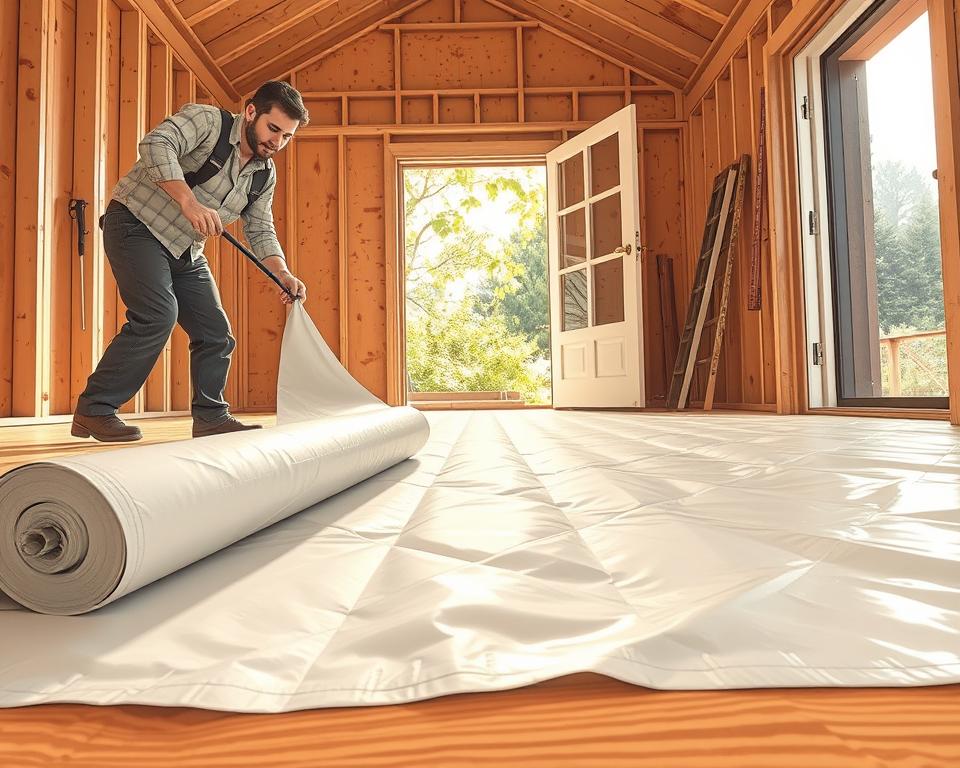
Preparing the timber frame and subfloor
Begin by verifying your timber’s dryness using a reliable moisture meter. Readings must show less than 20% content before proceeding. This prevents trapping dampness within your building’s framework.
Thoroughly clean all surfaces removing dust and debris. Pay special attention to corners and edges where particles accumulate. Proper preparation creates the ideal foundation for your protective layer.
Inspect the entire structure for any protruding nails or sharp edges. These could puncture your membrane during installation. Address any imperfections before continuing with the process.
Measuring and cutting your barrier material
Unroll your polythene or foil membrane across the prepared area. Allow sufficient material for 150mm overlaps at all joints and perimeters. This ensures complete coverage without potential gaps.
Use sharp utility knives for clean, precise cuts. Work in temperatures above 15°C to prevent material brittleness. Measure twice and cut once to avoid wasteful errors.
Label each section clearly if working with multiple pieces. This organisation simplifies the installation phase significantly. Proper planning here saves time and ensures accuracy.
Proper installation and fixing techniques
Position your first section carefully, ensuring proper alignment. Staple the material to timber studs every 150mm using heavy-duty staples. Apply double staples at edges and corners for extra security.
Maintain consistent tension across the entire surface. Avoid sagging or loose areas that could compromise effectiveness. Work methodically from one end to the other for uniform results.
Overlap subsequent sections by the required 150mm minimum. This creates continuous protection across your entire space. Check alignment regularly as you progress through the installation.
“Professional installers always work from the centre outward, ensuring smooth, wrinkle-free surfaces that perform optimally for decades”
Sealing joints and ensuring airtightness
Apply acrylic sealant along all overlap seams before taping. Use 50mm aluminium foil tape pressed firmly into position. This creates permanent, water-resistant seals at all connections.
Pay special attention to corners and service penetrations. These areas require extra sealant and careful tape application. Complete airtightness prevents vapour penetration through minor gaps.
Inspect every seam visually before proceeding to testing. Look for any lifting edges or imperfect adhesion. Address any issues immediately rather than after completion.
Common installation errors include insufficient overlap and poor sealing. These mistakes often lead to condensation problems within the structure. Careful attention here prevents costly remediation work later.
Testing reveals any remaining breaches in your system. Use a smoke pencil to identify air leakage points. Pressurise the space slightly to make detection easier.
Most standard garden rooms require 2-4 hours for complete installation. Warmer conditions improve material flexibility and adhesion quality. Rushing the process often leads to compromised results.
Following these steps meticulously protects your investment effectively. Proper implementation ensures decades of reliable performance against Britain’s challenging climate conditions.
Integrating Ventilation with Your Moisture Barrier System
Effective humidity management requires more than just physical barriers. Your protective system needs intelligent air movement to function properly throughout seasonal changes. This integration prevents trapped vapour from causing damage despite your sealed defences.
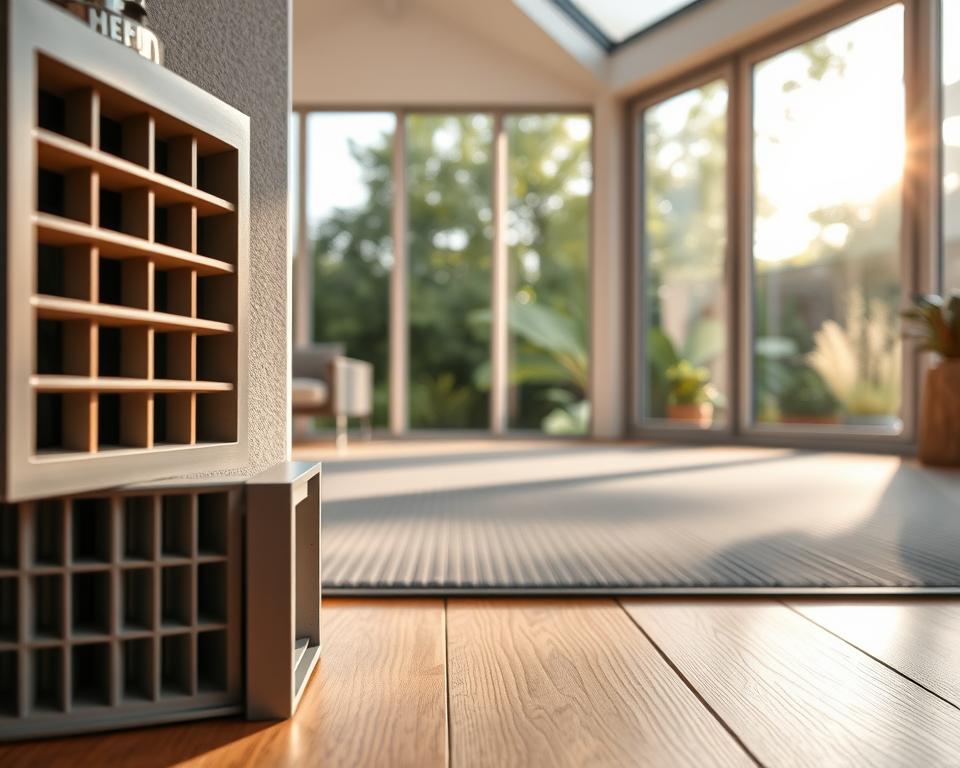
Why ventilation is crucial for moisture control
Even perfectly installed membranes cannot eliminate all humidity. Daily activities like breathing and cooking add moisture to your space. Without escape routes, this vapour condenses on cool surfaces.
Proper air exchange maintains healthy humidity levels below 60%. This prevents mould growth and protects your timber framework. British Building Regulations Part F mandates adequate ventilation in habitable spaces.
Strategic airflow complements your barrier’s protection. It addresses vapour that inevitably enters through door openings and minor gaps. This dual approach ensures comprehensive humidity management.
Types of ventilation systems for garden rooms
Passive systems offer simple, cost-effective solutions. Products like Perma-Vent provide discreet air exchange without drafts. These units fit unobtrusively into wall or roof designs.
Mechanical ventilation handles higher moisture loads effectively. MVHR systems recover heat while exchanging air. They’re ideal for frequently used spaces with heating installations.
Basic air bricks with pest mesh provide fundamental airflow. Position these at low levels to facilitate natural convection currents. This approach suits budget-conscious projects beautifully.
“Integrating ventilation with vapour barriers prevents interstitial condensation – the hidden danger that damages structures from within”
Balancing barrier protection with air circulation
Strategic placement maintains your membrane’s integrity. Install vents near moisture sources like floors or ceilings. Seal around edges thoroughly to prevent bypassing your barrier.
Low-level air bricks work well with timber constructions. They allow moist air escape without compromising thermal performance. Always use insect mesh to prevent pest entry.
Consider your room’s usage patterns when planning airflow. Heated spaces need more sophisticated moisture management. Simple occasional-use buildings require less complex systems.
This balanced approach ensures year-round protection. It combines physical barriers with intelligent air movement. Your garden retreat remains dry and comfortable through all seasons.
Common Installation Mistakes and How to Avoid Them
Even experienced DIY enthusiasts can encounter problems when installing protective systems. Recognising these frequent errors helps you achieve professional results without costly callbacks. Understanding what goes wrong prevents similar issues in your project.

Improper Placement and Sealing Errors
Installing your protective layer on the cold side causes serious issues. This mistake traps humidity within your framework, leading to potential rot. Always position membranes on the warm interior side for proper performance.
Inadequate sealing at joints creates drafts and moisture ingress. Use acoustic sealant with 200mm overlaps at all junctions. This approach maintains airtight protection throughout your structure.
Corners and edges require special attention during installation. These areas often develop gaps if not properly addressed. Double-check all perimeter seals before proceeding with further work.
Material Selection Pitfalls
Choosing generic products often leads to premature failure. Britain’s damp climate demands specific performance characteristics. Select materials based on dew-point calculations for your region.
Low-quality membranes may not provide sufficient vapour resistance. They can degrade quickly under temperature fluctuations. Invest in certified products that meet British standards for lasting protection.
Consider this comparison of common material options:
| Material Type | Proper Application | Common Mistakes |
|---|---|---|
| Polythene Sheets | Timber frame constructions | Insufficient thickness selection |
| Foil-backed Boards | Heated garden rooms | Poor tape sealing at joints |
| DPM Membranes | Concrete base installations | Inadequate ground coverage |
Ventilation Integration Mistakes
Neglecting airflow can cause interstitial condensation issues. This hidden damage occurs within wall cavities and roof spaces. Balance your sealed protection with appropriate ventilation systems.
Simple trickle vents often provide sufficient air exchange. Mechanical ventilation handles higher humidity loads in frequently used spaces. Integrate these systems during initial design rather than adding them later.
“A Manchester garden gym developed black mould within six months due to skipped sealing. The solution involved complete replacement with foil-backed insulation and proper ventilation integration”
Floor-specific issues demand particular attention. Always install a damp-proof membrane beneath concrete slabs. This prevents ground moisture from compromising your space’s integrity.
Online dew-point calculators help determine optimal material selection. Apply sealant meticulously at all connections. Ensure ventilation forms part of your overall design strategy.
Avoiding these common errors saves both time and money. It prevents callbacks and expensive remediation work. Attention to detail during installation ensures long-term performance.
Conclusion: Protecting Your Garden Room Investment
Your garden retreat’s longevity hinges on proper protection against humidity. A well-installed moisture barrier safeguards your timber framework from rot and decay. This ensures your space remains comfortable throughout the year.
Following our guide’s steps guarantees optimal results. From material selection to ventilation integration, each phase matters. Proper installation prevents costly future repairs and maintains your property’s value.
Investing in quality components pays dividends over time. It enhances energy efficiency and meets UK building regulations. Your garden room becomes a durable extension of your home.
Apply these insights to create a dry, welcoming environment. Enjoy your beautifully protected space for years to come.
FAQ
Why is a vapour barrier necessary for my garden room floor?
A vapour barrier is essential to protect your timber structure from moisture damage. It prevents damp from rising through the concrete slab, reducing the risk of rot and maintaining the integrity of your garden room. Proper installation ensures year-round defence against UK weather conditions.
What is the difference between a vapour barrier and a breathable membrane?
A vapour barrier is designed to block moisture from passing through, typically installed on the warm side of insulation. A breathable membrane, however, allows moisture vapour to escape while resisting liquid water, often used in roofs and walls to manage condensation.
How do I choose the right materials for my moisture barrier?
Select high-quality polythene sheets with appropriate thickness, usually 1000 gauge, or consider foil-backed insulation boards for added thermal resistance. Ensure you use compatible sealing tapes and adhesives to maintain an airtight seal, crucial for long-term performance.
What common mistakes should I avoid during installation?
Avoid improper placement of the barrier, ensure all joints are thoroughly sealed, and do not compromise on ventilation. Using inferior materials or incorrect fastening techniques can lead to gaps, reducing effectiveness and potentially causing damage over time.
How does ventilation integrate with a moisture barrier system?
Ventilation is vital to control humidity levels and prevent condensation buildup. Incorporate adequate air circulation through designed vents or systems, ensuring a balance between barrier protection and moisture management to safeguard your garden room’s structure.