How to Plant a Raised Bed with Various Herbs – Tips

Transforming your garden into a vibrant raised bed herb garden offers UK gardeners an exceptional opportunity to cultivate fresh, flavourful herbs right outside your kitchen door. A raised bed herb garden provides superior growing conditions, enabling you to create a productive green space even in limited areas.
Planting herbs in raised beds allows you to overcome traditional gardening challenges by giving you complete control over soil quality, drainage, and growing environment. Whether you’re a culinary enthusiast or herbal remedy lover, these specialised gardening tips will help you design a thriving herb cultivation space.
Gardening experts recognise raised bed herb gardening as a sophisticated approach to growing herbs. By implementing strategic planting techniques and understanding your local climate, you can develop a lush, productive herb garden that supplies fresh ingredients throughout the growing season.
Inhaltsverzeichnis
Key Takeaways
- Create a controlled growing environment with raised bed herb gardens
- Maximise limited garden spaces through strategic herb cultivation
- Improve soil quality and drainage for healthier herb growth
- Simplify herb maintenance and harvesting processes
- Enhance culinary and medicinal herb accessibility
Understanding the Benefits of Raised Bed Herb Gardening
Raised bed gardening transforms the way you cultivate herbs in your garden. The benefits of raised beds extend far beyond traditional ground-level planting, offering gardeners a sophisticated approach to herb cultivation. These elevated growing spaces provide remarkable advantages that make them an ideal solution for herb enthusiasts across the United Kingdom.
Raised bed advantages become immediately apparent when you consider the unique challenges of herb gardening. The strategic design addresses multiple gardening concerns, creating an optimal environment for your favourite culinary and medicinal plants.
Improved Drainage and Soil Control
Herb garden drainage is crucial for successful plant growth. Raised beds offer exceptional control over soil conditions, allowing you to:
- Create perfect soil mixtures tailored to specific herb requirements
- Prevent waterlogging in heavy clay soils
- Ensure optimal moisture levels for Mediterranean herbs
- Protect root systems from excessive moisture
Easier Access and Maintenance
Your gardening experience becomes significantly more comfortable with raised beds. The elevated design reduces physical strain, making herb cultivation accessible for gardeners of all ages and mobility levels. Key benefits include:
- Reduced bending and stretching
- Simplified weeding and harvesting
- Clear garden boundaries preventing herb spread
- Neat, organised gardening space
Extended Growing Season Possibilities
Raised beds offer a unique microclimate that extends your herb growing potential. The elevated design allows soil to warm more quickly in spring, providing an earlier start to your herb cultivation. This means you can enjoy fresh herbs for a longer period, maximising your garden’s productivity and culinary potential.
Choosing the Right Location for Your Raised Herb Bed
Selecting the perfect herb garden location is crucial for creating a thriving herb garden. The right positioning of raised beds can make a significant difference in your herbs’ growth and productivity. Most culinary herbs require 6-8 hours of direct sunlight daily, making south-facing areas in your garden ideal for positioning raised beds.
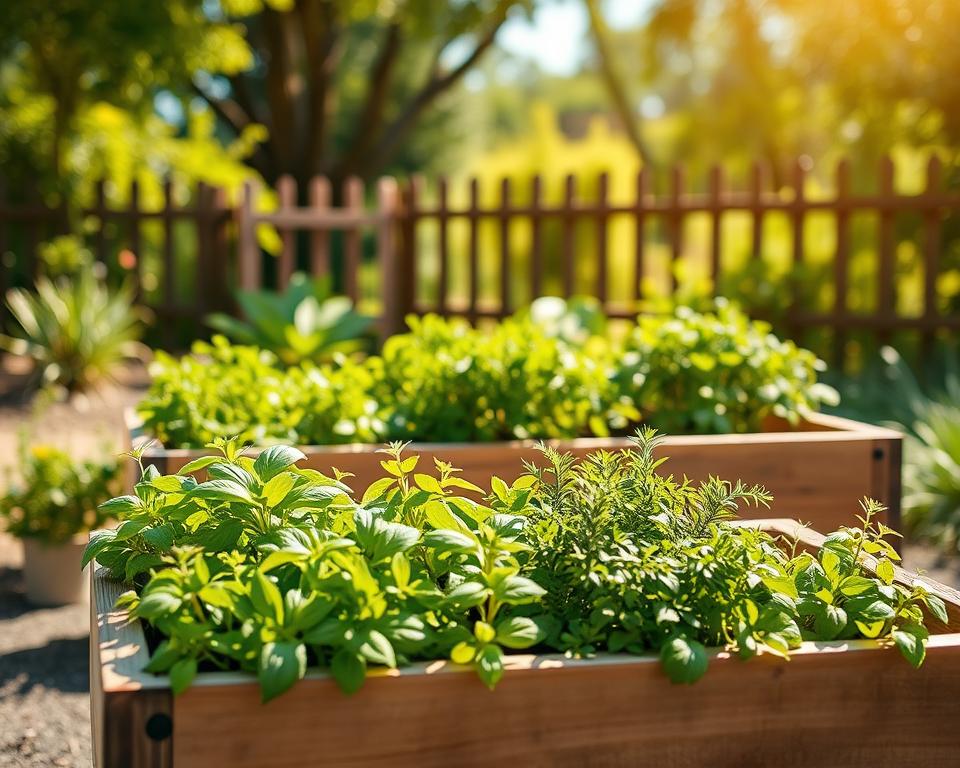
When considering sunlight for herbs, evaluate your garden’s microclimates carefully. Look for spots that offer:
- Maximum sun exposure throughout the day
- Protection from harsh winds
- Proximity to your kitchen for easy harvesting
- Access to a water source
Your raised bed’s location should balance several key factors:
| Location Consideration | Recommended Approach |
|---|---|
| Sunlight | Minimum 6 hours direct sunlight |
| Accessibility | Close to kitchen, easy to reach |
| Ground Level | Flat, well-drained area |
| Wind Exposure | Moderate air circulation |
Avoid low-lying areas where cold air settles and frost develops early. Positioning raised beds requires strategic thinking about your garden’s unique landscape. Ensure you can comfortably reach all areas without stepping into the growing space, which could compact the soil and damage delicate herb roots.
By carefully selecting your herb garden location, you’ll create an optimal environment for growing healthy, productive herbs right in your own garden.
Selecting the Best Materials for Your Raised Bed Construction
Choosing the right materials for your raised bed is crucial for creating a successful herb garden. The selection impacts not only the durability of your garden but also the health of your herbs. Your raised bed materials will determine how long your garden thrives and how well your herbs grow.
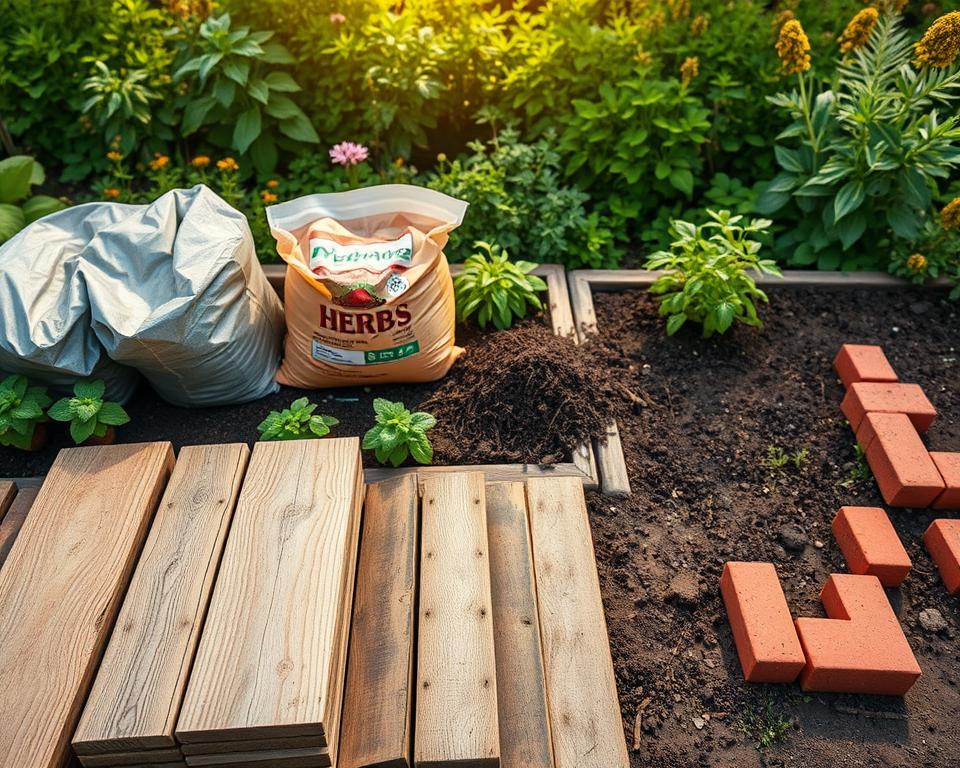
When considering raised bed materials, several options stand out for herb cultivation:
- Cedar raised beds: Naturally rot-resistant and chemical-free
- Untreated wood for herbs: Safe and environmentally friendly
- Composite materials: Durable and low-maintenance
- Galvanised steel: Modern and long-lasting
Wood Options and Treatment Considerations
Cedar is the top choice for raised bed construction. This naturally rot-resistant wood provides excellent durability without chemical treatments. Untreated wood for herbs ensures you’re not introducing harmful chemicals into your growing environment.
| Material | Pros | Cons |
|---|---|---|
| Cedar | Natural rot resistance | Higher initial cost |
| Larch | Naturally durable | Limited availability |
| Oak | Extremely long-lasting | Heavy and expensive |
Alternative Materials for Longevity
Beyond traditional wood, you can explore alternative raised bed materials. Composite lumber made from recycled materials offers an eco-friendly solution. Galvanised steel provides a contemporary look with exceptional durability. Remember to consider your local climate and garden aesthetic when selecting materials.
Key considerations include cost, longevity, and potential chemical interactions with your herb soil. Prioritise materials that support healthy herb growth and complement your garden design.
Preparing the Perfect Soil Mix for Herb Cultivation
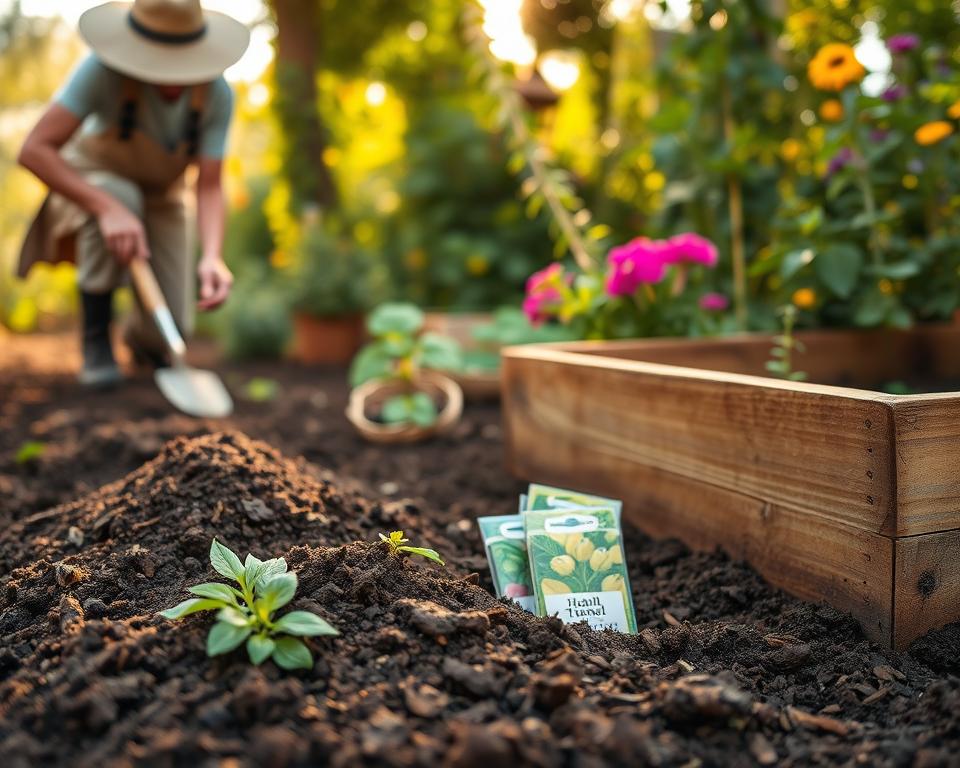
Creating the ideal herb garden soil is crucial for a thriving raised bed garden. Your potting mix for herbs requires careful consideration to ensure optimal growth and flavour. Most herbs demand specific soil conditions that differ from typical vegetable gardens.
The foundation of successful soil preparation involves crafting a well-draining, nutrient-balanced mix. Your herb garden soil should include:
- 60% high-quality topsoil or loam
- 30% organic compost
- 10% horticultural grit or sharp sand
Mediterranean herbs like lavender and rosemary prefer leaner soil conditions. For these speciality plants, adjust your soil mix by increasing the grit proportion to 20-30%. This modification ensures excellent drainage and mimics their native growing environments.
Soil pH plays a critical role in herb cultivation. Most herbs thrive in slightly acidic to neutral conditions, with an ideal pH range between 6.0 and 7.0. Test your soil to confirm its current state and make necessary adjustments before planting.
Pro tip: Avoid overly rich soil, as this can reduce the essential oils and flavour intensity of your herbs.
When preparing your raised bed, consider adding a layer of cardboard at the base to suppress weeds while maintaining drainage. Fill the bed shortly before planting to prevent soil compaction and settling.
How to Plant a Raised Bed with Various Herbs – Tips
Creating a thriving herb garden in your raised bed requires careful planning and strategic planting techniques. Your herb planting guide will help you transform a simple garden space into a productive and beautiful herbal sanctuary.
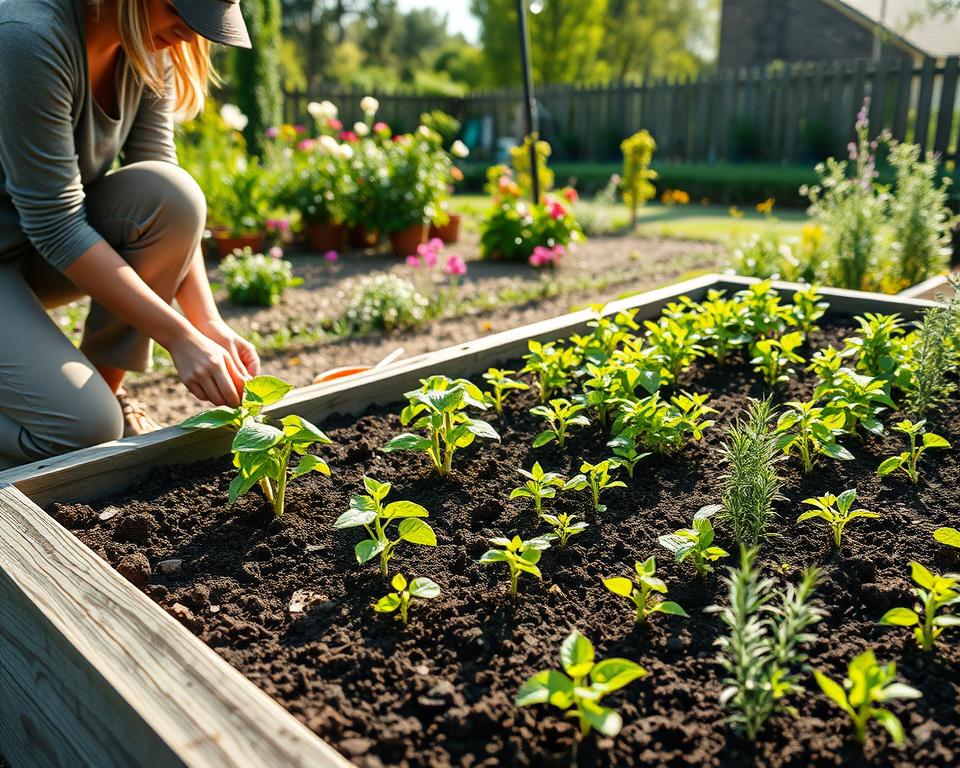
Successful herb cultivation depends on understanding the specific needs of different plant varieties. Your approach to herb spacing and planting techniques will directly impact the health and yield of your garden.
Spacing Requirements for Different Herb Varieties
Proper herb spacing is crucial for healthy plant development. Here’s a comprehensive guide to help you plan your raised bed:
- Compact herbs (thyme, chives): 15-20 cm apart
- Medium-sized herbs (parsley, coriander): 20-30 cm apart
- Large herbs (rosemary, fennel): 45-60 cm apart
Companion Planting Strategies for Herbs
Maximise your raised bed’s potential by implementing smart companion planting techniques:
| Herb Combination | Benefits |
|---|---|
| Basil + Rosemary | Complementary root depths, maximises bed space |
| Parsley + Oregano | Balances moisture requirements |
| Mint | Requires separate containment to prevent spreading |
“In herb gardening, strategic placement is as important as the herbs themselves.” – UK Gardening Expert
By following these herb planting techniques, you’ll create a vibrant, productive raised bed that provides fresh herbs throughout the growing season.
Best Herbs for Raised Bed Growing in the UK Climate
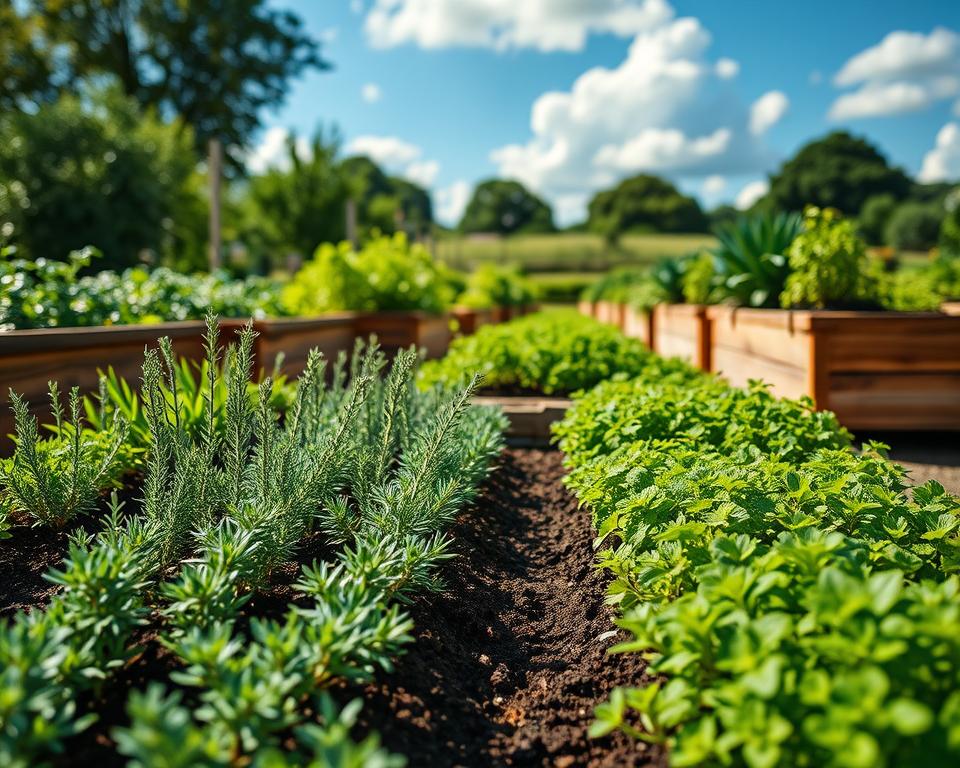
Selecting the right herbs for your raised bed can transform your British garden into a vibrant culinary paradise. UK herb varieties thrive in raised beds, offering gardeners exceptional growing conditions that combat the challenging British climate.
Perennial herbs UK gardeners love are perfect for creating a reliable herb garden. These robust plants provide year-round interest and flavour:
- Rosemary – A Mediterranean favourite that adapts well to British conditions
- Thyme – Multiple varieties offering versatile ground cover
- Sage – Resilient and aromatic
- Chives – Easy to grow and wonderfully productive
British climate herbs require strategic planting. Raised beds offer excellent drainage and soil control, making them ideal for Mediterranean herbs that typically struggle in heavy UK soils.
“A well-planned herb garden is a gift that keeps on giving” – Traditional British Gardening Wisdom
For maximum success, consider these top recommendations:
- Choose compact varieties suited to raised beds
- Protect tender herbs during winter months
- Practice succession planting for continuous harvest
Your raised bed can become a thriving herb garden with careful selection and maintenance, providing fresh flavours for your culinary adventures throughout the year.
Watering Techniques for Raised Bed Herb Gardens
Mastering watering herbs is crucial for maintaining a thriving raised bed herb garden. The unique structure of raised beds demands a specialised approach to herb garden moisture management. Understanding the right watering techniques can transform your herb cultivation from mediocre to magnificent.
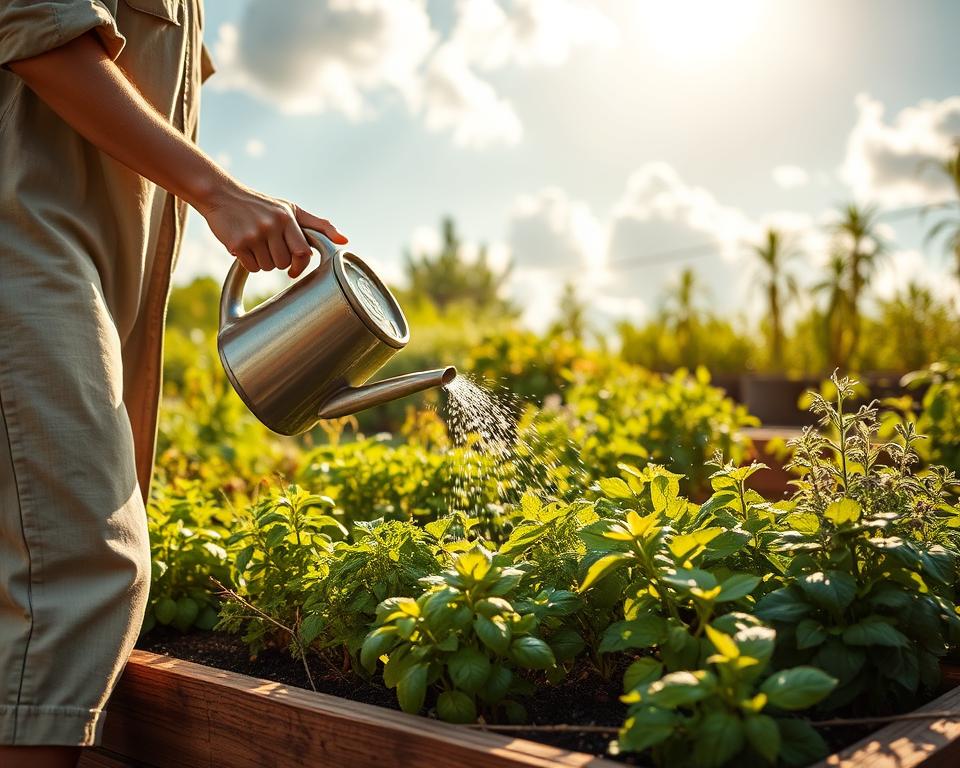
Successful herb gardens require careful attention to moisture levels. Different herbs have varying water requirements, making a nuanced watering strategy essential.
Establishing a Consistent Watering Schedule
Creating an effective watering routine involves several key considerations:
- Check soil moisture by inserting your finger 5cm deep
- Water early morning to prevent fungal diseases
- Avoid midday watering to reduce evaporation
- Use the “soak and dry” method for most herbs
Irrigation Systems for Raised Beds
Drip irrigation offers an excellent solution for maintaining consistent herb garden moisture. These systems provide several advantages:
- Direct water delivery to root zones
- Minimal water waste
- Automated watering capabilities
- Reduced risk of leaf diseases
Mediterranean herbs like rosemary and thyme prefer drier conditions, while parsley and basil require more frequent moisture. By understanding each herb’s specific needs, you can create an optimal watering strategy that promotes healthy growth and abundant harvests.
Pro tip: Mulching with gravel or organic materials helps conserve moisture and prevents soil splash, protecting your precious herbs from unnecessary stress.
Fertilising and Feeding Your Herb Garden Throughout the Season
Nurturing your herb garden requires a delicate balance of herb nutrition that supports healthy growth without compromising flavour. Different herbs have unique feeding requirements, making it crucial to understand their specific needs for optimal cultivation.
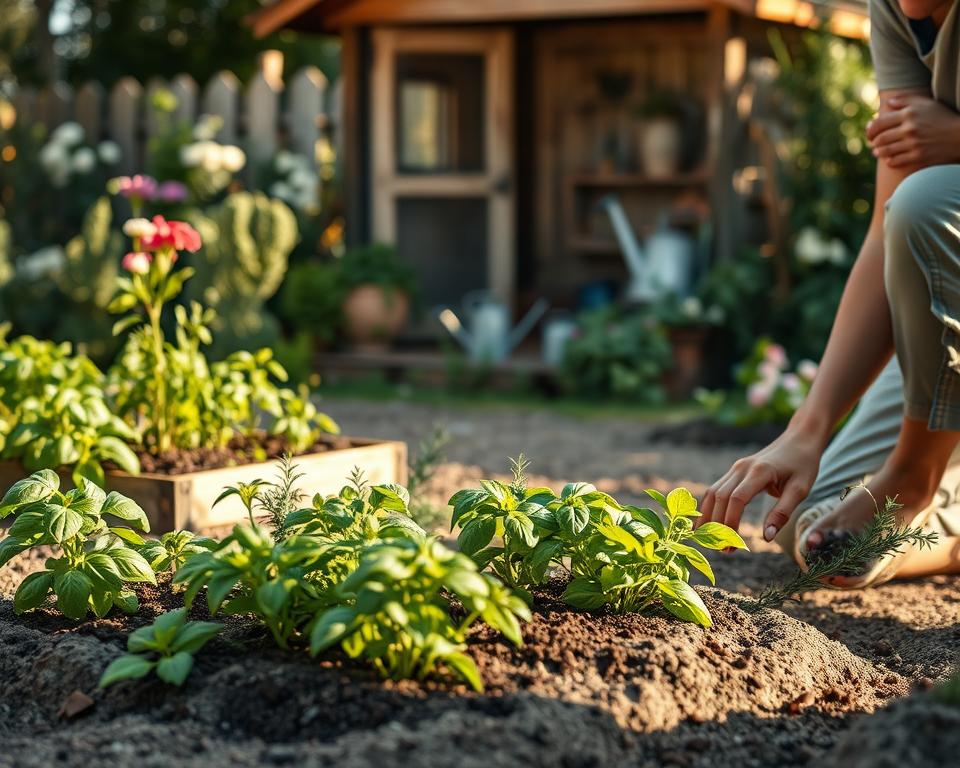
Mediterranean herbs like rosemary and thyme typically thrive in lean conditions. They rarely need extensive feeding and prefer minimal organic fertiliser. In contrast, leafy herbs such as basil and parsley benefit from more frequent nutrition throughout their growing season.
- Apply well-rotted compost as an annual top dressing
- Use liquid seaweed feed diluted to half strength
- Implement fish emulsion for balanced herb nutrition
Your feeding herbs strategy should adapt to the UK growing season. Begin fertilising in April when plant growth resumes, continue monthly during summer, and stop by late August to allow plants to prepare for winter.
| Herb Type | Fertilisation Frequency | Recommended Organic Fertiliser |
|---|---|---|
| Mediterranean Herbs | Annually | Compost top dressing |
| Leafy Herbs | Monthly | Liquid seaweed |
Watch for nutrient deficiency signs like yellowing lower leaves or purple-tinged foliage. Regular harvesting can stimulate new growth, potentially reducing the need for additional feeding. Avoid synthetic high-nitrogen fertilisers that might compromise your herbs’ essential oils and flavour.
Pest Management and Disease Prevention in Raised Herb Beds
Maintaining a healthy raised herb garden requires proactive pest management and disease prevention strategies. While herbs are generally more resilient than other garden plants, they can still face challenges from various herb pests and diseases. Understanding how to protect your herb garden organically will ensure a thriving and productive harvest.
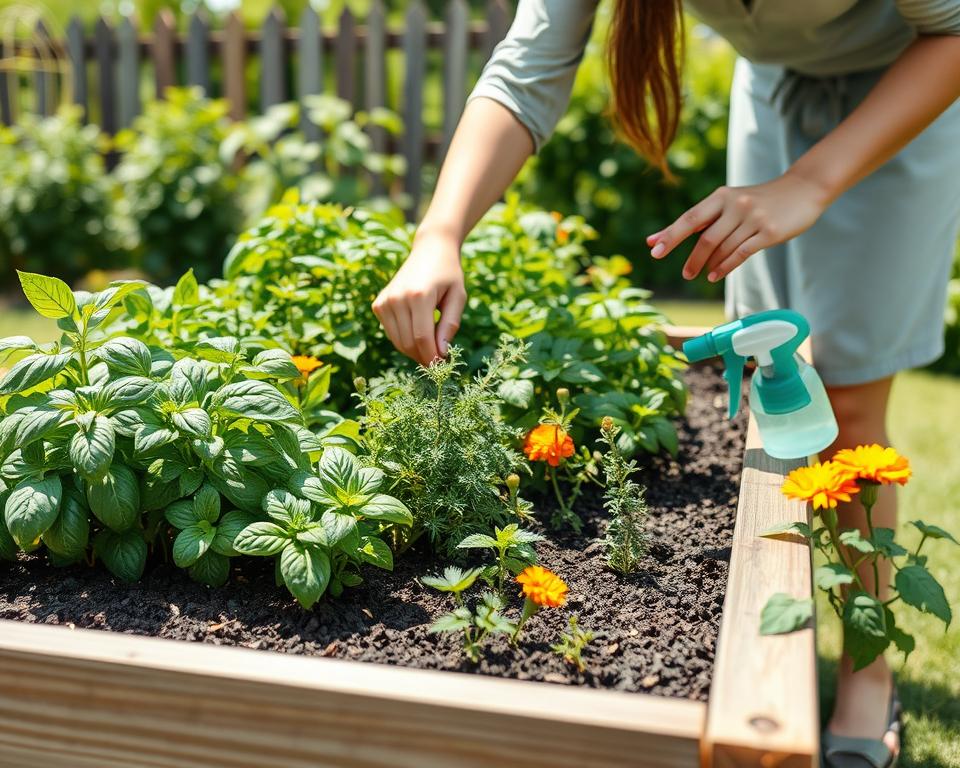
Natural Pest Control Methods
Organic pest control is crucial for maintaining a healthy herb garden. Different strategies can help you manage herb pests effectively:
- Encourage beneficial insects like ladybirds and lacewings that naturally control pest populations
- Use strong water jets to dislodge aphids from herb plants
- Apply organic insecticidal soap for persistent infestations
- Hand-pick larger pests such as rosemary beetles
Recognising Common Herb Diseases
Early detection of herb diseases can prevent widespread damage to your raised bed. Watch for these common issues:
- Powdery mildew: White coating on leaves, particularly affecting mint and sage
- Rust: Orange pustules on mint leaves
- Root rot: Wilting plants despite moist soil conditions
Prevention is key in managing herb diseases. Implement cultural practices like maintaining proper spacing, avoiding overhead watering, and removing affected plant material promptly. By staying vigilant and using organic pest control methods, you can keep your raised herb bed healthy and productive.
Harvesting and Pruning Techniques for Maximum Yield

Mastering harvesting herbs is crucial for maintaining a productive garden. Your approach to pruning techniques can significantly impact your herb yield and plant health. By understanding the right methods, you’ll ensure continuous growth and abundant harvests throughout the season.
Timing is everything when harvesting herbs. Aim to collect your herbs in the morning after the dew has dried, when essential oils are most concentrated. This ensures maximum flavour and potency for both culinary and medicinal uses.
- Use sharp, clean secateurs or scissors for precise cuts
- Harvest no more than one-third of the plant at a time
- Cut just above a leaf node to encourage branching
Different herbs require specific harvesting techniques. For leafy herbs like basil and parsley, pinch out the growing tips to promote bushier growth. Chives can be cut down to 5cm above the soil level for complete regeneration. Woody herbs need careful pruning into green growth to maintain their vitality.
“The art of herb harvesting is about balance – taking what you need while ensuring the plant’s continued health and productivity.”
Preservation is key to maximising your herb yield. Try these methods:
- Air-dry herbs by hanging bundles in a warm, dark, ventilated space
- Freeze herbs in ice cube trays with water or oil
- Create herb butters and pestos for long-term storage
For perennial herbs, practice light pruning to maintain shape. Avoid hard cutting in autumn, which can stimulate vulnerable new growth before winter. When some herbs like coriander and dill go to seed, collect seed heads when they turn brown, ensuring thorough drying before storage.
Conclusion
Embarking on a raised bed herb gardening journey transforms your culinary experience and brings fresh flavours directly from your garden to your kitchen. This growing herbs guide has equipped you with essential knowledge to create a thriving herb garden that requires minimal effort but delivers maximum satisfaction.
Your raised bed maintenance strategy doesn’t need to be complicated. By focusing on key principles like proper soil preparation, strategic herb selection, and consistent care, you can develop a productive herb garden that suits the unique conditions of the UK climate. Start with a few versatile herbs like thyme, rosemary, and chives, and gradually expand your collection as your confidence grows.
The beauty of raised bed herb gardening lies in its accessibility and adaptability. Whether you’re a novice gardener or an experienced horticulturist, these elevated garden beds offer superior drainage, easier maintenance, and extended growing seasons. Your investment in creating a well-designed raised herb bed will reward you with fresh, aromatic herbs that elevate your cooking and provide immense personal satisfaction.
Remember, successful herb gardening is about patience, observation, and continuous learning. Each season brings new insights, and your raised bed will become a vibrant, productive space that reflects your growing skills and passion for gardening.
FAQ
What are the benefits of using a raised bed for growing herbs?
Raised beds offer numerous advantages for herb cultivation, including improved drainage, better soil control, easier access for maintenance, and an extended growing season. They warm up more quickly in spring, reduce back strain during gardening, and provide excellent containment for spreading herbs like mint.
How much sunlight do herbs need in a raised bed?
Most culinary herbs require six to eight hours of direct sunlight daily. In the UK, a south-facing location is ideal, ensuring your herbs receive adequate light throughout the growing season while avoiding areas with excessive shade from buildings or trees.
What is the best soil mix for a herb raised bed?
The ideal soil mix consists of approximately 60% quality topsoil, 30% compost or well-rotted manure, and 10% horticultural grit or sharp sand. This combination provides excellent drainage, organic nutrients, and optimal growing conditions for most Mediterranean and culinary herbs.
How often should I water herbs in a raised bed?
Most herbs prefer a “soak and dry” watering approach. Water deeply but infrequently, allowing the soil to dry out between waterings. Mediterranean herbs like rosemary and thyme require less frequent watering, while parsley and basil need more consistent moisture.
Which herbs grow best in raised beds in the UK climate?
Excellent herb choices for UK raised beds include hardy perennials like rosemary, thyme, sage, and chives, and productive annuals such as basil, parsley, coriander, and dill. Choose varieties specifically suited to British growing conditions for the best results.
Do I need to fertilise herbs in a raised bed?
Herbs generally require minimal fertilisation. Light feeding with organic options like well-rotted compost, liquid seaweed, or fish emulsion is sufficient. Avoid over-fertilising, as this can reduce the herbs’ essential oils and flavour intensity.
How can I prevent pests in my herb raised bed?
Implement natural pest control methods such as encouraging beneficial insects, using insecticidal soap, and maintaining good garden hygiene. Ensure proper spacing for air circulation, remove diseased plants promptly, and choose disease-resistant herb varieties when possible.
What is the best way to harvest herbs from a raised bed?
Harvest herbs in the morning after dew has dried, using clean, sharp secateurs. Cut no more than one-third of the plant at a time, just above a leaf node to encourage bushier growth. Regular harvesting promotes continuous production and prevents premature flowering.
Can I grow herbs in a raised bed year-round?
While some herbs are hardy perennials that survive UK winters, others are tender and require protection. Use techniques like mulching, bringing potted herbs indoors, or using cold frames to extend the growing season and protect more delicate herb varieties.
How deep should a raised herb bed be?
A raised bed height between 30-45 cm provides adequate root depth for most herbs while remaining comfortable to work with. This depth allows for proper drainage, root development, and easy access for planting, maintenance, and harvesting.