How to Build a Wooden Garden Table (DIY Guide)
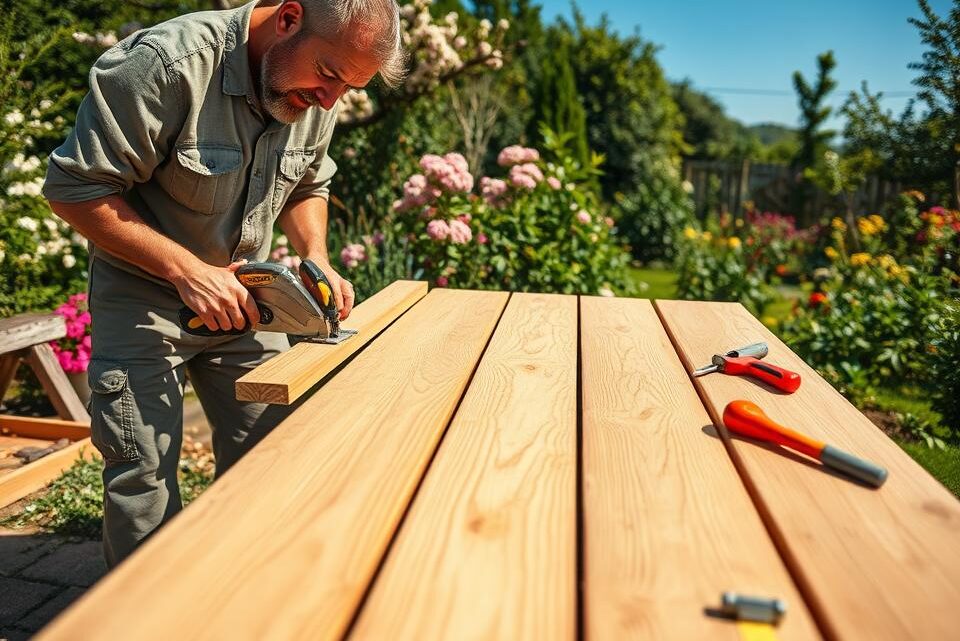
Creating your own wooden outdoor table is an exciting project that combines craftsmanship with practical garden furniture building skills. This comprehensive guide will walk you through every step of constructing a beautiful and durable garden table that will transform your outdoor living space.
Building a DIY garden table offers numerous benefits beyond simply saving money. You’ll gain the satisfaction of crafting a unique piece of furniture tailored precisely to your garden’s requirements. With careful planning and the right techniques, even those with limited woodworking experience can successfully complete this rewarding project.
The British climate demands robust outdoor furniture, and a well-constructed wooden table can withstand years of use. By following our detailed instructions, you’ll learn how to select appropriate materials, use the correct tools, and apply protective finishes that ensure your garden table remains beautiful and functional for seasons to come.
Inhaltsverzeichnis
Key Takeaways
- Create a personalised wooden outdoor table with basic woodworking skills
- Learn cost-effective techniques for garden furniture building
- Understand material selection for durability in British weather
- Gain confidence in DIY woodworking projects
- Develop practical skills for home and garden improvements
Planning Your Wooden Garden Table Project
Crafting the perfect wooden garden table begins long before you pick up your first tool. Successful outdoor furniture creation demands careful planning and strategic thinking about your garden space, design preferences, and project parameters.
Your garden table design will serve as the centrepiece of your outdoor living area. Selecting the right outdoor table plans requires thoughtful consideration of several key factors that will impact the final result.
Choosing the Right Design for Your Space
When exploring garden furniture dimensions, consider these critical aspects:
- Available garden area
- Intended usage (dining, relaxation, entertainment)
- Existing landscape features
- Aesthetic compatibility with surrounding environment
Measuring Your Garden Area
Accurate measurements are crucial for creating a functional garden table. Use a measuring tape to assess your available space, remembering to leave adequate room for:
- Seating clearance
- Movement around the table
- Potential additional garden elements
Setting Your Budget and Timeline
Establishing realistic financial and time expectations helps ensure a smooth project. Break down potential expenses including:
- Wood materials
- Tools and equipment
- Finishing treatments
- Contingency funds
Your timeline should account for wood acclimatisation, construction periods, and potential weather interruptions typical in the British climate.
Essential Tools and Equipment for Building a Garden Table
Creating a stunning wooden garden table requires the right woodworking tools and DIY table equipment. Your carpentry essentials will make the difference between a professional-looking piece and an amateur project.
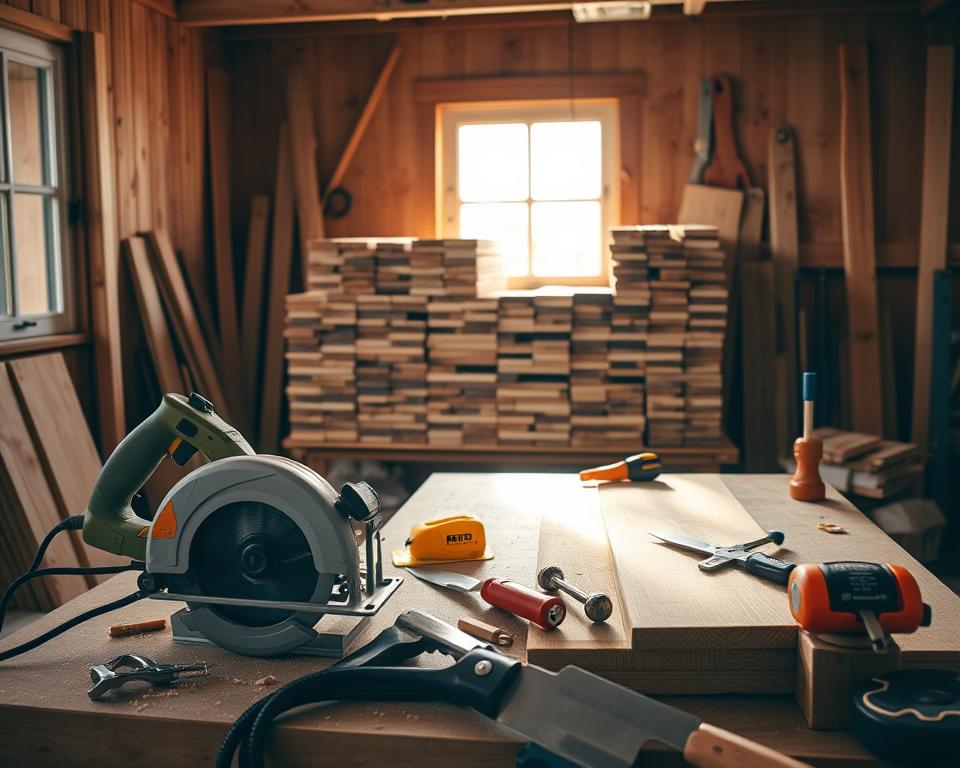
Before starting your garden table build, you’ll need to gather a comprehensive set of tools. Professional woodworkers and DIY enthusiasts alike rely on a mix of hand and power tools to achieve precise results.
Hand Tools You’ll Need
- Carpenter’s measuring tape
- Combination square
- Marking gauge
- Sharp chisels
- Handsaw
- Hammer
- Wood clamps
Power Tools for Efficient Construction
- Cordless drill
- Circular saw
- Random orbital sander
- Jigsaw
Safety should always be your priority when working with woodworking tools. Invest in quality protective gear to ensure a safe DIY experience.
Safety Equipment Checklist
- Safety glasses
- Dust mask
- Ear protection
- Work gloves
| Tool Category | Recommended Quality | Price Range |
|---|---|---|
| Hand Tools | Mid-range | £50-£150 |
| Power Tools | Professional Grade | £200-£500 |
| Safety Equipment | High Quality | £30-£80 |
Pro tip: You don’t need to buy everything new. Many DIY enthusiasts find excellent second-hand tools that work perfectly for garden furniture projects.
“The right tool makes every job easier and more enjoyable.” – Traditional Carpenter’s Wisdom
Selecting the Best Wood for Outdoor Furniture
Choosing the right timber is crucial for creating a durable and attractive garden table. Your outdoor timber selection will determine the longevity and performance of your furniture against the unpredictable British weather.
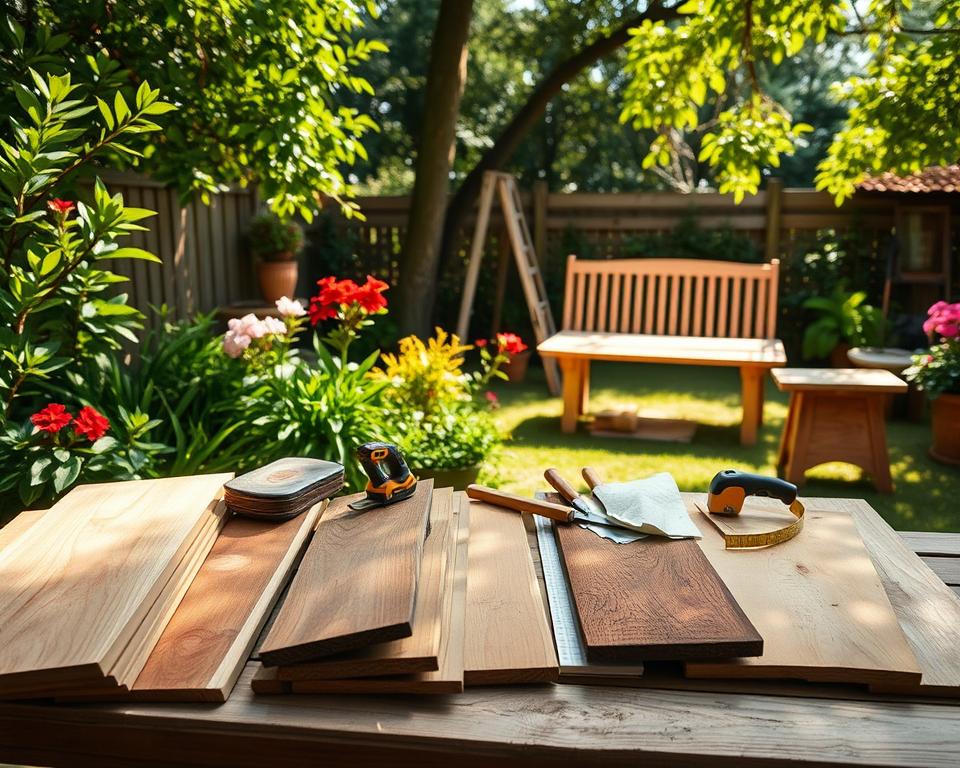
When embarking on your wooden garden table project, understanding the differences between wood types becomes essential. The choice between hardwood and softwood can significantly impact your furniture’s durability and maintenance requirements.
Hardwoods vs Softwoods: A Comparative Guide
Hardwoods offer exceptional weather-resistant wood qualities that make them ideal for outdoor furniture. Some top hardwood options include:
- Teak: Naturally oil-rich and extremely durable
- Oak: Dense and resistant to moisture
- Iroko: African hardwood with excellent weather resistance
Weather-Resistant Timber Options
For those seeking budget-friendly alternatives, softwoods can be an excellent choice when properly treated. Pressure-treated pine and larch provide robust options for outdoor furniture, especially when protected with appropriate finishes.
Consider these key factors in your outdoor timber selection:
- Natural wood resistance to rot and insects
- Climate suitability
- Maintenance requirements
- Sustainability of timber source
Pro tip: Always source FSC-certified timber to ensure environmental responsibility and quality.
Your final wood choice should balance durability, aesthetics, and budget, creating a garden table that will withstand British weather while maintaining its beautiful appearance for years to come.
Preparing Your Materials and Workspace
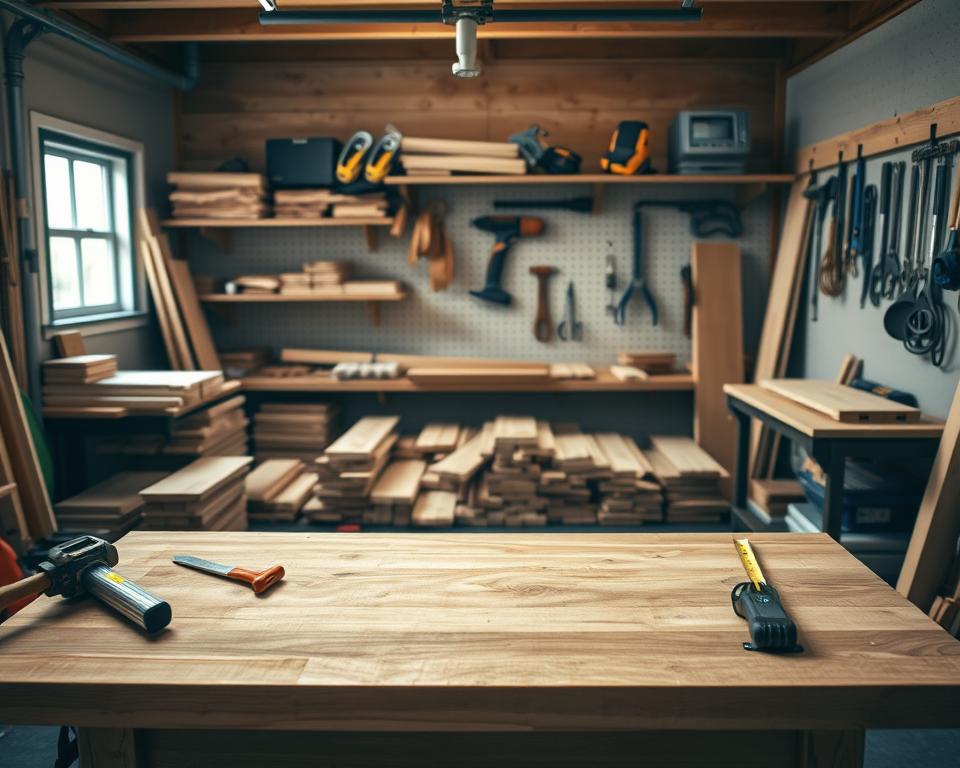
Creating a successful wooden garden table starts with meticulous workshop preparation. Your woodworking workspace must be carefully organised to ensure a smooth and efficient project from start to finish.
Timber acclimatisation is a crucial first step in your garden table construction. You’ll need to allow your selected timber to adjust to the environment for 48-72 hours before beginning work. This process prevents future warping and ensures the stability of your finished piece.
- Select a clean, well-lit workspace with good ventilation
- Ensure a level working surface for precise measurements
- Arrange tools within easy reach
- Clear the area of unnecessary clutter
Your workspace organisation should prioritise safety and efficiency. Gather all necessary tools and materials beforehand, including:
- Measuring tape
- Saw
- Sandpaper
- Protective safety gear
Inspect your timber carefully for any defects. Check each piece’s grain direction to maximise aesthetic appeal and structural integrity. Pre-drilling pilot holes can help prevent wood splitting during the construction process.
Pro tip: Keep your workspace clean by managing sawdust and offcuts immediately to prevent potential hazards and maintain a safe working environment.
Step-by-Step: Building Your Wooden Garden Table
Crafting a wooden garden table requires precision and careful timber table construction techniques. This guide will walk you through the essential steps of garden table assembly, ensuring you create a sturdy and attractive outdoor furniture piece.
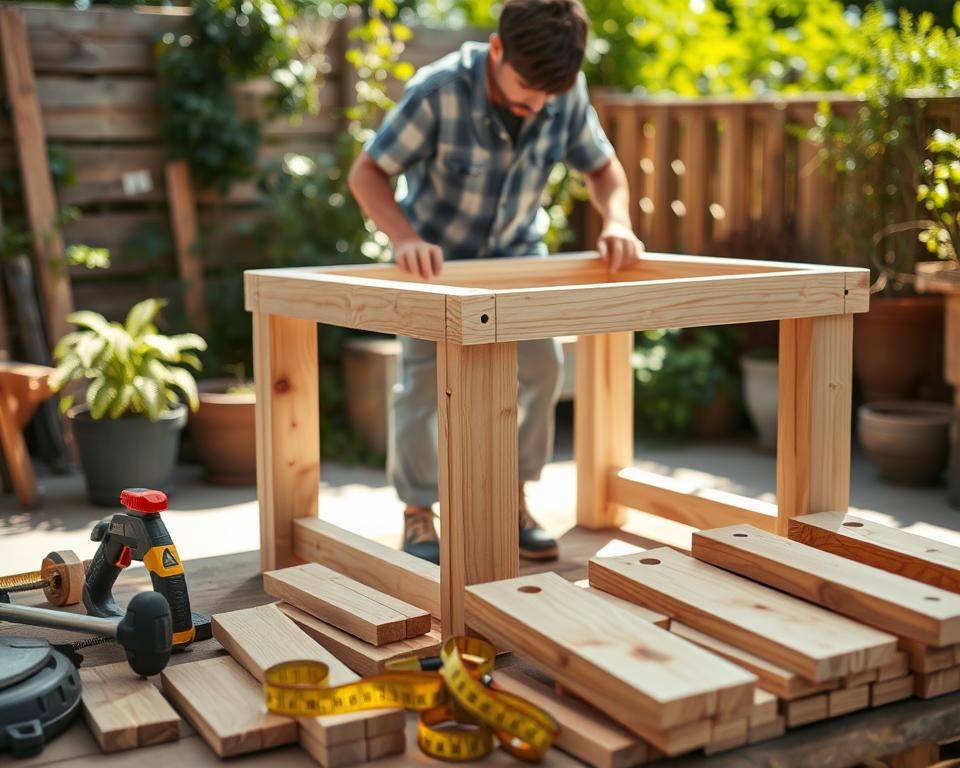
Before beginning your DIY table building project, gather all necessary tools and materials. Woodworking techniques are crucial for creating a professional-quality garden table that will withstand outdoor conditions.
Cutting the Tabletop Planks to Size
Accurate measurement is the foundation of successful woodworking. Follow these key steps for cutting tabletop planks:
- Measure twice, cut once to ensure precision
- Use a straight edge guide for clean cuts
- Mark cutting lines clearly with a sharp pencil
- Wear safety glasses during cutting
Constructing the Table Frame
The frame provides structural integrity for your garden table. Consider these joinery methods:
| Joinery Method | Skill Level | Strength Rating |
|---|---|---|
| Mortise and Tenon | Advanced | High |
| Lap Joints | Intermediate | Medium |
| Pocket Hole Screws | Beginner | Good |
Assembling the Legs and Support Beams
Stability is key when creating table legs. Ensure legs are perfectly level and braced to prevent wobbling. Calculating precise angles for splayed legs can enhance overall table stability.
Attaching the Tabletop Securely
When attaching the tabletop, consider wood movement and expansion. Use techniques that allow slight movement while maintaining a secure connection. Space planks appropriately and choose fastening methods that accommodate natural wood characteristics.
Sanding and Smoothing Your Garden Table
Achieving a professional finish on your wooden garden table requires mastering wood sanding techniques. Surface preparation is crucial for creating a smooth, splinter-free surface that looks and feels exceptional.
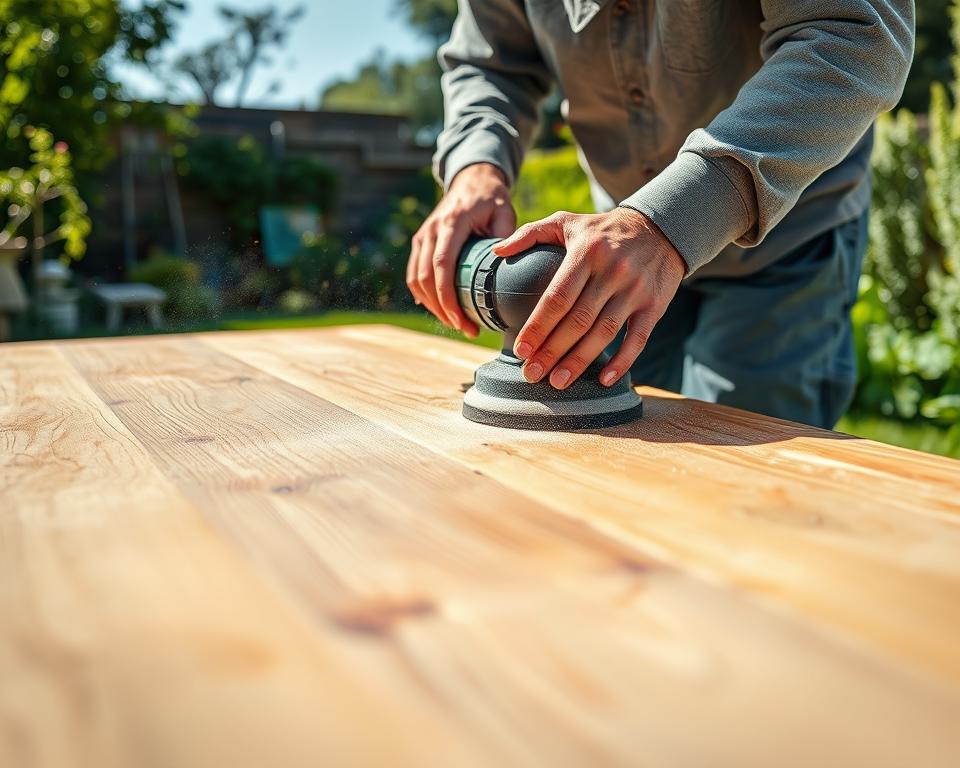
Your furniture smoothing process should follow a strategic approach using different sandpaper grits. Start with coarser grits and progressively move to finer ones for the best results.
- Begin with 80-grit sandpaper for initial rough surface removal
- Progress to 120-grit for general surface preparation
- Finish with 180 or 240-grit for a silky-smooth finish
When sanding, always work along the wood grain to prevent unsightly scratches. Pay extra attention to edges and corners where hands will frequently touch.
| Sandpaper Grit | Purpose | Technique |
|---|---|---|
| 80-grit | Initial smoothing | Remove rough surfaces |
| 120-grit | Surface preparation | Even out minor imperfections |
| 180-240-grit | Final smoothing | Create ultra-smooth surface |
“Proper sanding transforms raw wood into a professional-looking piece of furniture.” – Woodworking Craftsman
Remember to remove dust thoroughly between grit changes using a tack cloth or slightly damp rag. This ensures a clean surface and better finish adhesion, ultimately extending your garden table’s lifespan.
Applying Protective Finishes and Treatments
Protecting your handcrafted wooden garden table requires careful selection of wood treatment outdoor solutions. The right weatherproof coating will safeguard your furniture against harsh environmental conditions, ensuring longevity and maintaining its beautiful appearance.
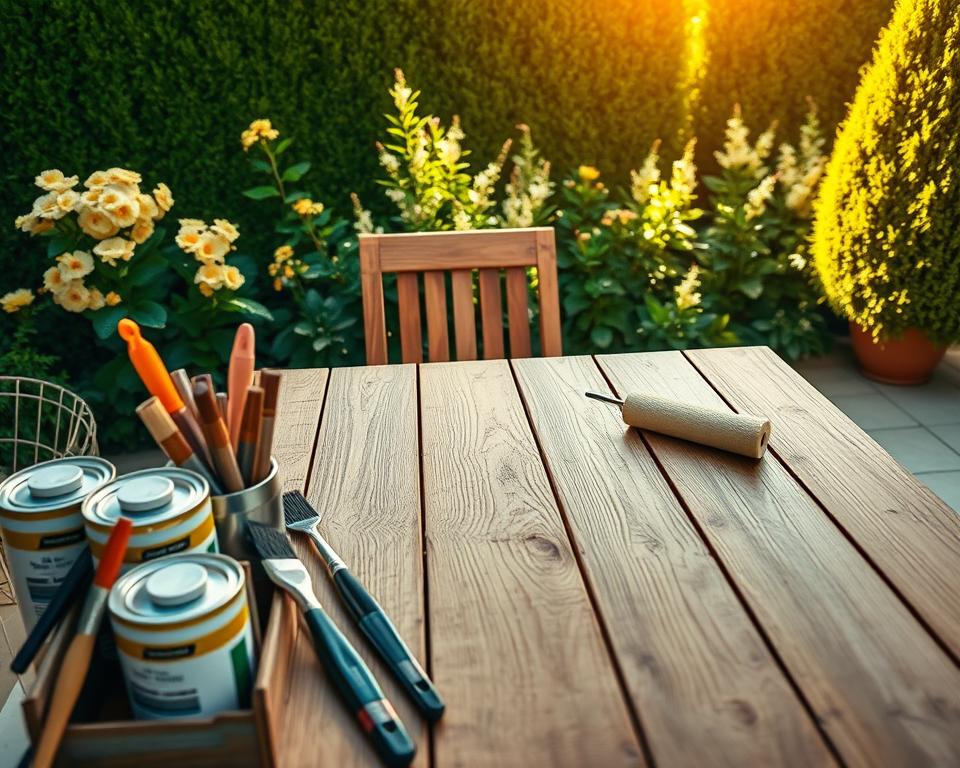
Your garden furniture finishing strategy depends on several crucial factors. Understanding the different protective options will help you make an informed decision that suits your specific needs.
Choosing Between Oil, Varnish, and Paint
When selecting a protective finish, you’ll encounter three primary options:
- Natural Oils: Penetrate wood fibres, enhancing grain and providing moderate protection
- Varnishes: Create a robust surface film with excellent water resistance
- Exterior Paints: Offer complete colour coverage and comprehensive weather protection
Application Techniques for Long-Lasting Protection
Achieving a professional weatherproof coating requires attention to detail:
- Prepare the surface by sanding thoroughly
- Choose dry days with moderate temperatures
- Apply thin, even coats
- Allow adequate drying time between applications
- Protect end grain and undersides carefully
Professional tip: Most finishes require two to three coats for optimal protection. Work in a dust-free environment to ensure a smooth, professional result.
Common Mistakes to Avoid When Building Garden Furniture
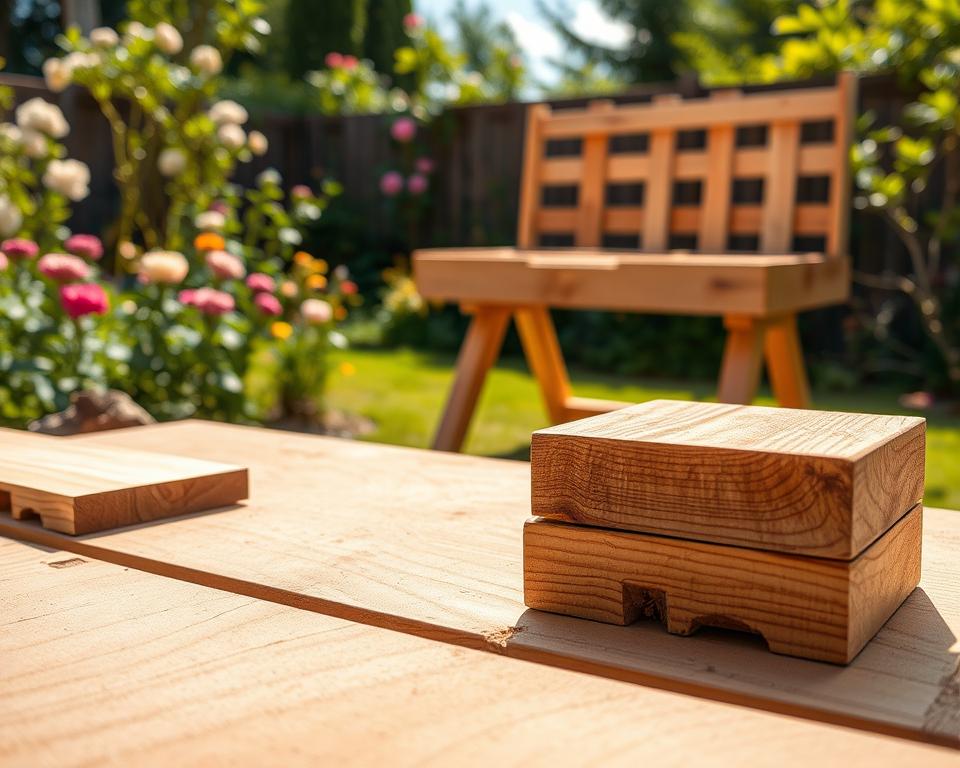
Building a garden table comes with potential woodworking errors that can compromise your project’s quality and durability. Understanding these DIY furniture mistakes will help you create a robust and long-lasting piece of outdoor furniture.
Woodworking errors often stem from inadequate preparation and rushed techniques. Your garden table’s success depends on avoiding several critical mistakes that can undermine its structural integrity and aesthetic appeal.
- Using improperly dried timber that leads to warping and splitting
- Neglecting structural bracing, which results in unstable tables
- Poor joint construction weakening the overall structure
- Ignoring wood movement allowances during construction
Measurement precision is crucial in garden table projects. Measure twice, cut once isn’t just an old carpenter’s saying—it’s a fundamental rule for preventing costly DIY furniture mistakes.
| Common Garden Table Problems | Prevention Strategies |
|---|---|
| Timber Warping | Use kiln-dried, well-seasoned wood |
| Weak Joints | Use appropriate woodworking techniques and reinforcements |
| Rust-prone Fasteners | Select stainless steel or galvanised hardware |
Finishing techniques can significantly impact your garden table’s longevity. Rushing the finishing process or applying coats in unsuitable weather conditions can lead to subpar results.
Professional woodworkers know that patience and precision are key to creating exceptional outdoor furniture.
By understanding these potential woodworking errors, you’ll be better equipped to create a garden table that withstands the elements and provides years of enjoyment.
Maintaining Your Wooden Garden Table
Proper garden table maintenance is crucial for preserving the beauty and longevity of your outdoor furniture. A well-maintained wooden table can withstand the unpredictable British weather and continue to be a centrepiece of your garden for years to come.
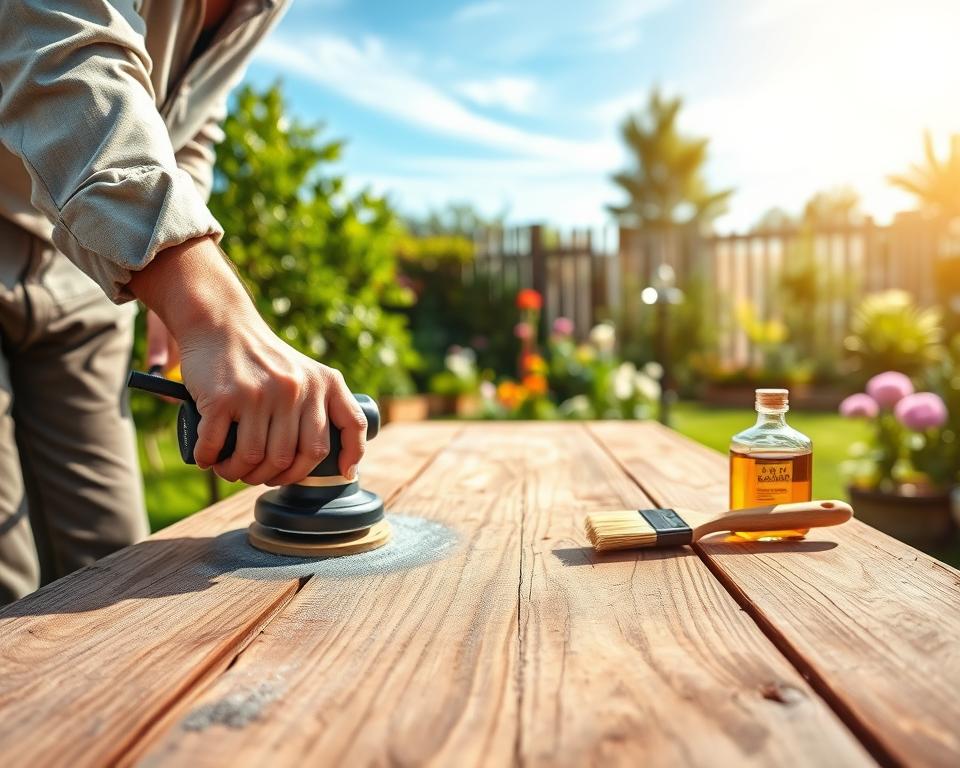
Outdoor furniture care requires a systematic approach that adapts to seasonal changes. Your wooden garden table needs specific attention throughout the year to protect it from moisture, sun damage, and general wear.
Seasonal Cleaning and Protection Strategies
Effective wood furniture cleaning involves more than just occasional wiping. Follow these essential maintenance tips:
- Spring: Inspect the table for winter damage
- Summer: Protect from intense sunlight and heat
- Autumn: Prepare for wet and cold conditions
- Winter: Store or cover thoroughly
Addressing Minor Damage and Wear
Quickly addressing small issues prevents more significant problems. Learn to:
- Spot-sand minor scratches
- Apply wood filler for small cracks
- Tighten loose joints
- Refresh protective finishes annually
Regular maintenance not only preserves your garden table’s appearance but also extends its functional life. Invest a little time each season, and you’ll enjoy a beautiful, sturdy outdoor centrepiece for many years.
Customising Your Table with Additional Features
Transforming your custom garden table into a unique outdoor masterpiece involves creative personalisation and thoughtful outdoor furniture modifications. Your DIY wooden table can become more than just a simple dining surface by incorporating innovative design elements that enhance both functionality and aesthetic appeal.
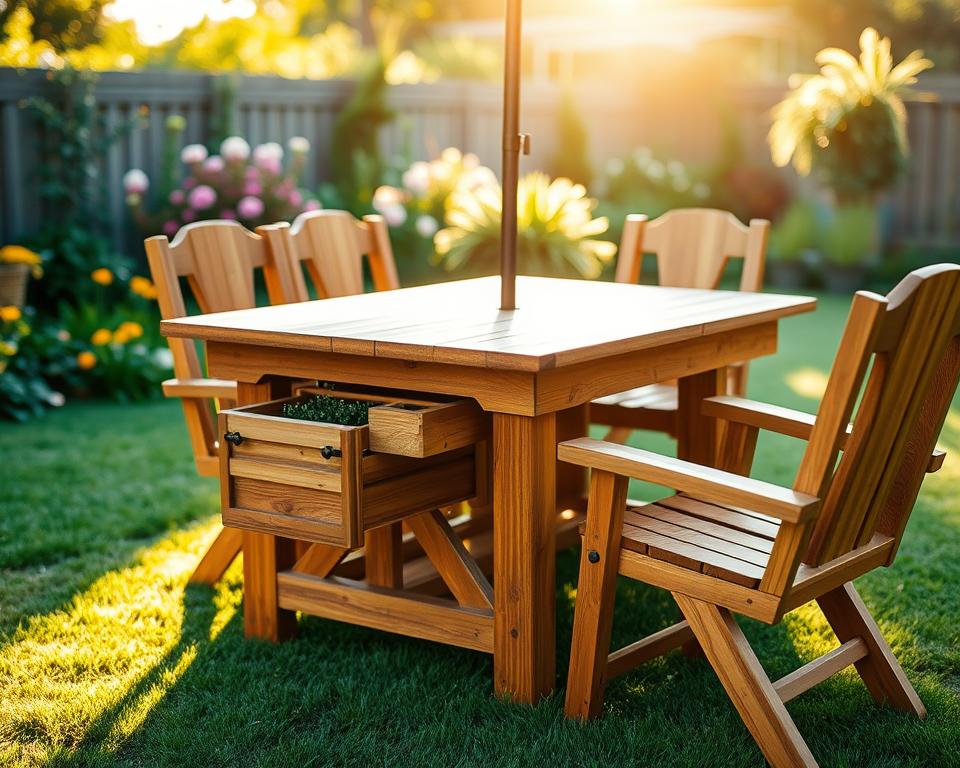
- Install a central parasol aperture for comfortable shade
- Create integrated drink coolers or planter sections
- Design extendable table sections for flexible entertaining
- Add lower storage shelves for garden accessories
Decorative enhancements can truly elevate your table’s character. Explore techniques like:
- Routed edge profiles for visual interest
- Inlaid wood species creating intricate patterns
- Carved or burned decorative designs
- Unique paint and stain techniques
Functional additions can transform your custom garden table into a versatile outdoor centrepiece. Solar-powered LED lighting, fold-down leaves, and matching bench seating are excellent options for table personalisation. When planning these modifications, always prioritise structural integrity and weather resistance to ensure your table remains both beautiful and durable.
Conclusion
Building your own garden furniture represents a remarkable achievement in DIY woodworking success. Your handcrafted wooden garden table is more than just a piece of furniture; it’s a testament to your skill, patience, and creativity. By following the detailed steps outlined in this guide, you’ve transformed raw materials into a functional and beautiful outdoor centrepiece.
The garden furniture project completion journey you’ve undertaken requires dedication and precision. Each stage—from selecting the right wood to applying protective finishes—contributes to creating a durable piece that will serve your outdoor space for years to come. Your commitment to understanding woodworking techniques and material selection sets you apart from ordinary DIY enthusiasts.
Remember that this project is just the beginning of your woodworking adventure. The skills you’ve developed—measuring precisely, cutting accurately, and finishing with care—will serve you well in future projects. Your handmade garden table not only saves money but also provides immense personal satisfaction, knowing you created something unique with your own hands.
As you enjoy your new garden table, take pride in your craftsmanship. Each gathering around this table will be a reminder of your skill, creativity, and determination to create something truly special. Your DIY woodworking success is a journey of continuous learning and personal achievement.
FAQ
What tools will I need to build a wooden garden table?
You’ll require a range of tools including a circular saw, drill, measuring tape, wood chisels, sander, level, and clamps. Essential safety equipment like protective eyewear, dust masks, and work gloves are also crucial for your project.
How do I choose the right type of wood for an outdoor table?
Consider weather-resistant timbers like oak, teak, or pressure-treated pine. Look for wood with natural durability against moisture and insects. Hardwoods offer superior longevity but are more expensive, while softwoods can be excellent when properly treated and maintained.
How long will it take to build a wooden garden table?
The project typically takes between 2-4 days, depending on your woodworking experience and the complexity of your design. Allow time for material preparation, construction, sanding, and applying protective finishes.
What protective finish should I use on my garden table?
Options include exterior wood oils, varnishes, and marine-grade paints. Teak oil and Danish oil enhance natural wood grain, while exterior varnishes provide robust water resistance. Choose a finish that suits your timber type and desired aesthetic.
How do I maintain my wooden garden table?
Clean the table regularly with mild soap and water, apply protective finish annually, and cover or store indoors during harsh winter months. Inspect for damage, sand any rough areas, and reapply protective treatments to ensure long-lasting durability.
Can I build a garden table if I’m a beginner?
Yes, with careful planning and patience. Start by selecting a straightforward design, invest in quality materials, follow step-by-step instructions, and don’t rush the process. Practice basic woodworking techniques and prioritise safety throughout your project.
How much will it cost to build a wooden garden table?
Costs vary depending on wood quality and table size, typically ranging from £100 to £500. Budget for timber, tools, protective finishes, and additional materials like screws and sandpaper. Purchasing timber from reclaimed sources can help reduce expenses.
What are the most common mistakes to avoid?
Key mistakes include using improperly dried wood, inadequate structural bracing, poor joint construction, neglecting wood movement allowances, rushing the finishing process, and using incorrect fasteners. Always measure carefully and prioritise precision in your work.