Creating a rock garden – tips
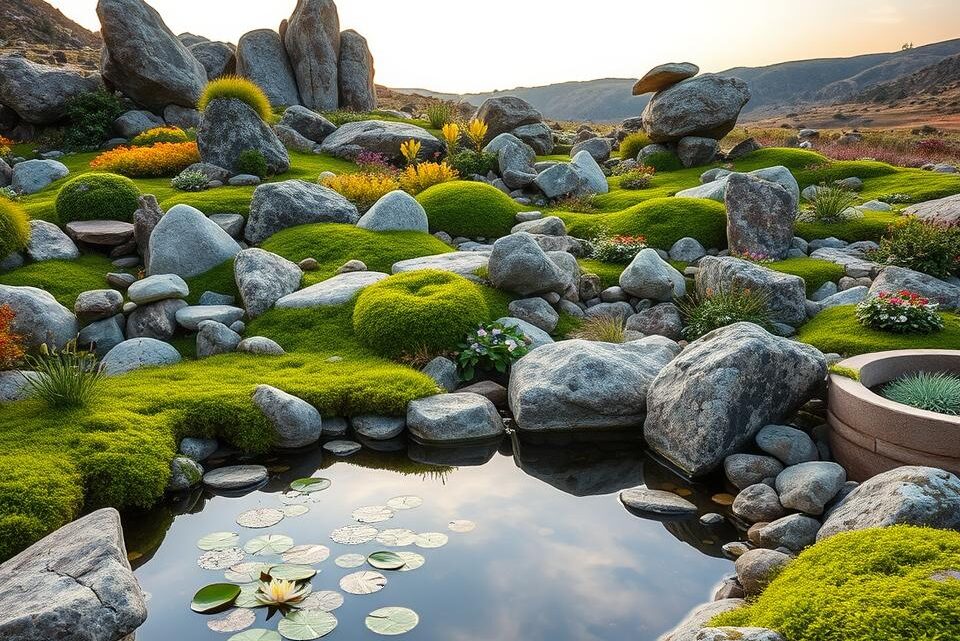
Imagine turning your ordinary garden into a stunning alpine landscape. A well-designed rock garden brings mountain charm right to your home. It combines natural beauty with practical benefits for British gardens.
These features solve problem areas like tricky slopes while adding year-round structure. You can create intimate corners with gravel and stones or elaborate designs with water features. The versatility suits gardens of all sizes.
Using local materials and drought-tolerant plants makes your project sustainable. This approach aligns perfectly with eco-friendly gardening practices. Even beginners can achieve spectacular results with proper planning.
This guide walks you through every step from site selection to ongoing care. Discover how to build your own personalised landscape feature that will thrive for years.
Inhaltsverzeichnis
Key Takeaways
- Rock gardens enhance outdoor spaces with natural beauty and low maintenance
- They work well in British climates and gardens of all sizes
- These features can transform problematic slopes into attractive areas
- Using local materials and drought-tolerant plants supports sustainability
- Proper planning ensures successful results even for beginners
- Rock gardens provide year-round structure and visual interest
- They offer creative opportunities for personalising your landscape
Understanding the Fundamentals of Rock Gardening
Transform your outdoor space into a miniature mountain landscape that captures nature’s rugged beauty. These special gardens bring alpine magic to British homes, offering both visual appeal and practical solutions.
What Makes a Successful Rock Garden
Successful designs mimic high-altitude environments where alpine plants naturally thrive. They demand excellent drainage, plenty of sunlight, and careful placement of stones.
Good planning creates natural-looking slopes and planting pockets. This approach ensures your feature looks authentic while providing ideal growing conditions.
Benefits of Rock Gardens in British Climates
These landscapes excel in UK weather patterns. They handle rain well while surviving dry spells thanks to drought-tolerant plants.
You’ll enjoy reduced maintenance and year-round interest. Even problem areas become attractive features that improve your entire garden design.
Matching Your Vision to Your Space
Consider your available area and personal style before beginning. Rough, natural rocks create wild appeal, while smooth stones suit formal designs.
Small spaces can host intimate arrangements with gravel and dwarf conifers. Larger sites allow for expansive landscape features with water elements.
Proper planning ensures your vision becomes a sustainable, beautiful reality that enhances your home for years.
Selecting the Perfect Site for Your Rock Garden
Your rockery’s long-term success begins with thoughtful placement within your outdoor space. The right location ensures your alpine plants thrive while minimising maintenance efforts. Careful consideration now pays dividends for years to come.
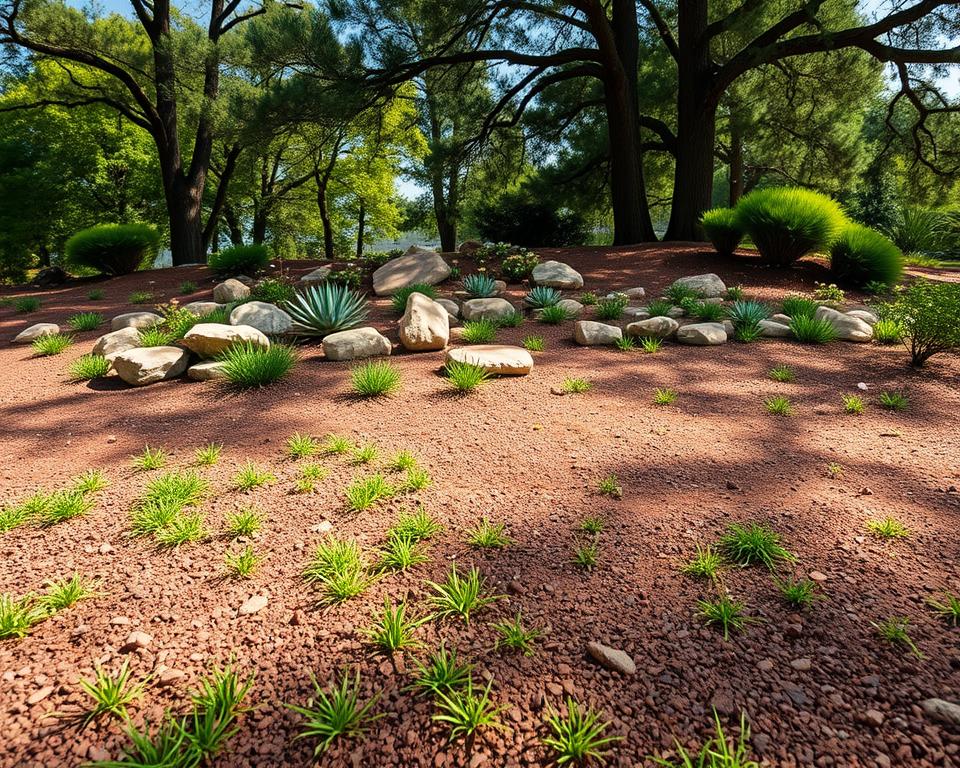
Assessing Sunlight and Microclimate Conditions
Most alpine specimens demand generous sunlight throughout the day. Choose an open position away from overhanging trees or buildings. This provides the light exposure your plants need to flourish.
Microclimate details significantly impact plant health. Avoid frost pockets where cold air accumulates. These areas can damage sensitive specimens during chilly periods.
Evaluating Drainage and Soil Composition
Perfect drainage remains essential for rock garden success. Test your ground’s natural drainage capabilities before committing to a site. Poor drainage may require raised beds or additional amendments.
Clay soil often needs improvement with added grit and sharp sand. This creates the free-draining environment alpine plants adore. Proper soil preparation prevents waterlogging issues.
Avoiding Frost Pockets and Problem Areas
Steer clear of locations with extensive tree root systems or underground utilities. These can complicate construction and affect plant growth over time. Sloping ground naturally enhances drainage while adding visual interest.
As gardening expert Katharine Woods advises, “Choose a site with good natural background and gradient for optimal drainage.” This approach transforms challenging spaces into stunning landscape features.
Sketching a simple plan helps visualise your chosen area’s potential. Consider viewing angles from your home and how sunlight moves across the space. This planning ensures your rockery integrates seamlessly with existing garden design.
Essential Materials and Preparation
Gathering the right components transforms your vision into a lasting landscape feature. Quality materials ensure both beauty and functionality for years to come. Thoughtful preparation creates the perfect foundation for alpine specimens to thrive.
Choosing the Right Rocks and Stones
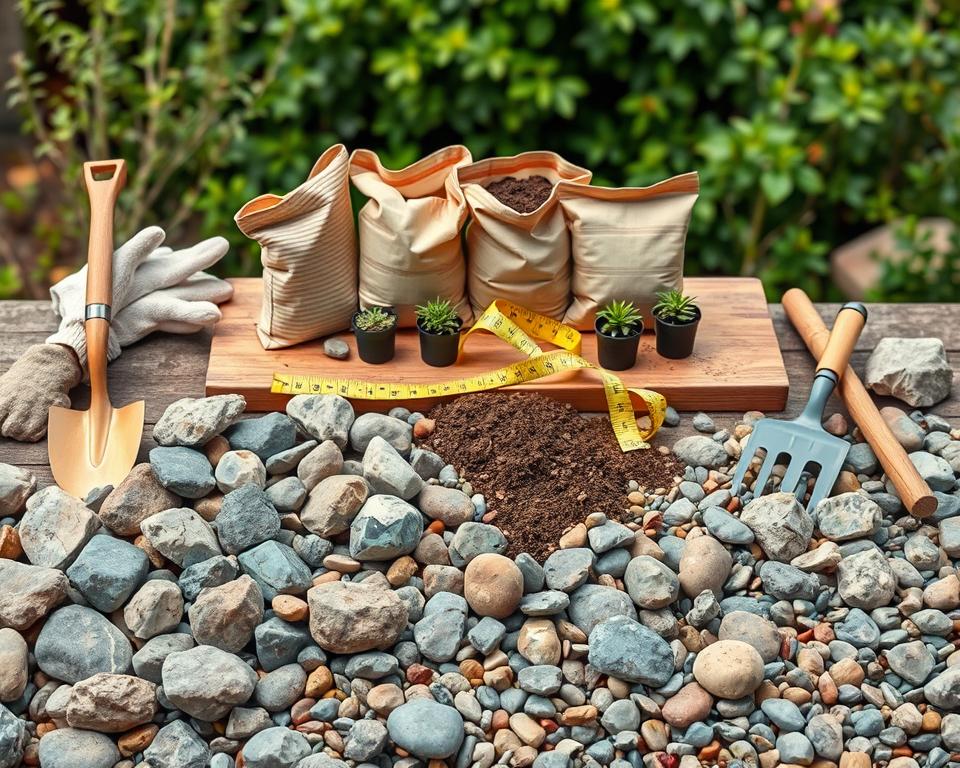
Select local stones like sandstone or Purbeck limestone for authentic appeal. These blend naturally with British landscapes while supporting regional biodiversity. Vary sizes and types to create realistic outcrops and interesting textures.
Avoid protected limestone pavements to preserve natural habitats. Larger rocks form the structural backbone of your design. Smaller pieces fill gaps and create natural transitions between planting areas.
Sourcing Local Materials in the UK
Visit stone merchants or quarries for the best selection of native materials. Salvaged options offer cost-effective and sustainable alternatives. Local sourcing reduces environmental impact while ensuring harmony with your surroundings.
As gardening expert Katharine Woods demonstrates with Purbeck limestone, local stone creates instant authenticity. This approach celebrates regional geology while building an ecologically sensitive feature.
Creating Your Planting Compost Mix
Prepare the ideal growing medium for your alpine plants. Combine one part loam, one part horticultural grit, and one part leafmould or coir. This mixture provides excellent drainage while retaining essential nutrients.
The gritty composition mimics natural mountain soil conditions. Your specimens will establish strong root systems in this well-balanced environment. Proper planting mix ensures long-term health and vitality.
Weed Prevention and Ground Preparation
Begin with thorough weed removal from your chosen site. This crucial step prevents future maintenance headaches. Create a 15cm base layer of rubble for stability and drainage improvement.
Top with inverted turves or quality landscape fabric for lasting weed control. These barriers allow water passage while blocking unwanted growth. Proper preparation now saves countless hours of future upkeep.
Your carefully prepared area now stands ready for construction. This solid foundation ensures your rockery remains beautiful and manageable for seasons to come.
Building Your Rock Garden Structure
Witness your vision materialise as you craft the structural foundation of your alpine paradise. This hands-on phase transforms careful planning into tangible beauty that will endure for years. Each stone placed brings you closer to a stunning landscape feature.

Creating a Naturalistic Design Plan
Begin by marking your site with sand or spray paint. This visual guide ensures your final arrangement matches initial design ideas. Consider viewing angles and sunlight patterns throughout the day.
Sketch gradients and stone placements on paper first. This prevents costly adjustments during construction. Your plan should mimic natural outcrops rather than artificial patterns.
Placing Keystones and Establishing Structure
Position large anchor rocks first, tilting them slightly backward. Bury each stone up to one-third its depth for stability. Use a crowbar for precise positioning of heavier pieces.
Align geological strata in the same direction across all stones. This creates authentic natural appearances. Support larger pieces with smaller stones wedged beneath them.
Building Proper Drainage Systems
Create a base layer of rubble for essential drainage. Add permeable materials like grit and sand above this foundation. This system prevents waterlogging around delicate root systems.
As gardening expert Katharine Woods advises, “Ramming soil into nooks provides additional stability while maintaining permeability.” This technique ensures long-term structural integrity.
Creating Planting Pockets and Crevices
Form planting pockets between stones using your compost mix. These protected spaces offer ideal conditions for alpine plants to establish. Vary pocket sizes for different specimen types.
For specialised crevice gardens, set sandstone slabs vertically. Fill gaps with gritty mix for plants that demand excellent drainage. These features provide deep root runs and efficient moisture use.
- Start with largest stones as structural anchors
- Ensure consistent tilt and strata alignment
- Build layered drainage systems with rubble base
- Create varied planting spaces between rocks
- Use smaller pieces to connect features naturally
Your carefully built structure now stands ready to host vibrant garden plants. This solid foundation ensures your rockery becomes a dynamic, engaging feature that evolves beautifully through the seasons.
Plant Selection and Arrangement Strategies
Unleash your creativity by curating a living tapestry of alpine treasures that thrive in British conditions. The right plant choices transform structural stonework into a dynamic, ever-changing display that celebrates nature’s diversity throughout the seasons.
Choosing Alpine Plants for UK Conditions
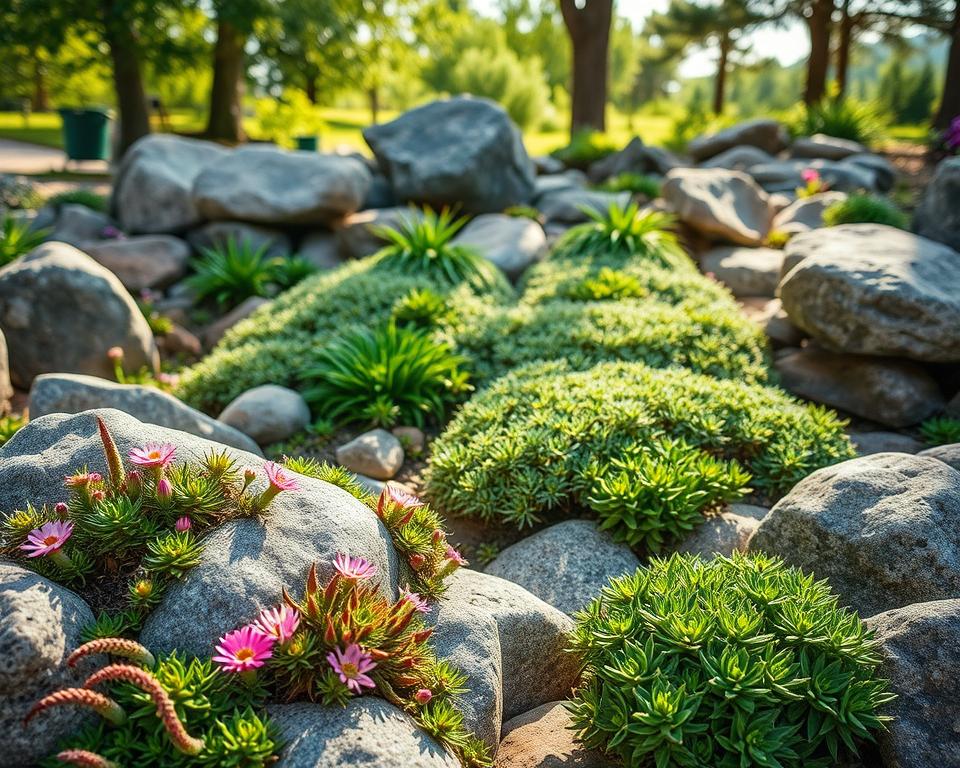
Select specimens from the Alpine Garden Society Seed Exchange for guaranteed suitability to our climate. These specialist plants have evolved to handle Britain’s variable weather patterns while offering exceptional beauty in compact forms.
Consider mail-order alpine plants like those Katharine Woods uses for authentic high-altitude character. They provide stunning floral displays despite their small stature, perfect for planting pockets between stones.
Incorporating Dwarf Conifers and Shrubs
Add year-round structure with locally sourced dwarf conifers that provide permanent height and texture. These woody elements create valuable contrast against low-growing alpines and trailing specimens.
Small shrubs like hebes or dwarf rhododendrons offer additional winter interest. Their enduring presence ensures your rockery maintains visual appeal even during dormant periods.
Designing for Year-Round Interest
Create continuous interest by combining spring bulbs like species tulips with summer-flowering perennials and autumn grasses. This layered approach ensures something always catches the eye in your garden.
Include evergreen plants for winter structure and early spring bulbs for post-winter cheer. Your feature will evolve beautifully through the seasons, offering new discoveries with each visit.
Creating Colour and Texture Combinations
Experiment with complementary colours and contrasting textures for visual harmony. Pair silver-leaved sedums with purple bellflowers or yellow rock roses with blue gentians for stunning effects.
Use creeping groundcovers like thyme or sedums to soften rock edges and create natural transitions. Their mat-forming habits help suppress weeds while adding cohesive beauty.
For shaded areas, consider ferns or hellebores that thrive in cooler conditions. These choices ensure every part of your landscape contributes to the overall design.
Arrange plants while still in their pots to visualise mature spreads and heights. This artistic process allows you to create balanced compositions that enhance your stone feature for years to come.
Practical tips for creating a rock garden – ongoing care
Your alpine paradise deserves thoughtful attention to flourish through the seasons. Proper upkeep ensures your landscape remains vibrant with minimal effort. Embrace these simple practices to maintain your stunning feature for years.

Watering and Feeding Your Rock Garden
Hydrate specimens adequately during warm periods. Stones retain heat, increasing evaporation in sunny areas. Water deeply but infrequently to encourage strong root systems.
Fertilise sparingly to match plant needs. Most alpines thrive in nutrient-poor conditions. Some varieties like hostas appreciate occasional feeding for lush growth.
Weed Management and Maintenance
Apply gravel layers between plants to suppress unwanted growth. This natural barrier reduces weed emergence significantly. Manual removal preserves your feature’s pristine appearance.
Regularly prune dead growth and remove spent flowers. This encourages new blooms and maintains tidy beds. Your efforts keep the design looking intentional and well-cared for.
Seasonal Care Throughout the Year
Monitor drainage during wet weather to prevent waterlogging. Add grit if puddles persist around planting pockets. Winter protection shields sensitive specimens from frost damage.
Spring brings new planting opportunities and growth checks. Summer demands attention to hydration needs. Autumn prepares your feature for colder months ahead.
Dealing with Common Challenges
Improve heavy clay soil with added sand and grit. This enhances drainage for healthier root development. Combat pests naturally through companion planting or physical barriers.
Select resilient plants suited to your specific conditions. Crevice gardens offer better moisture efficiency in problem areas. Proactive solutions prevent issues before they arise.
| Season | Key Tasks | Special Considerations |
|---|---|---|
| Spring | Plant new specimens, check drainage | Protect new growth from late frosts |
| Summer | Water monitoring, deadheading | Provide shade during heatwaves |
| Autumn | Pruning, soil preparation | Mulch tender plants for winter |
| Winter | Structure checks, planning | Protect from heavy snow damage |
Regular monitoring ensures your rockery remains healthy and beautiful. Check for weeds, assess water needs, and observe plant vitality. These simple habits guarantee long-term success with minimal effort.
Seasonal changes bring new growth and unexpected blooms. Your landscape evolves beautifully throughout the year. Enjoy watching your alpine feature mature into its full potential.
Embrace the rewarding nature of low-maintenance gardening. Your thoughtful care results in maximum enjoyment and pride. A well-maintained rockery becomes a cherished part of your home for decades.
Conclusion
Your completed rockery stands as a testament to thoughtful planning and creative vision. This personalised alpine feature transforms your outdoor space into a sustainable retreat that requires minimal upkeep.
Remember how careful site selection, local materials, and proper drainage create lasting success. Your choice of alpine plants and dwarf conifers ensures year-round beauty that evolves through the seasons.
Take pride in this achievement that enhances your home’s landscape. Share your journey with fellow gardening enthusiasts and continue learning through resources like the Alpine Garden Society.
Your rock garden will bring endless pleasure and natural charm for many years to come. It represents both artistic expression and practical gardening wisdom working in perfect harmony.
FAQ
What is the most important factor for success with a rockery?
Excellent drainage is absolutely crucial. Most alpine plants, which thrive in these settings, originate from mountainous regions with free-draining soil. Soggy roots will quickly lead to failure, so incorporating plenty of grit and sand into your compost mix is essential.
Can I build a rock garden in a shady part of my garden?
While possible, a sunny spot is vastly preferable. Most traditional rock garden plants adore full sun and will struggle in deep shade. If you have a shady area, focus your plant selection on woodland species that tolerate lower light levels, rather than classic sun-loving alpines.
Where is the best place to source rocks in the UK?
Always try to source locally. Using stone native to your region creates a far more natural and harmonious look. Local quarry suppliers or landscaping merchants are ideal. Avoid mixing different stone types, as this can make the feature look disjointed and artificial.
How do I stop weeds from taking over my rock garden?
Meticulous ground preparation is your best defence. Remove all perennial weeds and their roots before you begin building. Laying a permeable weed-suppressing membrane beneath your top layer of soil and gravel can provide long-term control. A top dressing of gravel also helps suppress weeds and retains moisture.
What are the best plants for a beginner’s rock garden in Britain?
Start with tough, reliable choices. Look for dwarf conifers for structure, hardy succulents like sempervivums (houseleeks), and easy alpines such as aubrieta, arabis, and saxifrage. These plants are widely available, forgiving, and will provide colour and interest with minimal fuss.
How often will my rock garden need watering?
Once established, your feature should be relatively drought-tolerant. Water thoroughly during the first growing season to help plants settle in. After that, only water during prolonged dry spells. The well-draining soil means overwatering is a greater risk than underwatering.
Can I add a rock garden to a flat lawn?
Absolutely! You can create a raised mound or berm to provide the necessary slope and drainage. This allows you to build a stunning focal point and introduce different levels of interest, even in a completely flat space.