Garden Shed Roof Designs: Mono-Pitched, Gable & Flat

This article compares three common garden shed roof designs to help UK homeowners make a confident choice. We look at the mono-pitched roof, the gable roof and the flat roof, assessing style, practicality, weather performance, cost and planning implications for sheds, workshops and summerhouses across Britain.
Readers include homeowners, DIY enthusiasts, garden designers and tradespeople who need clear, practical guidance on shed roofing UK options. The guide sets out shed roof ideas, typical materials, insulation and ventilation advice, plus when planning permission or building regulations might apply.
The long-form article that follows covers an overview of roof types, detailed comparisons by size and use, materials such as felt, metal and EPDM, insulation and weatherproofing, cost comparisons, DIY versus professional installation, and aesthetic enhancements. Emphasis is given to British English terms and the specific climate and planning regimes in the United Kingdom.
By the end of this piece you will know when a mono-pitched roof suits your plot, why a gable roof adds headroom, where a flat roof might work best, what materials to choose, how to budget and which regulatory triggers to watch for.
Inhaltsverzeichnis
Key Takeaways
- Compare mono-pitched, gable and flat roof designs for practical and aesthetic fit.
- Consider UK climate and planning rules when selecting shed roofing UK solutions.
- Match shed roof ideas to size, purpose and budget before buying materials.
- Learn common materials and insulation practices to improve durability and comfort.
- Decide between DIY and professional installation based on skill and safety needs.
Overview of Garden Shed Roof Types for UK Homes
Choosing the right roof for a garden shed affects more than appearance. A good selection influences water run-off, internal space and headroom, insulation potential, lifespan and how often you must maintain the roof. This shed roof overview UK explains the main considerations for homeowners planning a new build or a replacement.
https://www.youtube.com/watch?v=B2Y9CLveXSU
Why roof choice matters for garden sheds
Roof form alters drainage and the rate of water run-off, so pitched options shed rain quickly while flat roofs need careful waterproofing. Internal headroom depends on pitch and ridge height, which affects storage and usability as a workshop or studio. Insulation potential varies by design and material, which in turn changes energy use and condensation risk.
Longevity and maintenance frequency link to both shape and material. A metal roof such as corrugated steel offers long life with low upkeep. Felt or bitumen shingles cost less up front but may need more frequent attention. Visual fit with the house and garden impacts resale value and curb appeal.
Climate and planning considerations in the United Kingdom
UK climate shed roofs face frequent rain, wind exposure and occasional snow loads in northern and highland areas. Those conditions influence pitch, drainage details and membrane choice. Good ventilation reduces condensation that forms in cold weather, helping preserve timber and stored items.
Permitted development rules set height limits and proximity to boundaries that may restrict roof style. Conservation areas and listed building status can limit materials and appearance. This overview touches on these basics; further planning guidance appears later in the article.
Common materials used for shed roofs
Shed roofing materials range from traditional to modern. Roofing felt and bitumen shingles remain popular for budget builds and simple repairs. Metal options include galvanised or aluminium corrugated sheets that score highly for durability and speed of installation.
Cedar shingles provide a natural look and age attractively, but cost more and require upkeep. EPDM rubber membranes and single-ply systems suit low-pitch or flat roofs, offering excellent waterproofing and long service lives. Green-roof systems add biodiversity and insulation but increase structural and maintenance needs.
| Material | Typical Cost | Expected Lifespan | Best For |
|---|---|---|---|
| Roofing felt | Low | 5–15 years | Small garden sheds, low budget |
| Bitumen shingles | Low–Medium | 10–25 years | Sloped roofs where appearance matters |
| Corrugated metal (steel/alu) | Medium | 20–40 years | Durable, quick to fit, coastal or exposed sites |
| Cedar shingles | High | 20–40 years | Traditional look, high-end garden rooms |
| EPDM / single-ply membrane | Medium–High | 25–50 years | Flat or low-pitched roofs needing robust waterproofing |
| Green roof systems | High | 20–50 years (with maintenance) | Wildlife, insulation, aesthetic integration |
Before deciding, weigh budget, desired longevity, aesthetic match to your home and the shed’s intended use. Consider whether you plan to access the roof or use it for storage; these choices change materials and design. A clear shed roof overview UK helps set priorities and guides the next planning steps.
Mono-pitched roof, gable roof, flat roof – Garden sheds and their roof designs
Choosing between mono-pitched, gable and flat roofs shapes how a shed looks, performs and suits its purpose. This section defines each roof style, offers a clear shed roof comparison and shows which roof works best for different shed sizes and use cases. The aim is practical: help homeowners pick the best shed roof for small shed projects or larger garden rooms.

Definitions and quick comparison
Mono-pitched roofs have a single sloping plane. They lend a contemporary look and suit modern garden offices that favour large front glazing.
Gable roofs consist of two sloping sides meeting at a ridge. They provide traditional charm, generous headroom and often space for loft storage in larger workshops.
Flat roofs are low-pitch or nearly level. They work well for compact log stores and for schemes that use the roof as a planted green roof or seating area.
| Feature | Mono-pitched | Gable | Flat |
|---|---|---|---|
| Drainage performance | Good with 5–15° pitch | Very good at 20–35° pitch | Challenging; needs membranes and falls |
| Ease of construction | Relatively simple | More complex framing and ridge work | Simple structure, careful waterproofing required |
| Headroom | Moderate; can slope to maximise height | Highest; good for tall storage and workshops | Low; interior height limited |
| Aesthetic fit | Modern, pairs well with glazing | Traditional, suits timber sheds | Contemporary, minimal |
| Common materials | Felt, metal, shingles | Shingles, tiles, metal | EPDM, GRP, felt |
| Typical use cases | Garden offices, studios with clerestory windows | Workshops, summerhouses, tool sheds | Log stores, shed extensions, planted roofs |
Suitability by shed size and purpose
For very small storage sheds and bike stores, mono-pitched or flat roofs are common. They keep costs down and are quick to build, making them the best shed roof for small shed applications.
Larger workshops and summerhouses benefit from a gable roof. The extra headroom suits loft storage and creates a more spacious interior.
Studios, garden rooms and contemporary garden offices often favour mono-pitched roofs. The single slope permits tall glazing and clerestory windows to bring in light.
Visual examples and typical use cases
Mono-pitched designs appear on modern home extensions and garden offices from suppliers such as Wickes and Jacksons Fencing. They suit an office with a glazed front and a higher rear wall for privacy.
Gable roofs suit traditional timber tool sheds and potting areas sold by B&Q and specialist timber firms. The shape complements classic garden settings and offers clear attic-like storage.
Flat roofs work for compact log stores or green roofs. They are often chosen where horizontal lines are preferred and usable rooftop planting is planned.
Pitch matters: mono-pitched roofs typically use 5–15° for felt or metal and higher angles for shingles. Gable roofs commonly sit between 20–35°, which affects material choice and ventilation. Flat roofs need appropriate falls and durable membranes to avoid ponding.
Mono-pitched Roof: Design Advantages and Limitations
The mono-pitched roof is a popular choice for contemporary garden buildings. It offers a clean line and efficient water run-off when planned correctly. This small section describes key design points, practical considerations and when a mono-pitched roof works best for UK gardens.

Key benefits
A mono-pitched roof benefits from simple geometry. Its single slope makes construction quicker than a gable, reducing labour and material costs. Homeowners gain the mono-pitched roof benefits of efficient drainage when the high side is positioned to catch falling rain into a single gutter.
Large glazing on the high wall lets in natural light, an advantage for garden offices and studios. The clean, sloping profile creates a modern shed roof aesthetic that sits well next to contemporary extensions.
Construction notes
Typical rafters or timber trusses set at one angle form the frame. Felt or EPDM systems work with shallow pitches from about 2°–5°. Shingles and tiles need a steeper incline to shed water reliably.
Detailing for eaves, fascias and guttering is essential because runoff concentrates on one side. Use breathable underlay and good ventilation in timber buildings to prevent condensation and prolong life.
Potential drawbacks
Mono-pitched limitations include exposure to strong winds on the high face. Large roofs need robust fixings and bracing to prevent uplift. Drainage is focused on one gutter, so it must be sized and installed correctly to avoid overflow.
The single slope can reduce usable headroom at the low side. Designers must balance internal layout with the slope to avoid cramped corners in storage or workspace areas.
When to choose this roof
Consider a mono-pitch shed advantages when you want a low rear elevation, a neat link to a boundary wall or a structure that looks modern beside a house by firms such as Marshalls or Melin. Pick this form for garden rooms, studios and offices where light and sight lines matter.
In the UK, orient the high side to the north if adding clerestory glazing to avoid excessive solar gain. For durability, ensure guttering, fascias and fixings meet local building expectations and your chosen material’s minimum pitch.
Gable Roof: Traditional Style and Practicality
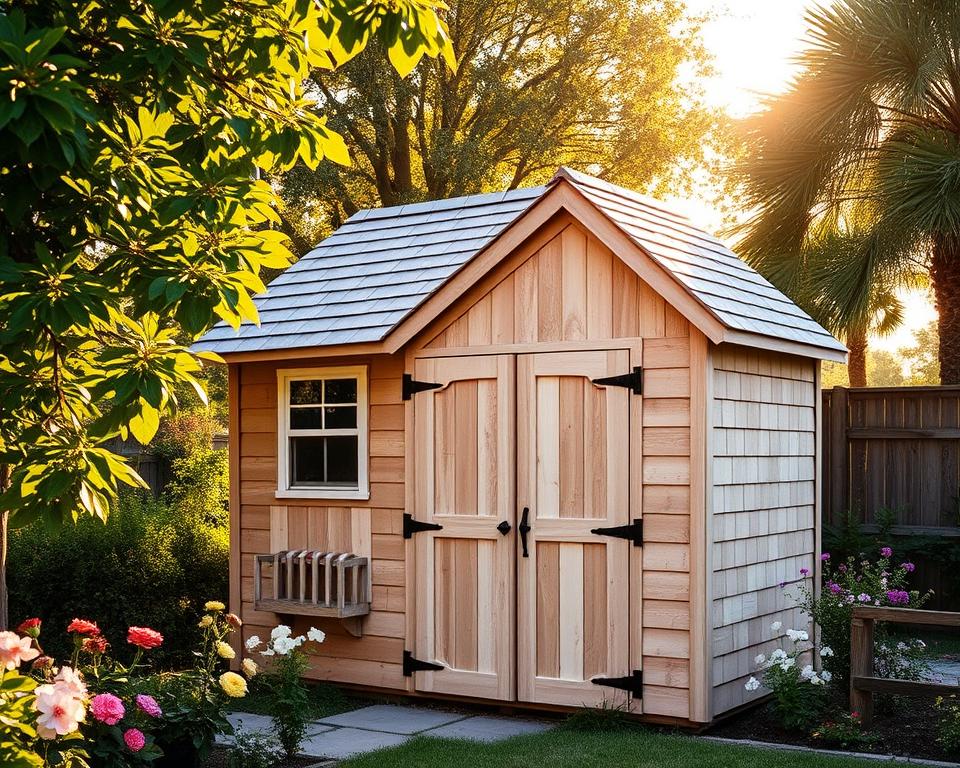
The gable roof is a classic choice for garden buildings. It echoes the silhouette of many UK homes and gives a tidy, symmetrical appearance that suits period and modern properties alike. For those seeking a traditional shed roof, the gable form remains a popular option.
Architectural appeal and increased headroom
A gable roof shed creates a clear ridge line and pleasing proportions. The pitch can be adjusted to suit the garden scale, creating generous shed headroom where needed. Owners often use the extra internal height for loft storage or a small mezzanine for tools and seasonal items.
Structural considerations and ventilation advantages
Structurally, a gable roof requires a ridge beam and matching rafters on both slopes. Correct ties and bracing keep the frame rigid, particularly if heavy coverings such as slate or tiles are chosen. Those coverings demand stronger framing and may need a sturdier foundation than lighter materials.
Gable ends permit the installation of gable vents and ridge ventilation. Improved airflow reduces condensation in timber sheds and keeps stored equipment in better condition. Good ventilation is especially useful in workshops and potting sheds where airflow prevents damp and mildew.
Maintenance and longevity for gable roofs
When fitted with quality materials, a gable roof offers long service life. Slate, tiles or high-grade metal sheet can resist weathering for decades. Regular checks of ridge flashings and caps help spot issues early and reduce repair costs.
After storms, a brief annual inspection pays dividends. Replace damaged slates or tiles, and use galvanised nails or stainless steel screws in coastal locations to limit corrosion. For small sheds, avoid very steep pitches that increase wind exposure and may lift fixings in strong gusts.
Flat Roof: Contemporary Options and Considerations
Flat roofs are a popular choice for modern garden buildings because they keep lines simple and often cost less to build. They open up usable rooftop space for planters, solar panels or a neat seating area, making a flat roof shed a versatile option for small gardens.

Pros of flat roofs: simplicity and usable rooftop space
Construction is straightforward, so labour time and material waste tend to be lower. A flat roof allows easy access, making it ideal for a green roof shed or mounting PV panels. Low profile designs suit contemporary landscapes and shed styles.
Waterproofing and drainage challenges in the UK climate
True flat roofs need a slight fall, typically between 1:80 and 1:40, to prevent ponding. Persistent UK rain demands high-quality membranes and well-sized outlets. Choosing aluminium or stainless-steel gutters and outlets reduces corrosion risk and helps maintain effective flat roof waterproofing.
Materials and insulation for durable flat roofs
Common coverings include built-up bitumen felt, torch-on membranes, EPDM rubber, liquid-applied systems and single-ply PVC. EPDM and modern single-ply membranes can last 20–40 years when installed correctly. Felt often needs replacement every 8–15 years depending on grade.
For thermal performance, warm-roof construction with rigid PIR above the joists is best. Continuous insulation avoids thermal bridging and protects timber from cold spots. Good detailing around edges and outlets ensures the insulation and membrane work together to extend lifespan.
Practical tips: specify the required fall in the substrate, fit corrosion-resistant outlets, and choose a reputable installer. Correct installation is the single biggest factor in long-term success for flat roof waterproofing and the overall durability of a flat roof shed.
Materials for Garden Shed Roofs: Felt, Metal, Shingles and EPDM

Choosing the right shed roof materials affects durability, cost and installation time. This short guide compares common options so you can match performance to budget and roof pitch.
Roofing felt and shed shingles remain popular for timber sheds. Traditional mineral roofing felt is economical and easy for a DIYer to fit on small roofs. Ensure decking is smooth, laps are correct and compatible adhesives and fixings are used to avoid early failures.
Bitumen shingles from brands such as IKO improve appearance and longevity compared with cheap felt. Shingles give a neat finish and can extend service life to the 15–25 year band with basic maintenance.
A metal shed roof provides excellent longevity and rapid water shedding. Choose corrugated galvanised steel, aluminium or standing-seam panels for robustness in exposed sites. Panels often come in polyester or plastisol coatings for colour and corrosion resistance.
Metal transfers heat quickly, so internal insulation and a vapour control layer help prevent condensation and summer overheating. Use stainless or marine-grade fixings in coastal locations to reduce corrosion risk.
EPDM for sheds is a highly flexible synthetic rubber membrane designed for flat or low-pitch roofs. Firestone and Carlisle systems are well known. EPDM is UV-stable and gives long-lasting waterproofing with simple laps or adhesive detailing.
Alternative single-ply membranes include PVC and TPO, each with different weldability and chemical resistance. Professional installation or careful DIY application will keep seams watertight and extend life expectancy to 20–40 years for EPDM.
Key practical points apply to every option. Use compatible flashings and fixings, fit breathable underlays where timber framing needs to breathe, and choose vapour barriers for insulated builds. In exposed locations choose higher-grade materials to reduce maintenance.
The table below summarises typical lifespans, costs and maintenance for popular choices, with recommended brand examples.
| Material | Typical lifespan | Approx. cost band | Maintenance notes | Representative brands |
|---|---|---|---|---|
| Roofing felt (mineral) | 8–15 years | Low | Check laps, replace torn sections; avoid ponding | IKO, Marley (felt ranges) |
| Shed shingles (bitumen) | 15–25 years | Low–Medium | Inspect for lifted tabs and re-seal edges | IKO, Onduline |
| Metal shed roof (steel/aluminium) | 25+ years | Medium–High | Check fixings and coatings; clean gutters | Kingspan, Tata Steel (coated panels) |
| EPDM and modern membranes | 20–40 years | Medium | Inspect seams and flashings; trim vegetation | Firestone, Sika, Carlisle |
Insulation, Ventilation and Weatherproofing Best Practice
Good thermal control and airtightness keep a shed dry and usable. Choose materials and details that suit the roof type and the intended use. Small structures have specific needs for insulation, ventilation and sealing to avoid moisture, heat loss and rot.
Choosing insulation suitable for small structures
For flat warm-roof builds, rigid PIR board gives a high thermal value in limited depth. Pitched roofs perform well with mineral wool or breathable quilt fitted between rafters. Where a space may become habitable, aim for U-value targets and consider Building Regulations Part L guidance.
Use a continuous vapour control layer on the warm side when insulation depth is limited. This reduces interstitial condensation and improves the effectiveness of shed insulation.
Ventilation strategies to prevent condensation
Good airflow helps prevent condensation in sheds. Fit soffit vents, ridge vents or gable vents to create passive cross‑ventilation. Trickle vents on windows keep low-level airflow without draughts.
Workshops that produce dust, paint fumes or steam should include mechanical extraction. Balanced ventilation preserves materials and prevents mould from forming on stored items.
Sealing and flashing to protect against the elements
Detailing at eaves, abutments and gutter interfaces matters. Use roof flashing for sheds where the roof meets walls, dormers or gutters to stop water ingress. Lead flashings or compatible metal flashings are traditional choices for long service life.
Apply flashing tapes and sealants from recognised suppliers such as Soudal or Everbuild at joins and penetrations. Inspect seals and roof flashing for sheds annually and clear gutters to maintain shed weatherproofing.
Practical maintenance and condensation control
Install airtight joins and seal service penetrations to prevent warm moist air reaching cold surfaces. A breathable underlay on pitched roofs lets moisture escape while keeping rain out. Repair any membrane tears promptly to avoid timber decay.
Regular checks of seals, flashings and gutter outlets form the backbone of ongoing shed weatherproofing. Small interventions now avoid costly repairs later and help prevent condensation in sheds.
Planning Permission, Building Regulations and Permitted Development
Small garden buildings often sit comfortably within permitted development rights, yet a few clear tests will tell you when formal approval is needed. Check location, size and proposed use early. Properties in conservation areas or listed buildings face tighter controls. Replacing a low flat roof with a taller pitched roof can change visibility and may prompt a planning application.
When a shed roof might trigger planning permission
If your project increases overall height, creates a separate dwelling, or materially affects neighbours’ amenity you may need permission. Works that extend beyond permitted development sheds limits, or that sit forward of the principal elevation, are more likely to be flagged by the local planning authority. Always seek pre-application advice for borderline cases.
Building regulations relevant to sheds and structures
Many garden sheds remain outside building regs for sheds when used purely for storage. Converting a shed into a heated workspace, home office or living space alters that status. Elements such as structural safety, thermal performance, ventilation and electrical safety can then fall under building regs for sheds and related parts like Part L, Part F and Part P. Contact local authority building control to confirm requirements.
Height restrictions and distance from boundaries in the UK
Permitted development rules set clear parameters on shed height restrictions and footprint. Typical limits require single-storey outbuildings not to exceed specified eaves and ridge heights, often in the 2.5–4 m range depending on roof type and siting. Outbuildings must not cover more than half the garden area and may need to sit a set distance from boundaries to avoid overlooking or overshadowing neighbours.
Practical steps and examples
Start by checking gov.uk guidance and your local council planning pages. Request written confirmation if you are uncertain. Hire a planning consultant for complex or high-visibility schemes. For example, swapping a flat roof for a pitched roof that raises the ridge height may require notification if it breaches shed height restrictions or increases street visibility.
For a smooth process keep drawings modest, note existing boundary distances and state intended use clearly. Clear communication with the local planning authority reduces delays and helps ensure your new roof complies with shed planning permission UK rules and building regs for sheds while respecting permitted development sheds limits.
Cost Comparison and Budgeting for Different Roof Designs
Budgeting for a garden shed roof starts with a clear breakdown of cost components. Typical items include decking, membrane or covering, insulation, flashings, labour, waste disposal, scaffold or access and extras such as guttering, fascias and glazing. Factoring each line helps you compare options and control shed roof costs from the outset.
Material and labour cost estimates for mono-pitched roofs
Mono-pitched roof cost sits in the mid-range for small sheds. Simpler framing lowers labour time compared with a gable roof, yet choices of finish change the total. A basic felt covering is cheaper. Metal or shingles add to material cost. Pitch, access and insulation needs push labour estimates up. Always obtain local quotes to reflect site-specific factors.
Cost factors for gable roofs versus flat roofs
Gable roof cost tends to be higher because extra timber work, a ridge and more complex joinery demand more time and materials. Flat roof budget is often the most economical at installation. Low initial spend can lead to higher long-term outlay if low-grade coverings are used. Choosing a high-quality membrane like EPDM raises the initial flat roof budget but reduces repair frequency.
Long-term value: maintenance and replacement costs
Consider lifespan as part of value. Cheap felt often needs replacement near the ten-year mark. EPDM and metal perform longer and lower lifetime spend. Good insulation reduces heating demands for garden rooms, cutting running costs. Include planned checks, resealing and occasional repairs when you calculate shed roof maintenance costs over a decade.
Practical budgeting advice helps you avoid surprises. Get at least three quotes. Check contractor insurance, warranty and references. Add a contingency of 10–20% for hidden repair work found during reroofing. Factor in annual inspections and resealing as routine items under shed roof maintenance costs.
| Cost Component | Mono-pitched | Gable | Flat |
|---|---|---|---|
| Decking and framing | Moderate | High | Low |
| Covering (felt/EPDM/metal) | Varies: low to high | Varies: low to high | Low initial to high quality |
| Insulation | Recommended | Recommended | Essential for heated rooms |
| Labour | Moderate | High | Low to moderate |
| Access/scaffold | Depends on height | Often required | Less often required |
| Long-term maintenance | Moderate | Low to moderate | Potentially higher without quality membrane |
Use the table to compare realistic trade-offs for mono-pitched roof cost, gable roof cost and flat roof budget. Keep records of quotes and warranties. That approach keeps spend sensible and protects against unexpected rises in shed roof costs later on.
DIY vs Professional Installation: What to Consider
Deciding between a DIY shed roof and a professional shed roof installation depends on skills, site conditions and the materials you plan to use. Small flat roofs and modest mono-pitched designs can suit a competent DIYer with basic carpentry tools. Larger spans, gable roofs or complex membranes demand specialist knowledge and care.
Skill level required
Flat roofs and small mono-pitched roofs are within reach for those confident with measuring, cutting and fixing timber. Gable roofs involve rafters, trusses and load calculations that usually need experienced carpenters or roofers. If you lack experience with structural work, seek professional advice before you start.
Shed roof safety and tools
Work at height is the main risk. Use fall prevention, stable ladders and consider scaffold for higher or awkward sites. Essential PPE includes gloves and eye protection. Typical tools are a circular saw, spirit level and nail gun. For specific coverings you may need a torching kit for torch-on felt, a rubber roller for EPDM or seam welders for PVC/TPO.
Step-by-step considerations for DIYers
Begin with careful planning and accurate measuring. Prepare the decking and fit breathable underlay on pitched roofs. Add insulation where needed before fixing the chosen membrane or tiles. Install gutters and flashings to prevent leaks. Finish with a checklist of seals and a maintenance schedule to extend lifespan.
When to hire a pro
Hire a specialist for torch-on felt, PVC/TPO systems or when the roof sits over a tall or awkward site. Structural alterations, plans to make the space habitable or guarantees for long-term waterproofing are all reasons to choose professional shed roof installation. Accredited tradespeople bring expertise you may not have.
How to choose a contractor
Ask for public liability insurance and proof of previous projects. Request references and photos of finished roofs. Look for members of TrustMark or the Federation of Master Builders. Obtain clear, written quotes that show materials, timelines and warranties for workmanship and materials. Confirm they understand building regulations for your area.
Enhancing Aesthetics: Colours, Overhangs and Integrated Storage
Good roof design lifts a simple garden building into a crafted feature. Consider appearance, function and maintenance when you pick finishes. Small choices yield big changes in shed roof aesthetics and long-term satisfaction.
Choosing colours and finishes that complement your home
Select roof tones and textures to either harmonise with your house or provide a deliberate contrast. Dark grey metal or EPDM works well with modern facades. Natural cedar shakes suit period homes. Look for colour-fast finishes and reflective coatings to reduce heat gain and lower upkeep.
Using overhangs, fascias and soffits for a finished look
Modest overhangs protect walls from driving rain and help channel water away from doors. Fascias create a neat junction for guttering and conceal joist ends. Soffits improve roofline ventilation and hide rafter tails.
Choose durable materials such as UPVc or treated painted timber for these elements. Fit quality fascias and soffits with secure fixings to reduce maintenance and improve the overall look of overhangs fascias soffits.
Designing integrated storage or green roofs for added value
Plan eaves and overhangs to shelter firewood, bikes or bins. Built-in shelving under the eaves or an external cupboard keeps tools tidy. Thoughtful layout turns wasted space into practical integrated shed storage.
Consider a lightweight green roof shed with sedum to boost biodiversity and add insulation. Use a root-resistant membrane such as specialist EPDM systems and confirm structure capacity before installation. Mono-pitched roofs are ideal for mounting solar PV panels at a useful angle, provided weight and wiring routes are planned.
| Feature | Benefits | Typical materials or suppliers |
|---|---|---|
| Shed colours and finishes | Improves curb appeal, reduces heat gain, lowers maintenance | Powder-coated metals, EPDM membranes, cedar shingles; consult local UK finishers |
| Overhangs fascias soffits | Weather protection, clean gutter junction, improved ventilation | UPVc, painted softwood, aluminium fascias and soffits from reputable UK suppliers |
| Integrated shed storage | Maximises space, secures equipment, creates sheltered zones | Custom eave shelving, lockable external cupboards, bespoke carpentry |
| Green roof shed | Insulation, biodiversity, rainwater retention | Sedum kits, root-resistant EPDM, systems from Bauder and Green Roof Kits UK |
| Solar PV on roofs | Renewable energy, reduced bills, good on mono-pitch for orientation | Panel mounting rails, professional installers, ensure structural checks |
Conclusion
This shed roof summary pulls together the practical points for UK homeowners. Mono‑pitched roofs suit modern garden rooms and are straightforward to build. Gable roofs deliver a classic look and the most headroom. Flat roofs are the most economical and can create usable rooftop space, but they need careful waterproofing in the UK climate.
Deciding which is the best shed roof for garden use depends on several factors: local climate and planning rules, whether the shed will be habitable or used for storage, your budget, and longer‑term maintenance. Measure the site, check local authority planning guidance, and shortlist materials such as roofing felt, metal, shingles or EPDM based on performance and cost.
Next steps are practical. Obtain quotes from suppliers like Wickes, B&Q or Jacksons Fencing, consider TrustMark or Federation of Master Builders‑registered installers if you need professional help, and decide whether to DIY. Plan insulation and ventilation to avoid condensation and ensure longevity.
In summary, balance appearance, performance and cost when you choose shed roof UK. With the right checks and quotes in place, you can move confidently to planning and installation knowing you have selected the best shed roof for garden needs.
FAQ
What is the purpose of this guide comparing mono‑pitched, gable and flat shed roofs?
This guide helps UK homeowners, DIY enthusiasts, garden designers and tradespeople choose the best roof type for sheds, workshops and summerhouses by assessing style, practicality, weather performance, costs and planning implications. It explains when each roof type is appropriate, typical materials, budgeting tips, regulatory triggers and maintenance expectations.
Which roof type is best for the UK climate?
For reliable rain and wind performance, mono‑pitched and gable roofs generally outperform true flat roofs because they shed water more effectively. Flat roofs remain viable if built with a slight fall and a high‑quality membrane (EPDM, PVC or torch‑on) plus correctly sized outlets. In exposed or coastal locations choose robust fixings and corrosion‑resistant materials.
How do mono‑pitched, gable and flat roofs compare in terms of headroom and interior space?
Gable roofs provide the most headroom and potential loft or mezzanine space. Mono‑pitched roofs give a sloped internal profile with higher glazing and good natural light on the tall side. Flat roofs give minimal internal height but can be efficient for compact storage sheds or where a low profile is required.
What materials are commonly used for shed roofs and how long do they last?
Common coverings include mineral roofing felt (8–15 years), bitumen shingles (15–25 years), metal roofing such as galvanised steel or aluminium (25+ years), and membranes like EPDM or PVC single‑ply (20–40 years). Lifespan varies with installation quality and maintenance; reputable brands include IKO, Firestone and Marley for tiles and membranes.
When will changing or installing a shed roof trigger planning permission or building regulations?
Small garden sheds are usually permitted development, but triggers include siting in a conservation area, listed building status, creating a separate residential unit, or substantial increases in height or footprint. Building Regulations may apply if the shed is insulated and used as a habitable space (Part L, Part F and Part P for electrical work). Always check local planning authority guidance and gov.uk resources.
What are the typical cost differences between the three roof types?
Flat roofs are often the least expensive initially because they require simpler framing. Mono‑pitched roofs sit mid‑range because of modest framing work and potential higher glazing costs. Gable roofs usually cost more due to ridge beams, additional timber and labour. Long‑term costs depend on material lifespans and maintenance—EPDM or metal may offer better lifetime value than cheap felt.
Can I install a shed roof myself or should I hire a professional?
Small flat roofs and simple mono‑pitched roofs can be suitable for competent DIYers with carpentry experience. Gable roofs, large spans, torch‑on felt or specialist single‑ply systems usually require experienced roofers or carpenters. Hire accredited tradespeople (TrustMark, Federation of Master Builders) for complex work, structural changes or if building regulations apply.
What insulation and ventilation should I use to avoid condensation?
For warm‑roof flat constructions use rigid PIR insulation above joists. For pitched roofs consider mineral wool or breathable insulation between rafters with a vapour control layer on the warm side. Provide ventilation via soffit, ridge or gable vents and ensure airtight joins and sealed service penetrations to minimise condensation risk.
How should I detail drainage and waterproofing on a flat roof in the UK?
Ensure the substrate has a fall (commonly 1:80 to 1:40) to prevent ponding. Use quality membranes (EPDM, PVC, torch‑on) and corrosion‑resistant outlets, gutters and flashing. Fit aluminium or stainless steel outlets and install continuous weatherproof flashings at abutments. Regular inspection and prompt repair of tears or blocked outlets preserve timber and structure.
What practical design tips help when choosing a mono‑pitched roof?
Orient the high side appropriately—north facing for clerestory glazing in the UK to avoid excessive solar gain. Use adequate bracing and fixings on the high side to resist wind uplift. Ensure the single gutter is sized correctly and that ventilation and breathable underlays are used to prevent condensation in timber builds.
Are green roofs or solar panels suitable for garden sheds?
Extensive green roofs (sedum) are viable on flat roofs with suitable root‑resistant membranes and lightweight growing media; check structural capacity first. Mono‑pitched roofs are well suited to solar PV for optimal tilt and orientation. Both require planning checks if visible from neighbouring properties or in conservation areas.
Which fixings and materials are recommended for coastal or exposed sites?
Use marine‑grade stainless steel or galvanised fixings, corrosion‑resistant fascias and coated metal roofing. Choose membranes and panels with proven durability and consider heavier framing to resist uplift. Regular inspections after storms are advisable to catch and repair corrosion or loose fixings early.
What maintenance should I budget for different roof types?
Annual inspections are recommended for all roofs. Flat roofs may need more frequent clearance of outlets and checks for ponding or membrane damage. Felt roofs often require replacement every 8–15 years depending on grade. Metal and EPDM roofs generally need less frequent renewal but watch for sealant and flashing deterioration.
How do I check whether my shed needs planning permission when changing roof style or height?
Contact your local planning authority or consult gov.uk planning guidance. Key checks include the shed’s height, proximity to boundaries, whether the property is in a conservation area or listed, and whether the change materially affects neighbours. A pre‑application enquiry or written confirmation removes uncertainty for significant changes.