How to Cultivate a Lush Mediterranean Garden
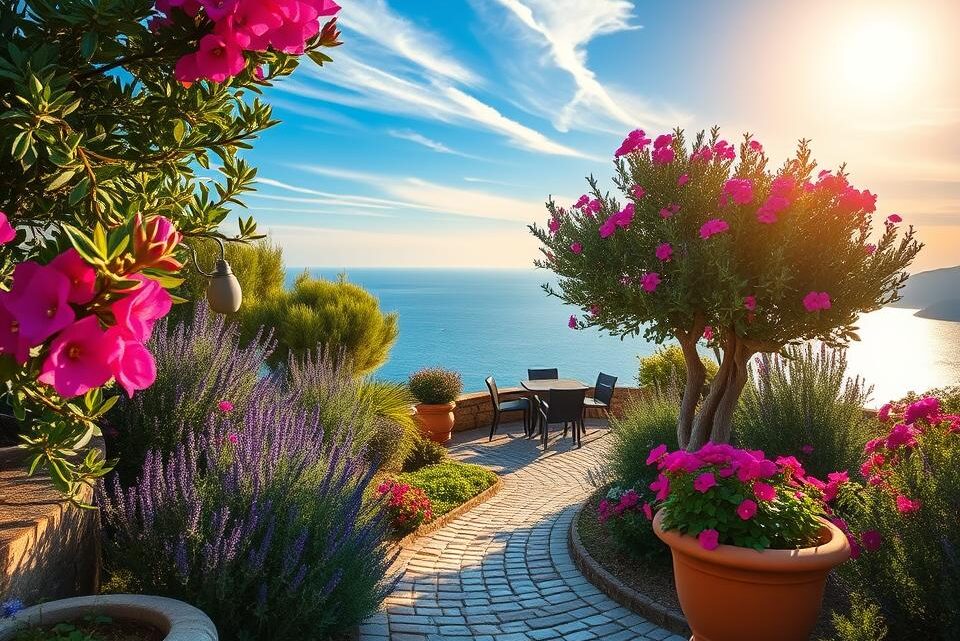
Transforming your outdoor space into a vibrant Mediterranean garden is a great way to bring a touch of the exotic to your UK landscape. Characterised by its lush greenery and colourful blooms, this style of gardening is perfect for those looking to create a warm and inviting atmosphere.
By incorporating key elements such as drought-tolerant plants, terracotta pots, and natural stone, you can achieve a beautiful and sustainable garden design. Effective landscaping is crucial to creating a Mediterranean garden that thrives in the UK climate.
Inhaltsverzeichnis
Key Takeaways
- Choose drought-tolerant plants suitable for the UK climate
- Incorporate natural materials such as terracotta and stone
- Consider the local weather conditions when designing your garden
- Effective landscaping is crucial for a thriving Mediterranean garden
- A well-designed Mediterranean garden can increase your outdoor living space
Understanding the Mediterranean Garden Style
Creating a Mediterranean garden involves understanding the distinct characteristics that define this style, from architectural elements to colour palettes. The Mediterranean garden style is not just about aesthetics; it’s about creating an outdoor space that reflects the warmth and hospitality of the Mediterranean region.
Key Characteristics of Mediterranean Gardens
Mediterranean gardens are known for their distinctive features, which include architectural elements, colour schemes, and the use of natural materials.
Architectural Elements and Materials
The use of natural materials such as stone, terracotta, and wood is prevalent in Mediterranean gardens. These materials are often used for pathways, walls, and decorative features.
Colour Palettes and Visual Themes
The colour palette in Mediterranean gardens tends to be warm and earthy, featuring shades of terracotta, ochre, and green. These colours are often complemented by the vibrant hues of flowering plants.
The Mediterranean Climate vs. British Climate
The Mediterranean climate is characterized by hot, dry summers and mild, wet winters. In contrast, the British climate is generally cooler and wetter. Understanding these differences is crucial for adapting Mediterranean garden principles to the UK weather.
Adapting Mediterranean Principles to UK Weather
To create a Mediterranean-style garden in the UK, you need to adapt your design to the local climate. This can involve selecting plants that are tolerant of cooler and wetter conditions, as well as incorporating features that protect your garden from excessive rainfall.
| Climate Characteristic | Mediterranean Climate | British Climate |
|---|---|---|
| Summer Conditions | Hot and Dry | |
| Winter Conditions | Mild and Wet | Cool and Wet |
| Rainfall | Low to Moderate | Moderate to High |
Benefits of Creating a Mediterranean Garden in the UK
The Mediterranean garden style is gaining popularity in the UK due to its numerous benefits, including drought resistance and low maintenance requirements. By adopting this style, you can create an outdoor space that is not only beautiful but also practical and sustainable.
Drought Resistance and Water Conservation
One of the significant advantages of a Mediterranean garden is its ability to withstand drought. Plants native to the Mediterranean region are adapted to survive with minimal water, making them ideal for the UK’s increasingly dry summers. This drought resistance means you’ll spend less on watering, contributing to water conservation efforts.
Low Maintenance Requirements
Mediterranean gardens are known for their low maintenance needs. The plants used in these gardens are hardy and require less pruning, watering, and care compared to other garden styles. This makes a Mediterranean garden perfect for busy homeowners or those new to gardening.
Extended Outdoor Living Space
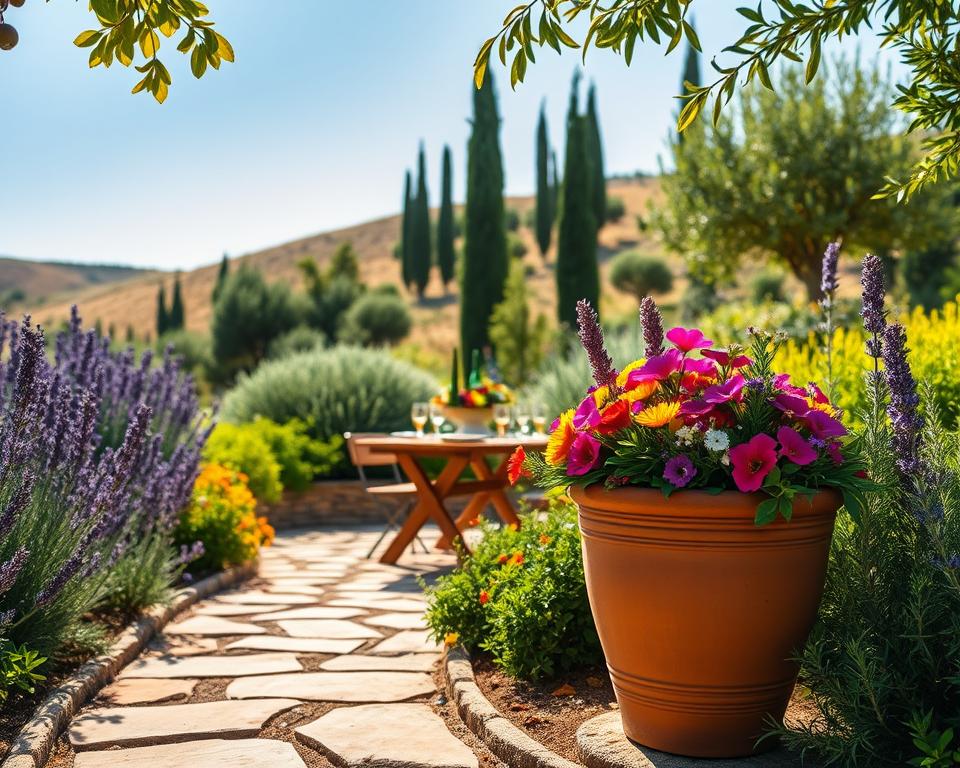
A Mediterranean garden can significantly extend your outdoor living space. By incorporating elements like pergolas, outdoor seating areas, and terracotta pots, you can create inviting spaces that encourage you to spend more time outdoors. This not only enhances your living experience but also increases the usable space in your home.
Creating a Holiday Atmosphere at Home
One of the joys of a Mediterranean garden is the holiday atmosphere it creates. With its lush plants, rustic decor, and inviting spaces, you can bring the feel of a Mediterranean holiday to your own home. This can be particularly enjoyable during the summer months when outdoor living is at its peak.
| Benefits | Description |
|---|---|
| Drought Resistance | Plants adapted to survive with minimal water, reducing watering needs. |
| Low Maintenance | Hardy plants require less pruning, watering, and care. |
| Extended Outdoor Space | Incorporating elements like pergolas and outdoor seating areas. |
Planning Your Mediterranean Garden Layout
A successful Mediterranean garden layout begins with understanding your garden’s unique conditions. To create a thriving oasis, you need to assess your space carefully and make informed decisions about its design.
Assessing Your Space and Sunlight Exposure
Before you start planting, it’s crucial to evaluate how much sunlight your garden receives. Most Mediterranean plants love full sun, so identifying the sunniest areas is key. Consider using a sunlight gauge or simply observing your garden throughout the day to determine the sunniest spots.
Creating Functional Zones
A well-designed Mediterranean garden often includes distinct functional zones. You might want to create a dining area, a relaxation zone, or a herb garden. Use hardscaping elements like pathways and terracing to define these areas and create a sense of flow.
Incorporating Hardscaping Elements
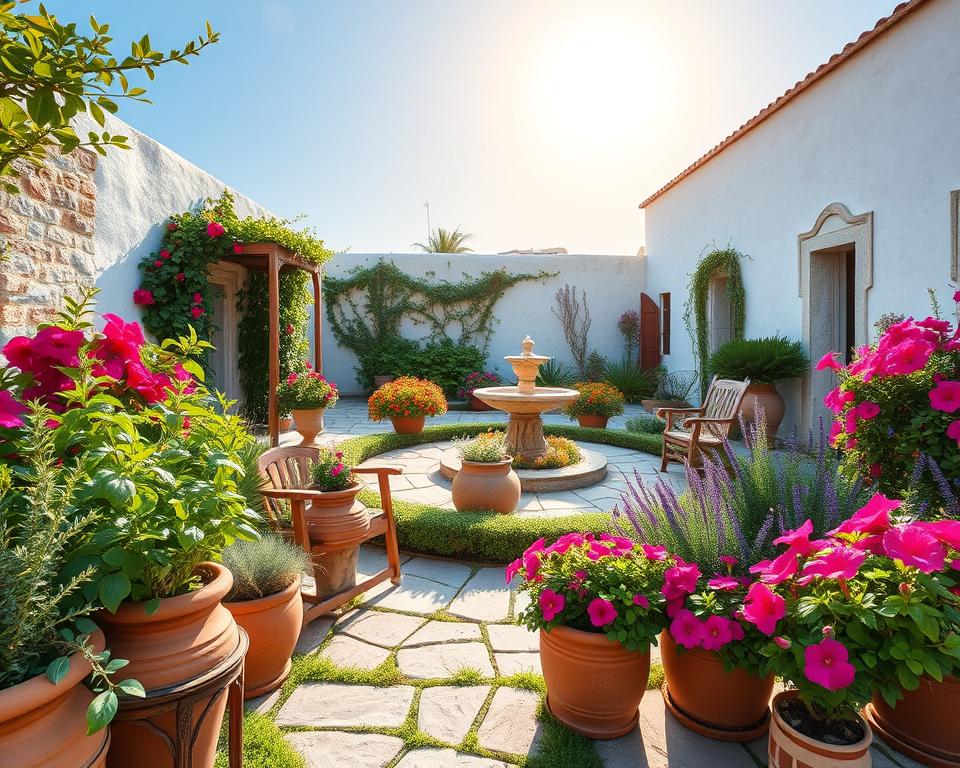
Hardscaping is a vital component of Mediterranean garden design. It includes features like stone pathways, gravel, and terracotta pots. These elements not only add visual interest but also help with drainage and soil temperature regulation.
Working with Existing Garden Features
When planning your garden layout, consider how to incorporate existing features. You might have mature trees, a pond, or a patio that can be integrated into your design. Assess how these features impact sunlight and drainage, and plan accordingly.
Some key considerations include:
- Preserving mature trees that provide shade
- Utilizing existing slopes or terracing
- Incorporating water features or ponds
By working with your garden’s existing features, you can create a more cohesive and sustainable Mediterranean garden.
Essential Elements to Create a Mediterranean Garden
The Mediterranean garden style is characterized by several distinctive elements that work together to create a warm and inviting outdoor space. To achieve this look, you’ll need to incorporate a mix of natural materials, thoughtful design, and specific features that evoke the feeling of the Mediterranean region.
Terracotta Pots and Containers
Terracotta pots are a hallmark of Mediterranean gardens, adding warmth and rustic charm to your outdoor space. These pots are not only aesthetically pleasing but also practical, as they help to regulate soil temperature and moisture. When selecting terracotta pots, choose ones that are frost-resistant if you live in an area that experiences cold winters.
Gravel and Stone Pathways
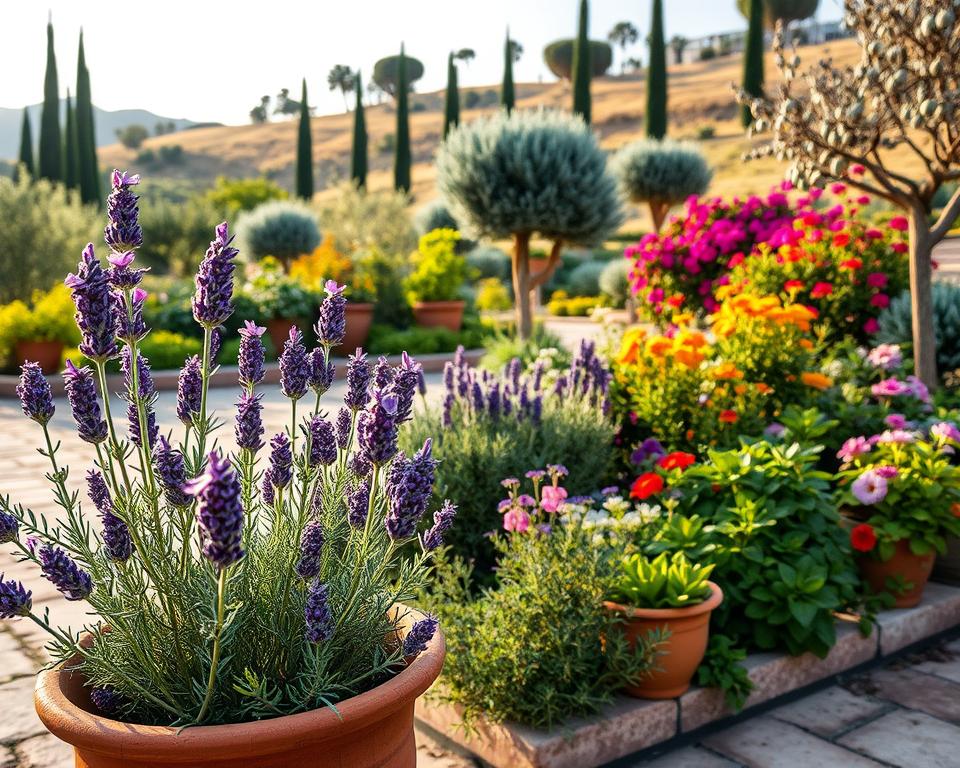
Gravel and stone pathways are another essential element of Mediterranean gardens. They provide a durable and low-maintenance solution for navigating your garden while also helping with drainage. Gravel pathways can be complemented with stone or terracotta edging to create a visually appealing and cohesive look.
Water Features and Fountains
The soothing sound of water is a key component of Mediterranean gardens. Incorporating water features or fountains can create a calming ambiance and attract wildlife to your garden. When designing your water feature, consider using natural materials such as stone or terracotta to blend seamlessly with the surrounding landscape.
Pergolas and Shade Structures
Pergolas and other shade structures are vital in Mediterranean gardens, providing respite from the sun and creating inviting areas for relaxation or dining. These structures can be adorned with climbing plants such as wisteria or grapevines, further enhancing the Mediterranean feel.
Mediterranean-Style Garden Walls and Boundaries
The boundaries of your garden play a significant role in defining its overall aesthetic. Mediterranean-style garden walls are typically constructed from natural stone or stucco, materials that blend harmoniously with the surrounding landscape. These walls not only provide privacy but also help to create a sense of enclosure, characteristic of Mediterranean gardens.
By incorporating these essential elements, you can create a Mediterranean garden that is both beautiful and functional, providing a serene retreat for years to come.
Preparing the Soil for Mediterranean Plants
Creating a lush Mediterranean garden starts with preparing the right soil environment for your plants. Mediterranean plants are adapted to thrive in well-draining, often poor soils, so it’s essential to replicate these conditions in your UK garden.
Improving Drainage in Heavy UK Soils
Many UK gardens have heavy clay soils that can be detrimental to Mediterranean plants due to their tendency to waterlog. Improving drainage is crucial. One effective method is to add organic matter like compost or well-rotted manure to the soil. This not only enhances drainage but also improves soil structure.
Creating Raised Beds for Better Drainage
For gardens with very heavy clay, consider creating raised beds. Raised beds allow for better control over soil composition and drainage. Fill your raised beds with a mix of topsoil, compost, and perlite or sand to ensure good drainage. This will provide your Mediterranean plants with the dry, well-draining conditions they prefer.

Soil pH Requirements
Mediterranean plants generally thrive in slightly alkaline to neutral soils, with a pH between 6.0 and 8.0. Testing your soil pH is a crucial step. If your soil is too acidic, you can raise the pH by adding lime. Conversely, if it’s too alkaline, incorporating elemental sulfur or peat moss can help lower it.
| Soil pH | Adjustment Needed | Amendment |
|---|---|---|
| Too Acidic (<6.0) | Raise pH | Lime |
| Too Alkaline (>8.0) | Lower pH | Elemental Sulfur or Peat Moss |
Adding Appropriate Amendments
Depending on your soil type, different amendments may be necessary. For chalky or clay soils, adding organic matter can help improve soil structure and fertility. In sandy soils, incorporating compost can enhance water retention.
Working with Chalky or Clay Soils
For chalky soils, which are alkaline and often nutrient-poor, incorporating plenty of organic matter can help. In clay soils, which are dense and prone to waterlogging, adding grit or sharp sand can improve drainage. Understanding your soil type is key to making the right amendments.
By carefully preparing your soil, you can create an ideal environment for your Mediterranean plants to flourish, enjoying a beautiful and thriving garden.
Selecting Mediterranean Trees for UK Gardens
The right Mediterranean trees can thrive in UK gardens, providing a lush, Mediterranean ambiance. When selecting trees, it’s essential to choose varieties that are resilient to the UK’s temperate maritime climate, which can be quite different from the Mediterranean region’s climate.
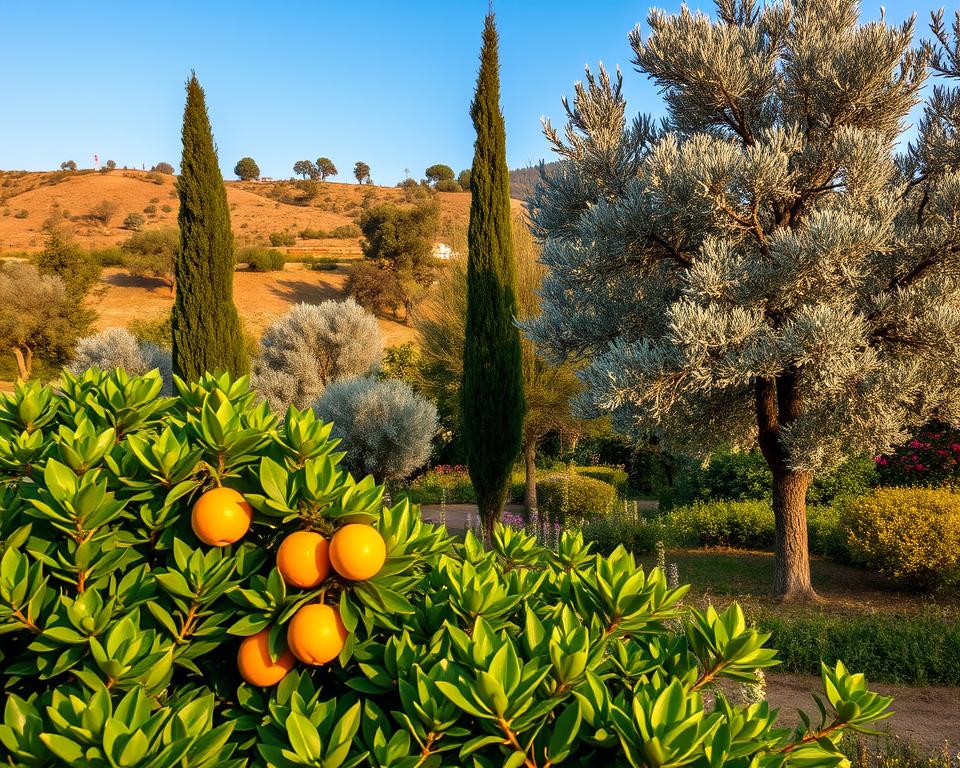
Olive Trees (Olea europaea)
Olive trees are quintessential Mediterranean trees, known for their silvery leaves and ability to thrive in dry conditions. In the UK, they require protection during harsh winters.
Cultivation and Winter Protection
To cultivate olive trees successfully, ensure they are planted in well-draining soil and receive full sun. During winter, protect them with fleece or bring potted trees under cover to shield from frost.
Key benefits of olive trees include:
- Drought tolerance
- Evergreen foliage
- Aesthetic appeal
Cypress Trees (Cupressus sempervirens)
Cypress trees are another popular choice for Mediterranean gardens. They are relatively hardy and can tolerate the UK’s climate, provided they are sheltered from harsh winds.
Fig Trees (Ficus carica)
Fig trees are a delicious addition to any garden, offering both shade and fruit. In the UK, they may need winter protection to prevent damage from frost.
Cold-Hardy Citrus Options
While citrus trees are generally sensitive to frost, there are cold-hardy options available that can tolerate cooler temperatures. These make excellent choices for UK gardens.
Container Growing for Frost Protection
Growing citrus trees in containers allows you to move them to protected areas during winter, safeguarding against frost damage. This method also enables better soil control and mobility.
Tips for growing citrus trees in the UK:
- Choose cold-hardy varieties like Satsumas or Kumquats.
- Use containers that can be moved indoors or under cover during winter.
- Ensure good drainage and fertile soil.
Mediterranean Shrubs and Perennials That Thrive in British Conditions
Mediterranean gardens in the UK can be just as vibrant as their southern European counterparts with the right selection of hardy plants. To create a lush and inviting outdoor space, you need to choose Mediterranean shrubs and perennials that are adapted to the UK’s temperate maritime climate.
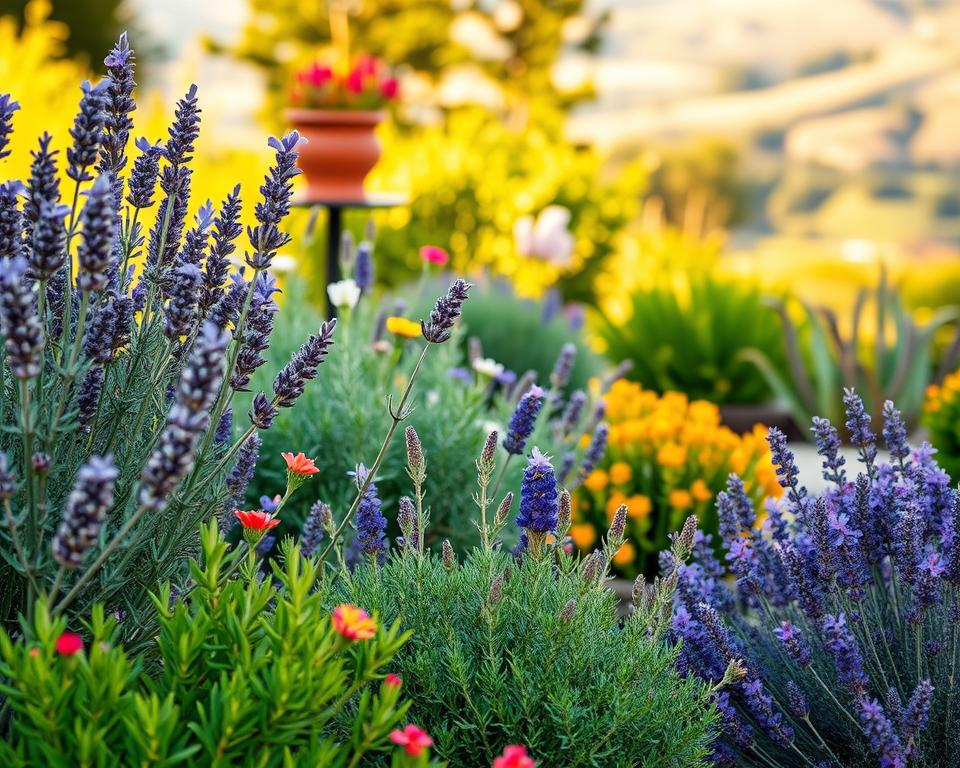
Lavender Varieties for UK Gardens
Lavender is a quintessential Mediterranean plant that thrives in UK gardens, particularly in well-drained soil and full sun. There are several varieties to choose from, each with its unique characteristics.
English Lavender vs. French Lavender
English lavender (Lavandula angustifolia) is more cold-hardy and suitable for the UK climate, while French lavender (Lavandula stoechas) is less tolerant of frost. For UK gardens, English lavender is generally a safer choice.
Rosemary and Other Mediterranean Herbs
Rosemary is another popular Mediterranean herb that can thrive in the UK, provided it is protected from harsh winters. Other herbs like thyme and oregano are also well-suited to British conditions.
- Rosemary: A fragrant, evergreen herb ideal for cooking and landscaping.
- Thyme: A low-growing, drought-tolerant herb perfect for ground cover.
- Oregano: A hardy, flavorful herb great for culinary use.
Drought-Tolerant Flowering Plants
In addition to herbs, there are many drought-tolerant flowering plants that can add color and vibrancy to your Mediterranean garden.
Seasonal Blooming Schedule
| Season | Flowering Plants |
|---|---|
| Spring | Tulips, daffodils |
| Summer | Roses, lavender, geraniums |
| Autumn | Asters, sedum |
Ornamental Grasses for Texture
Ornamental grasses can add texture and movement to your Mediterranean garden. Varieties like Stipa gigantea and Pennisetum are excellent choices for UK gardens, providing a dynamic element that complements other plants.
Creating a Mediterranean Herb Garden
Transforming a corner of your garden into a Mediterranean herb garden can be a rewarding experience, providing fresh flavors for your cooking year-round. A well-designed herb garden not only enhances your culinary endeavors but also adds a touch of Mediterranean flair to your outdoor space.
Design Considerations for Herb Gardens
When designing your Mediterranean herb garden, consider the layout and how it will be used. You can opt for either a formal or informal design.
Formal vs. Informal Layouts
A formal layout often features geometric patterns and neatly trimmed hedges, while an informal design may have a more relaxed, natural appearance. Choose a style that complements your existing garden aesthetic.
Essential Mediterranean Culinary Herbs
Mediterranean cuisine is renowned for its use of fresh herbs. Some essential herbs to include are:
- Rosemary
- Thyme
- Oregano
- Basil
- Lavender
Growing Conditions for Each Herb Type
| Herb | Sunlight | Watering | Soil |
|---|---|---|---|
| Rosemary | Full sun | Drought tolerant | Well-drained |
| Thyme | Full sun | Moderate | Well-drained |
| Oregano | Partial shade | Moderate | Moist, rich |
Harvesting and Using Your Herbs
To ensure a continuous supply of fresh herbs, learn how to harvest them correctly. Most herbs are best harvested in the morning, after the dew has dried but before the heat of the day. Use your homegrown herbs in a variety of dishes, from soups and salads to marinades and sauces.

By following these guidelines, you can create a thriving Mediterranean herb garden that enhances your cooking and adds beauty to your outdoor space.
Implementing Water-Wise Irrigation Systems
Water-wise irrigation systems are essential for maintaining a lush Mediterranean garden, especially in the UK’s variable climate. These systems help conserve water while ensuring your plants receive the right amount of moisture to thrive.
Drip Irrigation Solutions
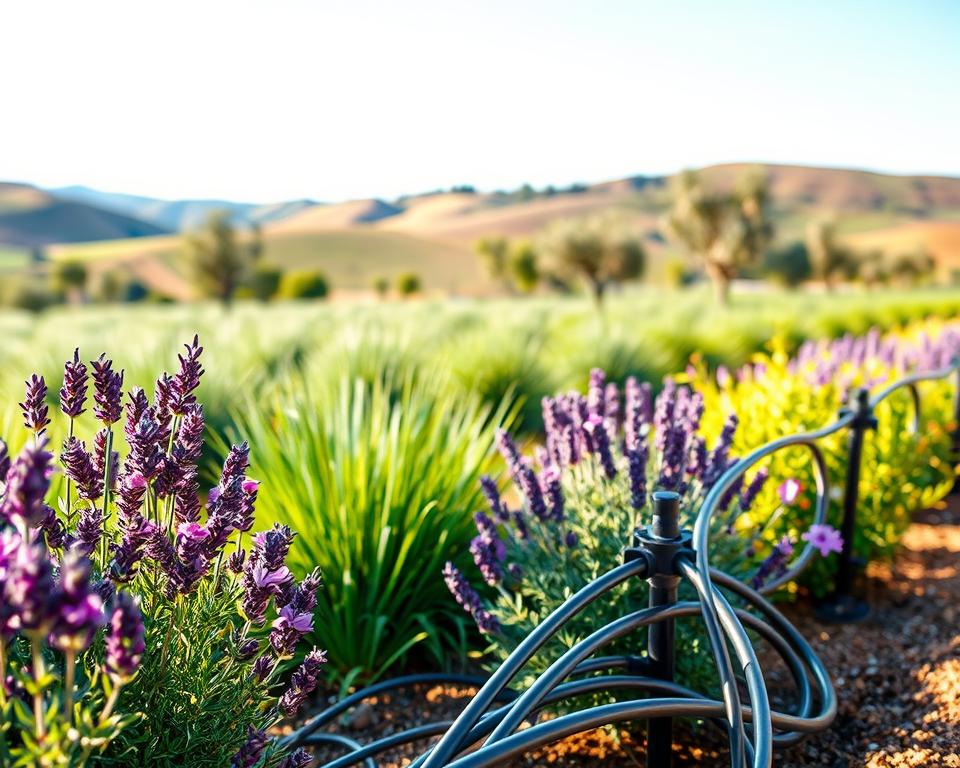
Drip irrigation is a highly efficient method that delivers water directly to the roots of plants, reducing evaporation and runoff. This targeted approach not only saves water but also promotes healthy plant growth.
Benefits of Drip Irrigation:
- Water conservation
- Reduced weed growth
- Improved plant health
Installation and Maintenance Tips
To get the most out of your drip irrigation system, proper installation and regular maintenance are crucial. Start by laying out the tubing along the plants you want to water, ensuring it’s close to the roots. Regularly check for leaks and clogged emitters to maintain efficiency.
Tip: Flush your drip irrigation system at the beginning and end of the growing season to remove any debris.
Rainwater Harvesting Techniques
Rainwater harvesting is another effective way to conserve water in your Mediterranean garden. By collecting and storing rainwater, you can reduce your reliance on mains water and create a more sustainable garden.
Steps to Implement Rainwater Harvesting:
- Install a rainwater tank or barrel
- Connect downspouts to direct rainwater into the tank
- Use a first flush device to divert initial runoff, reducing contamination
Watering Schedules for Mediterranean Plants
Mediterranean plants have adapted to dry conditions, but they still require careful watering. Establishing a suitable watering schedule is vital for their health and survival.
Adjusting for British Seasonal Rainfall
The UK’s rainfall varies significantly throughout the year, so it’s essential to adjust your watering schedule accordingly. During wetter months, reduce watering frequency, while in drier periods, increase it to ensure your plants receive adequate moisture.
Seasonal Watering Tips:
- Spring: Water regularly as plants start growing
- Summer: Increase watering frequency, especially during heatwaves
- Autumn: Gradually reduce watering as temperatures cool
- Winter: Water sparingly, as most Mediterranean plants are dormant
Seasonal Maintenance of Your Mediterranean Garden
As the seasons change, so do the needs of your Mediterranean garden, requiring adaptable maintenance strategies. To keep your garden thriving, it’s crucial to understand the seasonal tasks that will help maintain its beauty and health.
Spring Tasks and Preparations
Spring is a vital time for preparing your Mediterranean garden for the growing season. Start by cleaning up any debris that may have accumulated over winter. Prune plants that need it, and apply a balanced fertilizer to promote healthy growth. It’s also an ideal time to inspect your irrigation system and make any necessary repairs.
Summer Care and Watering
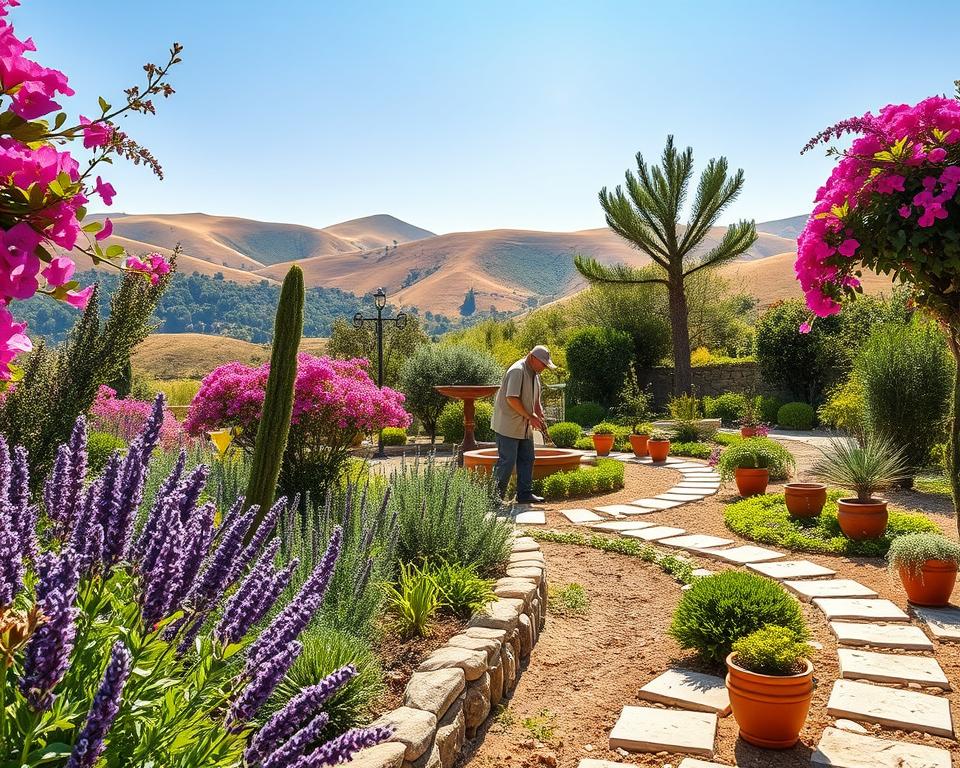
During the summer, your Mediterranean garden will require regular watering, especially during hot spells. However, it’s essential to avoid overwatering, which can be detrimental to many Mediterranean plants. Mulching around plants can help retain moisture and suppress weeds. Regularly inspect your plants for signs of pests or diseases and take action promptly if necessary.
“The key to a thriving Mediterranean garden is not just about the plants you choose, but how you care for them throughout the changing seasons.”
Autumn Pruning and Clean-up
Autumn is the time to start preparing your Mediterranean garden for the colder months. Prune any dead or damaged branches, and clean up fallen leaves and debris. This is also a good time to divide and replant perennials if needed. Adding a layer of compost or well-rotted manure can help improve soil health over winter.
Winter Protection Strategies
Protecting your Mediterranean garden from harsh winter conditions is crucial. Tender plants may need to be brought under cover or protected with fleece. Consider using winter protection methods such as covering sensitive areas with a breathable cloth or bringing potted plants under shelter.
Protecting Tender Plants from British Winters
Tender plants like citrus and olive trees need special care during the British winter. Move potted plants to a sheltered location, and consider wrapping the trunks of young trees with insulation to protect from frost. For plants that cannot be moved, use a frost cloth or bubble wrap to protect from freezing temperatures.
By following these seasonal maintenance tips, you can ensure your Mediterranean garden remains healthy and vibrant throughout the year.
Creating Mediterranean-Style Garden Rooms and Seating Areas
Creating a Mediterranean-style garden room or seating area can significantly elevate your outdoor living experience. These inviting spaces not only provide a tranquil retreat but also extend your living area, allowing you to enjoy the outdoors in comfort and style.
Outdoor Dining Spaces
Outdoor dining is a hallmark of Mediterranean living. To create an inviting outdoor dining space, consider using weather-resistant furniture that reflects the warm, earthy tones of the Mediterranean style.
Weather-Appropriate Furniture Selection
Choose furniture made from durable, weather-resistant materials such as teak, wrought iron, or synthetic wicker. These materials can withstand the elements while maintaining their aesthetic appeal.
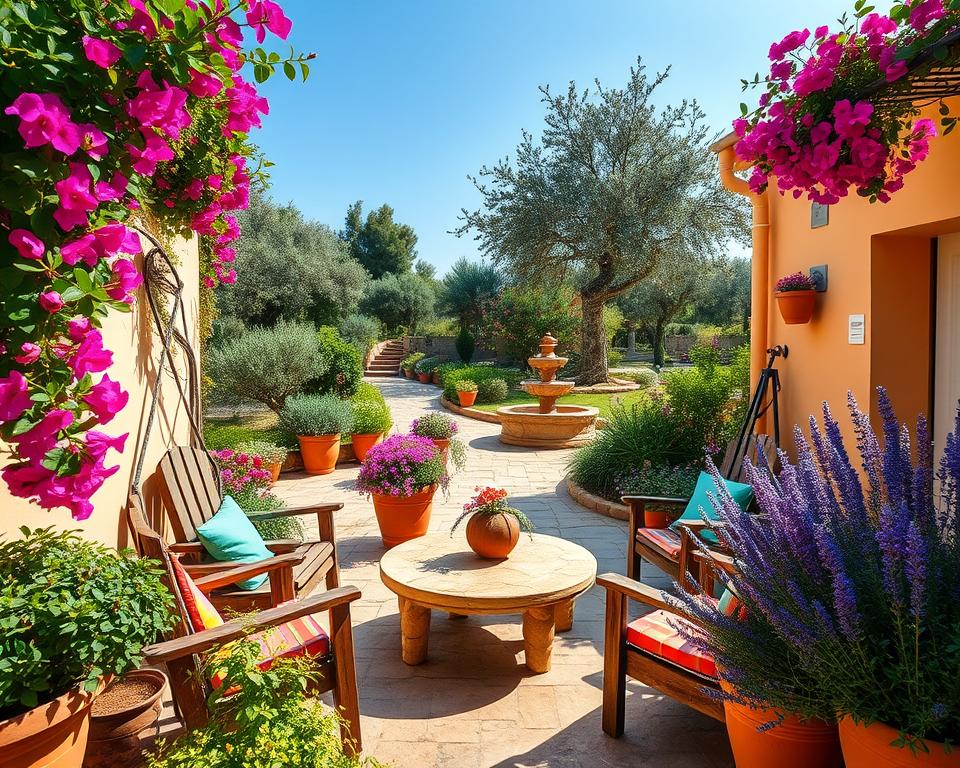
Relaxation Zones with Mediterranean Flair
Relaxation zones are essential in a Mediterranean garden, providing a serene escape from the hustle and bustle of daily life. Incorporate comfortable seating areas with plush cushions and soft throws to create inviting spaces.
Furniture and Accessory Selection
Selecting the right furniture and accessories is crucial in creating a Mediterranean-style garden room. Opt for pieces that reflect the region’s characteristic warmth and hospitality.
Lighting for Evening Enjoyment
To extend the use of your garden into the evening, incorporate appropriate lighting. String lights, lanterns, and solar-powered lights can add ambiance and warmth to your outdoor space.
By carefully designing your garden rooms and seating areas with these elements in mind, you can create a truly immersive Mediterranean experience in your UK garden.
Common Challenges and Solutions for Mediterranean Gardens in the UK
Despite the challenges, many UK gardeners successfully cultivate Mediterranean gardens by understanding and addressing the specific difficulties they face. One of the primary concerns is the UK’s unpredictable climate, which can be quite different from the Mediterranean region’s dry summers and mild winters.
Dealing with Excessive Rainfall
Excessive rainfall is a common issue in UK Mediterranean gardens. To mitigate this, ensure your garden has proper drainage. You can achieve this by adding organic matter like compost to the soil, which improves its structure and drainage capabilities. “As a gardener, it’s essential to be proactive in managing waterlogged soil,” says a renowned horticulturist.
Consider raising your plants on mounds or using raised beds to prevent waterlogging. Additionally, using gravel or stone pathways can help reduce water accumulation around plants.
Protecting Plants from Frost and Cold
Frost can be detrimental to Mediterranean plants that are not adapted to cold temperatures. To protect your plants, use a frost blanket or fleece to cover them during cold snaps. You can also bring potted plants under cover or move them to a sheltered location.
Temporary Structures and Coverings
Temporary structures like cold frames or polytunnels can provide protection from harsh winter conditions. These structures can be particularly useful for sensitive plants like citrus and olive trees.
Pest and Disease Management
Mediterranean gardens in the UK are not immune to pests and diseases. Regularly inspect your plants for signs of trouble. For pests, consider using organic control methods.
Organic Control Methods
Organic control methods include introducing beneficial insects, using neem oil, or applying insecticidal soap. For diseases, ensure good air circulation around plants and remove any infected material promptly.
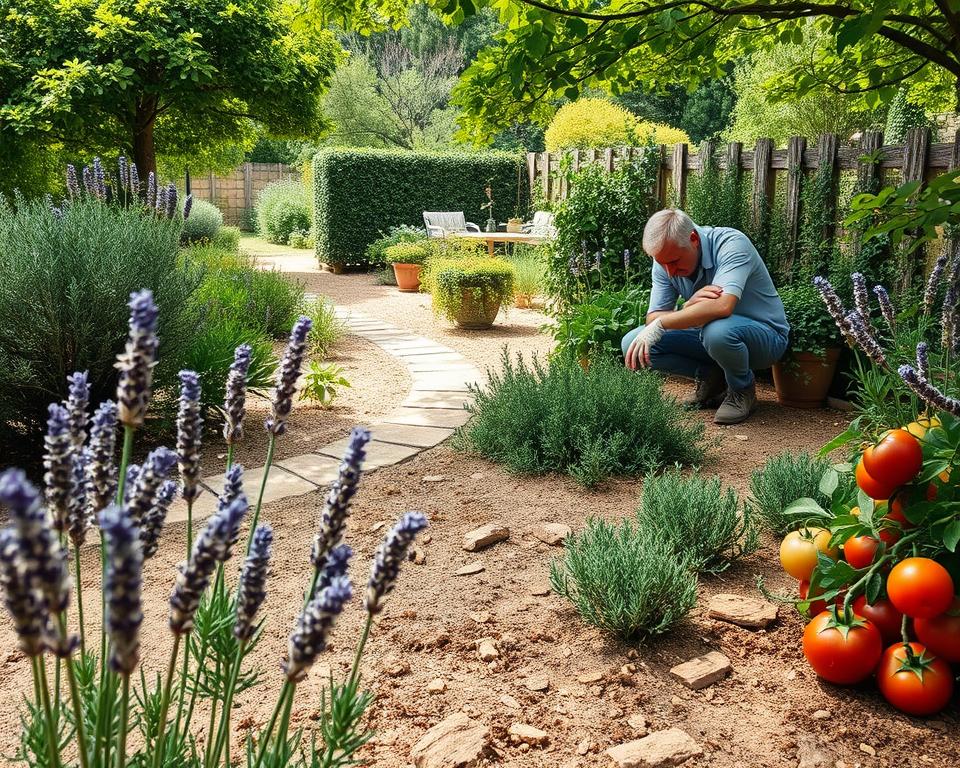
By understanding and addressing these challenges, you can enjoy a thriving Mediterranean garden in the UK. With the right strategies and a bit of planning, your garden can flourish despite the odds.
Conclusion: Enjoying Your Lush Mediterranean Retreat
As you complete your Mediterranean garden, you’ll be able to relax in a serene and inviting outdoor space. Your new garden retreat is designed to bring the beauty and charm of the Mediterranean to your doorstep, providing a tranquil escape from the stresses of everyday life.
You can now enjoy your garden by incorporating outdoor living areas, such as al fresco dining spaces or relaxation zones with comfortable seating. Make the most of your Mediterranean garden retreat by hosting gatherings or simply spending time surrounded by the sights and scents of the region’s characteristic plants.
To get the most out of your garden, consider how you can use the space to enhance your lifestyle. Whether you’re looking to create a peaceful haven or an entertainment area, your Mediterranean garden is sure to become a favourite spot. As you enjoy your garden, you’ll appreciate the benefits of your hard work, including the opportunity to connect with nature and relax in a beautiful outdoor setting.
FAQ
What are the key elements of a Mediterranean garden?
The key elements of a Mediterranean garden include terracotta pots, gravel and stone pathways, water features, pergolas, and drought-tolerant plants such as olive trees, lavender, and rosemary.
How do I adapt Mediterranean garden principles to the UK climate?
To adapt Mediterranean garden principles to the UK climate, you should focus on improving drainage, using drought-tolerant plants, and incorporating hardscaping elements such as gravel and stone. You should also consider using protective measures such as frost cloths or temporary structures to shield tender plants from harsh winters.
What are the benefits of creating a Mediterranean garden in the UK?
Creating a Mediterranean garden in the UK offers several benefits, including drought resistance, low maintenance requirements, and an extended outdoor living space. It can also create a holiday-like atmosphere in your own home.
How do I prepare the soil for Mediterranean plants?
To prepare the soil for Mediterranean plants, you should improve drainage, check the soil pH, and add necessary amendments. You may need to create raised beds to ensure good drainage, especially in heavy UK soils.
What Mediterranean trees are suitable for UK gardens?
Suitable Mediterranean trees for UK gardens include olive trees, cypress trees, fig trees, and cold-hardy citrus trees. You should consider providing winter protection for tender trees, such as container growing or using frost cloths.
How do I maintain my Mediterranean garden throughout the year?
To maintain your Mediterranean garden, you should perform seasonal tasks such as spring preparations, summer watering, autumn pruning, and winter protection. This includes protecting tender plants from frost, adjusting watering schedules according to UK seasonal rainfall, and using organic control methods to manage pests and diseases.
What irrigation systems are suitable for Mediterranean gardens?
Suitable irrigation systems for Mediterranean gardens include drip irrigation solutions and rainwater harvesting techniques. You should consider installing a drip irrigation system and implementing a watering schedule that adjusts for British seasonal rainfall.
How can I create a Mediterranean-style garden room or seating area?
To create a Mediterranean-style garden room or seating area, you should focus on outdoor dining spaces, relaxation zones, and weather-appropriate furniture selection. You should also consider adding lighting for evening enjoyment and incorporating Mediterranean flair through accessories and decor.