Essential Garten Room Buying Checklist Guide

This Garten Room Buying Checklist is designed as the definitive garden room guide for homeowners across the United Kingdom. Demand for UK garden rooms has surged since 2020 as more people choose garden offices, art studios and leisure spaces to support remote working and lifestyle changes.
The guide sets out a clear garden building checklist that covers planning and permitted development, realistic budgeting, size and layout choices, material and insulation options, services such as electrics and broadband, foundations and drainage, plus building regulations and warranties. It aims to give readers the practical detail needed to make confident decisions from first enquiry to installation.
Whether you are compiling a garden office checklist or considering a multi‑purpose studio, this short garden room guide targets homeowners who need professional, actionable advice to buy a garden room that suits long‑term needs and adds value to the home.
Inhaltsverzeichnis
Key Takeaways
- Garten Room Buying Checklist provides a step‑by‑step approach for UK homeowners.
- The garden room guide reflects rising demand for garden offices and leisure spaces.
- Include planning, budget, materials and services in your garden building checklist.
- Focus on long‑term usability: insulation, electrics and warranties matter.
- Use this garden office checklist to compare suppliers and verify compliance.
Why a Garten Room is Worth Considering for Your UK Home
A garden room offers a private, year-round space that can boost daily life and support mental health. Shorter commutes, clear separation between work and home, and a stronger link to nature help create calm. Access to daylight and views of greenery link to better mood and focus. These are key benefits of garden rooms many owners report.
Wellbeing garden room design focuses on light, ventilation and comfort. Good insulation and heating make the space usable across seasons. Thoughtful glazing and simple landscaping enhance natural light and privacy. Such features help the garden room fulfil its promise as a restful retreat and productive workspace.
Estate agents like Savills and Knight Frank say well‑built external living spaces can raise buyer interest. A tidy, compliant garden building that matches the house can lift curb appeal. While direct figures vary, the garden room value UK often reflects the quality of finish, access, and planning compliance. Clear documentation and attractive finishes strengthen resale prospects.
Choosing finishes and fittings that meet building regulations and match the home helps buyers see the space as genuine living area. Practical additions such as electrics, insulation and plumbing influence how estate agents categorise the unit. This affects perceived garden room value UK and how quickly a property appeals to potential buyers.
Garden rooms score highly for flexible uses. They work as a quiet home office, an art studio with acoustic treatment, a guest room with thermal comfort, or a compact home gym with reinforced electrics. Different garden room uses demand varied specifications, so plan heating, wiring and finishes to suit the main purpose.
Design for adaptability to maximise lifespan and utility. Simple partitions, robust flooring and extra power points make conversion between office, studio, guest accommodation and gym straightforward. A flexible garden building meets changing family needs while protecting the initial investment.
| Use | Key specification | Benefit |
|---|---|---|
| Home office | High-speed broadband, daylight glazing, insulation | Better work–life balance and productivity |
| Art or music studio | Acoustic treatment, durable flooring, task lighting | Improved creativity and noise control |
| Guest room | Thermal heating, privacy glazing, en-suite option | Comfortable short-term stays, added living space |
| Home gym | Reinforced electrics, moisture-resistant finishes, ventilation | Safe, dedicated exercise area without using inside rooms |
Garten Room Buying Checklist
Deciding on a garden room needs thought. Use this Garten Room Buying Checklist to guide choices on purpose, cost, permissions and site logistics. A clear checklist helps avoid surprises during delivery and fit-out.
Determining your primary purpose and usage patterns
Ask practical questions up front. Will the space be used daily for work, occasional hobbies, or overnight stays? Will you need plumbing for a shower or sink? Do you require extra soundproofing for music or recording?
Answers shape technical needs. A 9–12 m2 home office needs strong connectivity and modest heating. A recording studio demands acoustic treatment, controlled lighting and enhanced ventilation. Guest accommodation raises insulation and fire-safety standards.
Budgeting: costs to consider beyond the unit price
Factor in groundworks and foundations, electrics, heating, plumbing where required, insulation upgrades and glazing. Expect additional costs for doors and specialist windows, decking or pathways and landscaping work.
Allow for VAT, connection fees for electricity and broadband, planning application fees and consulting charges. Ballpark UK ranges: basic groundwork from £800–£2,500, electrics and heating £800–£3,000, advanced glazing or insulation £500–£2,000. Obtain detailed quotations to avoid surprises.
Planning permissions and permitted development rights in the UK
Check permitted development rules before ordering. Limits cover overall size, height and distance from property boundaries. Using the space as separate living accommodation can affect rights and may require formal planning permission.
Restrictions apply for listed buildings, conservation areas and national parks. Consult gov.uk guidance and consider a pre-application enquiry with your local planning authority when in doubt. Keep records of any advice given.
Site access and installation logistics
Assess delivery access for large panels or modular units. Measure vehicle turning space and note any tight gates or low branches. Crane lifts may be necessary for larger modules; confirm whether the supplier provides crane services.
Plan for landscaping disruption, storage of materials on site and working-hour limits that the local council enforces. Agree neighbour access arrangements if installers need to pass through adjacent properties. Provide clear access details to suppliers before ordering and include an installation checklist with delivery instructions and expected timescales.
Setting Your Budget and Understanding Costs
Decide your garden room budget before you start shopping. Clear figures help when comparing suppliers and choosing extras. Itemised quotes make it easier to spot where money is spent and to plan for revisions.
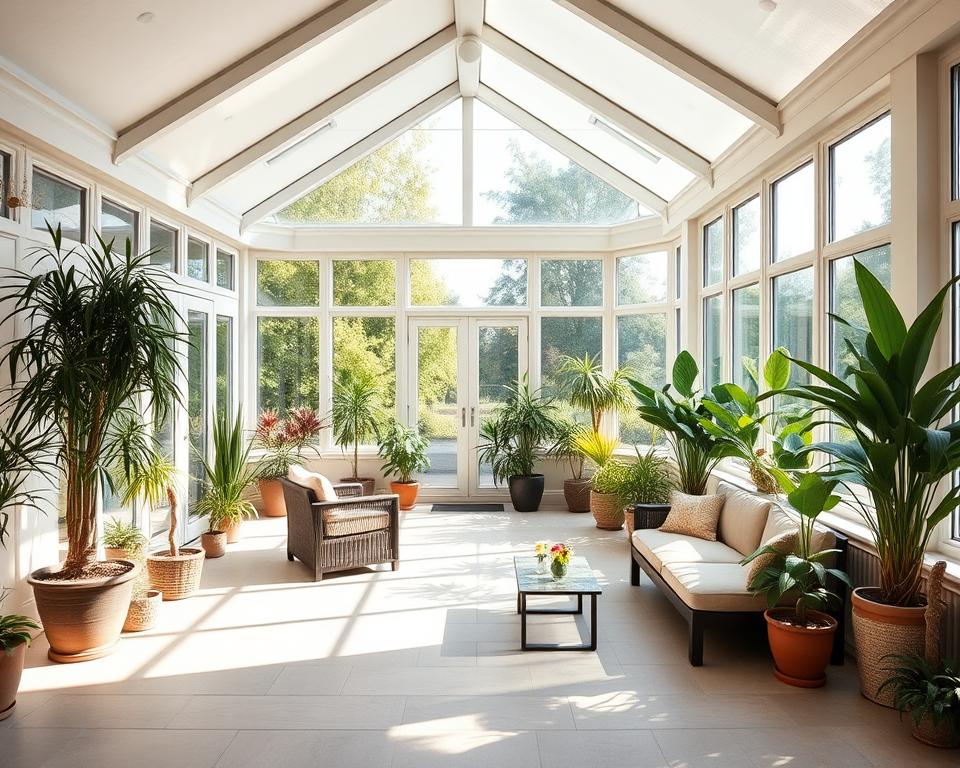
Price ranges for different sizes and specifications
Small basic garden rooms (6–8 m²) typically start at a lower price point. Mid-range bespoke units (10–20 m²) vary widely depending on glazing, heating and finish. Premium insulated pods or fully fitted studios and annexes sit at the top of the market.
Ask established brands such as Jacksons and Green Retreats for itemised breakdowns. Local bespoke builders can offer competitive alternatives. Get at least three detailed quotes to compare specification, warranty and timescale.
Hidden costs: foundations, electrics, insulation and landscaping
Foundations may require concrete slabs, screw piles or a sleeper base, each with different costs. Drainage and ground works add to the bill if the site needs levelling or improved runoff.
Electrics often need a new consumer unit, RCD protection and proper circuits for heating and appliances. Heating systems, extractor fans for bathrooms and any plumbing raise costs further.
Insulation to building-regulation standards and internal lining affect both comfort and running costs. Landscaping, pathways and waste removal are typical extras that help your garden building sit well in the plot.
Remember VAT rules that differ for supply-only and supplied-and-fitted installations. Allow a contingency of 5–15% for unexpected items and on-site surprises.
Financing options and cost-saving strategies
Common ways to finance a project include personal loans, home improvement loans, remortgaging or using savings. If the space is genuinely used for business, speak to an accountant about claiming costs or using business expenses.
To reduce spend, consider phased installation, simpler cladding and standard modules from reputable manufacturers. Doing non-specialist tasks yourself, such as decorating and furnishing, will lower labour costs.
Obtain multiple competitive quotes, confirm what is included and ask suppliers about payment milestones. A clear plan and disciplined garden room budget keep the project on track and avoid last-minute decisions that push up garden room costs UK.
Choosing the Right Size and Layout
Deciding on the correct footprint for a garden room starts with a careful survey of the site. Measure the available garden space and note sightlines from the house and neighbouring properties. Check boundary distances required by local regulations, mark underground services such as cables and drains, and assess slope, tree locations and root protection zones before settling on dimensions. Plan drainage runs and sunlight angles to avoid siting the building where water pools or shade limits use.
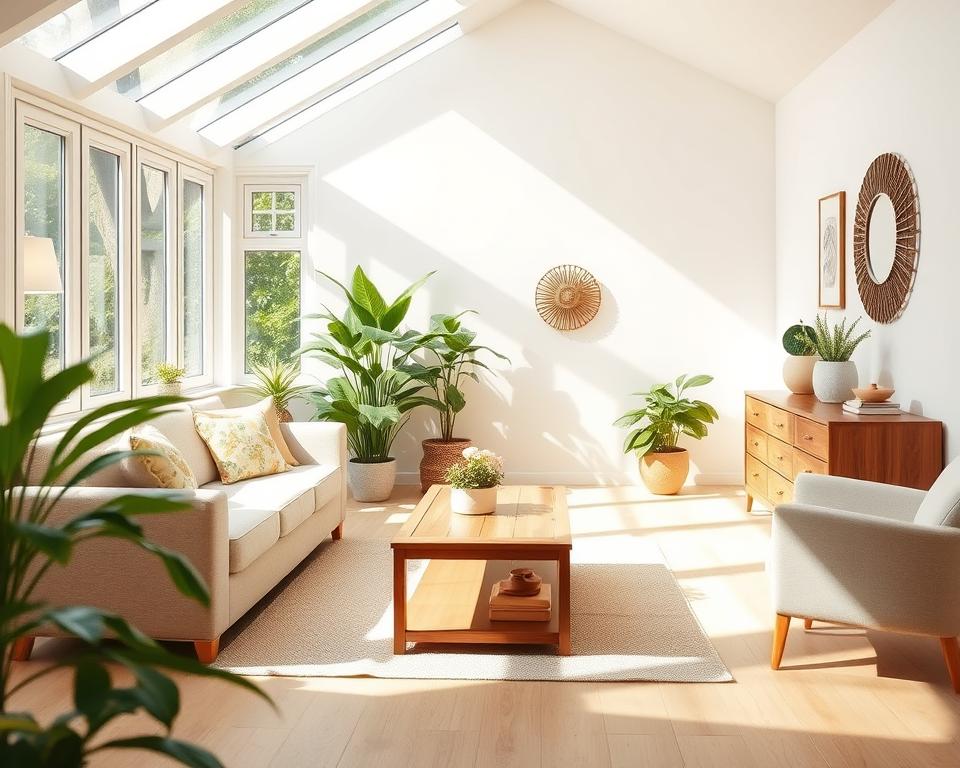
Use simple sketches to test options. Draw a scale plan of the garden, then overlay likely garden room sizes to compare impact on lawn, paths and planting. This approach helps with space planning garden room decisions and shows how different garden room layout choices affect sightlines and privacy. Add proposed screening or boundary planting to see how neighbours’ views will be managed.
Internal layout must match the intended use. For a home office, place a desk near glazing for daylight with storage units along one wall. For a studio, create flexible zones that allow an open work area and a separate tidy-up zone. A guest room benefits from a fold-away sofa bed and compact kitchenette. Keep circulation clear: allow at least 900mm for corridors and 1,200mm in primary activity areas to avoid cramped movement.
Position services where they least disrupt the plan. Locate power points close to desks, media hubs and kitchenettes. Pre-plan heating and ventilation so radiators, underfloor pipes or MVHR units do not block walkways or storage. Fit lighting circuits to task areas and add dimming for mood control. Thoughtful placement reduces later rewiring and keeps the garden room layout efficient.
Design for storage from the start. Built-in cabinets, high shelves and under-bench drawers save floor space. Use multi-function furniture such as benches with storage and wall-mounted desks that fold away. These measures improve day-to-day usability and support clean lines in a compact garden room layout.
Make adaptability a priority to create a future-proof garden room. Use modular furniture and moveable partitions to allow repurposing from office to guest suite or gym. Install extra conduits and spare cabling so future technologies can be added with minimal work. Over-spec the electrical supply slightly to provide capacity for additional IT, appliances or heating in years to come.
| Design Focus | Practical Tip | Benefit |
|---|---|---|
| Site assessment | Measure garden, map sightlines, locate services and trees | Reduces surprises and protects roots and utilities |
| Size testing | Overlay scaled room footprints on plan | Clarifies impact on lawn and circulation |
| Internal layout | Define activity zones, allow 900–1,200mm clearances | Improves comfort and function |
| Services positioning | Place sockets, heating and ventilation before finishes | Minimises retrofit work and preserves layout |
| Storage solutions | Use built-in and multi-function furniture | Maximises usable floor area |
| Future-proofing | Fit extra cabling, larger electrical capacity, modular fittings | Allows easy reconfiguration and technology upgrades |
Material and Construction Options
Choosing the right materials shapes how a garden room looks, performs and lasts. This short guide compares common approaches to structure and cladding. It helps you weigh longevity, maintenance and environmental credentials when you discuss options with suppliers such as Timberwise or Oakwrights.
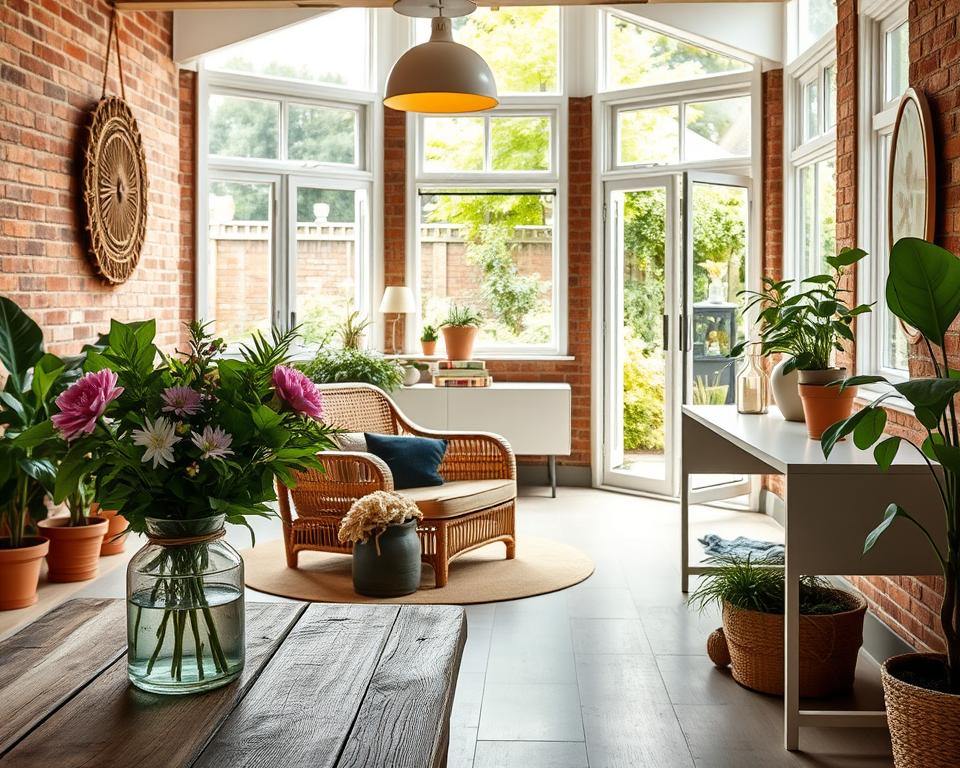
Timber frames deliver a warm, traditional finish and strong thermal performance. They are straightforward to modify on site and suit bespoke joinery. Preservative treatments extend life, while FSC-certified timber supports a sustainable garden room approach.
Engineered steel and composite systems give slimmer profiles and a higher strength-to-weight ratio. These frames reduce movement and can allow larger glazed runs. Modern modular systems use precision components for faster installation and lower long-term maintenance.
Timber frames versus steel or composite systems
Timber is forgiving during construction and repairs. It insulates well and ages with character. Expect a maintenance cycle of staining or oiling every few years, depending on exposure.
Steel and composite frames resist rot and need fewer routine interventions. They can cost more upfront yet offer slimmer sections and stable performance in varied climates. Ask manufacturers for movement and thermal break details when comparing timber vs steel garden room choices.
Cladding choices: timber, metal, render and composite panels
Larch and cedar cladding give a natural appearance that weathers attractively. They provide additional insulating value while requiring periodic re‑oiling or treatment.
Metal cladding, typically aluminium or steel, is robust and low-maintenance. It must be fitted with appropriate thermal breaks to avoid cold bridges. Check fire ratings for any metal system you consider.
Render offers a clean, contemporary finish. It relies on the correct substrate and breathable layers to avoid trapped moisture. Rendered systems suit planning areas where a smooth façade is preferred.
Composite panels deliver consistent colour and minimal upkeep. Many include recycled content. Review warranties and fire performance statements for cladding options garden room proposals.
Durability, maintenance and sustainability considerations
Compare whole-life costs rather than just initial price. Timber needs periodic treatment; metal and composite panels often carry longer warranties. Typical maintenance schedules and manufacturer datasheets should be requested before purchase.
Sustainability matters for long-term value. Look for FSC or PEFC certification on timber, recycled content in composites and low-embodied-carbon steel where available. A sustainable garden room balances durable materials with responsible sourcing and clear maintenance guidance.
Ask suppliers for material datasheets, expected maintenance cycles and warranty terms. That information clarifies trade-offs between aesthetics, performance and lifetime cost when choosing garden room materials and cladding options garden room designs.
Insulation, Heating and Energy Efficiency
Good thermal design turns a seasonal shed into a comfortable, year-round space. This section covers practical choices for garden room insulation and heating. It explains how to reach U-values that meet or exceed Part L, while keeping running costs low for an energy efficient garden room.
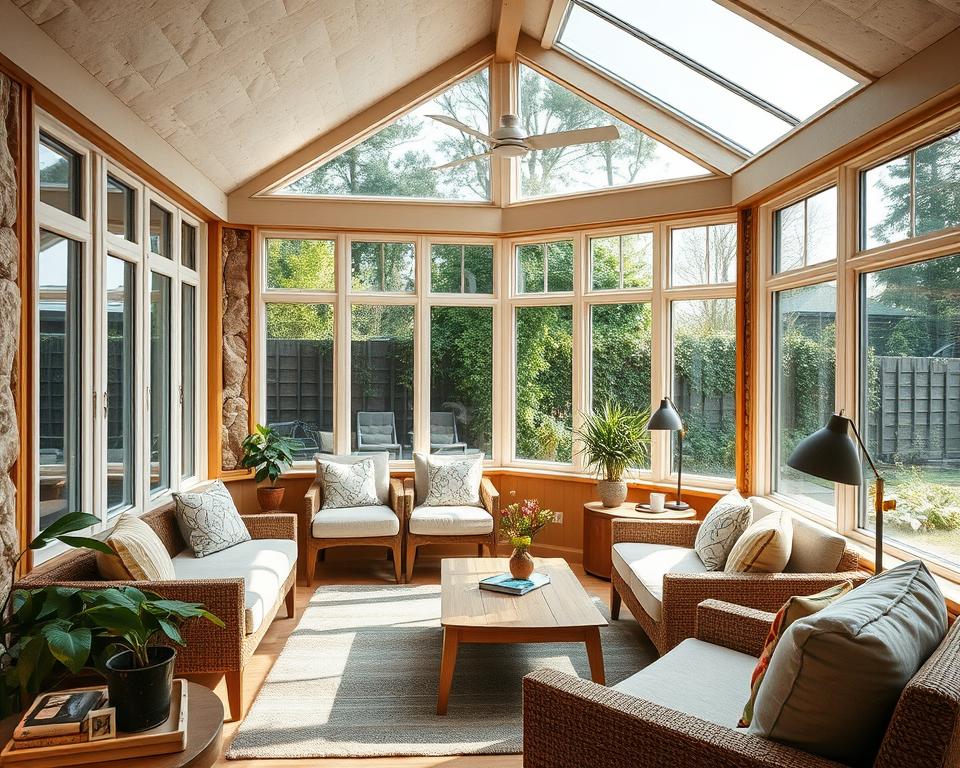
Types of insulation suitable for garden rooms
Rigid PIR boards give a high thermal value in thin layers. They suit tight spaces where floor or roof depth is limited.
Mineral wool offers good fire performance and sound absorption. It works well in timber stud walls and loft-style roofs.
Sheep’s wool is breathable and sustainable. It helps manage moisture in timber structures and adds damp-proofing benefits.
Spray foam achieves air sealing and insulation in one application. Caution is needed because some foam systems can reduce breathability and risk trapped moisture in timber frames.
Insulated panel systems combine structure and thermal performance. They simplify build time and can deliver consistent U-values across walls and roofs.
Heating options: electric, underfloor, heat pumps
Electric radiators and panel heaters are easy to install and control. They heat quickly for intermittent use but cost more to run on standard tariffs.
Infrared panels give focused warmth to occupants and reduce wasted heat in small rooms. They are efficient for desks or seating areas.
An underfloor heating garden room can use electric mats or wet systems. It provides even distribution and comfortable surface temperatures, yet involves higher installation costs and careful floor build-up planning.
Air-source heat pumps are efficient for larger or very well-insulated rooms. They require outdoor space for the unit and a larger initial investment, but running costs fall as efficiency improves.
Thermostatic controls and smart thermostats cut waste by zoning and scheduling. Pairing these controls with proper insulation improves cost-effectiveness.
Improving thermal performance and reducing running costs
Airtightness prevents cold draughts and heat loss. Use quality door seals, frame gaskets and sealed service entries to maintain performance.
High-performance double or triple glazing with warm-edge spacers reduces heat transfer. Thermal breaks in aluminium frames stop unwanted conduction.
Mechanical ventilation with heat recovery or positive input ventilation helps control moisture and preserve insulation performance without losing warmth.
Energy-efficient appliances and LED lighting lower electric demand. Adding solar PV panels or battery storage offsets consumption and supports a net-zero approach.
| Feature | Pros | Cons |
|---|---|---|
| Rigid PIR boards | High R-value per mm; slim build-up | Requires careful bridging of thermal breaks |
| Mineral wool | Good fire and acoustic performance | Thicker depth needed for target U-values |
| Sheep’s wool | Breathable and sustainable | Higher material cost; needs pest-proofing |
| Spray foam | Seals gaps and insulates in one pass | Can trap moisture in timber without vapour control |
| Insulated panels | Speed of build; consistent thermal performance | Limited on-site adjustability |
| Electric heaters | Low capital cost; simple fit | Higher operational cost |
| Underfloor heating garden room | Even heat; comfortable floors | Higher installation cost; floor height impact |
| Air-source heat pump | Low running cost on well-insulated buildings | Higher upfront cost; needs external space |
Windows, Doors and Natural Light
Good glazing, robust furniture and careful siting transform a garden room into a bright, secure and usable space all year round. Choices for glass, frames and openings shape daylight levels, thermal comfort and how safe the room feels. Below are practical options to help you decide what suits your plot and purpose.
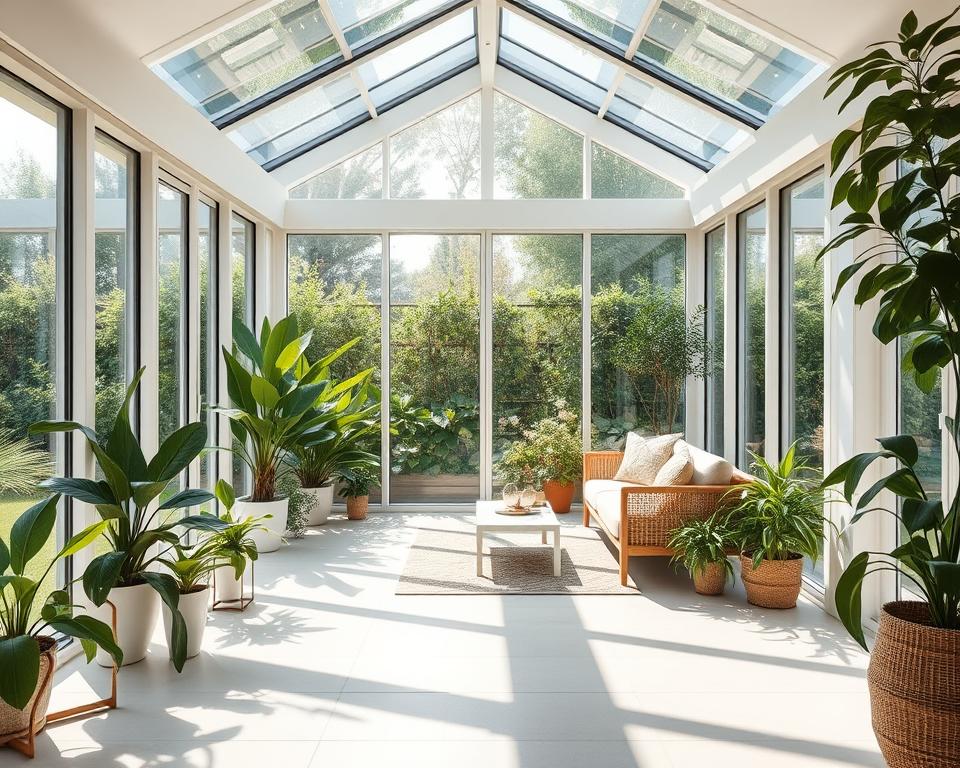
Glazing choices for daylight and thermal efficiency
Double glazing offers a reliable balance of cost and insulation for most builds. Triple glazing raises thermal performance further on cold sites and helps cut noise in busy areas.
Low-E coatings and argon or krypton fills reduce heat loss while still admitting daylight. Insulated frames, such as thermally broken aluminium or timber with a warm edge, stop thermal bridging around large panes.
Consider large glazed elevations or rooflights to create a natural light garden room. Add solar control glass or external shading where south or south-west glazing risks overheating in summer.
Security and locking mechanisms for external openings
Fit multipoint locking systems on garden room doors to resist forced entry. Choose laminated or toughened glass for higher impact resistance in glazed doors and windows.
Select hardware tested to PAS 24 where relevant and complement locks with window restrictors for child safety. Alarms or magnetic contact sensors can link to your home system for added protection.
Brands such as Yale, ERA and ASSA ABLOY supply a wide range of certified locks and ironmongery for garden room doors and secure garden room windows, offering tested reliability and spare-part support.
Placement and orientation for optimal light and privacy
Orient primary glazing to the south or south-west to maximise daylight and late sun, providing sufficient shading is planned. East-facing glazing gives pleasant morning light without high afternoon heat.
Balance views with neighbour privacy by using high-level glazing or frosted panels where lines of sight are intrusive. External screening such as trellis or hedging preserves light while creating a private aspect.
Plan window and door positions to follow sun paths and sightlines. Use a mix of fixed panes, casements and sliding doors to control ventilation, daylight and access without compromising secure garden room windows.
| Feature | Typical benefit | When to choose |
|---|---|---|
| Double glazing | Good insulation, cost-effective | Most UK gardens and moderate budgets |
| Triple glazing | Superior thermal and acoustic performance | Cold sites, near roads, or high-performance builds |
| Low-E + argon/krypton | Reduced heat loss, maintained light levels | Where energy efficiency is a priority |
| Solar control glass / external shading | Limits overheating, protects interiors | South/south-west glazed elevations |
| Multipoint locks + PAS 24 hardware | Enhanced security for doors and windows | Accessible ground-floor openings |
| Laminated or toughened glass | Improved impact resistance and safety | Large panes, doors, or vulnerable aspects |
| High-level/frosted glazing | Privacy without losing light | Close neighbours or overlooked gardens |
| Rooflights | Extra top-down daylight | Deep plans or where wall glazing is limited |
Electrical, Lighting and Technology Considerations
Getting the electrics, lighting and tech right makes a garden room useful year-round. Think about power capacity, the mood and function of lights, and reliable connectivity before installation. Early planning saves time and reduces retrofit costs.
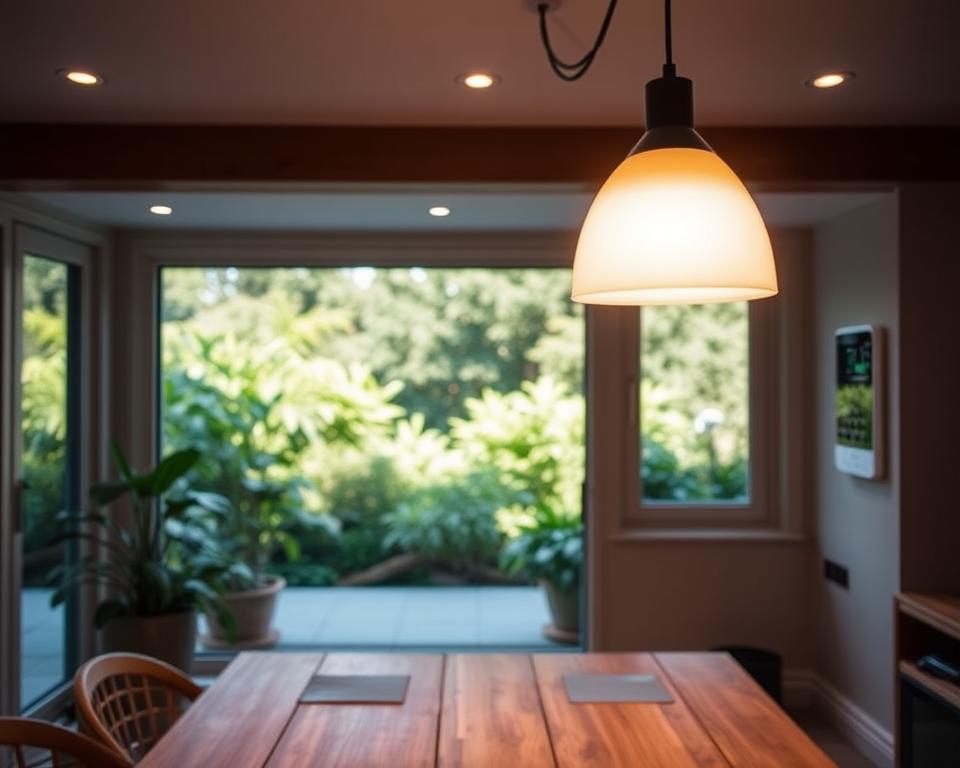
Power requirements and circuit planning
Start by listing heaters, computers, audio/AV gear and charging points to calculate the total load. This figure guides whether you need a new supply or can extend an existing outdoor feed.
Use a suitable consumer unit with RCD and MCB protection. For high-draw items, a dedicated radial or a sub circuit is often best. Running a new mains supply can add cost for excavation and meter work; extending an existing supply may be cheaper if cable routes are straightforward.
Hire a NICEIC or NAPIT-registered electrician to produce a full circuit plan and provide certification. That ensures safety and compliance with UK regulations.
Lighting design for mood and task needs
Adopt a layered lighting strategy: ambient, task and accent layers deliver flexibility. Use downlights or surface-mounted LEDs for general light, desk lamps or under-cupboard fittings for tasks, and wall washers or picture lights for feature accents.
Choose dimmable LEDs to control brightness and save energy. For colour temperature, pick 2700–3000K warm tones for relaxation and 4000K for focused work. Include multiple switch locations and consider motion sensors for practical convenience in a smart garden room.
Connectivity: broadband, smart home integration and cabling
Decide how to deliver internet early. Options include extending the home network with Ethernet, using powerline adapters, placing mesh Wi‑Fi extenders, or arranging a dedicated fibre drop when signal or speed is an issue.
Pre-wire with Cat6 Ethernet, plan for multiple power sockets and USB outlets, and add speaker cabling if you want integrated audio. Run conduits for future upgrades and coordinate routing with your installer and ISP to avoid repeated digs.
Smart controls for heating and lighting benefit from wired backbones where possible. Thoughtful cabling and a clear tech layout make a garden room future-ready and easy to maintain.
| Consideration | Recommendation | Typical Benefit |
|---|---|---|
| Power supply | Calculate load; use consumer unit with RCD/MCB; consider dedicated radial | Safe, compliant supply for heaters and appliances |
| Lighting layers | Ambient downlights, task lamps, accent fittings; dimmable LEDs | Flexible mood and task illumination with energy savings |
| Cabling | Pre-wire Cat6, speaker and USB outlets; install conduits | Future-proof network and AV with minimal disruption |
| Connectivity options | Ethernet extension, powerline adapters, mesh Wi‑Fi, or fibre drop | Reliable garden room broadband for work and streaming |
| Smart integration | Pre-plan control wiring and hub location; use reputable brands | Smooth smart garden room experience for heating and lighting |
| Installer | Use NICEIC or NAPIT-registered electrician; coordinate with ISP | Certified work, safe connections and straightforward handover |
Foundations, Drainage and Site Preparation
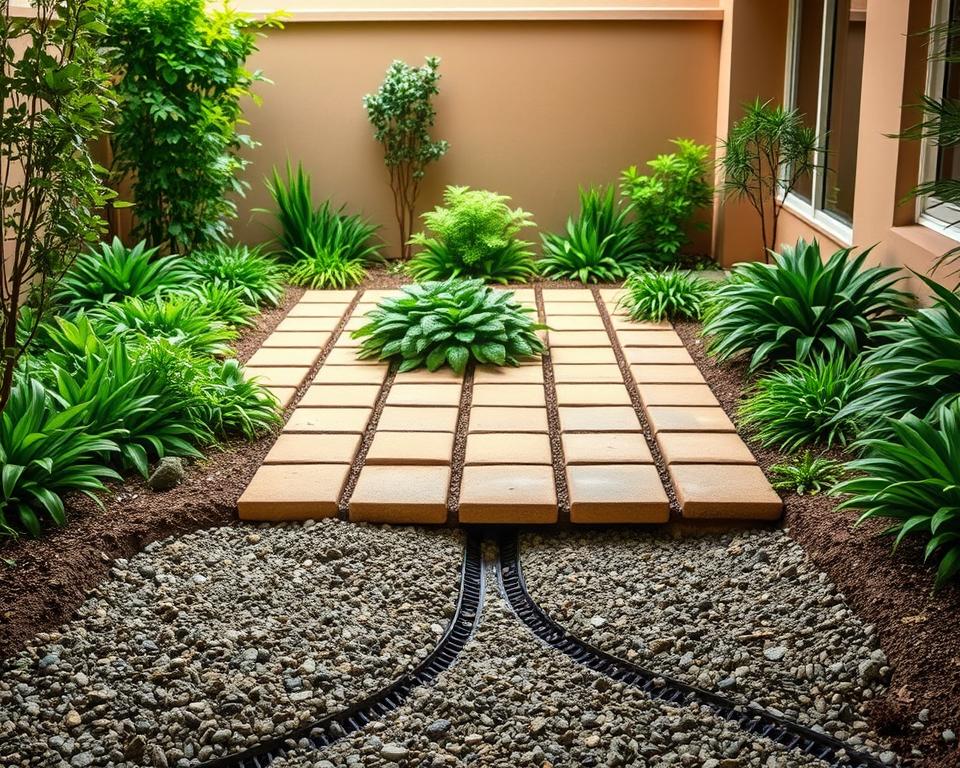
A careful start protects the finished garden room. Good site preparation garden building keeps the structure level, dry and safe. Think about soil type, access for plant and materials, and how water will move around the building.
Types of foundations suitable for garden rooms
Choose the foundation to match ground bearing capacity and unit weight. Concrete pad foundations suit lightweight cabins on firm ground. Suspended timber joist frames on adjustable pedestals work where ventilation beneath the floor is needed and for minor level adjustments.
Screw pile foundations garden room offer rapid installation with minimal excavation. They perform well on sloping sites and reduce disruption to lawns and tree roots. For heavier structures or poor ground, concrete strip foundations give continuous support and resist frost heave.
Assessing ground conditions and drainage needs
Carry out a visual check for peat, made ground, high water table or expansive clay. For larger or heavier garden rooms, commission a simple ground investigation. That test informs whether deeper or reinforced foundations are necessary.
Plan garden room drainage to manage surface water. Use soakaways when percolation tests pass. Where soakaways are unsuitable, connect to an existing drain with permission from the local authority or water company. Permeable paving around the building helps reduce run-off and lowers flood risk.
Working with contractors and site access considerations
Select a qualified groundwork contractor with experience in garden projects. Ask for references, insurance details and a clear method statement. Agree on traffic management, delivery routes and working hours before work starts.
Obtain any licences needed for skip placement or temporary road closures. Ensure Health and Safety compliance on site and include clear contract terms for responsibilities, timelines and payment schedules. A written schedule reduces disputes and keeps the build on track.
| Foundation Type | Best For | Ground Conditions | Typical Install Time |
|---|---|---|---|
| Concrete pad foundations | Light to medium garden rooms | Firm, well-draining soil | 1–3 days |
| Suspended timber joist on pedestals | Sites needing ventilation or minor levelling | Moderate soils, risk of damp | 1–2 days |
| Screw pile foundations garden room | Sloping sites, minimal disruption projects | Soft or variable soils, limited excavation | Half day to 2 days |
| Concrete strip foundations | Heavier buildings, poor ground | Expansive clay, deep frost zones | 2–5 days |
Planning Permission, Building Regulations and Legalities
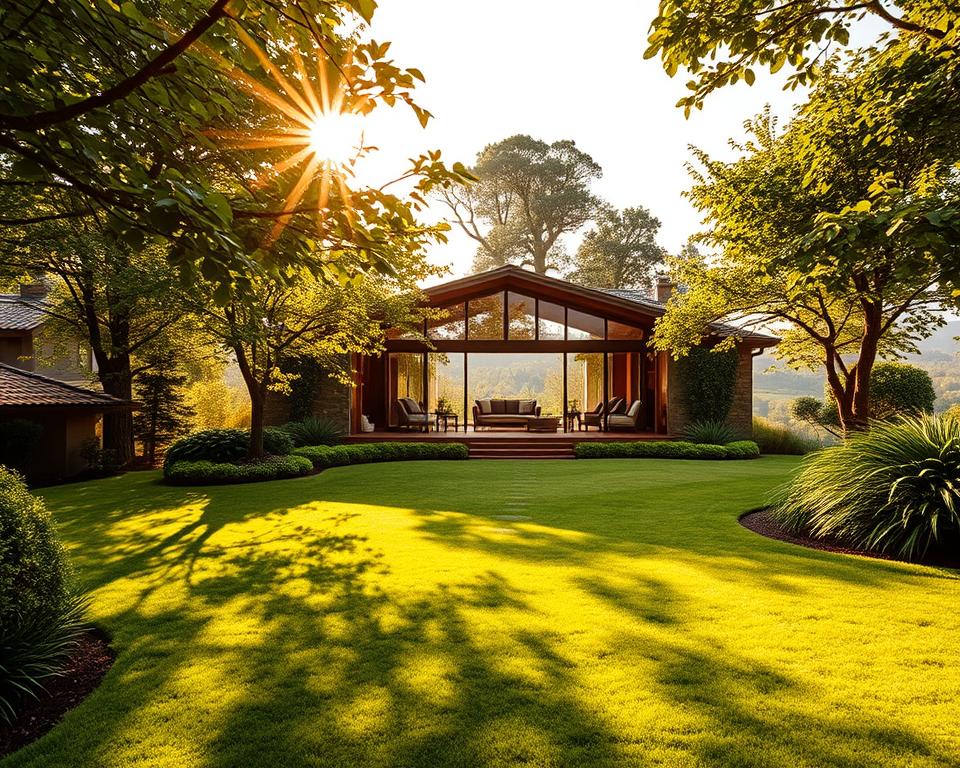
Fitting a garden room involves planning checks and legal steps that protect you and your neighbours. Small garden studios often sit within permitted development, but specific triggers can mean you must apply for formal consent. Start by checking guidance on gov.uk and seek pre-application advice from your local planning authority to avoid delays.
When planning permission is required
You will need planning permission if your garden room exceeds permitted development limits, sits forward of the principal elevation, or will be used as self-contained accommodation. Properties in conservation areas, national parks or near listed buildings face stricter controls. A full planning application is often needed when proposals materially affect neighbours or the street scene.
Building regulations compliance for safety and insulation
Garden room building regulations commonly cover structural stability, fire safety and thermal performance under Part L. Ventilation under Part F, electrical safety under Part P and means of escape rules also apply. Some demountable or temporary units may be exempt in narrow circumstances, but you should consult a building control officer or an approved inspector before assuming exemption.
Party wall and neighbour considerations in the UK
Works close to shared boundaries can trigger the Party Wall etc. Act 1996. If your plans affect a party wall or are within certain distances of a neighbour’s structure, you must serve notice. Disputes may lead to appointing surveyors to agree procedures and safeguards.
Talk to neighbours early and present clear plans. A written agreement or recorded consent avoids friction and future claims. Keep copies of all notices, agreements and approvals in case of later queries from building control or conveyancers.
If you are uncertain about any requirement, get formal advice. A planning consultant, building control officer or chartered surveyor can clarify when garden room planning permission UK or further compliance is necessary, and guide you through party wall garden room obligations.
Warranty, Aftercare and Supplier Reputation
Choosing a garden room is a long-term decision. Look beyond price and check the small print on guarantees, ask about aftercare, and vet suppliers carefully. A clear understanding of warranty cover and post-installation support reduces risk and keeps your new space performing well.
What to look for in guarantees and warranties
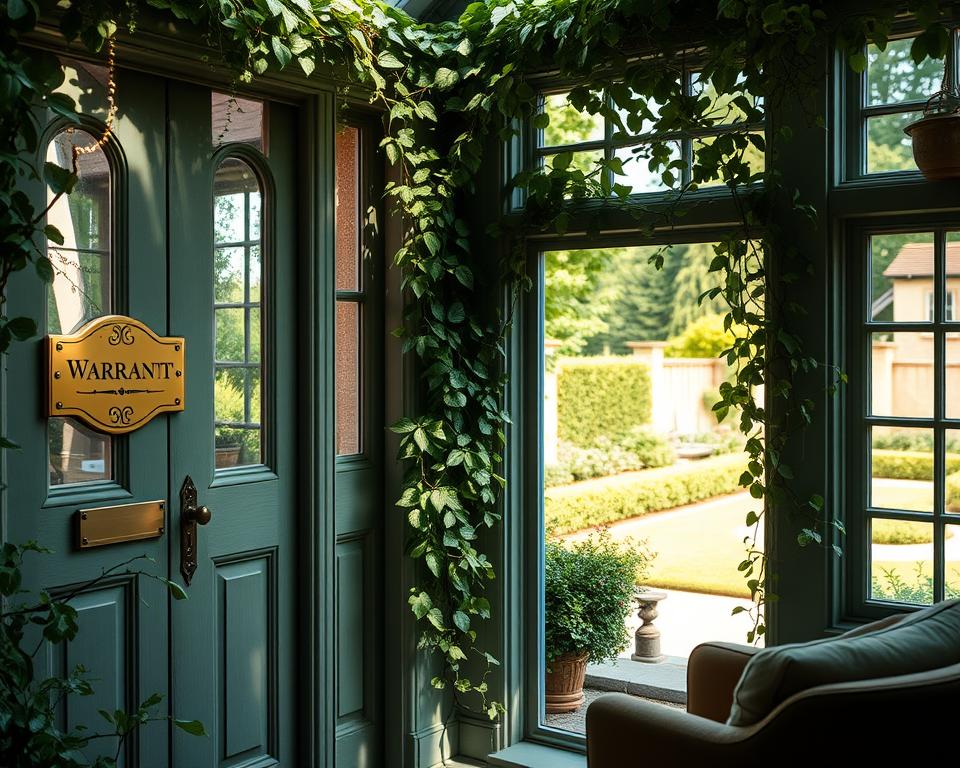
Seek written terms that spell out the length of cover for structural guarantees, cladding and roof warranties, and workmanship. Note exclusions such as wear and tear, accidental damage and unauthorised alterations. Find out if warranties are transferable when you sell the property and whether the supplier specifies remedies and timescales for repairs.
Checking supplier accreditation and customer reviews
Perform garden room supplier checks by confirming memberships with trade bodies such as the Federation of Master Builders and checking Constructionline entries. Look for certifications like FSC for timber and assess independent reviews on platforms such as Trustpilot and Which?. Ask for local references and, when possible, visit completed projects to inspect build quality first-hand.
Aftercare services, maintenance packages and spare parts
Discuss garden room aftercare options before signing. Good suppliers offer scheduled visits, prompt responses to defects and access to replacement parts for cladding, glazing and hardware. Consider annual garden room maintenance packages that include timber retreatment, checks on seals and servicing of mechanical systems to preserve performance and warranty validity.
Design and Interior Finishes
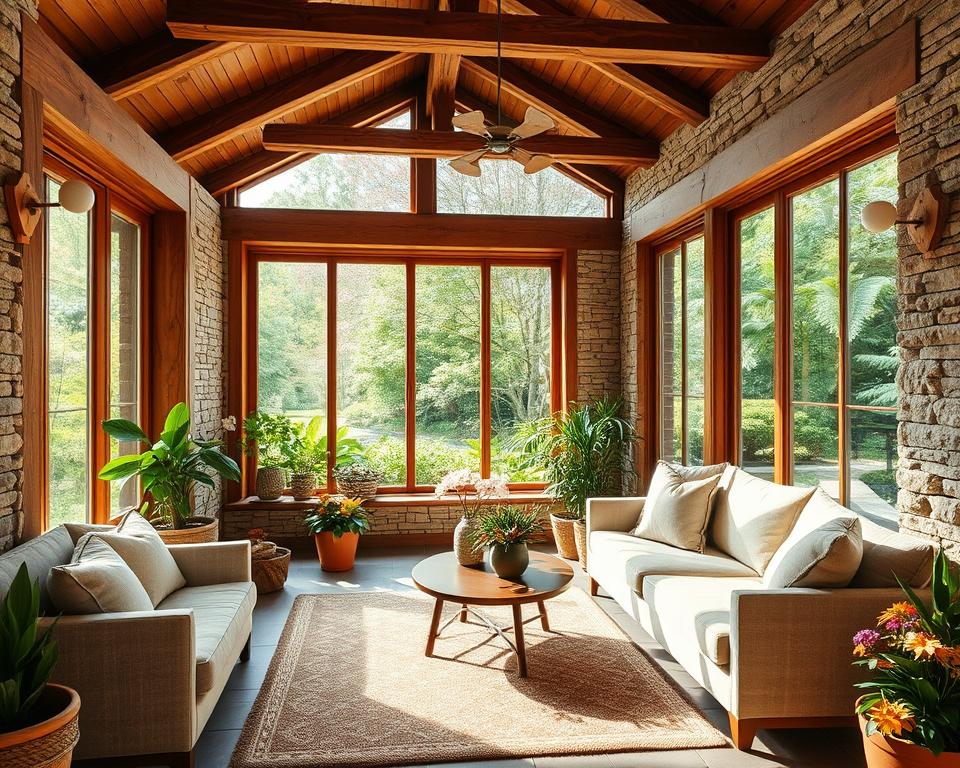
Good design makes a garden room interior feel larger, warmer and more useful all year. Start with durable finishes and plan furniture that fits the room’s purpose. Pay attention to moisture control and sound treatment where needed.
Flooring, wall finishes and moisture control
Choose resilient flooring such as engineered oak, luxury vinyl plank or ceramic tile over a suspended insulated subfloor. Use a vapour control layer when the ground can transfer moisture.
For walls, opt for moisture-stable plasterboard or timber linings with breathable membranes behind cladding. Install trickle vents and extract fans in enclosed layouts to reduce condensation risk.
Where humidity is likely, add a dehumidifier and ensure ventilation rates meet the intended use. Proper detailing at junctions prevents damp spots and protects garden room finishes.
Furniture selection for space optimisation
Maximise floor area with multitasking pieces: foldaway desks, wall beds and built-in storage. Modular shelving adapts as needs change and bespoke joinery works well where sightlines are tight.
Consider the load-bearing capacity before placing heavy items such as treadmills or free weights. If the plan includes a home gym, specify reinforced floor joists and appropriate fixings.
Choose garden room furniture with easy-clean surfaces and concealed storage to maintain a neat, practical interior.
Colour schemes and acoustic treatments
Light neutrals reflect daylight and make a space feel bigger. Use darker, cosy tones selectively to create warmth in reading nooks or media areas.
For studios or noisy equipment, aim for an acoustic garden room with absorptive wall panels, heavy curtains and resilient underlays. Decoupled stud walls reduce transmitted noise to adjacent properties.
Test paint and fabric samples in situ to check light reflection and how finishes interact with acoustic elements before committing to final garden room finishes.
| Element | Recommended Options | Benefits | Notes |
|---|---|---|---|
| Flooring | Engineered oak, vinyl plank, ceramic tile | Durable, moisture-resistant, easy to clean | Install over insulated suspended subfloor with vapour control |
| Wall finishes | Moisture-stable plasterboard, timber lining | Stable in variable humidity, aesthetic flexibility | Use breathable membranes and vapour checks as required |
| Storage & furniture | Built-in joinery, foldaway desks, wall beds | Space optimisation, personalised layouts | Check floor load rating for heavy equipment |
| Acoustic treatment | Absorptive panels, resilient underlay, decoupled walls | Reduces reverberation and transmitted noise | Essential for music studios or machinery; creates an acoustic garden room |
| Ventilation & moisture control | Trickle vents, extract fans, dehumidifiers | Controls condensation, protects finishes | Match ventilation rates to room use and occupancy |
Conclusion
This Garten Room Buying Checklist conclusion pulls together the essentials: clarify your intended use, set a realistic budget that includes hidden costs, choose the right size and durable materials, and specify effective insulation and heating. Ensure correct foundations and drainage, check planning and building control where required, and prioritise suppliers with clear warranties and reliable aftercare.
For practical garden room next steps, measure and audit your garden, write a short specification based on intended use, and obtain several itemised quotes. Liaise early with your local authority about permissions and building regulations, and arrange site visits to assess access and groundwork before committing.
If you decide to buy garden room UK, remember that careful planning pays off. A well-specified and professionally installed garden room adds flexible living space, supports lifestyle needs and can improve property appeal. Use this checklist as a living document through research and purchase to keep decisions focused and outcomes predictable.
FAQ
What is a Garten Room Buying Checklist and why should I use it?
The Garten Room Buying Checklist is a practical guide to help UK homeowners plan, select and purchase a garden room. It covers purpose, budgeting, planning and building requirements, site preparation, materials, insulation, services such as electrics and broadband, supplier checks, warranties and interior finishes. Using a checklist reduces surprises, helps compare quotes and ensures long‑term suitability for uses such as a home office, studio, guest room or gym.
Do I need planning permission for a garden room in the UK?
Not always. Many garden rooms fall under permitted development (PD) rights if they meet size, height and siting rules and are not used as separate self‑contained living accommodation. Exceptions include listed buildings, conservation areas and national parks. Always check gov.uk guidance and contact your local planning authority for pre‑application advice if in doubt.
What hidden costs should I budget for beyond the supplier price?
Expect additional costs for foundations or screw piles, groundworks, drainage, electrics and consumer unit upgrades, heating, insulation, glazing upgrades, plumbing if required, connection fees for electricity and broadband, landscaping, VAT and possible planning or consultancy fees. Allow a contingency of around 5–15% for unforeseen items.
Which foundation type is best for my garden room?
Foundation choice depends on ground conditions, building weight and access. Options include concrete pad foundations, suspended timber joists on adjustable pedestals, screw pile foundations (low disruption) and concrete strip foundations for heavier structures. A ground assessment is recommended for larger units or poor soils.
How do I choose the right size and layout for my intended use?
Start by defining primary use and frequency. A daily home office needs good connectivity and storage; a recording studio requires acoustic treatment and controlled lighting; guest accommodation needs plumbing and fire‑safety considerations. Measure available garden space, maintain required boundary distances and allow circulation and storage when planning internal layouts.
What insulation and heating options should I consider for year‑round use?
Aim for high thermal performance: consider rigid PIR boards, mineral wool or sheep’s wool and insulated panel systems to meet U‑value targets. Heating options include electric radiators, infrared panels, underfloor heating and air‑source heat pumps. Pair insulation with airtightness, quality glazing and thermostatic controls to reduce running costs.
How can I ensure reliable broadband and smart home connectivity?
Pre‑plan connectivity: run Ethernet (Cat6) during installation, consider mesh Wi‑Fi extenders, powerline adapters or a dedicated fibre drop if needed. Pre‑install extra conduits for future cables and coordinate with your ISP. For smart devices, include sufficient power sockets, USB outlets and optional speaker or AV cabling.
What materials and cladding options are most durable and low maintenance?
Timber cladding (larch, cedar) offers a natural look but needs periodic treatment. Metal cladding (aluminium, steel) is durable and low maintenance but may require thermal breaks. Render gives a clean finish if applied to the right substrate. Composite panels deliver consistent low‑maintenance finishes. Ask suppliers for datasheets, fire ratings and maintenance schedules.
How do building regulations affect garden rooms?
Building regulations commonly cover structural safety, fire protection, thermal performance (Part L), ventilation (Part F) and electrical safety (Part P). Some demountable or temporary structures may be exempt in limited cases, but it is safer to consult building control or an approved inspector to confirm requirements for your project.
What should I look for in supplier warranties and aftercare?
Seek written warranties that specify length and scope—structural guarantees, roof and cladding cover and workmanship remedies. Check exclusions and whether warranties are transferable. Verify supplier accreditation (Federation of Master Builders, NAPIT), read independent reviews on Trustpilot or Which?, and ask about maintenance packages and spare‑parts availability.
Are there standard price ranges for garden rooms in the UK?
Prices vary by size, specification and finish. Small basic units (6–8 m2) start at lower price bands; mid‑range bespoke units (10–20 m2) vary widely depending on insulation, glazing and fit‑out; premium insulated pods or annexes with full fittings cost considerably more. Obtain itemised quotes from multiple suppliers such as Jacksons or Green Retreats and local builders to compare accurately.
How do I manage site access and installation logistics?
Assess delivery access for large panels or modules, space for vehicle turning, potential crane use for larger units, and neighbour access agreements. Plan storage for materials, agree working hours and traffic management with contractors, and inform suppliers of any access constraints before ordering to avoid delays or extra costs.
What steps should I take to protect neighbour relations and comply with party wall rules?
Discuss plans with neighbours early and in writing. If works are close to shared boundaries, the Party Wall etc. Act 1996 may require serving notices and appointing surveyors where disputes arise. Document consents and obtain professional advice to prevent delays and legal issues.
How can I future‑proof my garden room for changing needs?
Design for adaptability: use moveable partitions, modular furniture, and pre‑installed conduits and extra electrical capacity for future upgrades. Choose materials and fixings that allow reconfiguration and consider spare capacity in heating and electrics to support future appliances or equipment.
What interior finishes and furniture work best in compact garden rooms?
Use moisture‑resistant flooring (engineered oak, vinyl plank or tile), moisture‑stable wall linings and vapour controls where needed. Opt for multifunction furniture—foldaway desks, Murphy beds and built‑in storage—to maximise floor space. Select light colour schemes to enhance perceived volume and add acoustic treatments where noise control is important.
How do I check a supplier’s reputation and completed work?
Verify memberships of trade bodies, request local references, visit completed projects if possible and read independent reviews on Trustpilot or Which?. Ask for material and maintenance datasheets, check warranty terms and confirm who will handle aftercare and any remedial work post‑installation.