Transform Your Space: 10 Ideas for Covering a Terrace
For UK homeowners keen on outdoor living UK, this guide introduces 10 ideas for covering a terrace that suit a range of budgets and garden styles. Whether you want a simple terrace shelter idea or a full terrace transformation, the options here reflect what is readily available from suppliers such as B&Q, Wickes, Sunflex and Markilux.
Covering a terrace extends the season for al fresco dining, shields furniture from rain and UV, and can add privacy and value to your home. The right terrace cover ideas also help cool adjacent rooms and cut maintenance on decking and timber, making them a practical long‑term investment.
This article tackles each solution in turn: canopies and retractable awnings, solid roofs, glazed structures, shade sails, green roofs and living pergolas, curtains and screens, timber slatted roofs and louvred pergolas, patio umbrellas, temporary gazebos and the lighting, heating and accessories that finish a terrace transformation. Practical decision factors—budget, lifespan, orientation, load capacity and planning considerations—are highlighted to help you choose the best terrace shelter ideas for your home.
Inhaltsverzeichnis
Key Takeaways
- Explore 10 ideas for covering a terrace to match different budgets and styles.
- Good covers increase usable space, protect furniture and can raise property value.
- UK climate and planning rules influence the choice between temporary and permanent solutions.
- Suppliers such as B&Q, Wickes, Sunflex and Markilux offer many viable options.
- Consider orientation, load‑bearing capacity and maintenance when planning a terrace transformation.
10 ideas for covering a terrace
Covering a terrace ranges from simple fabric sails to robust glazed roofs and living pergolas. This short overview shows why homeowners invest in a cover: weather protection, shade, privacy and an improved link between indoors and outdoors. Good design keeps daylight while offering shelter, so a terrace becomes useful for longer parts of the year.
Overview of concept and benefits
Terrace covers include lightweight shade, retractable awnings, timber pergolas, aluminium systems, glass canopies and green roofs. Each option alters the feel of the space and can create habitat for plants and insects when planted. The main benefits are protection from rain and sun, an uplift in appearance and the chance to use the terrace more often.
How to choose the right cover for your terrace size and orientation
Start by measuring the terrace and noting the terrace orientation. Small terraces suit retractable awnings or a cantilever parasol. Large terraces can carry pergolas, glazed structures or solid roofs. South-facing terraces need stronger solar shading. North-facing terraces often benefit from glazing to increase light indoors.
Check wind exposure and roof pitch. Coastal or high terraces require wind-rated fixtures. Assess the structural capacity for heavy options like green roofs. Measure twice, consider sightlines to neighbours and review any conservation constraints before committing.
Budgetary considerations and expected lifespan of options
Set a clear terrace budget before choosing materials and extras. Shade sails and parasols sit at the economical end, retractable awnings and motorised canopies fall into a mid-range band, and glazed or tiled roofs represent higher investment. Ongoing costs include replacement fabrics, motor servicing and cleaning.
| Option | Typical UK cost | Expected lifespan | Notes |
|---|---|---|---|
| Shade sails and parasols | £100–£1,000 | 5–12 years | Low initial cost, fabric replacement likely over time |
| Retractable awnings (manual/motorised) | £600–£5,000+ | 5–15 years | Motorised units need periodic servicing, good for variable shade |
| Glass roofs and glazed structures | £3,000–£20,000+ | 20+ years | High light transmission, seals and cleaning affect longevity |
| Solid tiled roofs and verandas | £4,000–£25,000 | 15–30 years | Traditional look, may need building regulation checks |
| Living pergolas / green roofs | Variable; can be high when reinforcing structure | Variable; plant maintenance ongoing | Adds insulation and biodiversity, requires irrigation and upkeep |
| Aluminium louvred systems | £1,500–£10,000+ | 15–30 years | Durable, adjustable light control, low rot risk |
Consider the lifespan of terrace covers in relation to your maintenance willingness. Fabric options need replacing more often. Timber requires treatment to reach 10–25 years. Metal and glazed systems offer long service lives but demand occasional cleaning and checks. Balance initial outlay against ongoing costs to make a choice that fits your terrace budget and lifestyle.
Canopies and retractable awnings for flexible shade
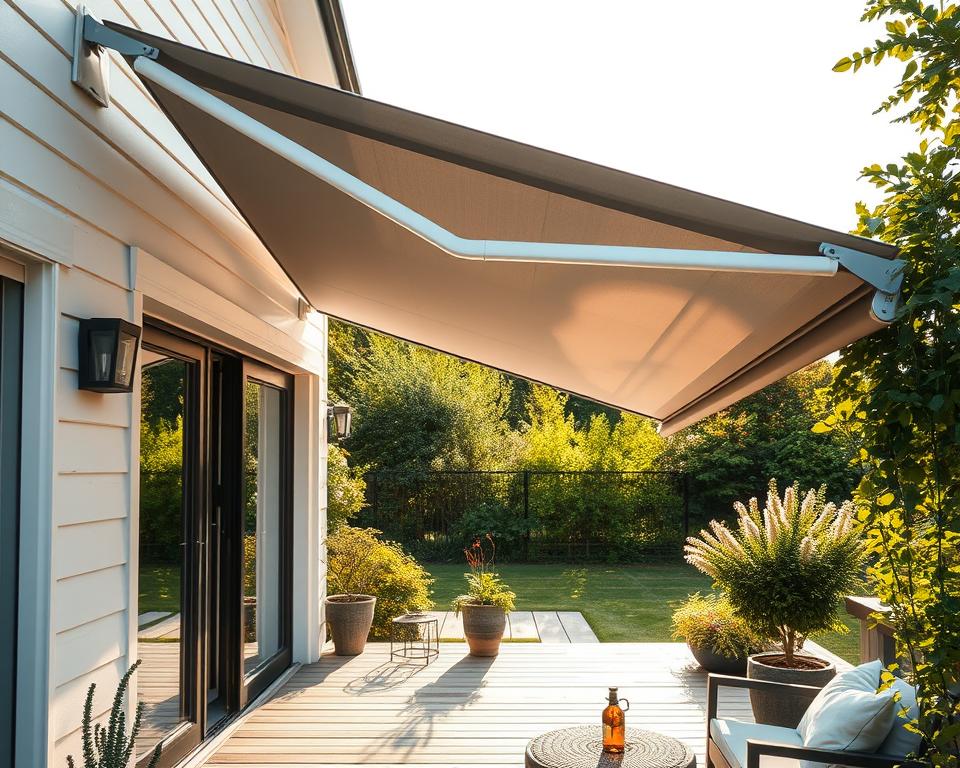
Covering a terrace with a canopy or an awning lets you adapt to fickle UK weather while extending living space. Choices range from simple hand-crank models to fully automated systems and robust pergola-style roofs. Each option balances cost, convenience and durability.
Types of awnings
Manual roll-out awnings use a crank for operation. They cost less and are straightforward to repair if a part fails. Motorised awnings add convenience with remote control, timers and smart-home links. Many UK installers fit Somfy motors for reliable automation and wind-sensor safety. Pergola canopies sit on a stronger frame. Brands such as Renson and Gibus produce bioclimatic pergolas that span wider areas and can include integrated gutters and lighting, making them ideal for larger terraces.
Awning materials and weather resistance
Fabric choice matters in Britain. Solution-dyed acrylic fabrics, like Sunbrella-style textiles, resist UV, fading and mould. PVC-coated polyester gives waterproof protection and is easier to wipe clean, though it can retain heat under strong sun. Frame metals are usually aluminium for low maintenance and corrosion resistance. Powder-coated steel offers extra strength but may need periodic touch-ups. Look for clear wind and UV ratings when specifying awning materials for UK conditions.
Installation tips and basic checklist for upkeep
Smaller manual units can suit a competent DIYer, but larger or motorised awnings should be fitted by a professional. Secure fixings to brick or a suitable header and ensure a proper fall so water drains into gutters. For pergola canopies, confirm load-bearing capacity and gutter alignment before installation.
Awning maintenance keeps systems working and prolongs life. Clean fabric seasonally with a mild detergent and soft brush. Lubricate moving parts and check brackets for corrosion. Arrange annual servicing for motors and retract or remove fabric during prolonged storms or high winds. Replace worn fabrics within recommended service intervals to retain weather protection.
| Feature | Manual awning | Motorised awning | Pergola canopy |
|---|---|---|---|
| Typical cost | Low | Medium to high | High |
| Ease of repair | Simple | Requires specialist | Specialist |
| Automation & sensors | No | Yes, common (wind/solar) | Optional integration |
| Weather protection | Good for shade | Good with sensor shutdown | Excellent, stronger structure |
| Common awning materials | Solution-dyed acrylic | Solution-dyed acrylic, PVC | PVC, acrylic fabrics; aluminium/steel frames |
| Maintenance needs | Low to medium | Medium; motor servicing | Medium to high; structural checks |
Solid roofs and permanent veranda solutions
Solid roofs transform a terrace into a year-round living space. A well-built solid terrace roof offers shelter from driving rain and wind, improves thermal comfort for adjacent rooms and creates a usable, finished ceiling for lights and heaters. Many homeowners find that a permanent veranda UK increases the perceived square metreage and can add value to the property.
Advantages of permanent roofing for year-round use
Permanent roofs deliver reliable protection and low maintenance compared with seasonal covers. They let you fit downlights, pendant lamps and fixed heating safely, which extends evenings through cooler months. A solid terrace roof also reduces noise from rain and gives better control over draughts and insulation near the house.
Design variations: tiled, polycarbonate, and timber roofs
Tiled veranda options provide continuity with the main roof. Using matching clay or concrete tiles creates a seamless look. Tiled verandas require rafters, underlay and competent roofing contractors to meet waterproofing and load needs.
Polycarbonate roof panels remain popular where light transmission and cost matter. A modern multiwall polycarbonate roof is lightweight, economical and available in clear or opal finishes. These sheets diffuse daylight while offering decent insulation when specified correctly.
Timber roofs give a warm, natural aesthetic. Exposed beams and a boarded ceiling feel domestic and attractive. Timber structures often pair with felt or EPDM membranes for waterproofing and need careful detailing at flashings, eaves and gutter junctions to avoid thermal bridging.
Planning permission and building regulations in the UK
Small lean-to roofs and many porch-style covers fall within permitted development rights, but any increase in floor area, raised platforms or enclosed space can trigger the need for planning permission. Always check with the local planning authority before starting work.
Building Regulations rules apply when a roof is attached to a dwelling and affects structure, drainage or electrical installations. Key topics include structural safety, Approved Document A compliance and safe routing for drainage and ventilation. For substantial builds it is sensible to hire a qualified architect or structural engineer familiar with UK building regs veranda requirements.
| Aspect | Tiled veranda | Polycarbonate roof | Timber roof |
|---|---|---|---|
| Appearance | Seamless with house roof, traditional | Modern, translucent or opal finish | Warm, natural, rustic or contemporary |
| Insulation | High when built with rafters and underlay | Moderate with multiwall sheets | Depends on membrane and insulation layers |
| Weight & structure | Heavy; requires strong rafters and fixings | Lightweight; simpler frame | Medium; beam sizing critical |
| Cost | Higher due to materials and labour | Lower initial outlay | Variable; mid-range depending on timber grade |
| Maintenance | Low once installed correctly | Low; replace panels if damaged | Moderate; treat against rot and inspect membranes |
| Planning & regs | May need Building Regulations and planning | Often permitted for small structures but check local rules | Check structural compliance and waterproofing details |
Glass roofs and glazed structures to maximise light
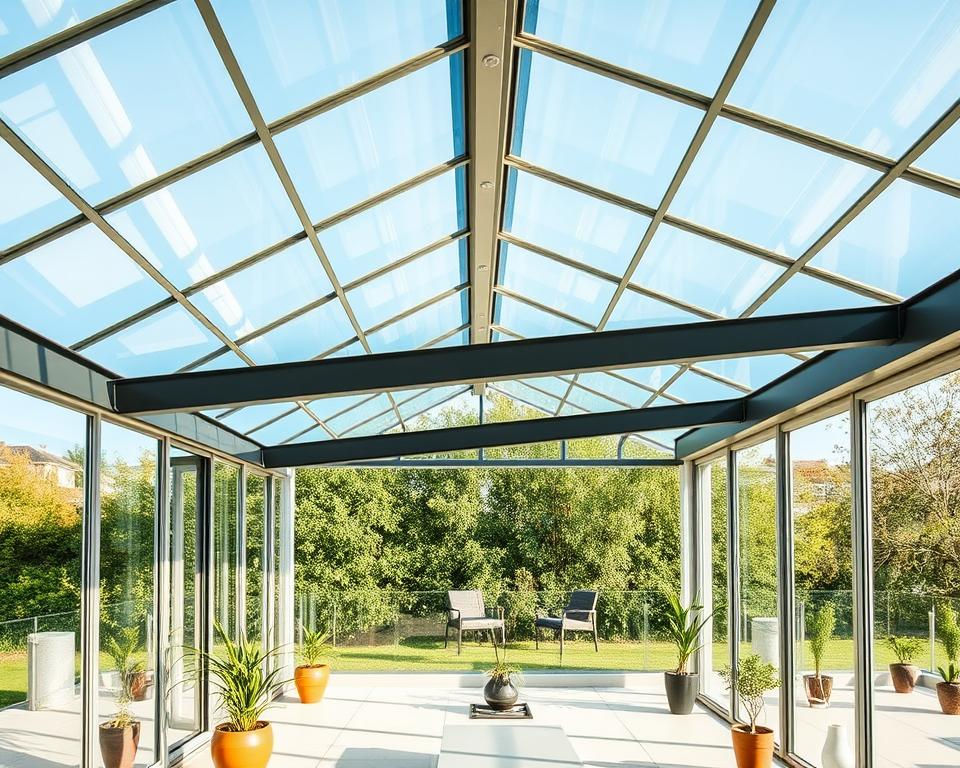
Glazed roofs bring terraces to life by bathing them in natural light and blurring the line between inside and outside. A well-designed glazed terrace roof can lift a north-facing space, support plants and make small terraces feel larger. Modern coatings give UV protection and solar control without dimming the view.
Benefits of glazed terrace covers for natural light
Fixed or sloped glazing provides continuous daylight and excellent sightlines to the garden. A glass pergola UK installation can offer the clean, contemporary look of a conservatory without full enclosure. Glazed options are perfect where you want daylight for living space or for nurturing plants.
Thermal performance and glazing specifications
Choose double- or triple-glazed units with low-emissivity coatings to improve warmth. Thermal glazing specs such as low-E glass and warm edge spacer systems reduce heat loss and help reach lower U-values for year-round comfort. For roofs use laminated or insulated glass units with toughened outer panes to meet durability needs.
Cleaning, condensation control and safety glazing standards
Regular cleaning with a soft squeegee and non-abrasive cleaner keeps sightlines clear. Manage condensation with good ventilation, trickle vents or louvred openings and thermal breaks in the frame. Safety glazing must meet British standards: choose toughened glass to BS EN 12150 or laminated glass to BS EN 14449 where fragility risk exists.
| Consideration | What to look for | Practical tip |
|---|---|---|
| Light control | Solar control coatings, tints and fritted glass | Use south-facing solar control glass to limit overheating |
| Thermal performance | Double/triple glazing, low-E, warm edge spacers | Target the best U-value your budget allows for year-round use |
| Safety standards | Toughened to BS EN 12150, laminated to BS EN 14449 | Specify safety glazing for rooflights and low sections |
| Maintenance | Soft squeegee, non-abrasive cleaners, safe access | Arrange fall-arrest access for contractors on steep roofs |
| Alternatives | Glass pergola UK, conservatory roof alternatives like slimline insulated panels | Compare daylight, thermal glazing specs and cost before choosing |
Shade sails for modern, cost-effective coverage
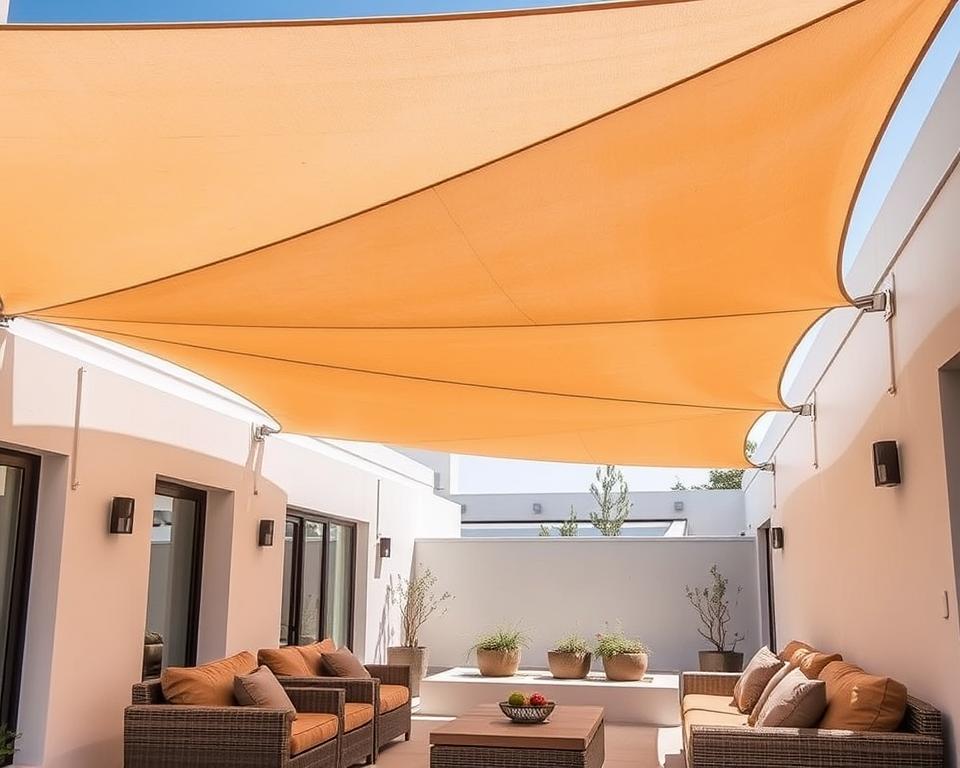
Shade sails offer a flexible, attractive way to cover terraces across the UK. With the right choices in fabric, fixes and layout, they give effective sun protection while keeping a light, contemporary look.
Choosing the right fabric and UV protection
Pick fabrics known for performance. High-density polyethylene (HDPE) is breathable, limits heat buildup and often blocks over 90% of UV. PVC-coated textiles give waterproof shelter for changeable British weather. Seek UV certification, fade-resistant dyes and anti-mould finishes from reputable suppliers such as Coolaroo or StormCloud.
Anchoring, tensioning and seasonal removal guidance
Good fixings are essential. Use stainless steel pad eyes, turnbuckles and heavy-duty masonry anchors or galvanised steel posts for long-term reliability. Correct tensioning prevents flapping and prolongs fabric life; a slight twist helps water run off where the cloth is not fully waterproof.
Plan for winter. In high winds or prolonged storms, a seasonal removal shade sail or lowering to a low-tension, safe position reduces risk of damage. Check site-specific wind ratings and any local council rules if you are in a conservation area.
Design ideas for layering and colour palettes
Layering sails at varied heights creates depth and moving shadows that lift a terrace visually. Mix triangular sails for awkward layouts with square or rectangular ones where you want clean lines. Choose a colour palette that complements brickwork, timber decks and planting to tie the scheme together.
Match hardware finishes to other external metalwork. Black, stainless steel or powder-coated fittings help the installation feel cohesive with furniture, lighting and balustrades.
| Aspect | Recommended option | Why it matters |
|---|---|---|
| Fabric | HDPE or PVC-coated | Breathability and UV blocking (HDPE) or waterproofing (PVC) |
| UV rating | Look for certified 90%+ block | Better skin protection and longer-lasting colours |
| Anchoring | Stainless pad eyes, turnbuckles, galvanised posts | Reduces corrosion and secures tension |
| Tensioning | Twist fit with turnbuckles | Prevents flapping and helps water shedding |
| Seasonal care | Seasonal removal shade sail or low-tension position | Protects fabric during winter storms |
| Layout | Layered heights, mixed shapes | Creates visual interest and adaptable shade |
| Finish | Match hardware to décor | Ensures a cohesive outdoor aesthetic |
Green roofs and living pergolas for ecological appeal
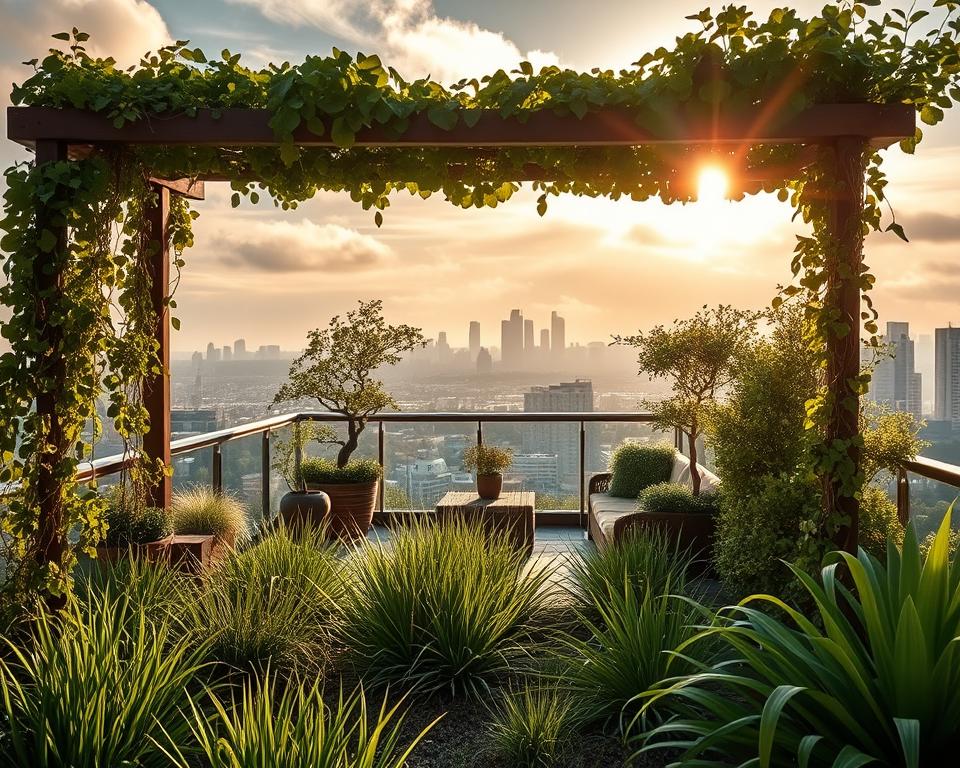
A green roof terrace or a living pergola can transform a plain terrace into a productive, wildlife-friendly space. These systems add shade, texture and seasonal colour while improving thermal performance and urban ecology.
Selecting plants
For extensive rooftop planting UK projects choose drought-tolerant, low-maintenance species such as sedums, mosses, native wildflowers, lightweight grasses and alpine plants. These cope with shallow substrates and exposure. For pergolas and containers pick climbers like Trachelospermum jasminoides, Clematis and Hedera or trained fruiting vines where space and load allow.
Benefits for performance and wildlife
Green roof terrace systems improve insulation and reduce heat loss in winter while cutting solar gain in summer. They help with stormwater attenuation by absorbing rainfall and reduce the urban heat island effect. A biodiversity roof benefits pollinators and birds, and shields membranes from UV ageing.
Structural considerations
Always commission a structural assessment before adding substrate and planting. Lightweight extensive systems typically weigh 60–150 kg/m² when saturated. Intensive roofs and deep planters carry far higher loads. Install a durable waterproof membrane, root barrier and a reliable drainage layer such as filter fleece and drainage boards.
Maintenance requirements
Green roof maintenance is straightforward but essential. Carry out seasonal weeding, top-up substrate where needed, inspect membranes and ensure drainage runs clear. Irrigate during prolonged dry spells and apply light fertilisation in spring. Accredited UK specialists such as Green Roof Consultancy and Sempergreen can advise on installation and long-term care.
Outdoor curtains and privacy screens for soft enclosures
Creating a sheltered, inviting terrace need not mean erecting solid walls. Soft enclosures bring warmth, movement and an easy way to control sightlines. This section looks at fabrics, fixings and styling to help you add comfort and privacy without losing daylight.
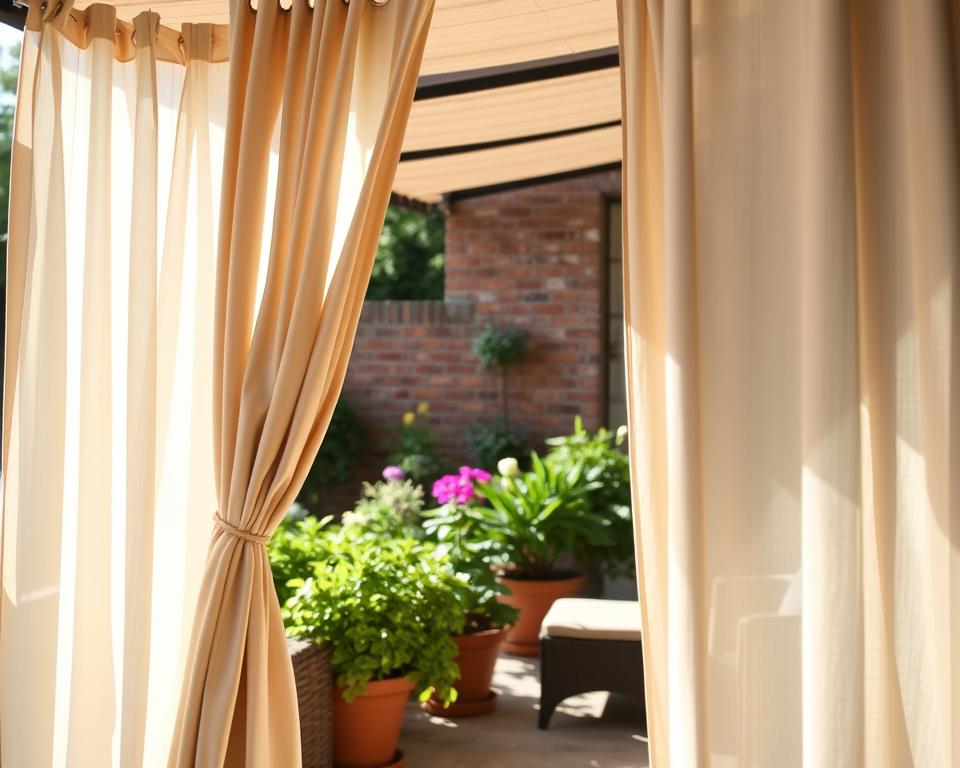
Choose fabrics engineered for life outside. Solution-dyed acrylic and performance polyester with PU coatings resist fading and repel water. Quick-dry olefin blends work well where splash and dew are common. Look for tags that state water-repellent, mould-resistant and high UV protection. Brands such as Sunbrella and Outdura supply weatherproof outdoor fabric suitable for the UK climate.
Tracks and fixings should match the performance of the textile. Stainless steel rails or powder-coated aluminium tracks with purpose-made gliders give smooth operation and long life. Fixings must be secured to solid substrates and be rated for lateral loads, especially where wind gusts strike a terrace edge.
Tactics for wind-resistant curtains reduce wear and noise. Incorporate tie-backs, Velcro straps and weighted hems to limit flapping. For exposed sites, consider perforated or semi-transparent screens to let air pass while blocking direct gusts. Use heavy-duty brackets and check fittings seasonally.
Light fabrics keep spaces airy while preserving privacy. Sheer panels allow daylight to filter through yet obscure neighbours. Heavier drapes create intimate zones for evening gatherings. Layering curtains with planted screens or slatted panels adds depth and absorbs sound.
Colour and texture are key to terrace styling. Neutral tones complement timber decking and stone paving. Bold hues or patterned weaves add contemporary character when coordinated with cushions and furniture textiles. Use consistent palettes to make the area feel like an outdoor room.
For practical care, choose washable linings and removable panels. Quick-dry options cut mildew risk and speed up turnover after rain. Store cushions and lightweight curtains indoors during storms to prolong useful life.
Timber slatted roofs and louvred pergolas for adjustable light
Timber slatted roofs give a warm, natural feel while controlling sun and shade. You can choose a simple fixed timber slatted roof for dappled light or select systems that let you alter the roof angle. Many homeowners in the UK prefer the balance between form and function these structures offer.
Fixed slats versus adjustable louvres: pros and cons
Fixed slats are straightforward to build and cost less. They create attractive patterns of light and require little maintenance beyond routine staining or oiling.
Adjustable louvres offer more control. With manual or motorised adjustable louvres you can change airflow and shade throughout the day. Bioclimatic louvres can close to keep out rain, turning the pergola into a weatherproof shelter.
Expect higher upfront costs and occasional servicing for moving parts. Mechanical components need access for maintenance, so plan for service routes at the design stage.
Material choices, finishes and rot-resistant treatments
Softwoods such as treated Scots pine and Douglas fir are common for affordable frames. Oak and Iroko are durable hardwoods that resist decay better but come at a premium.
Engineered timber and aluminium slatted systems suit low-maintenance needs. Use stainless steel fixings and galvanised brackets to avoid corrosion in coastal locations.
Apply pressure-impregnation, microporous stains or oil finishes for long life. Modern preservative coatings extend service intervals and reduce the need for frequent re-treatment.
How to integrate lighting and heating into the structure
Plan pergola lighting heating solutions during the design phase. Recessed downlights, LED strips along slats, or pendant fittings can create layered illumination. Always specify IP-rated fittings for external use.
Infrared heaters integrate well with slatted roofs when mounted correctly. Electrical runs must meet Part P regulations and use outdoor-grade cabling, isolators and switchgear. Locate transformers and service access points where they will not spoil sightlines.
Proper planning avoids costly retrofits and keeps the structure tidy and safe. Thoughtful integration enhances comfort and extends the season you use your terrace.
Patio umbrellas and cantilever parasols for portability
Patio umbrellas and cantilever parasols offer quick, flexible shade for terraces of all sizes. They suit rented properties and gardens where a permanent roof is not practical. Choose a model that matches your outdoor layout and expected wind exposure.
Sizing and base options to ensure stability in breezy conditions
Pick parasol size by the seating area. Typical diameters range from 2.5m to 4m. A larger canopy covers more seating but needs a stronger support system.
For cantilever parasol UK setups, an offset pole keeps the floor clear. These need a heavy patio umbrella base. Options include concrete blocks, water-fill bases and screw-in anchors. Filled bases and ground anchors work well for windy UK sites.
For more permanent use, consider a rigid cross base or an in-ground socket. These provide superior stability for larger canopies on decked terraces.
Fabric choice, UV ratings and care instructions
Choose solution-dyed acrylic or polyester fabrics for colourfastness and water repellence. Check the parasol UV rating or UPF percentage to see how much sun the canopy blocks. A high parasol UV rating aids long-term protection from UV rays.
Retract or store parasols in strong winds. Use a protective cover and clean the fabric with mild detergent. Treat wooden poles with suitable oils or varnish. Replace canopies when fading, fabric thinning or stitching failure appears to keep shade and safety reliable.
Combining parasols with other terrace coverings for layered protection
Parasols work well with shade sails and fixed roofs to create layered terrace shading. Use parasols for ad-hoc cover where a retractable or permanent roof is unnecessary.
Add LED clip-on lights beneath canopies for evening use. Match parasol colour and finish with decking, furniture and garden fabrics for a cohesive look.
Temporary and seasonal structures: gazebos and pop-up shelters
A temporary terrace cover can transform outdoor plans for a day, a weekend or a summer season. These structures suit garden parties, market stalls and renters who cannot alter a building. A gazebo UK option or a compact pop-up shelter gives quick shelter from sun and light rain and keeps alfresco dining comfortable.
When to choose a temporary solution over a permanent one
Opt for a temporary unit when you need flexibility. If planning permission is unclear, your budget is limited or your use is occasional, a pop-up shelter works well. Tenants benefit from a non-permanent footprint that leaves no lasting changes to the property.
Assembly tips and storage guidance for UK seasons
For reliable gazebo assembly, pick galvanised frames and canopies with sealed seams. Follow manufacturer guidance from brands such as Kampa, Coleman and Outwell. Use guy ropes, ground anchors and level ground to improve stability.
At the first sign of strong winds or heavy snow, take the unit down. For seasonal shelter storage, dry the fabric thoroughly and pack in breathable bags. Avoid damp basements to prevent mould and keep spare fixings with the canopy for repairs.
Durability and when to replace temporary coverings
Temporary coverings last between two and seven years depending on exposure and care. Watch for UV degradation, brittle seams or broken frame joints as signs to replace the membrane. Frequent seasonal use justifies investing in higher-spec pop-up shelters with reinforced joints and extended fabric warranties.
Lighting, heating and accessories to complement terrace covers
Bright, warm and well-chosen fittings lift a terrace from functional to inviting. Think in layers: task lights for dining and prep, ambient lights for mood, and accent points to show off plants or architectural features. Good planning keeps neighbours happy and guests safe.
Outdoor lighting types and placement for safety and ambience
Use low-voltage LED systems for energy efficiency and longevity. Pendants and wall lights work well for task lighting over dining tables and counters. String lights and lanterns create soft ambient glow for evenings. Uplighters and spotlights provide accent illumination for planters and trellis work.
Fit IP-rated fixtures where splashes are possible; aim for IP44 minimum in outdoor zones. Place lights to avoid glare, illuminate steps and paths, and direct beams downwards to reduce light spill into neighbours’ gardens.
Heating options: electric, gas and infrared patio heaters
Infra-red heaters give immediate radiant warmth and are efficient under pergolas or solid roofs. Electric fan heaters and short- or long-wave infra-red units are simple to mount. Gas patio heaters offer high output for open terraces but demand ventilation and safe siting.
For fixed electrical heaters, ensure compliance with Part P and use a qualified electrician. LPG freestanding heaters require stable bases and clearances from combustible materials. Combine radiant heat with windbreaks to retain warmth on blustery evenings.
Waterproof furniture and textiles to match your chosen cover
Choose durable materials such as teak, aluminium, powder-coated steel, synthetic rattan and HDPE for long life. Cushions with quick-dry foam and fabrics that have DWR coatings or solution-dyed acrylic finish will stay sound and colourfast.
Store soft furnishings or cover them in winter if not under a glazed or solid roof. Coordinate finishes for planters, lighting fixtures and patio heaters UK models to achieve a cohesive terrace look. Select terrace accessories that resist moisture and salt where relevant, keeping appearance and function consistent.
Keep external electrical safety central to every decision. Use RCD protection for outdoor circuits, place sockets away from direct water spray and ensure all fittings are installed to British Standard practice. Regular checks by a competent electrician will maintain safe, long-lasting installations.
Conclusion
This terrace cover summary recaps ten practical ways to transform outdoor space. Assess size, orientation, wind exposure and budget before choosing. Think about permanence: a solid roof gives year‑round use, while awnings and umbrellas offer flexibility for seasonal needs.
When choosing terrace cover UK, combine solutions for the best result. Pair glazed roofs with outdoor curtains for light and privacy, add heaters to louvred pergolas, or layer shade sails above planting to soften heat. Always consult reputable suppliers and installers, check warranties and material specifications, and seek professional advice for any structural or planning matters.
Prioritise safety and longevity. Arrange structural assessments, ensure electrical and heating installations comply with regulations, and select UV‑ and mould‑resistant materials. Plan for routine servicing of awnings, glazing seals and motors, and budget for green roof upkeep if relevant.
Use this article as a planning checklist when obtaining quotes. Balance initial cost against lifespan and resale value, and aim to create an outdoor living UK space that fits your lifestyle and stands up to local conditions. The right choice of the best terrace coverings will add comfort, value and year‑round enjoyment.
FAQ
What are the most practical options for covering a terrace in the UK climate?
Practical options include retractable awnings and pergola-style canopies for flexibility, solid roofs or glazed structures for year‑round use, shade sails and parasols for cost-effective shade, and temporary gazebos for occasional use. Green roofs and living pergolas add ecological benefits. Choice depends on orientation, wind exposure, budget and whether you need a permanent solution or something seasonal.
Do I need planning permission or building regulations approval to cover my terrace?
Many small lean‑to roofs or canopies fall under permitted development, but larger or enclosed works may require planning permission and some installations must comply with Building Regulations. Anything that significantly changes floor area, drainage, structural loads or introduces fixed electrics or gas heaters should be checked with your local planning authority and a qualified architect or structural engineer. Refer to Approved Document A for structural rules and consult your local council if in a conservation area.
Which materials resist UK weather best for awnings and sails?
Solution‑dyed acrylic fabrics (Sunbrella‑style) resist UV, fading and mould and suit awnings. HDPE and PVC‑coated fabrics are common for sails—HDPE is breathable and cool, PVC is waterproof. Frames made from aluminium are corrosion‑resistant; powder‑coated steel offers strength but needs maintenance. Choose products with wind ratings, UV certification and anti‑mould finishes for British conditions.
How much should I expect to spend on different terrace covering options?
Typical UK cost bands: shade sails and parasols £100–£1,000; retractable awnings and motorised canopies £600–£5,000+; glazed roofs and conservatory‑style covers from around £3,000 to £20,000+; solid tiled verandas £4,000–£25,000; living pergolas vary widely due to structural and irrigation needs. Also budget for ongoing costs such as fabric replacement, motor servicing and glazing cleaning.
Can a glazed roof cause overheating on south‑facing terraces?
Yes, south‑facing glazed roofs can overheat without solar control. Use double or triple glazing with low‑E coatings and consider solar control glass or externally mounted blinds. Adequate ventilation, trickle vents or louvred openings and shading strategies (overhangs, external blinds, pergolas) help manage solar gain while retaining daylight.
Are green roofs and living pergolas suitable for terraces structurally?
They can be, but a structural assessment is essential. Lightweight extensive green roofs typically add around 60–150 kg/m² when saturated; intensive systems are much heavier. You’ll need waterproof membranes, root barriers and drainage layers. Engage an accredited installer like Green Roof Consultancy or Sempergreen and a structural engineer before proceeding.
What maintenance should I plan for awnings, glazed roofs and pergolas?
Awnings: clean fabrics seasonally with mild detergent, service motors annually, and stow or lower in storms. Glazed roofs: regular cleaning with non‑abrasive tools, check seals to avoid leaks and control condensation with ventilation. Timber pergolas: treat or stain timber, inspect fixings and replace any rotten members. Green roofs require occasional weeding, irrigation and membrane inspections.
How do I ensure shade sails and parasols stay secure in windy conditions?
Use correctly rated anchors (stainless steel pad eyes, turnbuckles), adequate tensioning and, for parasols, heavy or in‑ground bases. In high winds or winter, remove or lower sails and store parasols. For exposed or coastal terraces choose wind‑rated products and seek professional advice on fixings to masonry or ground anchors.
What heating and lighting options work best under terrace covers?
Layer lighting with task (pendants), ambient (string/LED) and accent (uplighters) using IP‑rated fittings (IP44 minimum where applicable). For heating, infrared electric heaters are efficient for immediate warmth; gas heaters require ventilation and safe siting. Any fixed electrical work should be installed by a qualified electrician to meet Part P regulations.
Can I combine different cover types for flexibility and style?
Absolutely. Combining solutions—glazed roofs with outdoor curtains, louvred pergolas with integrated heaters, or shade sails layered over planting—creates flexible and attractive spaces. Plan levels, sightlines and materials so the combinations are cohesive. Consulting reputable suppliers and installers helps ensure structural compatibility and a polished finish.
Where can I buy reliable materials and products in the UK?
Major suppliers include B&Q and Wickes for basic materials; specialist brands and installers include Renson, Markilux, Somfy (motors), Coolaroo (sails), Sunbrella (performance fabrics), and bespoke glazing or green‑roof firms such as Green Roof Consultancy and Sempergreen. Obtain multiple quotes and check warranties and installation credentials.
What are the typical lifespans for different terrace covering solutions?
Lifespans vary: fabric sails and awnings 5–12 years with care; timber structures 10–25 years depending on treatment; aluminium or powder‑coated systems 15–30 years; quality glazing 20+ years with maintained seals. Regular maintenance, correct installation and choosing materials suited to exposure will extend service life.
How should I approach drainage and water run‑off for solid or glazed roofs?
Design roofs with an appropriate pitch and incorporate gutters, downpipes and fall to carry water away from the house and terrace surface. Flashings and seals at the junction with the main building are critical to prevent leaks. For glazed roofs, ensure rooflights and polycarbonate joints are correctly sealed and serviced periodically to maintain weathertightness.
Are adjustable louvres worth the extra cost over fixed slatted roofs?
Adjustable louvres offer superior control over light, ventilation and rain protection and can be motorised for convenience. They cost more and require maintenance for moving parts. Fixed slatted roofs are cheaper, simpler and provide dappled shade. Choose adjustable systems when versatility and weather control justify the higher initial outlay.
What accessibility and safety issues should I consider during installation?
Ensure safe access for installers (roof anchors, edge protection where needed) and compliance with electrical and gas regulations for fitted heaters or lights. Use safety glazing in rooflights and check that fixes to brickwork or timber meet structural loading requirements. For substantial works, use accredited tradespeople and obtain relevant certificates on completion.