How to Install Lawn Edging Stones (Step-by-Step Guide)
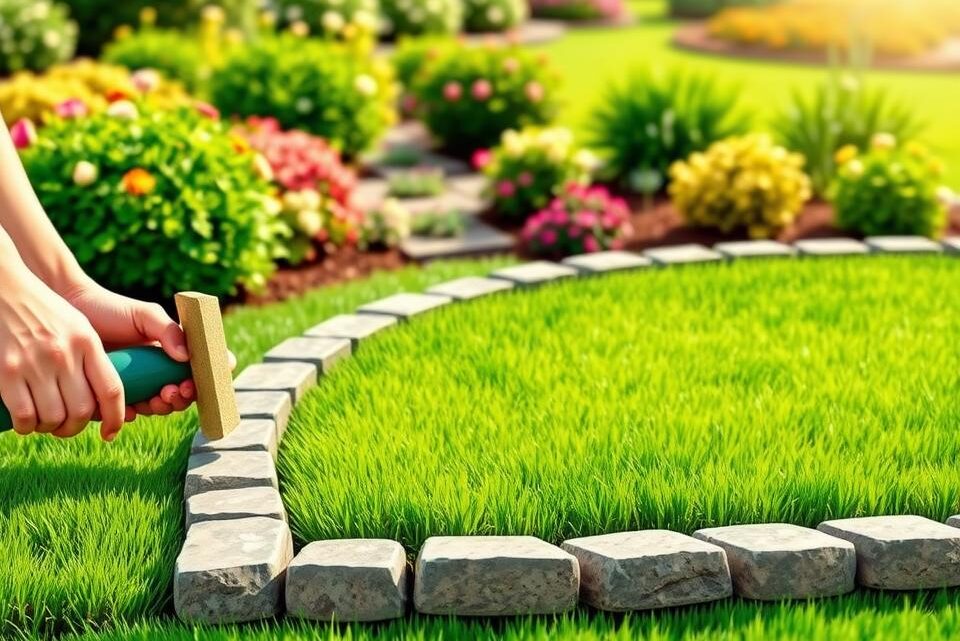
Transforming your garden’s appearance through DIY lawn edging installation is an exciting project that can elevate your outdoor space. Whether you’re a seasoned gardener or a weekend landscaper, creating professional-looking garden borders is within your reach. This comprehensive guide will walk you through every step of lawn edging installation, helping you achieve a polished and sophisticated garden design.
Lawn edging stones offer both aesthetic appeal and practical functionality. They define garden spaces, prevent grass from spreading into flower beds, and create clean, crisp lines that instantly upgrade your garden’s visual impact. With careful planning and the right approach, you can complete this DIY lawn edging project and achieve professional results.
Our guide breaks down the entire process into manageable steps, ensuring that even beginners can confidently tackle this landscaping project. From selecting the right materials to precise installation techniques, you’ll learn everything needed to create stunning garden borders that will last for years.
Inhaltsverzeichnis
Key Takeaways
- DIY lawn edging is achievable for gardeners of all skill levels
- Proper preparation is crucial for successful stone edging
- Stone edging enhances both garden aesthetics and functionality
- Precise measurement and alignment are essential for professional results
- Regular maintenance ensures long-lasting garden borders
Understanding the Benefits of Stone Lawn Edging
Garden border stones offer more than just a simple boundary for your landscape. These decorative garden edging solutions transform your outdoor space by providing multiple practical and aesthetic advantages that elevate your garden’s design and functionality.
When you install stone lawn edging, you create a crisp, clean line that separates different garden areas with professional precision. The benefits extend far beyond visual appeal:
- Prevents grass from spreading into flower beds
- Reduces time spent on edge trimming
- Helps retain mulch and soil effectively
- Creates a natural barrier against weeds
Your garden border stones serve as a robust defence mechanism for your landscape. They prevent soil erosion by creating a sturdy perimeter that keeps your garden beds intact during heavy rainfall or watering. This protective feature ensures your carefully cultivated plants remain securely positioned.
Durability is another significant advantage of stone lawn edging. Unlike plastic or wooden alternatives, stone edging withstands harsh weather conditions, making it a cost-effective long-term investment. The robust nature of these decorative garden edging elements means they’ll maintain their appearance and functionality for years.
Beyond practical benefits, stone edging adds substantial visual structure to your landscape. By defining clear boundaries between different garden zones, you create a more organised and intentional outdoor space that can potentially increase your property’s aesthetic value.
Essential Tools and Materials for Installing Edging Stones
Preparing for a stone edging installation requires careful planning and the right equipment. Your success depends on selecting appropriate tools and materials that will ensure a professional and long-lasting garden border.
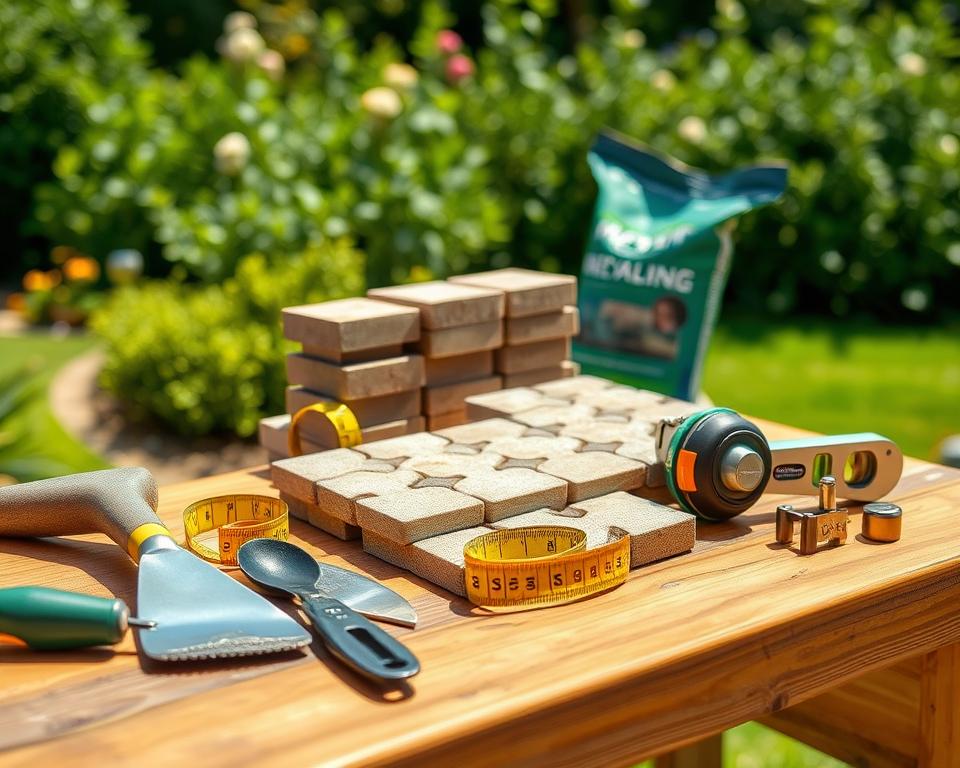
Professional landscapers understand that proper preparation is key to a successful stone edging project. Understanding the specific tools and edging stone materials will help you achieve a polished, precise result.
Tools You’ll Need for the Job
- Sturdy garden spade
- Rubber mallet
- Measuring tape
- Spirit level
- Gardening gloves
- String line
- Wheelbarrow
- Landscape fabric
Choosing the Right Edging Stones for Your Garden
Selecting appropriate edging stone materials is crucial for your landscape design. Consider these factors when choosing stones:
- Durability of the stone type
- Colour compatibility with existing landscape
- Weather resistance
- Budget constraints
Popular edging stone materials include:
- Granite
- Sandstone
- Limestone
- Slate
Calculating How Many Stones to Purchase
Accurate measurement is essential for stone edging installation. Measure your garden’s perimeter and add 10% extra for cutting and potential replacements. This approach ensures you have sufficient materials without unnecessary waste.
Pro tip: Always purchase stones from a reputable supplier who can provide consistent colour and quality.
Planning Your Lawn Edging Layout
Crafting the perfect landscape edging begins with thoughtful planning. Your garden edging ideas should harmonise with the existing landscape, creating a seamless and attractive border that enhances your outdoor space.
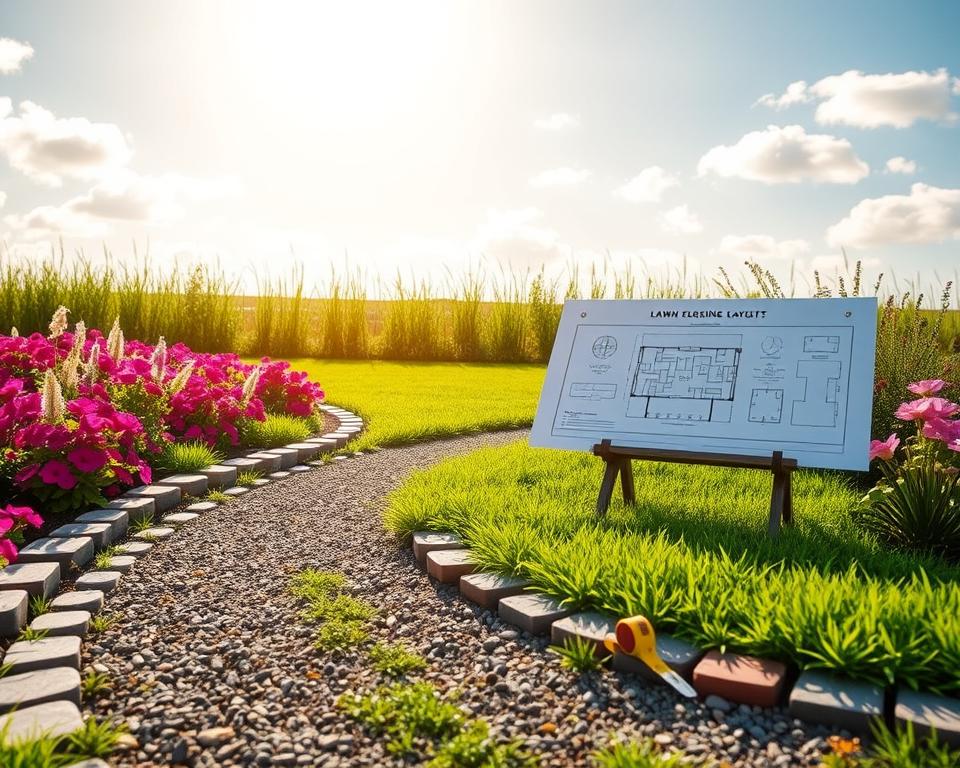
- Garden’s natural contours and existing features
- Aesthetic style of your outdoor space
- Practical functionality for maintenance
- Future plant growth and garden development
Visualising your garden edging ideas requires careful consideration. Gentle curves often create a more natural look, while straight lines work best in formal garden designs. Use a flexible garden hose to map out potential layouts, allowing you to experiment before committing to a final design.
Key measurements are crucial for successful landscape edging. Consider these important dimensions:
| Garden Area | Recommended Edging Width | Considerations |
|---|---|---|
| Small Garden | 10-15 cm | Minimalist design, tight spaces |
| Medium Garden | 15-25 cm | Balanced proportion, typical residential spaces |
| Large Garden | 25-40 cm | Expansive areas, more dramatic borders |
Remember to plan for practical aspects like lawnmower access and drainage patterns. Your landscape edging should not only look beautiful but also serve a functional purpose in your garden’s ecosystem.
Preparing the Ground for Stone Edging Installation
Creating a professional garden border installation requires meticulous groundwork. Successful lawn edging techniques begin with careful ground preparation, which serves as the foundation for a stunning and long-lasting landscape feature.
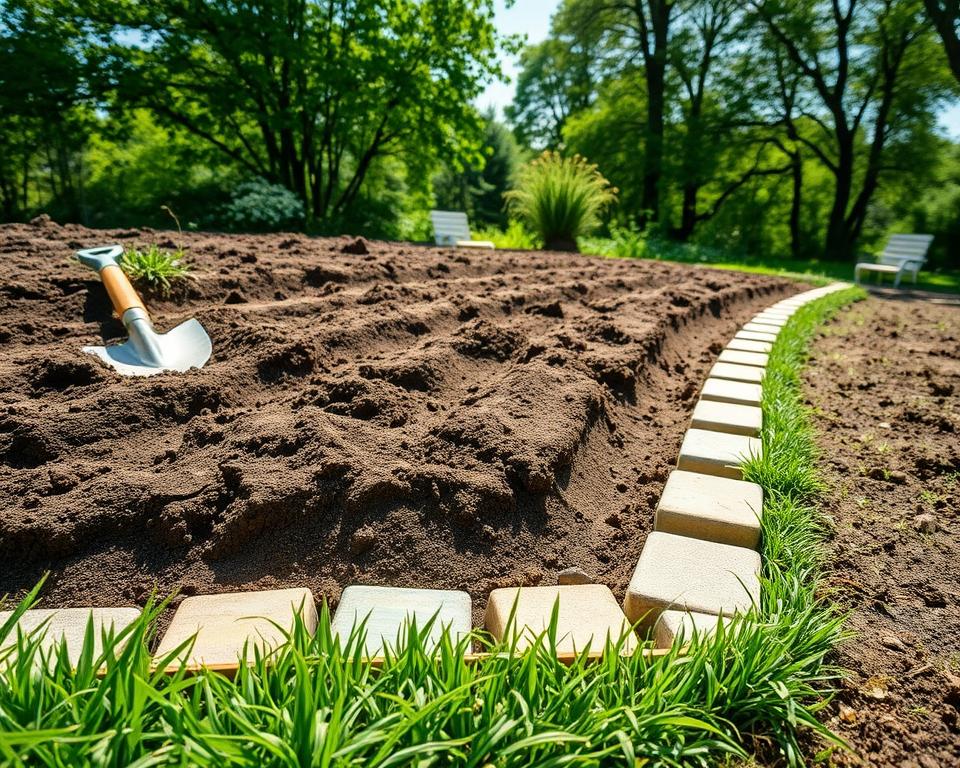
Before you start your garden border installation, understanding the critical steps of ground preparation is essential. Proper preparation prevents future issues like uneven settling or misalignment of your edging stones.
Marking Out Your Edging Line
Precise marking is crucial for achieving a professional lawn edging result. Follow these key steps:
- Use a garden hose or spray paint to outline your desired edge
- Ensure the line is smooth and follows your landscape’s natural contours
- Check the line’s symmetry using a measuring tape
*”A well-planned edge is the blueprint of a beautiful garden”*
Excavating the Trench Properly
Accurate trench excavation is fundamental to successful lawn edging techniques. The depth and width of your trench will determine the stability of your stone edging.
| Trench Specification | Recommended Measurement |
|---|---|
| Depth | 15-20 cm |
| Width | 10-15 cm wider than stone width |
| Base Preparation | Level and compact |
By meticulously preparing your ground, you’ll create a solid foundation for a beautiful and enduring garden border that enhances your landscape’s aesthetic appeal.
Creating a Stable Base for Your Edging Stones
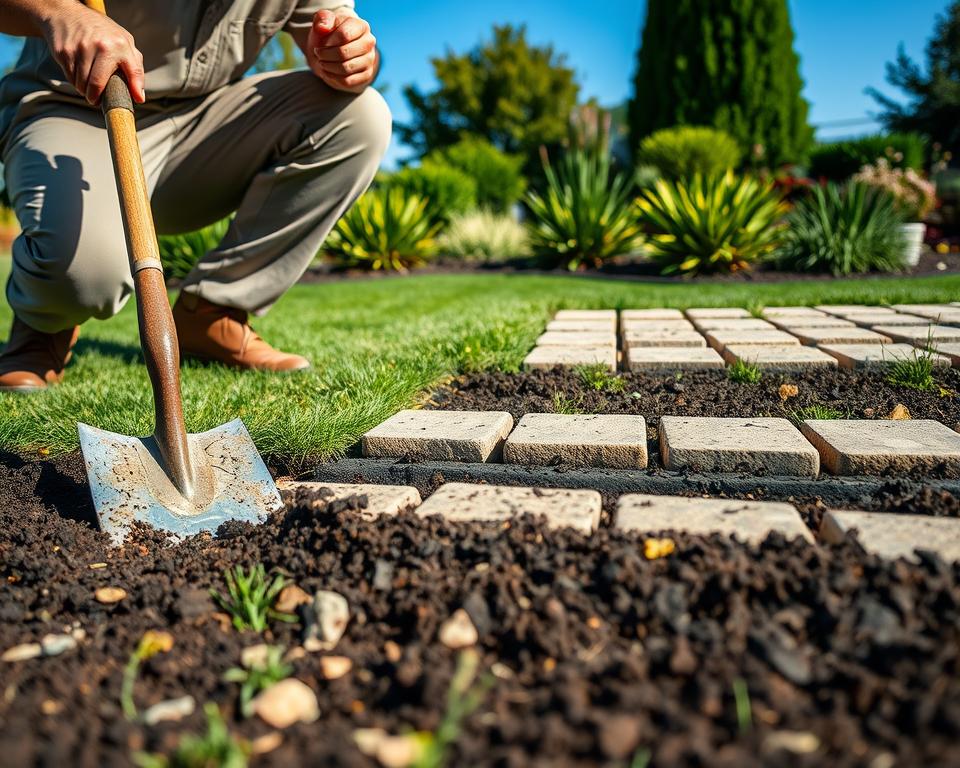
Creating a solid foundation is crucial for professional lawn edging. Your stone garden borders will only look stunning and remain stable if you invest time in preparing the right base. The key to long-lasting edging lies in proper groundwork.
When installing stone garden borders, you’ll need to focus on two primary base materials:
- Crushed Stone (MOT Type 1): Provides excellent drainage and structural support
- Sharp Sand: Easier to level but offers less stability
Your base should be 75-100mm deep, installed in layers of 25-30mm. Each layer requires thorough compaction using a hand tamper or plate compactor. This technique prevents future settling and ensures your professional lawn edging remains perfectly aligned.
Consider creating a slight gradient away from buildings—roughly 1:60—to manage water drainage. Use a spirit level and straight edge to check consistent depth and maintain precise alignment before placing your stones.
Pro tip: Proper base preparation is the foundation of beautiful, long-lasting garden borders.
How to Install Lawn Edging Stones (Step-by-Step Guide)
Installing lawn border stones requires careful planning and precise execution. The right edging installation tips can transform your garden’s appearance and create a crisp, professional landscape. This step-by-step guide will walk you through the process of placing your lawn edging stones with confidence.
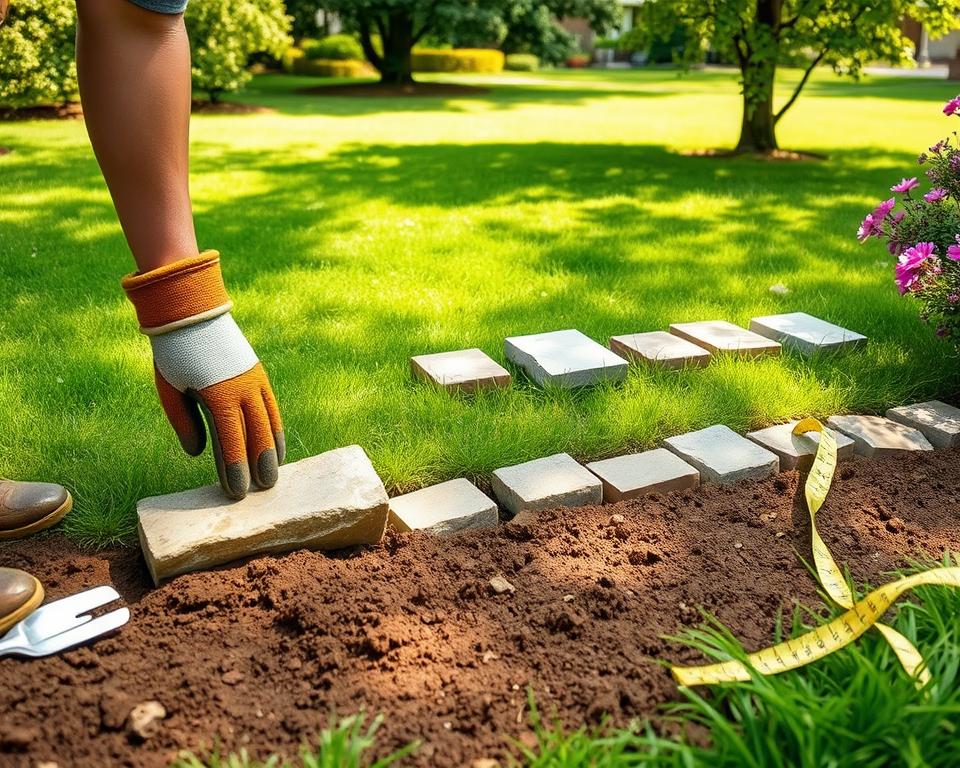
Positioning Your First Stone
Selecting the correct starting point is crucial for successful lawn edging. Begin at a corner or a straight section of your garden. Your first lawn border stone sets the foundation for the entire border, so take time to position it carefully.
- Ensure the ground is level and compact
- Place the first stone with slight pressure
- Check alignment using a string line
Laying Subsequent Stones Along the Edge
After positioning the initial stone, continue laying subsequent stones with precision. Follow these edging installation tips to maintain a professional finish:
- Place each stone closely against the previous one
- Use a rubber mallet to tap stones gently into place
- Maintain consistent spacing between stones
Checking Levels and Alignment
Accuracy is key when installing lawn border stones. Use a spirit level to ensure each stone sits perfectly flat. Small adjustments can make a significant difference in the overall appearance of your garden edging.
- Check horizontal and vertical alignment
- Remove or add sand underneath stones as needed
- Step back periodically to assess the entire border
Securing and Stabilising Your Stone Edging
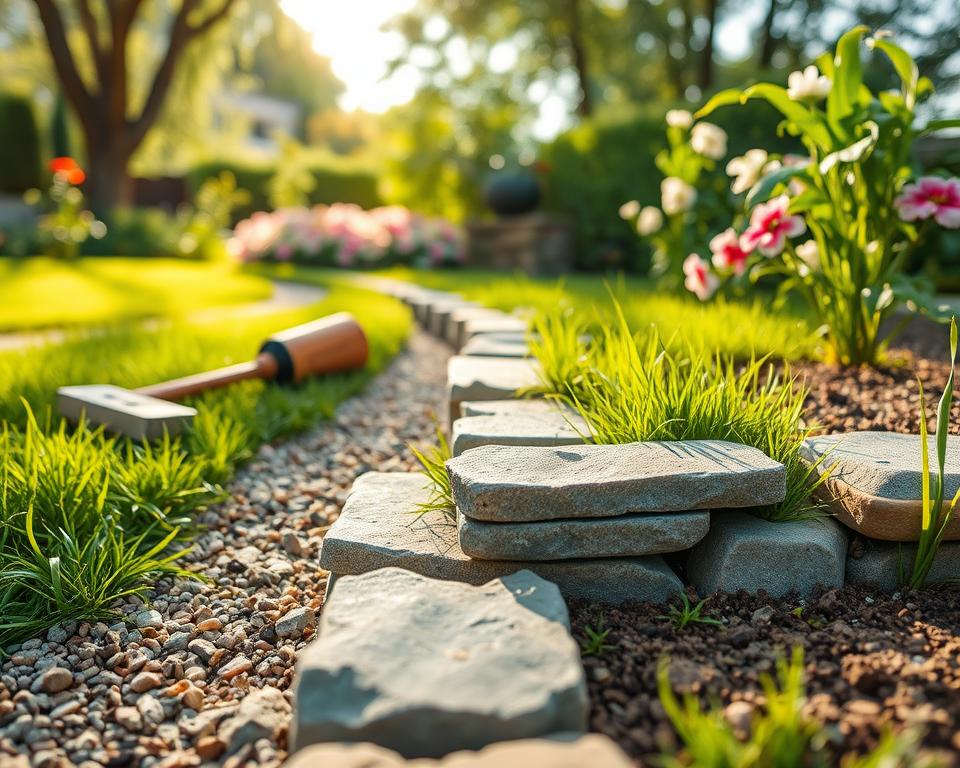
When installing natural stone edging, proper stabilisation ensures your garden’s aesthetic remains intact for years. Different edging stone types require specific securing methods to prevent shifting and maintain their pristine appearance.
Your stone edging’s stability depends on several key techniques:
- Tight stone positioning to minimise movement
- Proper backfilling with compact soil
- Strategic use of stabilisation methods
For residential garden edges, simple techniques work effectively. Butting stones closely together and using well-compacted soil provides basic stability. More challenging installations might require additional support.
Advanced stabilisation techniques include:
- Mortar haunching: Applying concrete mix behind stones
- Concrete collars: Reinforcing corners and curves
- Landscape adhesive: Creating continuous stone runs
Steep slopes or high-traffic areas might need extra anchoring. Stakes or buried anchors can provide additional support for your edging stone types, ensuring long-lasting garden definition.
Remember, the right stabilisation method depends on your specific landscape requirements and the natural stone edging you’ve selected.
Backfilling and Finishing Touches
After carefully installing your concrete edging stones, the final steps are crucial for creating a professional and long-lasting landscape border. Proper backfilling and finishing touches will ensure your brick edging alternatives look pristine and remain stable for years to come.
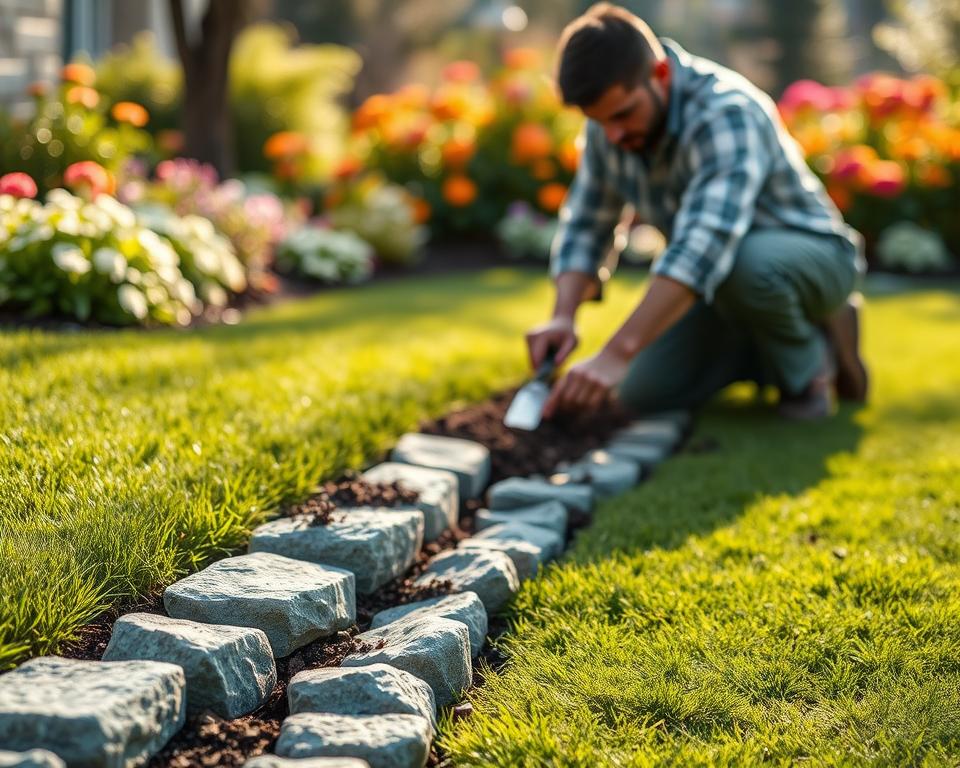
The backfilling process involves carefully adding soil around your newly installed edging stones to create a secure and polished appearance. This step is essential for maintaining the integrity of your landscaping design.
Compacting Soil Around the Stones
To achieve a robust and stable edge, follow these key steps for soil compaction:
- Use fine, dry soil or sand for backfilling
- Fill gaps gradually on both sides of the stones
- Tamp down the soil firmly using a hand tamper
- Ensure even pressure to prevent stone movement
Adding Decorative Touches to Enhance Appearance
Transform your concrete edging stones from functional to fabulous with these creative finishing techniques:
- Add decorative gravel between stones
- Plant low-growing ground cover along the edge
- Use landscape lighting to highlight the border
| Finishing Method | Aesthetic Impact | Difficulty Level |
|---|---|---|
| Decorative Gravel | High | Easy |
| Ground Cover Planting | Medium | Moderate |
| Landscape Lighting | High | Advanced |
By carefully implementing these backfilling and finishing techniques, you’ll create a stunning, professional-looking garden border that enhances your outdoor space’s overall aesthetic appeal.
Common Mistakes to Avoid When Installing Lawn Edging
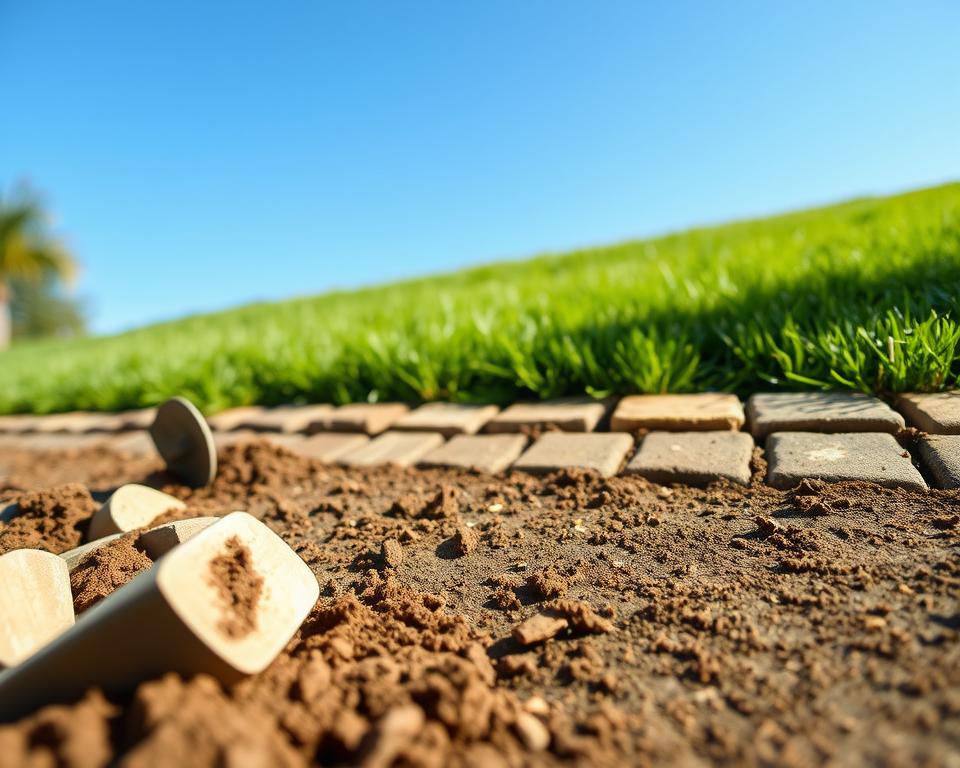
Installing garden landscaping borders requires careful attention to detail. Many homeowners encounter pitfalls that can compromise their lawn edging installation project. Understanding these common mistakes will help you create a professional-looking landscape border.
- Inadequate Ground Preparation: Skipping proper base preparation leads to uneven settling and misalignment of stones.
- Inconsistent Trench Depth: Uneven excavation creates an unprofessional appearance that’s difficult to correct.
- Poor Levelling Technique: Rushing the levelling process results in a wavy, uneven edging line.
When working on lawn edging installation, be mindful of critical errors that can undermine your garden landscaping borders. Positioning stones incorrectly can create significant problems:
| Mistake | Consequence |
|---|---|
| Setting Stones Too Low | Allows grass to overgrow, defeating edging purpose |
| Setting Stones Too High | Creates tripping hazard and mowing difficulties |
| Ignoring Drainage | Causes water pooling and potential erosion |
Weather conditions and material selection play crucial roles in successful lawn edging. Avoid installing during extreme weather—heavy rain creates muddy conditions, while frozen ground makes excavation challenging. Always purchase enough materials to complete your project, preventing delays and potential colour-matching issues.
Pro tip: Take your time and prioritise precision over speed in your garden landscaping borders project.
The key to successful lawn edging installation is patience, careful planning, and attention to detail. By avoiding these common mistakes, you’ll create a stunning, professional-looking garden border that enhances your landscape’s overall appearance.
Maintaining Your Stone Lawn Edging Over Time
Stone lawn edging requires minimal maintenance to keep your garden looking pristine. With strategic garden edge maintenance, you can preserve the beauty and functionality of your decorative garden edging for years to come.
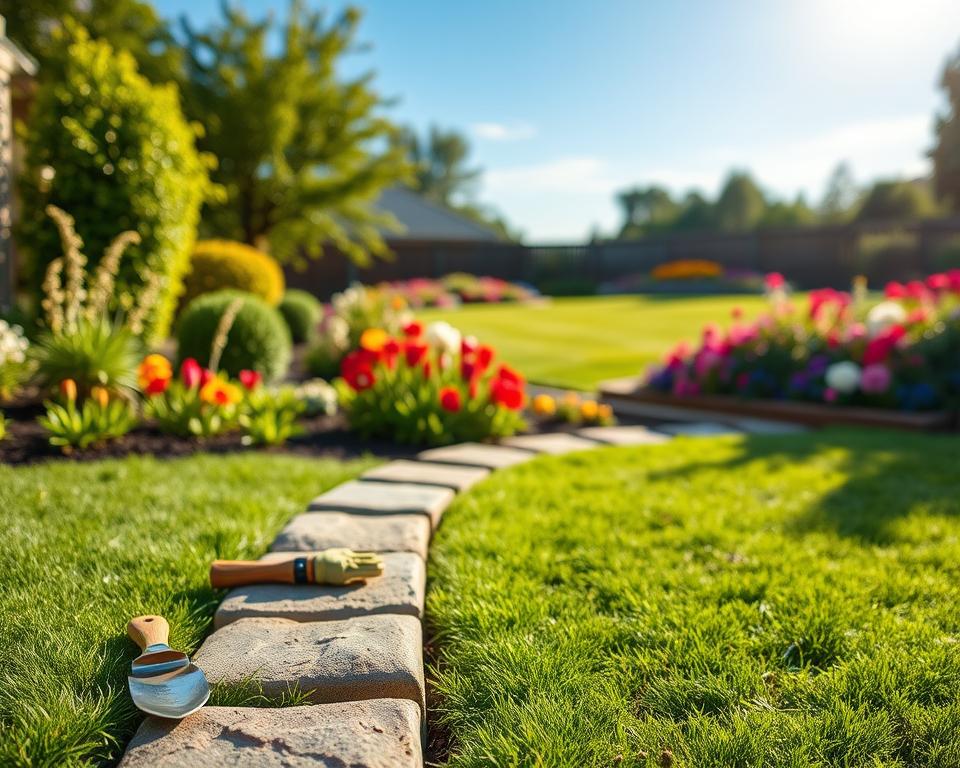
Regular care ensures your stone borders remain an attractive feature of your landscape. The key is to address potential issues before they become significant problems.
Seasonal Cleaning Techniques
Different seasons demand unique maintenance approaches:
- Spring: Remove winter debris and check for stone displacement
- Summer: Prevent weed growth between stones
- Autumn: Clear fallen leaves and inspect stone alignment
- Winter: Protect stones from frost damage
Essential Maintenance Practices
Implement these strategies to maintain your decorative garden edging:
- Regularly brush stones to remove dirt and moss
- Reapply sand or gravel between stones annually
- Check for any loose or tilting stones
- Repair minor damages promptly
Consistent garden edge maintenance prevents costly repairs and keeps your landscape looking professional.
With minimal effort, your stone lawn edging will continue to enhance your garden’s aesthetic appeal and structural definition.
Conclusion
Your DIY lawn edging project represents more than just a garden enhancement—it’s a transformative landscaping achievement. By following the comprehensive steps outlined in this guide, you’ve gained the skills to create professional-quality stone edging that will elevate your garden’s aesthetic and functionality.
The stone edging installation process might seem challenging initially, but with careful planning and precise execution, you can achieve remarkable results. Each stage—from ground preparation to final stone placement—contributes to a durable and visually appealing garden border that reduces maintenance and defines your outdoor spaces beautifully.
Remember that successful DIY lawn edging requires patience and attention to detail. The investment of time and effort will reward you with a stunning garden feature that not only increases your property’s kerb appeal but also provides years of enjoyment. Your newly acquired skills can be applied to future landscaping projects, empowering you to continue enhancing your outdoor environment.
As you admire your completed stone edging, take pride in your craftsmanship and the professional finish you’ve achieved. With regular seasonal maintenance, your garden borders will remain sharp, clean, and an impressive testament to your landscaping capabilities.
FAQ
How long does it take to install lawn edging stones?
The time required depends on the size of your garden and your experience level. Typically, a small to medium-sized garden can be completed in a weekend, with most DIY enthusiasts spending approximately 1-2 days on the entire project. Factors such as ground preparation, stone layout complexity, and the number of curves will influence the total installation time.
What is the best type of stone for lawn edging?
Natural sandstone, limestone, and granite are excellent choices for lawn edging. These materials offer durability, weather resistance, and aesthetic appeal. When selecting stones, consider factors like local climate, garden style, and budget. Sandstone provides a natural look, limestone offers a classic appearance, and granite delivers exceptional longevity and strength.
How deep should I dig the trench for lawn edging?
The recommended trench depth is typically 100-150mm (4-6 inches). This depth ensures stability by allowing you to create a solid base of crushed stone and sand, and to partially bury the stones for a secure installation. The exact depth may vary slightly depending on the height and size of your chosen edging stones.
Can I install lawn edging stones on a sloped garden?
Yes, you can install lawn edging stones on a sloped garden, but it requires additional planning and technique. You’ll need to create level terraces or follow the slope with stepped edging. Ensure proper base preparation, use additional stabilisation methods like concrete haunching, and potentially incorporate drainage solutions to prevent erosion.
How do I prevent weeds between lawn edging stones?
To minimise weed growth, use several strategies: install a landscape fabric beneath the stones, use a polymeric sand between stone joints, apply a weed prevention herbicide, and maintain regular garden maintenance. Proper installation with tight-fitting stones and adequate base preparation also reduces weed opportunities.
What tools do I need for installing lawn edging stones?
Essential tools include a spirit level, rubber mallet, shovel, wheelbarrow, tape measure, string line, plate compactor or hand tamper, string line, gardening gloves, and safety glasses. Additional helpful tools might include a landscaping rake, string level, and knee pads for comfort during installation.
How much do lawn edging stones typically cost?
Prices vary widely depending on the type of stone, quality, and quantity needed. Natural stone edging can range from £20-£60 per linear metre, while concrete or manufactured stone options might cost £10-£40 per linear metre. Budget for additional materials like base stone, sand, and potential delivery charges.
How do I maintain my stone lawn edging?
Maintain your stone lawn edging by performing seasonal checks, removing debris, checking for any loose stones, and reapplying joint sand if necessary. In winter, avoid using salt-based de-icers, and in autumn, clear fallen leaves to prevent moisture retention. Occasionally wash stones with a mild detergent to maintain their appearance.
Can I install lawn edging stones myself, or should I hire a professional?
Most homeowners with basic DIY skills can successfully install lawn edging stones by following a comprehensive guide. If you’re comfortable with basic landscaping tasks, have the necessary tools, and are willing to invest time in proper preparation, this is an achievable project. However, if you’re unsure or have a complex garden layout, consulting a professional landscaper might be advisable.