Practical Garden Tool Storage Ideas for a Tidy Garden
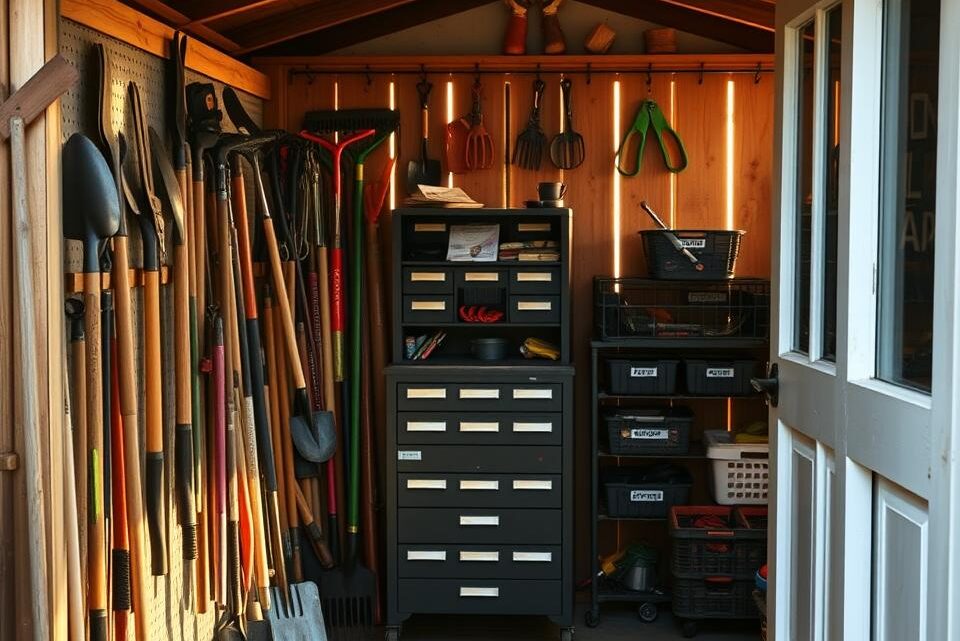
A cluttered shed or garage can turn a relaxing hobby into a source of frustration. Searching for a specific item wastes precious time and can lead to damaged equipment. This guide offers a clear path to transforming your outdoor workspace.
We will explore a variety of clever systems designed to bring order to chaos. The focus is on creating a functional environment where every piece of equipment has a proper home. This approach protects your investment and maximises the space you have available.
The solutions presented range from simple, cost-effective projects to more advanced installations. Whether you enjoy DIY or prefer ready-made options, there is a strategy to suit your needs. Implementing these garden tool storage ideas will save you time and effort in the long run.
An organised space not only improves efficiency but also enhances the overall appearance of your garden area. Say goodbye to the annoyance of misplaced tools and welcome a tidy, productive sanctuary.
Inhaltsverzeichnis
Key Takeaways
- Effective organisation saves time and protects your equipment from damage.
- A designated place for each item eliminates clutter and frustration.
- Solutions are available for all skill levels and budgets.
- Maximising vertical space is a key principle for efficient storage.
- A well-ordered shed contributes to a more enjoyable gardening experience.
- Proper care extends the lifespan of your valuable tool collection.
Introduction: The Importance of Organising Your Garden Tools
A disorderly workspace not only wastes precious minutes but also risks damage to your valuable equipment. When items are scattered randomly, finding what you need becomes a frustrating challenge. This inefficiency can turn a relaxing activity into a source of stress.
Proper arrangement goes beyond mere tidiness. It encompasses efficiency, safety, and the longevity of your implements. A well-planned approach protects your investment and enhances your overall experience.
Optimising Your Outdoor Space
Strategic organisation transforms even compact areas into highly functional zones. Assessing your available area is the first step toward creating an effective system. Every square metre should serve a purpose without creating clutter.
Scattered equipment increases the risk of damage, rust, and deterioration. This ultimately leads to costly replacements. Implementing a proper organisation method represents a practical investment in your efficiency.
| Aspect | Organised Space | Disorganised Area |
|---|---|---|
| Time Efficiency | Quick access to equipment | Lengthy searches for items |
| Equipment Condition | Protected from damage | Risk of rust and wear |
| Safety Level | Reduced accident risk | Potential tripping hazards |
| Space Utilisation | Maximum functionality | Wasted potential |
View organisational solutions as essential infrastructure rather than optional accessories. This mindset shift is crucial for long-term success. A systematic approach ensures everything has its designated place.
Benefits of a Well-Organised Garden Storage System
The investment in creating an orderly system for your outdoor gear pays dividends across multiple aspects of your gardening practice. A logical arrangement transforms how you approach every task, from simple maintenance to complex projects.
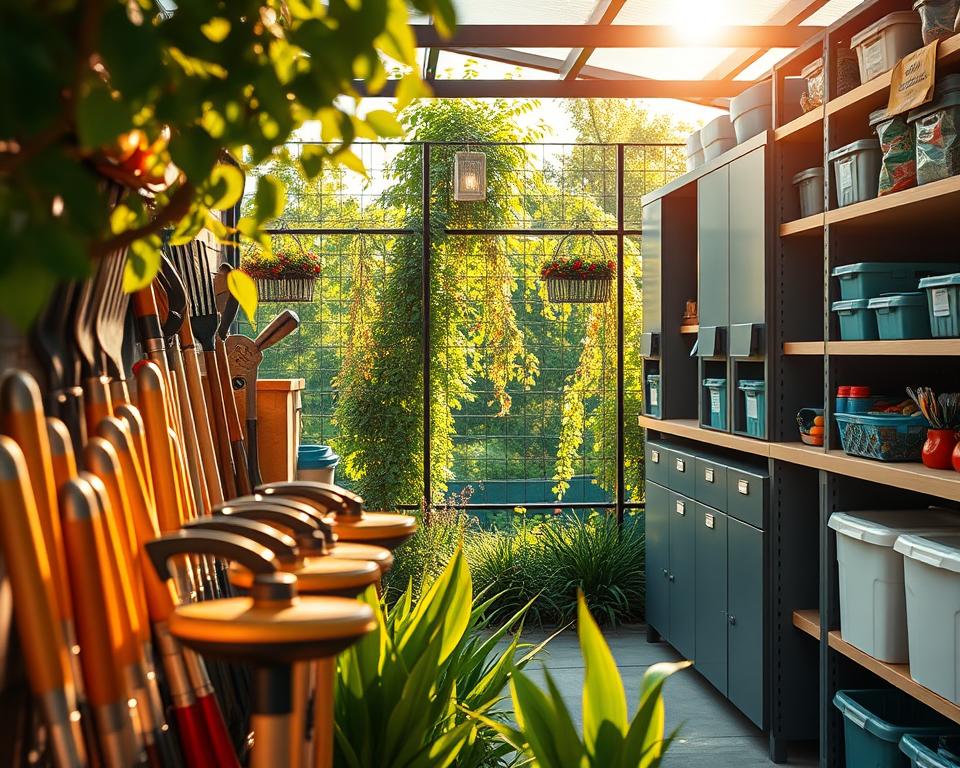
Imagine starting your work without wasting minutes searching for essential implements. This immediate access streamlines your workflow dramatically. You can quickly assess what equipment you own, preventing unnecessary duplicate purchases.
Enhanced Efficiency and Safety
A dedicated place for each item eliminates the frustration of misplaced equipment. Sharp implements like shears and pruners remain securely positioned, reducing accident risks. This organised approach keeps hazardous items away from children and pets.
The time savings accumulate significantly throughout the year. Instead of spending 10-15 minutes searching for specific implements, you gain immediate access. This efficiency multiplies across dozens of gardening sessions.
Prolonged Tool Life through Proper Storage
Proper care directly extends the lifespan of your valuable equipment. When items hang properly or rest in designated spaces, they avoid damage from falling or being stepped on. This protection prevents rust and corrosion that develop when implements remain damp on floors.
The psychological benefits are equally valuable. A tidy workspace reduces stress and increases motivation. You’ll take pride in maintaining a professional-looking area that enhances your entire gardening experience.
DIY Wall-Mounted Garden Tool Storage
Maximising your available vertical surfaces is a cornerstone of efficient outdoor organisation. A garden tool rack fixed to a wall clears valuable floor space and keeps your essential tools visible and within easy reach. This approach transforms an unused area into a highly functional zone.
Planning Your Wall Space and Placement
Begin by selecting a clear, sturdy section of wall in your shed or garage. Measure the area to ensure it can accommodate long-handled items like rakes without touching the floor. Consider the height carefully to allow for easy removal and replacement.

Strategic placement boosts efficiency. Position frequently used implements at eye level for quick access. Reserve higher or lower areas for seasonal or lesser-used equipment. This logical system saves time during every task.
Selecting Durable Hooks and Pegboards
Choosing the right hardware is crucial for a secure and lasting storage solution. Select heavy-duty hooks designed to support the weight of your equipment. Straight hooks are ideal for handled items, while J-hooks suit implements with holes.
For wooden shed walls, screws are often sufficient. Solid brick or concrete walls typically require a drill and wall anchors for a firm hold. A rail-based tool rack offers excellent flexibility, allowing you to reposition hooks as your collection of tools changes.
Build Your Freestanding Garden Tool Rack
Building your own freestanding rack provides a customisable solution without wall modifications. This approach suits spaces where drilling isn’t possible or where you prefer mobile organisation. The unit can be positioned anywhere and relocated as your needs change.
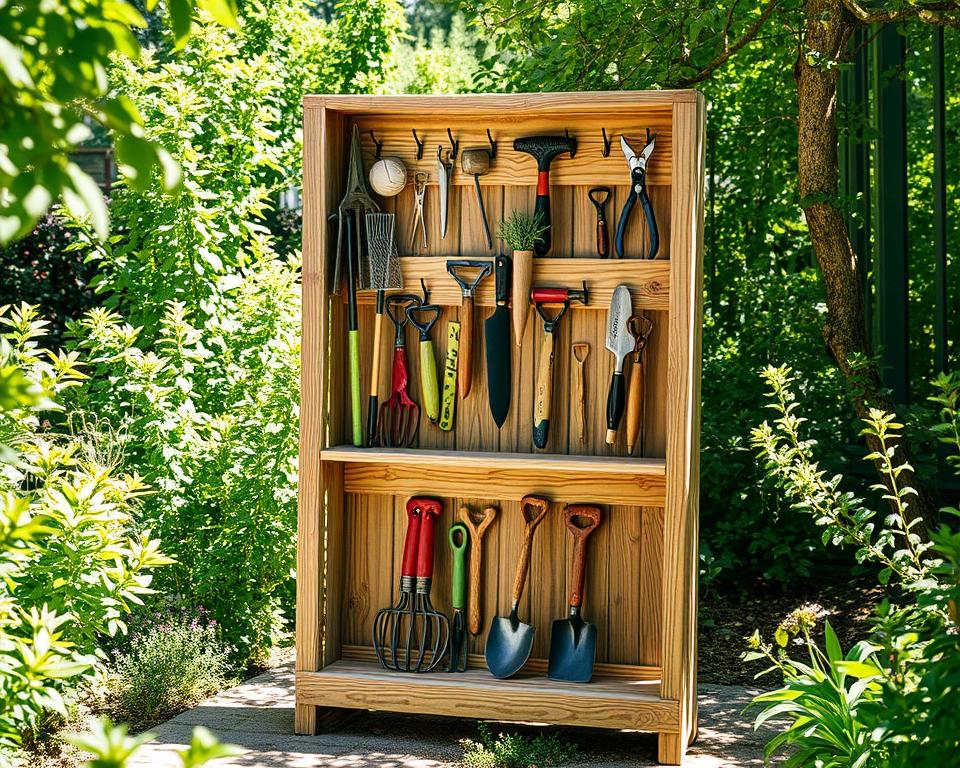
Choosing Quality Materials
Selecting durable materials ensures your creation withstands typical shed conditions. Pressure-treated timber offers excellent moisture resistance at reasonable cost. Cedar provides natural rot resistance with an attractive appearance.
Recycled pallet wood serves as an economical alternative for budget-conscious projects. For holding smaller implements, PVC pipes can be incorporated into the design. These materials balance durability with practical considerations.
Designing for Versatility
A versatile design accommodates various implement sizes and types. Incorporate adjustable elements that can be modified as your collection evolves. Create dedicated slots for long-handled items and sections for hand implements.
Consider adding small shelves for accessories like gloves or twine. This multifunctional approach maximises the utility of your organisational solution. The design should grow with your changing requirements.
| Material Type | Durability | Cost Level | Appearance |
|---|---|---|---|
| Pressure-Treated Timber | High | Medium | Functional |
| Cedar Wood | Very High | High | Natural |
| Recycled Pallet Wood | Medium | Low | Rustic |
| PVC Pipes | Medium | Low | Modern |
Personalisation enhances both functionality and aesthetics. Staining or painting protects the wood while matching your outdoor space. Labelling sections maintains order and simplifies item retrieval.
Garden Tool Storage Ideas: Innovative DIY Solutions
A custom-built solution ensures every implement, from the smallest trowel to the largest spade, has a designated home. This approach moves beyond standard shop-bought options, allowing for true personalisation. You can design a system that reflects your specific collection and working habits.
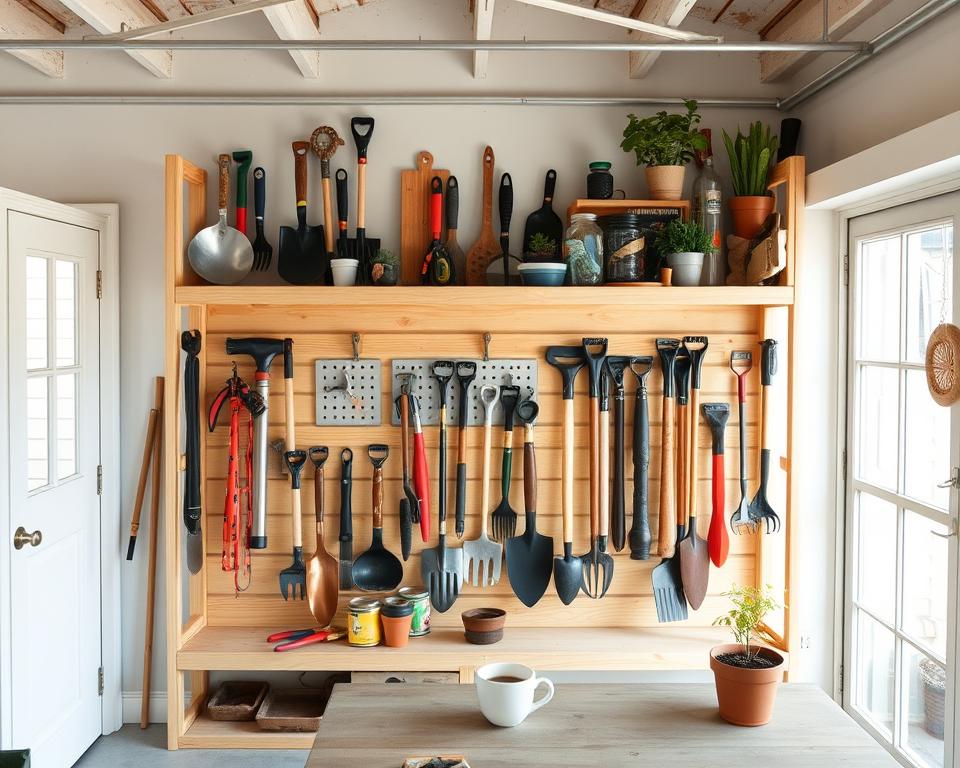
Everyday items can be repurposed with fantastic results. A magnetic knife strip becomes a brilliant holder for metal hand implements. An old wooden ladder fixed horizontally to a wall creates instant tiers for hanging equipment.
Customising Your Storage to Suit Your Tools
The key advantage of a do-it-yourself project is adaptability. You are not confined to pre-set dimensions or configurations. This allows you to accommodate unusual shapes and sizes perfectly.
Consider your most frequently used items first. Place them in the most accessible positions. This thoughtful planning creates a highly efficient workflow, saving you time on every project.
| Repurposed Item | New Function | Best For |
|---|---|---|
| Magnetic Strip | Metal tool holder | Securing pruners, trowels |
| Kitchen Organiser | Small parts storage | Seeds, twine, gloves |
| PVC Pipes | Long-handle slots | Rakes, brooms, shovels |
| Wooden Crates | Modular shelving units | Potting supplies, boots |
This method is not only cost-effective but also deeply satisfying. Building a system that evolves with your needs is a practical and rewarding investment in your outdoor space.
Innovative Vertical Storage Solutions for Garden Tools
Unlocking the potential of your vertical surfaces revolutionises how you store and access your equipment. This approach transforms unused wall areas into highly functional zones while keeping floor space clear.
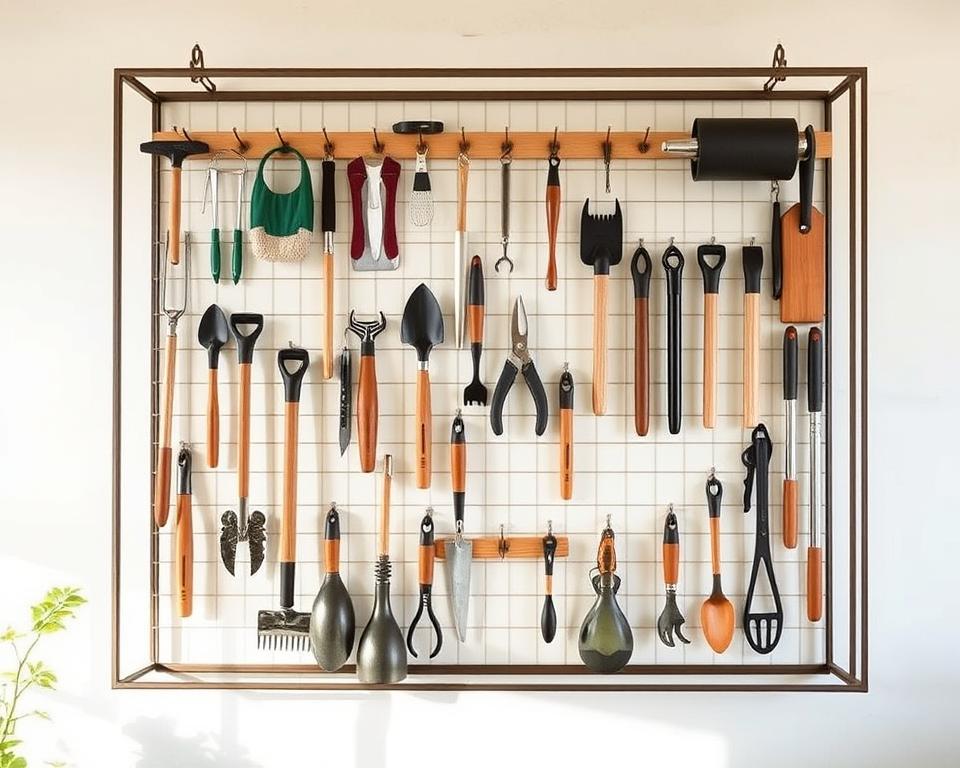
Utilising Vertical Space Effectively
Assess your available wall surfaces to identify optimal storage locations. Consider mounting systems on shed doors for immediate access without entering the space. This strategic placement saves time during every task.
Position smaller implements at the top of your vertical storage area. Place longer items at the bottom where they can extend past the storage surface if needed. This arrangement maximises usable space efficiently.
Creative Pegboard and Hook Arrangements
Pegboard systems offer exceptional flexibility for organising your collection. The ability to reposition hooks as your needs change makes this solution particularly valuable. Choose heavy-duty hooks that can support the weight of larger implements.
Different hook types serve specific purposes for various equipment. Select the right configuration for each item in your collection to ensure secure placement.
| Hook Type | Best For | Configuration Tip |
|---|---|---|
| Straight Hooks | Items with handle holes | Ideal for rakes and shovels |
| Plier Hooks | Pruners and shears | Slide closed blades into circle |
| J-Hooks | Rounded blade ends | Secure large-handled items |
| Double Hooks | Tools without holes | Place handles between hooks |
Use pegboard locks to prevent hooks from falling out when removing equipment. This simple addition eliminates frustration and maintains organisation. The system grows with your changing requirements effortlessly.
This vertical approach creates immediate accessibility while protecting your investment. Everything remains visible and within easy reach, transforming how you work.
Upcycling Pallets and Crates for Creative Storage
Repurposing wooden pallets offers an ingenious method for creating rustic and highly functional organisers. This approach combines environmental responsibility with significant cost savings. It adds considerable charm to any outdoor shed or workspace.
Source your materials by visiting local retailers or markets. Many businesses are happy to give away unused pallets. Always inspect them for damage and choose those in good condition.
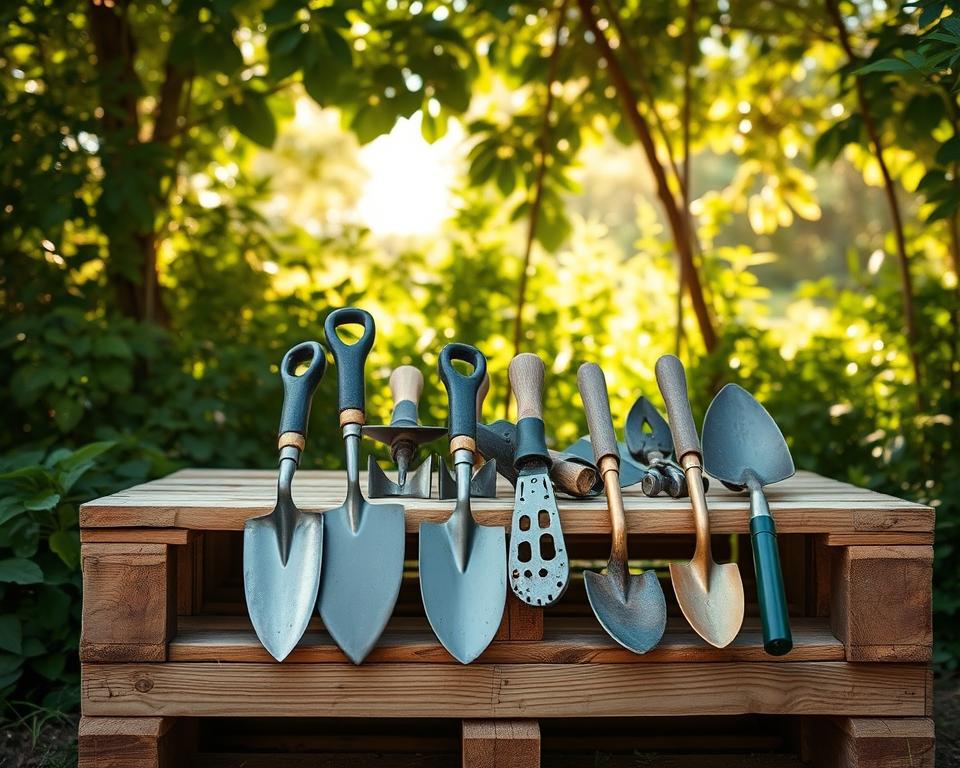
Transforming Pallets into Functional Organisers
Preparation is straightforward. Sand down any rough edges to create a safe surface. Applying a coat of paint or wood stain enhances both appearance and weather resistance.
The construction of pallets, with their built-in gaps, naturally creates perfect slots for long-handled items. This requires minimal modification. You can mount them vertically against walls or horizontally as shelving units.
Enhance the basic structure by adding sturdy hooks or small shelves. This transforms a simple pallet into a comprehensive garden tool organiser. It accommodates equipment of all sizes effectively.
| Configuration | Best Use | Stability Tip |
|---|---|---|
| Vertical Mount | Long-handled tools | Secure firmly to wall studs |
| Horizontal Shelf | Pots and small items | Use brackets for support |
| Freestanding Unit | Mobile organisation | Join multiple pallets together |
Wooden crates provide similar versatility. Stack them for modular systems or mount them individually. Adding handles creates portable carriers for your tools.
Repurposing Old Wood and Simple Materials for Tool Organisation
With some basic wood and a handful of nails, you can construct a custom solution from scratch. This approach is both economical and highly effective, allowing you to design a system that fits your specific collection perfectly.
Reclaimed timber is an excellent choice for these projects. Sanding and sealing the wood ensures durability, while a coat of paint can match your outdoor aesthetic.
Simple Wood Projects for the Garden Shed
A highly effective method involves using standard 2×4 timber. For implements with a T-shaped end, screw two boards perpendicular to the wall studs, creating a gap between them.
Hang the equipment with the handle pointing down into this space. This provides a secure hold without specialised brackets.

A similar way works for items with handles. Attach a single 2×4 vertically to a stud. You can then hang the tools directly from it.
For a minimalist approach, use screws or nails driven directly into your shed walls. Leave them protruding enough for handles to rest on.
- For items without handles: Drill small holes in the ends and attach a loop of string to hang them.
- Creative repurposing: An old rake head mounted on the wall provides instant hooks from its tines, ideal for hand tools.
Using Everyday Items in Clever Ways
Look around your home for items that can gain a new purpose. Old coat hooks or a retired kitchen rail can become instant organisers.
These clever adaptations require little investment but deliver professional results. They keep your smaller tools orderly and within easy reach.
Alternatives for Organising Smaller Garden and Hand Tools
Keeping track of smaller implements presents a unique organisational challenge. Their compact size makes them easy to misplace amongst larger equipment. They often get buried, leading to frustrating searches.
Contained solutions that group related items together are highly effective. This approach ensures every essential tool has a designated place. It transforms how you manage your hand tools.

Using Baskets and Portable Containers
Baskets offer a stylish and flexible way to declutter your space. Choose sturdy wicker or metal options for durability. They are perfect for gardening tools like gloves and pruners.
Labelling each basket creates a system for specific items. This method allows you to carry frequently used tools directly to your work area. It eliminates constant trips back to the shed.
For easily lost items like plant markers, consider wall-mounted pails. Attach small buckets with screws for a simple drop-in place. Labels on the front ensure everything goes back to its spot.
An innovative solution uses pots filled with sand or gravel. This stabilises the pot and keeps hand tools upright. Adding mineral oil to the sand can clean metal heads during storage.
- Portable Kits: Assemble essential garden tools in a carried container for efficiency.
- Container Types: Wicker for aesthetics, metal for durability, plastic for budget-friendly options.
- Key Benefit: Contained storage keeps smaller gardening tools organised and instantly accessible.
Multipurpose Gardening Stations and Workspaces
Creating a dedicated hub transforms how you approach outdoor tasks by bringing everything together in one efficient location. This integrated approach eliminates constant movement between separate areas for equipment and work surfaces.
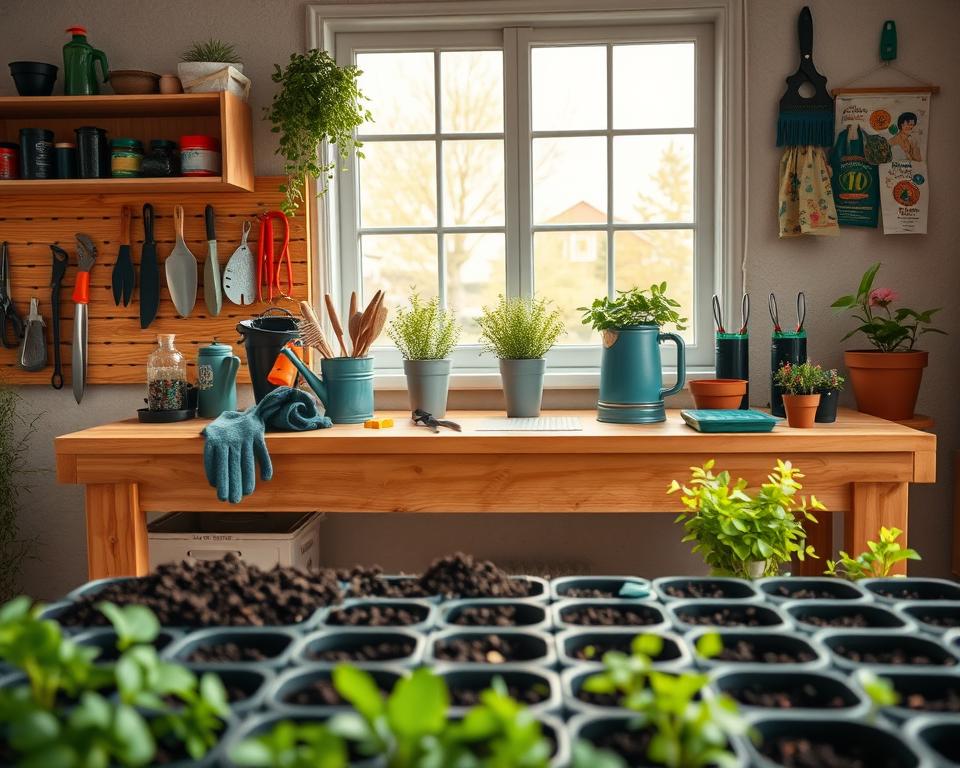
A sturdy table or workbench serves as the perfect foundation for your custom station. You can repurpose existing furniture or build a simple wooden frame to create this central workspace.
Combining Storage with Practical Work Areas
Strategic placement of organisational elements maximises functionality within your available area. Install pegboard panels behind the work surface to keep frequently used implements within easy reach.
Wire shelves offer clever solutions for long-handled equipment. By cutting specific wires, you create custom slots that keep rakes and shovels upright and separated.
Kitchen hanging rods with S-hooks provide excellent organisation for spray bottles and accessories. This system prevents items from toppling over while keeping them visible and accessible.
Designate specific zones for different activities within your station. Include a potting area with soil storage below and smaller containers for seeds and labels nearby.
This comprehensive approach ensures every item has its proper place while maintaining a clear work surface. The result is a highly efficient system that saves time and reduces frustration during all your outdoor projects.
Conclusion
Implementing a thoughtful system for your outdoor equipment marks a significant step towards a more productive and enjoyable horticultural practice. The garden tool storage ideas explored offer a clear path to transforming a chaotic area into a model of efficiency.
Selecting the right approach depends on your available space, budget, and DIY confidence. Whether simple or elaborate, a good system protects your investment and saves valuable time.
Remember that organisation is not purely functional. A well-ordered space can also be visually pleasing, adding character to your garden shed.
Regular maintenance ensures long-term success. Clean tools before putting them away and periodically check hooks and racks for security.
Begin your organisational journey today. Even a small change can yield noticeable benefits, leading to a tidier, more efficient gardening experience.
FAQ
What is the best way to organise long-handled implements like shovels and rakes?
A wall-mounted system using sturdy hooks or a purpose-built rack is highly effective. This method keeps items off the floor, prevents damage to the handles, and makes them easy to access. For a freestanding option, consider a rack with pre-drilled holes or slots to securely hold the equipment.
How can I create a storage system on a budget?
Upcycling materials like wooden pallets or old crates offers a cost-effective and creative solution. These can be mounted on a wall to hold various implements. Repurposing everyday items, such as using a pegboard with an assortment of hooks, also provides a versatile and affordable organisation system for your shed or garage.
What should I consider when planning a wall-mounted organiser?
First, assess the available wall space in your shed or garage to determine the size and layout. Then, consider the weight and variety of your equipment to select durable hooks and pegboards that can support them. Proper placement ensures everything has its place and is within easy reach.
How do I store smaller hand tools to keep them organised?
For smaller items, portable containers like baskets, toolboxes, or even repurposed kitchen utensil holders work wonderfully. These can be placed on shelves within a multipurpose gardening station, keeping everything tidy and transportable for tasks around the outdoor space.
Can I build a freestanding rack myself?
Absolutely. A DIY project using quality wood is a fantastic way to create a custom organiser. Design it with versatility in mind, incorporating different sized slots and perhaps a small shelf for accessories. This approach allows you to tailor the rack precisely to your collection.
Why is proper organisation important for my equipment?
A well-organised system enhances efficiency, saving you time searching for items. It also promotes safety by reducing tripping hazards and helps prolong the life of your equipment by protecting blades and handles from damage when not in use.