How to Clean Your Outdoor Cushioned Chairs
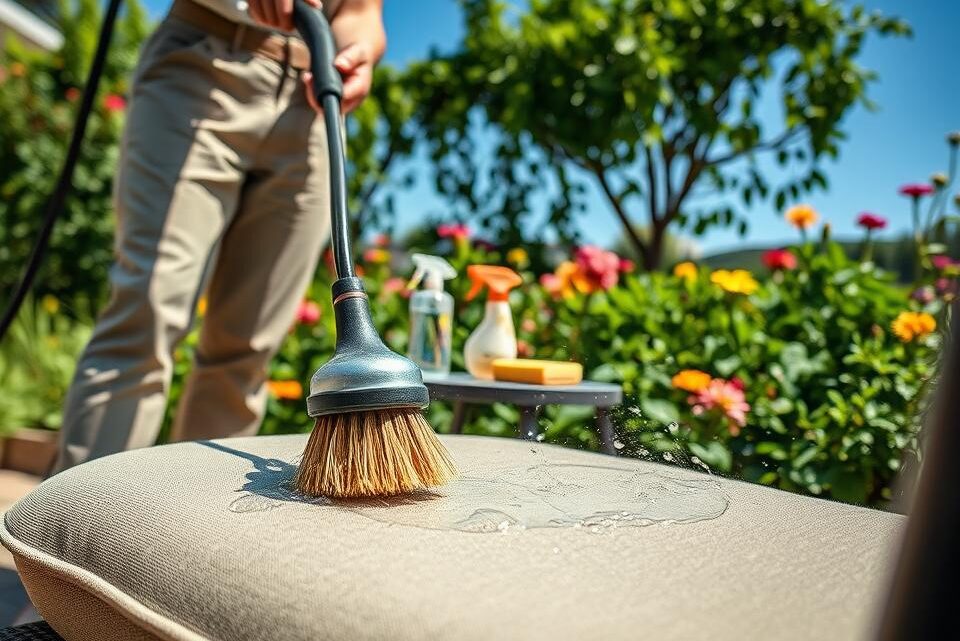
Maintaining your cushioned furniture is crucial for its longevity and aesthetic appeal. Cushion maintenance is not just about keeping them looking new; it’s also about ensuring they remain hygienic and comfortable.
You invest in outdoor furniture to enjoy your garden or patio, but without proper care, it can deteriorate quickly. This article will guide you through the process of cleaning your cushioned chairs, helping you to keep them in good condition.
Inhaltsverzeichnis
Key Takeaways
- Regular cleaning is essential for maintaining your cushioned chairs.
- Proper maintenance can extend the life of your outdoor furniture.
- Simple cleaning methods can be effective for cushion maintenance.
- Understanding the material of your cushions is crucial for choosing the right cleaning method.
- Regularly cleaning your outdoor furniture can enhance your outdoor living experience.
The Importance of Regular Cleaning for Outdoor Furniture
To ensure your outdoor cushioned chairs remain in good condition, regular cleaning is essential. Outdoor furniture is constantly exposed to various environmental factors that can deteriorate its quality and appearance.
Weather Impact on Cushioned Chairs
Weather conditions play a significant role in the deterioration of outdoor cushioned chairs. Understanding these effects is crucial for maintaining your furniture.
Effects of Rain and Humidity
Rain and high humidity can lead to moisture accumulation on your cushioned chairs, potentially causing mould and mildew growth. This not only damages the fabric but also creates unpleasant odours and health hazards.
Sun Damage and Fading
Prolonged exposure to sunlight can cause the colours of your cushions to fade, leading to a dull and worn appearance. UV rays can also weaken the fabric, making it more susceptible to tears and damage.
Health Benefits of Clean Outdoor Furniture
Regular cleaning of your outdoor furniture is not just about maintaining its appearance; it also has significant health benefits. Clean furniture reduces the risk of allergens and pests that can affect your health.
Preventing Allergen Buildup
Dust, pollen, and other allergens can accumulate on outdoor furniture, potentially triggering allergies. Regular cleaning helps to minimize these allergens, creating a healthier environment for you and your family.
Reducing Pest Infestations
Dirty outdoor furniture can attract pests such as insects and rodents, which can infest your outdoor living spaces. Keeping your furniture clean reduces the likelihood of pest infestations, ensuring a more comfortable and safe outdoor area.
Understanding Different Types of Outdoor Cushioned Chairs
Understanding the composition of your outdoor cushioned chairs is crucial for effective maintenance and longevity. Outdoor cushioned chairs are available in a wide range of materials and styles, each with its unique characteristics and maintenance needs.
Fabric Types and Their Cleaning Requirements
The fabric used for the cushions is a critical aspect of outdoor cushioned chairs. Different fabrics have distinct cleaning requirements to maintain their durability and appearance.
Acrylic and Olefin Fabrics
Acrylic and olefin fabrics are popular choices for outdoor cushions due to their water resistance and durability. Cleaning these fabrics involves gently brushing off dirt and using a mild soap solution. Avoid using harsh chemicals, as they can damage the fabric.
Polyester and Spun Polyester
Polyester and spun polyester fabrics are known for their strength and resistance to fading. Regular cleaning with a soft brush and mild detergent is recommended. For tougher stains, a solution of water and white vinegar can be effective.
Cotton and Canvas Materials
Cotton and canvas materials require more delicate care. Gentle hand washing with mild soap is advised. Avoid machine washing, as it can cause shrinkage and damage.
| Fabric Type | Cleaning Method | Special Care |
|---|---|---|
| Acrylic | Mild soap solution | Avoid harsh chemicals |
| Olefin | Gentle brushing | Resistant to water |
| Polyester | Soft brush and mild detergent | White vinegar for tough stains |
| Cotton/Canvas | Gentle hand washing | Avoid machine washing |
Frame Materials and Their Care
The frame of your outdoor cushioned chair is just as important as the cushions themselves. Different frame materials require specific care to ensure longevity.
Metal Frames (Aluminium, Steel)
Metal frames, such as those made from aluminium or steel, are durable and resistant to weathering. Regularly wiping them down with a dry cloth can prevent rust. For aluminium frames, a mild soap solution can be used to remove dirt.
Wooden Frames (Teak, Cedar)
Wooden frames, particularly those made from teak or cedar, require periodic oiling to maintain their appearance and durability. Using a wood sealant can protect them from the elements.
Synthetic Frames (Resin, Plastic)
Synthetic frames made from resin or plastic are lightweight and easy to clean. A simple wipe with a damp cloth is usually sufficient. For more stubborn dirt, a mild detergent can be used.
| Frame Material | Care Method | Special Care |
|---|---|---|
| Metal (Aluminium, Steel) | Dry cloth wipe | Prevent rust |
| Wooden (Teak, Cedar) | Periodic oiling | Use wood sealant |
| Synthetic (Resin, Plastic) | Damp cloth wipe | Mild detergent for stubborn dirt |
Essential Supplies to Clean Outdoor Cushioned Chairs
The right cleaning supplies are crucial for maintaining your outdoor cushioned chairs. Having the appropriate cleaning solutions and tools on hand will make the cleaning process more efficient and effective.
Cleaning Solutions and Products
When it comes to cleaning outdoor cushioned chairs, the type of cleaning solution used is vital. Different fabrics and materials require specific cleaning products to avoid damage and ensure a thorough clean.
Commercial Outdoor Fabric Cleaners
Commercial outdoor fabric cleaners are specifically designed for cleaning outdoor fabrics. They are usually formulated to remove dirt, stains, and mildew without damaging the fabric. Look for products that are pH-balanced and suitable for your cushion’s fabric type.
Mild Detergents and Soaps
Mild detergents and soaps can be used for cleaning outdoor cushions, especially if you prefer a more natural or cost-effective solution. Ensure the detergent is diluted properly to avoid leaving residue on the fabric.
Specialised Stain Removers
For tough stains, specialised stain removers can be very effective. These products are designed to target specific types of stains, such as grease or ink. Always test a small, inconspicuous area first to ensure the product doesn’t damage the fabric.
Tools and Equipment
In addition to cleaning solutions, having the right tools and equipment is essential for cleaning outdoor cushioned chairs effectively.
Brushes and Scrubbers
Soft-bristled brushes and scrubbers are useful for gently removing dirt and stains from the fabric. Be gentle to avoid damaging the fabric or removing any waterproof coatings.
Spray Bottles and Buckets
Spray bottles are handy for applying cleaning solutions evenly, while buckets are useful for mixing and soaking parts of the cushion. Use a bucket with a handle to make it easier to carry water and cleaning solution.
Microfibre Cloths and Sponges
Microfibre cloths and sponges are excellent for wiping down surfaces and absorbing spills. They are gentle on fabrics and can be used with or without cleaning solutions. Microfibre cloths are particularly effective for drying surfaces to prevent water spots.

By having the right cleaning supplies and tools, you’ll be well-equipped to keep your outdoor cushioned chairs clean and in good condition. Regular cleaning and maintenance will extend the lifespan of your outdoor furniture, ensuring it remains a comfortable and inviting part of your outdoor space.
Preparation Steps Before Cleaning
To ensure a thorough clean, several preparation steps should be taken before you begin. Cleaning your outdoor cushioned chairs is not just about wiping them down; it requires a systematic approach to remove dirt, debris, and stains effectively.
Removing Loose Debris and Dust
The first step in preparing your outdoor cushions for cleaning is to remove any loose debris and dust. This is crucial because dirt and debris can scratch the fabric if not removed before cleaning.
Vacuuming Techniques
Use a vacuum cleaner with a gentle suction setting to remove loose dirt and debris from the cushions. Ensure the vacuum is equipped with a brush attachment to gently sweep away dirt without damaging the fabric. “Vacuuming is a critical step that prevents dirt from being ground into the fabric,” says cleaning expert Jane Smith.
Brushing Methods
For more stubborn dirt or debris stuck in the fabric, use a soft-bristled brush to gently sweep it away. Brushing helps to loosen dirt, making it easier to clean the cushions thoroughly.
Testing Cleaning Solutions on a Small Area
Before applying any cleaning solution to your outdoor cushions, it’s vital to test it on a small, inconspicuous area. This step ensures that the solution doesn’t damage the fabric or cause colour fading.
Colour Fastness Testing
To check for colour fastness, apply a small amount of the cleaning solution to an unseen part of the cushion. Wait for a few minutes, then blot it with a white cloth. If the colour transfers to the cloth, the solution may not be suitable.
Material Reaction Assessment
Assess the material’s reaction to the cleaning solution by checking for any signs of damage, such as discolouration or texture change. If you notice any adverse effects, consider an alternative cleaning solution.

By following these preparation steps, you can ensure that your outdoor cushioned chairs are cleaned effectively and safely. Proper preparation not only enhances the cleaning outcome but also prolongs the lifespan of your outdoor furniture.
Step-by-Step Guide to Clean Outdoor Cushioned Chairs
Cleaning your outdoor cushioned chairs regularly is essential to maintain their appearance and longevity. Regular maintenance not only keeps your furniture looking its best but also extends its lifespan, ensuring you can enjoy your outdoor space for years to come.
Routine Cleaning Process
Routine cleaning is the first line of defence against dirt and grime. It involves simple, regular tasks that keep your outdoor cushioned chairs in good condition.
Weekly Maintenance Steps
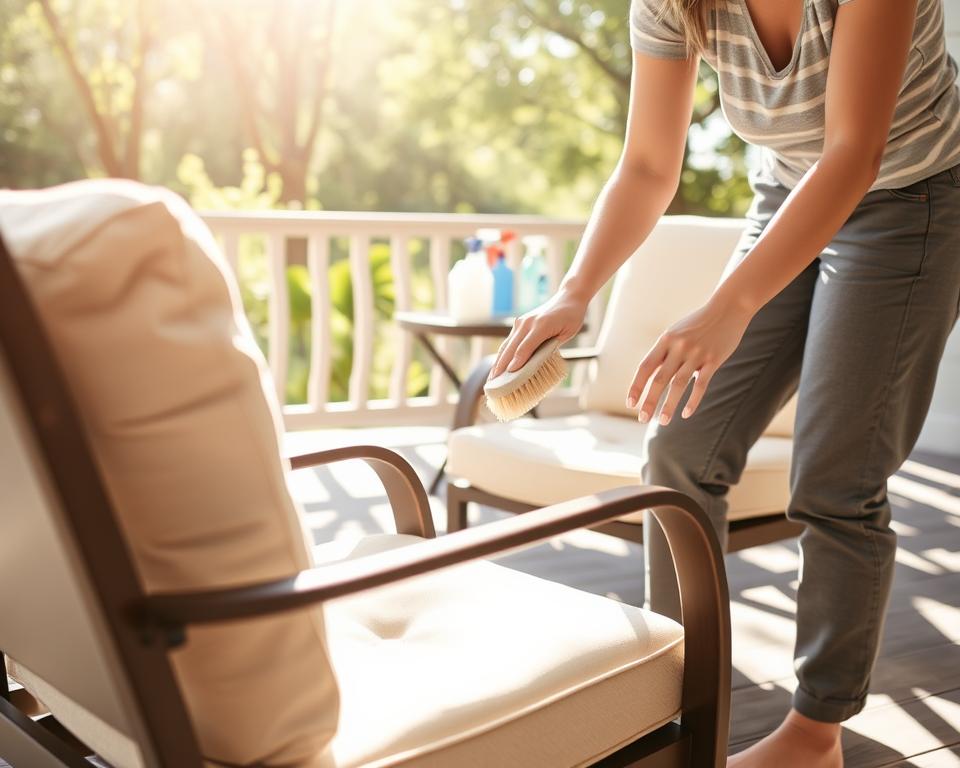
To maintain your outdoor cushioned chairs, start by removing any loose debris or dirt. Use a soft-bristled brush or a lint roller to gently sweep away dirt and dust. For more thorough cleaning, mix a mild detergent with warm water, and use a soft cloth to wipe down the cushions. Rinse with clean water and allow to air dry.
Monthly Cleaning Procedures
On a monthly basis, give your outdoor cushioned chairs a deeper clean. Use a more concentrated cleaning solution if necessary, and scrub any stubborn stains gently. Make sure to rinse thoroughly to remove any soap residue, which can attract dirt and cause discolouration.
Deep Cleaning Techniques
Deep cleaning is necessary to remove ingrained dirt and stains that regular cleaning might miss. This process involves more thorough methods to restore your cushions to their original condition.
Hand Washing Methods
For hand washing, remove the cushion covers if possible, and soak them in a mixture of warm water and a gentle detergent. Gently scrub any stained areas, then rinse thoroughly. For frames and non-removable parts, use a damp cloth with a mild cleaning solution to wipe down surfaces.
Pressure Washing Considerations
If you need to use a pressure washer, be cautious not to damage the fabric or frame. Use a low-pressure setting and keep the nozzle at least a foot away from the surface. Avoid using pressure washing on delicate fabrics or intricate designs.
By following these steps, you can keep your outdoor cushioned chairs clean, comfortable, and looking their best throughout the year.
Tackling Specific Stains and Problems
Maintaining your outdoor cushioned chairs involves more than just routine cleaning; it requires tackling specific stains and issues. Outdoor cushions are exposed to various elements and can suffer from a range of stains and damage, from food and beverage spills to mould and mildew growth.
Removing Food and Beverage Stains
Food and beverage stains are common on outdoor cushioned chairs. Prompt action is crucial to prevent these stains from setting in.
Coffee and Wine Stains
Coffee and wine stains can be particularly challenging. Blot the stain with a clean cloth, then apply a solution of equal parts water and white vinegar. For tougher stains, a mild detergent can be used.
Grease and Oil Marks
Grease and oil marks require a different approach. Sprinkle baking soda liberally over the stain to absorb the grease, then brush off and clean with a mild soap solution.
Dealing with Bird Droppings
Bird droppings are not only unsightly but can also be corrosive to fabric. Immediate treatment is essential.
Immediate Treatment
For fresh droppings, gently scrape off the excess with a flat tool, then clean the area with a mild soap solution.
Dried Stain Removal
Dried bird droppings may require a more vigorous approach, involving a mixture of water and a mild detergent or a specialized stain remover.
Treating Mould and Mildew
Mould and mildew thrive in damp conditions, making outdoor cushions a potential breeding ground. Regular inspection is key to preventing their growth.
Bleach Solutions
For severe cases, a diluted bleach solution can be effective. However, caution is advised to avoid damaging the fabric.
Natural Mould Remedies
Alternatively, natural remedies such as vinegar or tea tree oil can be used to combat mould and mildew without the risk of bleach damage.
Eliminating Tree Sap and Pollen
Tree sap and pollen are other common issues for outdoor furniture. They require specific removal techniques.
Freezing Techniques for Sap
For tree sap, applying ice can harden the sap, making it easier to scrape off without damaging the fabric.
Pollen Removal Methods
Pollen can be removed by gently brushing the area with a soft-bristled brush or wiping it with a damp cloth.
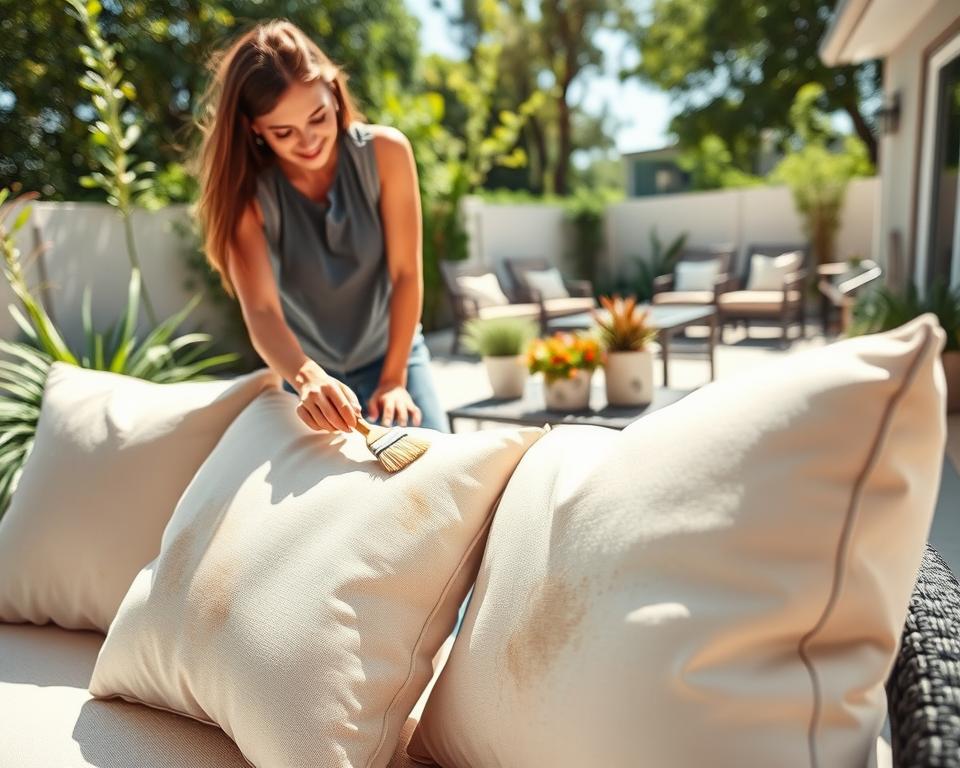
By addressing these common stains and problems effectively, you can extend the life of your outdoor cushioned chairs and keep them looking their best.
Machine Washing vs. Hand Cleaning Outdoor Cushion Covers
Cleaning your outdoor cushion covers effectively is crucial for maintaining your outdoor furniture’s overall appearance and hygiene. The method you choose can significantly impact the longevity and quality of the covers. In this section, we’ll explore the pros and cons of machine washing versus hand cleaning to help you make an informed decision.
When to Machine Wash Cushion Covers
Machine washing can be a convenient and efficient way to clean outdoor cushion covers. However, it’s essential to check the manufacturer’s instructions first to ensure that machine washing is recommended.
Checking Manufacturer’s Instructions
Before tossing your cushion covers into the washing machine, always refer to the manufacturer’s care label. Some fabrics may require dry cleaning or special care, while others might be machine washable. Ignoring these instructions can lead to damage or discoloration.
Proper Machine Settings
If machine washing is allowed, use a gentle cycle with cold water and a mild detergent. Avoid using bleach or harsh chemicals, as they can damage the fabric or cause fading. It’s also advisable to wash similar colors together to prevent dye bleeding.
| Machine Setting | Recommendation |
|---|---|
| Water Temperature | Cold |
| Cycle Type | Gentle |
| Detergent | Mild |
Hand Washing Techniques for Delicate Fabrics
For delicate or special-care fabrics, hand washing is often the safest method. This approach allows for a more controlled cleaning process, reducing the risk of damage.
Gentle Scrubbing Methods
When hand washing, use a soft-bristled brush or a clean cloth to gently scrub away dirt and stains. Avoid using abrasive materials or scrubbing too hard, as this can damage the fabric.
Rinsing and Squeezing Techniques
Rinse the cushion covers thoroughly with cold water to remove all soap residue. Gently squeeze out excess water without wringing or twisting the fabric, which can cause stretching or distortion.
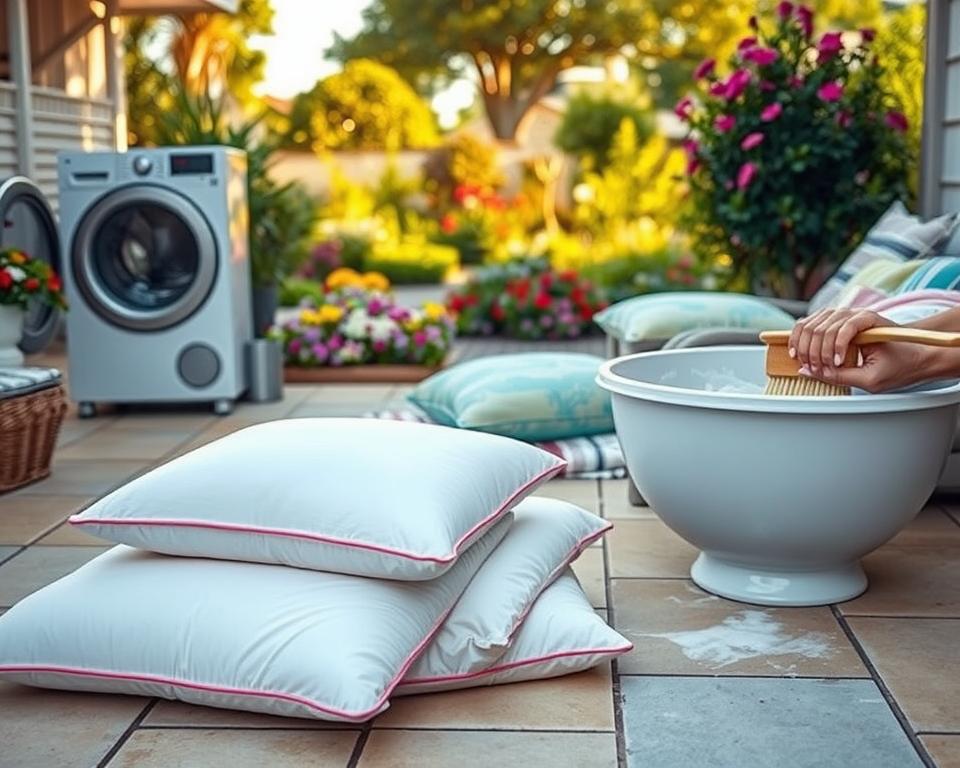
By understanding the appropriate cleaning method for your outdoor cushion covers, you can maintain their quality and extend their lifespan. Whether you choose machine washing or hand cleaning, following the right techniques is key to keeping your outdoor furniture looking its best.
Effective Drying Methods for Cushions
Once you’ve cleaned your outdoor cushions, the next step is to dry them thoroughly. Proper drying is crucial to prevent moisture buildup, which can lead to mildew and damage to the fabric.
Air Drying Techniques
Air drying is one of the most effective methods for drying outdoor cushions. To do this efficiently, you need to consider optimal positioning for airflow and potentially use fans or dehumidifiers.
Optimal Positioning for Airflow
Position your cushions in a way that allows air to circulate around them freely. This might mean standing them up against a wall or laying them flat on a surface that allows airflow underneath, such as a mesh table or a drying rack.
Using Fans and Dehumidifiers
To speed up the drying process, you can use fans to circulate the air or dehumidifiers to reduce the moisture in the air. This is particularly useful on humid days when air drying alone might not be sufficient.
Preventing Moisture Retention
Preventing moisture retention is key to avoiding issues like mildew formation. Ensuring that your cushions dry completely is crucial.
Avoiding Mildew Formation
Mildew can form on damp cushions, especially in warm, humid environments. To avoid this, ensure your cushions are completely dry before storing them or covering them up.
Ensuring Complete Drying
Check your cushions regularly during the drying process. If they are still damp after a few hours, consider using additional drying methods like fans or dehumidifiers to speed up the process.
| Drying Method | Benefits | Considerations |
|---|---|---|
| Air Drying | Energy efficient, gentle on fabrics | Weather dependent, can be slow |
| Using Fans | Speeds up drying, improves airflow | Energy consumption, noise |
| Dehumidifiers | Effective in humid conditions, reduces mildew risk | Energy consumption, initial cost |

Seasonal Care for Your Outdoor Cushioned Furniture
Seasonal changes bring different challenges for your outdoor cushioned furniture, necessitating a tailored care approach. To ensure your furniture remains in good condition throughout the year, it’s crucial to adjust your maintenance routine according to the season.
Spring Cleaning Routine
As winter ends, your outdoor cushioned furniture needs attention to refresh it for the new season. Start by removing any debris that may have accumulated during the winter months.
Preparing for Outdoor Season
Inspect your furniture for any damage caused during winter and make necessary repairs. Replace any worn-out covers or cushions to ensure your furniture is ready for use.
Refreshing After Winter Storage
Clean your cushions thoroughly before placing them back on the furniture. Check for any mould or mildew and treat accordingly to prevent further damage.
Summer Maintenance Tips
During the summer, your outdoor cushioned furniture is likely to be used frequently, which means it needs regular maintenance to withstand heavy use.
Dealing with Heavy Use
Regularly clean your cushions to remove dirt and stains. Consider using a fabric protector to enhance the durability of your cushion covers.
Protection from Sun Damage
Use umbrellas or canopies to provide shade for your furniture, reducing the impact of direct sunlight. Consider using covers or bringing cushions indoors during peak sun hours.
| Season | Key Tasks | Tips |
|---|---|---|
| Spring | Inspect and repair damage, clean cushions | Use a mild detergent for cleaning |
| Summer | Regular cleaning, protect from sun damage | Use fabric protector, provide shade |
| Autumn | Deep clean, prepare for reduced use | Store cushions in a dry place, consider covers |
Autumn Preparation Steps
As summer ends, prepare your outdoor cushioned furniture for the less frequent use during autumn and the forthcoming winter.
End-of-Season Deep Clean
Perform a thorough clean of your cushions and furniture to remove any dirt or debris that may have accumulated. Consider using a deep cleaning solution to tackle stubborn stains.
Preparing for Reduced Use
Store your cushions in a dry, well-ventilated area to prevent mould and mildew. Consider using protective covers for your furniture to shield it from autumn and winter weather.

Storage Solutions for Outdoor Cushions
When the outdoor season comes to an end, storing your cushions correctly can extend their lifespan. Proper storage protects them from harsh weather conditions, reduces the risk of damage, and keeps them clean for the next season.
Winter Storage Options
During the winter, it’s crucial to store your outdoor cushions in a way that shields them from cold, damp conditions. You have several options for storing your cushions, depending on the space available and the level of protection required.
Indoor Storage Locations
Storing your cushions indoors is one of the best ways to protect them. Consider using a dry, cool area such as a loft, attic, or a spare room. Ensure the space is free from moisture to prevent mould and mildew.
Garage and Shed Storage Tips
If indoor storage isn’t feasible, garages and sheds can be suitable alternatives. Make sure the area is dry and well-ventilated. You can store cushions on shelves or in storage bins to keep them off the floor.
Protective Covers and Containers
Using protective covers and containers is essential for maintaining the quality of your outdoor cushions during storage. These help to keep them clean and dry.
Waterproof Storage Bags
Waterproof storage bags are an excellent option for storing outdoor cushions. They provide a barrier against moisture and can be used in various storage locations, including outdoors.
Breathable Fabric Covers
Breathable fabric covers allow for airflow, reducing the risk of moisture buildup. They are ideal for storing cushions in dry conditions and can help prevent the growth of mould and mildew.
By choosing the right storage solution, you can ensure your outdoor cushions remain in good condition. Consider the following table when deciding on the best storage method for your needs:
| Storage Method | Protection Level | Cost |
|---|---|---|
| Indoor Storage | High | Low |
| Garage/Shed Storage | Medium | Low |
| Waterproof Bags | High | Medium |
| Breathable Covers | Medium | Low |
As gardening expert Carol Klein once said, “The key to maintaining your outdoor furniture is not just in the cleaning but also in how you store it during the off-season.” Proper storage is a crucial step in the care of your outdoor cushions.

DIY Cleaning Solutions for Budget-Friendly Maintenance
DIY cleaning solutions offer a cost-effective way to keep your outdoor cushioned chairs clean and fresh. By using common household ingredients, you can create effective cleaning products that are gentle on your furniture and the environment.
Vinegar-Based Cleaners
Vinegar is a versatile and eco-friendly cleaning agent that can be used to remove dirt, grime, and mildew from outdoor cushions. Its acidity helps break down tough stains without damaging the fabric.
Basic Vinegar Solution Recipe
To make a basic vinegar solution, mix equal parts of white vinegar and water in a spray bottle. Spray the solution onto the cushions, let it sit for a few minutes, and then scrub gently with a soft brush before rinsing.
Enhanced Vinegar Mixtures
For tougher stains, you can enhance your vinegar solution by adding a tablespoon of mild dish soap. This will help emulsify the dirt, making it easier to remove.

Baking Soda Treatments
Baking soda is another effective ingredient for cleaning outdoor cushions. It acts as a mild abrasive and can absorb odours, leaving your cushions smelling fresh.
Paste Application Methods
To use baking soda, make a paste by mixing it with a small amount of water. Apply the paste to stained areas and let it sit for 15-30 minutes before scrubbing and rinsing.
Deodorising Techniques
For deodorising, sprinkle baking soda liberally over the cushions and let it sit for a few hours or overnight before vacuuming or shaking off the powder.
Essential Oil Additions
Essential oils can be added to your DIY cleaning solutions to provide a pleasant scent and additional cleaning benefits. Certain essential oils, like tea tree oil, have natural disinfectant properties.
Natural Disinfectant Properties
Tea tree oil, for example, can be added to your vinegar solution to enhance its disinfectant properties. Use a few drops per litre of solution.
Pleasant Scent Combinations
You can also blend different essential oils to create a refreshing scent. For instance, combining lemon and lavender oils can leave your outdoor cushions smelling fresh and clean.
| Cleaning Solution | Main Ingredient | Benefits |
|---|---|---|
| Vinegar-Based | White Vinegar | Effective against mildew, gentle on fabrics |
| Baking Soda | Baking Soda | Mild abrasive, odour absorber |
| Essential Oil | Various Essential Oils | Pleasant scent, natural disinfectant properties |
When to Consider Professional Cleaning Services
When DIY cleaning methods fail to restore your outdoor cushions to their former glory, professional cleaning services may be the answer. While regular maintenance can keep your outdoor cushioned chairs looking their best, there are times when a deeper, more thorough clean is required.

Signs Your Cushions Need Professional Help
There are several indicators that suggest your outdoor cushions require professional attention. These include:
- Persistent stains and odours that remain after DIY cleaning attempts
- Fabric deterioration, such as fraying or discolouration
Persistent Stains and Odours
If you’ve tried various cleaning methods and still can’t remove stubborn stains or unpleasant odours from your outdoor cushions, it’s likely time to seek professional help. Professionals have access to industrial-grade cleaning solutions and equipment that can tackle even the toughest stains.
Fabric Deterioration Indicators
Fabric deterioration can manifest as fraying, discolouration, or weakening of the material. If you notice any of these signs, it’s crucial to consult a professional to prevent further damage and extend the lifespan of your outdoor cushions.
Choosing the Right Service Provider
When deciding to hire professional cleaning services, it’s essential to choose a reliable and experienced provider. Here are some factors to consider:
- Experience with outdoor furniture cleaning
- Positive customer reviews and testimonials
- Appropriate equipment and eco-friendly cleaning solutions
Questions to Ask Professionals
Before hiring a cleaning service, ask potential providers about their experience, methods, and products used. This will help ensure you’re getting the best service for your outdoor cushions.
Cost Considerations
The cost of professional cleaning services can vary based on factors like the size of your cushions, the level of soiling, and the service provider’s rates. Be sure to get quotes from multiple providers to compare prices and services offered.
Conclusion
You now have a comprehensive guide on how to clean and maintain your outdoor cushioned chairs. Regular cleaning is crucial for extending the life of your furniture and keeping it looking its best.
By following the cleaning tips summary provided, you can ensure your outdoor cushioned chairs remain a comfortable and inviting part of your outdoor living space. Remember, maintaining outdoor cushioned chairs is not just about aesthetics; it’s also about hygiene and durability.
To keep your outdoor furniture in top condition, make cleaning a regular part of your maintenance routine. This will not only enhance your outdoor living experience but also protect your investment.
FAQ
How often should I clean my outdoor cushioned chairs?
You should clean your outdoor cushioned chairs at least once a month, or more frequently if they are exposed to heavy use or harsh weather conditions.
What is the best way to remove mildew from outdoor cushions?
To remove mildew, you can use a solution of water and mild detergent, or a specialised mildew remover. Apply the solution to the affected area, scrub gently, and rinse thoroughly.
Can I machine wash my outdoor cushion covers?
It depends on the fabric type and manufacturer’s instructions. Check the care label before machine washing, and use a gentle cycle with cold water to prevent damage.
How can I protect my outdoor cushions from sun damage?
You can protect your outdoor cushions from sun damage by using a fabric protector or UV-resistant spray, or by storing them in a shaded area when not in use.
What is the best way to dry outdoor cushions after cleaning?
To dry outdoor cushions, you can air dry them in a well-ventilated area, or use a fan to speed up the drying process. Avoid using a tumble dryer or other heat source, as this can damage the fabric.
How can I remove stubborn stains from my outdoor cushions?
To remove stubborn stains, you can use a specialised stain remover or a DIY solution such as baking soda and water. Apply the solution to the stain, let it sit for a few minutes, and then scrub and rinse.
Can I use bleach to clean my outdoor cushions?
Bleach can be used to clean outdoor cushions, but it should be used with caution. Always check the care label and test a small area first to ensure the bleach doesn’t damage the fabric.
How can I store my outdoor cushions during the winter months?
To store your outdoor cushions during the winter months, clean and dry them thoroughly, then store them in a dry, protected area such as a garage or shed. Use breathable storage bags or containers to prevent moisture buildup.
What are some DIY cleaning solutions I can use on my outdoor cushions?
You can use DIY cleaning solutions such as vinegar and water, baking soda and water, or mild detergent and water to clean your outdoor cushions. Always test a small area first to ensure the solution doesn’t damage the fabric.
When should I consider hiring a professional to clean my outdoor cushions?
You should consider hiring a professional to clean your outdoor cushions if they are heavily soiled, have persistent stains, or are made of delicate or special-care fabrics. A professional cleaner can provide the necessary expertise and equipment to clean your cushions effectively.