How to Build a Foundation for a Garden Room

A sturdy base is vital in garden room construction. It prevents moisture damage and keeps your space secure for years to come.
This overview highlights the steps from site preparation to effective damp-proof solutions. Each stage supports a safe and long-lasting outcome, which is key in garden room construction.
Inhaltsverzeichnis
Key Takeaways
- Pick ground with firm support to minimise settlement
- Check soil composition to avoid shifting issues
- Keep an eye on damp-proof layers for added protection
- Use the right gear for precise measurements
- Plan each step for stability and durability
Why a Strong Base Is Essential
A well-prepared base supports long-term stability and shields your garden room from shifting soil. It keeps your structure level and resists common challenges caused by British weather. Investing in reliable foundation building steps saves time and money down the road.
In addition, a firm base means fewer repairs and less chance of damp or warping floors. That means your project remains steady, reducing stress on walls and timber elements. Plus, it offers peace of mind as you enjoy a well-built space in every season.
- Stronger support ensures consistent flooring.
- Better protection against moisture and frost.
- Reduced structural strain safeguards your investment.
| Key Benefit | Outcome |
|---|---|
| Improved stability | Lower risk of uneven floors |
| Moisture control | Defence against damp ingress |
| Reliable longevity | Fewer maintenance hassles |
Essential Tools and Materials
A strong start begins with a well-chosen selection of gear and building products. Basic items such as a reliable measuring tape, robust wheelbarrow, and durable shovel provide stability when tackling any DIY base for garden rooms.
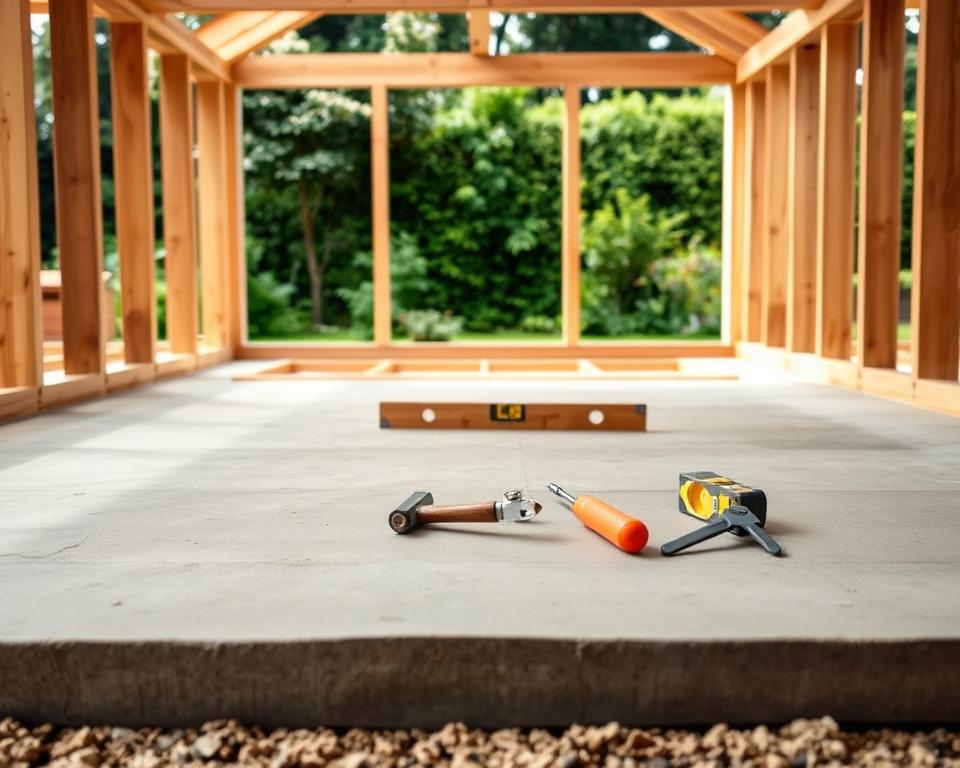
Precision matters. Tasks progress smoothly when every tool is in good condition. Small checks reduce the chance of miscalculations and keep the project on course.
Checking Tools for Accuracy
Measuring devices should be inspected for signs of wear. A spirit level with a clear bubble is vital for neat edges. Metal squares reveal if corners remain at the right angle. Careful upkeep prevents wobbly sections and uneven surfaces.
Selecting the Right Concrete Mix
Strong bases depend on quality cement and aggregate. Reputable cement brands in the UK offer mixes designed for durability under wet conditions. Each mix has a specific ratio that locks into place once it cures. A consistent blend boosts overall toughness and prolongs the life of any DIY base for garden rooms.
built foundation garden room
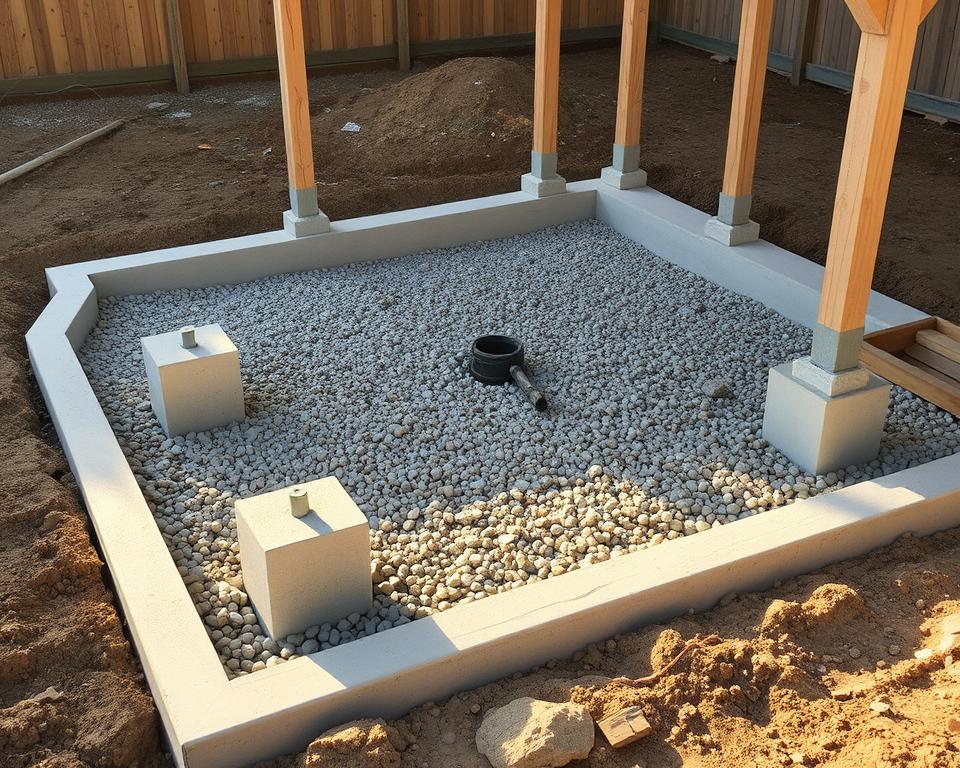
Preparing a stable base involves matching construction details to the ground beneath. Suitability depends on soil type, drainage needs, and any unique design goals. Each element should work together, giving your new building the support it requires. This applies whether you plan a simple workspace or a grand structure for family and friends.
Choosing the Best Construction Method
Concrete slabs sit low on the ground and often reduce cold drafts. Pier footings elevate the frame, keeping timber off damp patches. Some builders rely on ready-mix deliveries from B&Q for convenience. Others prefer mixing their own ingredients. Each approach can shape your outdoor living space by influencing the height, warmth, and aesthetics.
Concern for Local Regulations
Planning permission and building codes in the United Kingdom vary by council. Certain areas have height restrictions or minimum setback distances from boundaries. Research your local guidelines before breaking ground. These rules protect your investment and maintain harmony with neighbouring properties.
Evaluating Soil Conditions
Identifying your garden’s soil type is vital for a sturdy build. Clay or silt tends to retain water, while sandy or chalky ground can drain too quickly. Each texture demands close attention to avoid shifts and cracks later.
A simple inspection reveals basic traits. A deeper assessment includes:
- Visual check for colour, clumps, and organic matter
- A jar test to see how soil particles settle over time
These steps guide the selection of a stable foundation technique that suits your garden room. Results are more precise when soil is sampled from multiple spots. Testing during different weather conditions provides a broader outlook on how moisture levels change.

Understanding these details fits perfectly with the best stable foundation technique for a structure. Resistance to sinking or heaving becomes stronger when soil characteristics are fully known. Testing reduces financial risks later and makes your build more secure.
“Observing soil’s moisture retention is a crucial step,” advises the Royal Horticultural Society.
Preparing the Site
A level surface sets the stage for solid garden room construction. Clear stray branches, loose stones, and any clutter from the area. Keep measurements accurate by using sturdy stakes and string lines around your working zone.
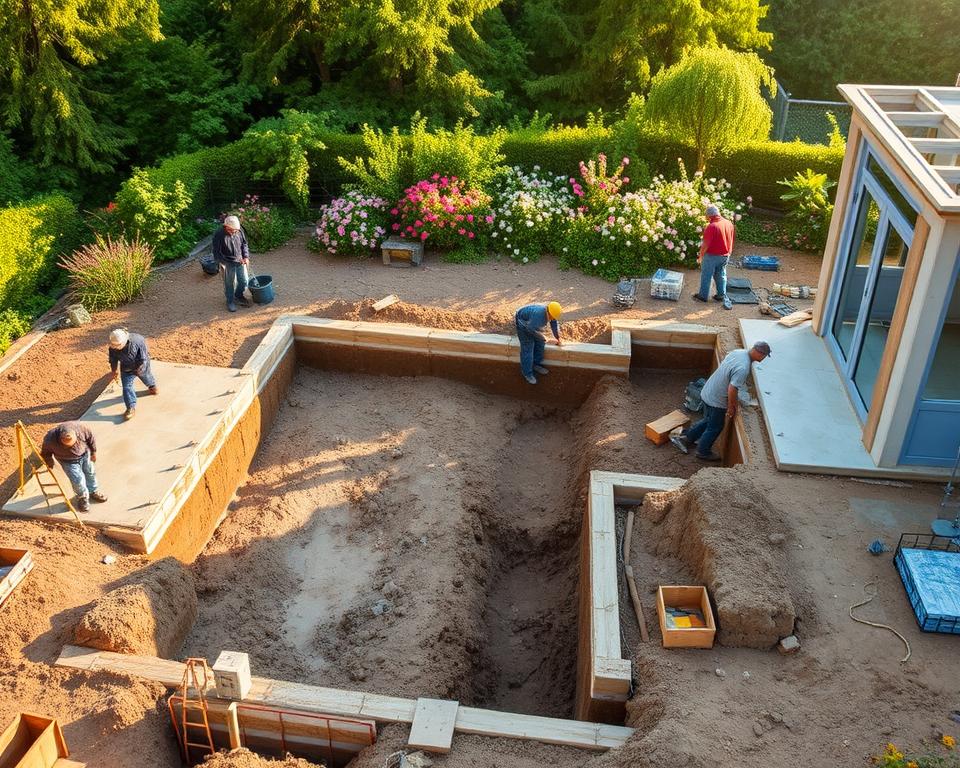
Site readiness prevents delays and mishaps during garden room construction. Each corner must align with your planned edges, allowing enough space for safe movement and assembly.
Marking Out the Perimeter
Use a tape measure and mark each boundary point with paint or pegs. Confirm correct angles by checking diagonals. Precise marking keeps your structure aligned and delivers a neat outcome.
Ensuring Proper Drainage
Pooling rainwater weakens many builds. Slope the ground away from your perimeter and lay gravel channels to move water out. This approach extends the life of timber and helps keep lighter materials stable.
| Step | Description |
|---|---|
| 1. Clear Surface | Remove debris and vegetation across the site. |
| 2. Outline Boundaries | Use stakes or paint for an accurate perimeter. |
| 3. Improve Drainage | Dig shallow channels and add gravel to divert water. |
Creating a Gravel Layer
Gravel supports drainage by allowing water to escape, which prevents unwanted pooling during wet weather. It also creates a stable cushion under any new surface. A depth of around 50 millimetres is common for most garden bases, though some projects may need a slightly thicker layer.
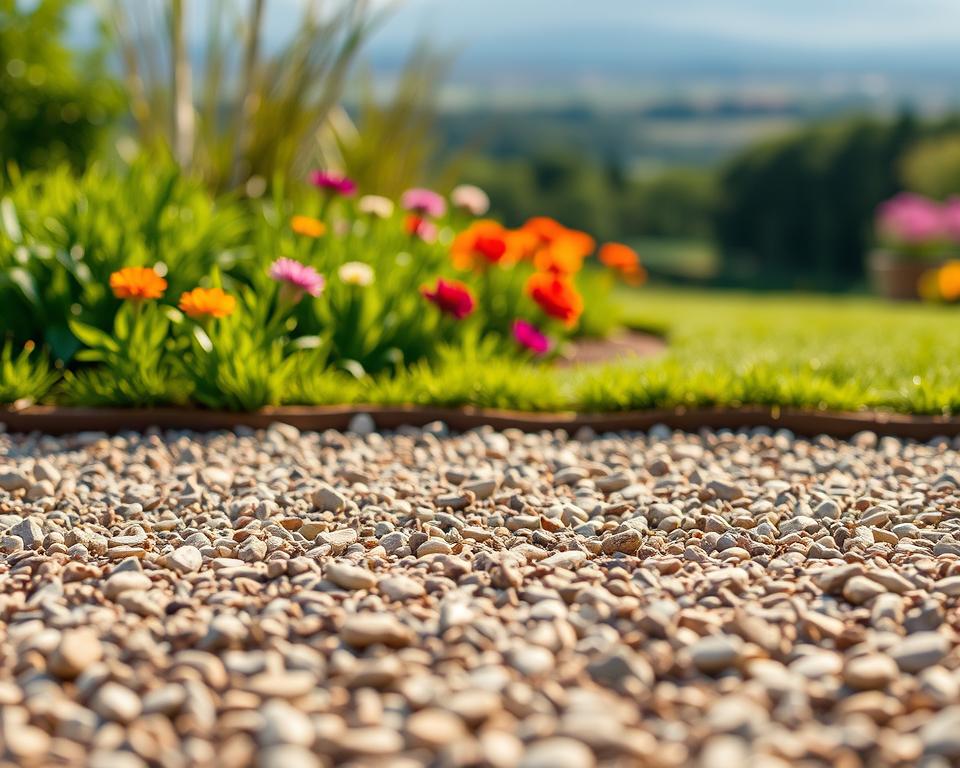
In any foundation building steps, it helps to pick gravel that compresses well. Rake it thoroughly and check for dips as you spread each load. Larger stones work beneath fine aggregate to maintain breathability. Crushed stone often fits the job because of its angular edges, offering a reliable grip and steady support.
Regularly inspect the layer as you work. Tamping down any loose pockets prevents shifting and keeps the surface level. These foundation building steps give your room project a sound footing that resists cracks and ensures long-term stability. This approach makes your gravel bed efficient, especially when you aim for an enduring base.
Levelling and Soil Compaction
This stage keeps your newly prepared surface stable for a robust structure. A smooth finish is key when building a DIY base for garden rooms. It maintains proper alignment and reduces the risk of shifting soil over time.
Precision is vital, so invest in reliable tools that confirm evenness. Controlled compaction steers clear of sinking and safeguards the integrity of your garden room.
Using a Spirit Level
A spirit level from brands like Stanley or Bosch can help you spot dips or raised sections. Place it along the edges to check alignment. Adjust gradually to keep the surface steady and balanced.
Compacting for Stability
Load-bearing capacity improves with thorough compaction. Some homeowners prefer a hand tamper for smaller sites. Others rent a plate compactor from trusted suppliers, adding extra force to compress the substrate. This step fills in hidden gaps, ensuring each layer remains sturdy for a long-lasting DIY base for garden rooms.
Laying Out Concrete Footings
The stability of a garden room depends on well-planned footings that support its framework. Each footing should keep the structure level and distribute weight efficiently. This approach helps protect against cracks or uneven sinking.
Positioning these supports takes careful measuring and marking. Precise spacing maintains balance in your outdoor living space. Drive stakes at targeted intervals to guide the depth and width of every concrete pad. This method preserves alignment across the base.
Local climate and soil composition play a part in shaping your footings. Saturated ground may need deeper excavation, while firmer soil often allows for a simpler layout. Paying attention to these details prevents damage down the road and keeps your outdoor living space comfortable.
Reinforcing with Formwork
Formwork shapes wet concrete. It holds everything in place while the mix settles and creates a strong base. This stable foundation technique helps protect against cracks and shifts caused by heavy loads or shifting soil.
Choosing Sturdy Form Boards
Thick wooden planks or robust plywood sheets keep the shape true. Builders often pick form boards that resist moisture warping. Strong ties or stakes stop boards from bowing under concrete pressure. This step makes sure the sides stay even.
Placing Steel Reinforcement
Metal bars or mesh add extra stability. They block tension cracks as concrete cures. The correct spacing of steel rods prevents weak spots and supports the slab for years. This stable foundation technique safeguards the finished project against shifting ground and daily use.
Curing and Protecting the Base
Proper curing keeps the slab steady during the drying phase. It prevents cracks and strengthens the surface against wear. A damp environment is vital in the first few days. Surface moisture stops premature shrinkage. Cool nights can lower temperatures, so placing insulation boards helps maintain warmth. Shelter the foundation from heavy rain by covering it with water-resistant sheeting. Check the surface for uniform colour and smooth texture.
Many builders rely on consistent humidity to avoid fractures. If dryness appears, a light mist can restore proper moisture. This creates a stronger base that resists future damage and ensures peace of mind over time.
Once the concrete sets, preserve moisture with common techniques:
- Spritz the slab with water at intervals to avoid dryness.
- Use frost protection if cold snaps threaten early complications.
This thorough approach sets the stage for successful garden room construction, paving the way for a lifetime of enjoyment without defects.
Preventing Future Issues
Moisture can disrupt the stability of any garden room. Checking for early signs of seepage is a critical step in preserving walls and floors. This approach minimises long-term headaches and keeps comfort levels high.
Applying Damp-Proof Membranes
One of the most effective ways to block ground moisture is installing a reliable membrane beneath and around the structure. It creates a barrier that protects timber and insulation from damage. These foundation building steps shield your interior from hidden deterioration.
Inspection and Maintenance
Regular check-ups help catch cracks or leaks before they escalate. Small gaps can widen if left unaddressed. A stable foundation technique involves sealing these openings and ensuring clear drainage to avoid water build-up. This habit supports a dry, secure environment that stands the test of time.
Conclusion
Planning your new area can feel exciting when you see how each step fits together. Building a stable foundation technique from the start will give you a confident base. This approach boosts the lifespan of your garden room and prevents common snags later on.
A DIY base for garden rooms is your chance to create an outdoor living space that suits your needs. It becomes a spot for work, play, or peaceful reflection. Sourcing quality materials from trusted UK stores such as B&Q can help you stay on track with your budget and timeline.
This journey leads to a calm and sturdy result. When the ground is prepared and the concrete sets well, you’ll enjoy a solid structure that stands strong in all conditions. A little planning can transform your backyard into a practical extension that inspires new ideas every season.
FAQ
Why is it crucial to have a stable foundation for my garden room?
A solid base keeps your garden room level and helps prevent warping floors, damp ingress, and structural stress. By focusing on robust foundation steps, such as proper footings and adequate levelling, you’ll safeguard the longevity and safety of your outdoor living space.
Do I need planning permission or approval under British building regulations before starting?
Many garden room projects do not require planning permission, but it’s always wise to double-check with your local council. Certain foundation techniques might prompt additional building regulations compliance—especially if the structure is large or near boundaries—so it’s best to confirm before you begin.
How important is site preparation and drainage?
Proper site prep is vital. Clearing debris, marking out the perimeter accurately, and ensuring good drainage (for example, installing gravel channels) all contribute to a stable foundation. Good drainage measures reduce moisture infiltration, keeping your garden room free from damp problems.
Should I worry about soil conditions when planning a DIY base for garden rooms?
Absolutely. Understanding your soil—whether it’s clay, sandy, or chalky—helps you select the right foundation technique. Conducting simple tests and adjusting your plan based on soil conditions minimises future issues like shifting or cracking.
What tools and materials do I need for a sturdy foundation?
Essential equipment includes a spirit level, measuring tape, trowel, and sturdy form boards for creating formwork. Opt for a reliable concrete mix and consider using steel reinforcement if you want to boost durability and structural integrity.
How do I ensure a proper gravel layer and soil compaction?
Distribute gravel evenly to help with drainage and support, then use a plate compactor or hand tamper for thorough compacting. This process removes air pockets and creates a uniform, level surface—both key for a stable foundation technique.
Is adding a damp-proof membrane necessary?
Yes, applying a damp-proof membrane under your foundation is one of the most effective ways to block ground moisture. It protects your garden room from potential damp ingress, which can lead to long-term problems and expensive repairs.
How long should I allow the concrete to cure before using the base?
Typically, concrete needs at least 7–10 days to achieve enough strength for light loads; however, a full 28 days ensures optimal curing. During this time, keep it damp and shield it from extreme weather to prevent cracks and shrinkage.
How can I prevent future issues once the base is finished?
Routine inspection and maintenance are key. Look for small cracks or signs of water damage, and address them promptly. By maintaining your foundation’s damp-proof membranes and ensuring proper drainage, you’ll preserve the integrity of your garden room for seasons to come.