Maximise Space with Practical Cabinets & Hanging Tips

This article helps UK homeowners and allotment holders learn how to maximise shed space using practical cabinets and hanging systems. It explains straightforward ways to improve garden shed storage so tools last longer, tasks are quicker and storage is safer. The advice suits hobby gardeners, DIY enthusiasts and anyone seeking better shed organisation UK-wide.
We outline how to assess your shed, choose cabinet materials, design an efficient layout and integrate pegboards, rails and magnetic organisers. The focus is on practical cabinets that withstand British weather and hanging systems that free up floor area to maximise storage garden shed owners can rely on.
Expect practical outcomes: increased usable storage, improved tool preservation, safer chemical and fuel storage, and a more functional outdoor space that can add value. The guide also flags UK-specific considerations such as damp, condensation and typical shed sizes when fitting heavier cabinets and fixings.
Inhaltsverzeichnis
Key Takeaways
- Practical cabinets and hanging systems are central to good shed organisation UK homeowners can implement quickly.
- Assessing space and inventory first helps you select the right cabinet materials and styles.
- Maximise shed space by using wall-mounted rails, pegboards and overhead storage to free the floor.
- Weatherproof finishes and secure fixings prolong tool life and protect against damp.
- Clear zones for gardening, DIY and seasonal items speed up tasks and improve safety.
Why maximise shed space matters for UK homeowners
An organised shed changes how a garden works. It saves time when you reach for a spade, keeps tools in good condition and makes outdoor chores less stressful. Thoughtful storage boosts the everyday use of a shed and adds to garden storage value when selling or letting a property.
Benefits of an organised garden shed
Fast access to hand tools and materials cuts task time. Brands such as Stanley and Draper offer hand tool organisers that keep kit visible and sorted. Plastic systems from Keter and metal units like Stanley FatMax provide modular options that suit different budgets and needs.
Shed safety, accessibility and preserving tools
Good layout reduces trip hazards and falling objects. Lockable cabinets fitted with Yale or Master Lock hardware deter theft and unauthorised access. Dry, ventilated storage protects wooden handles and limits metal corrosion, aiding long-term tool preservation.
Value added to property and outdoor living
Well-kept storage lifts the appeal of a garden and increases outdoor living storage UK potential for hobbies or small workshops. Durable cupboards made from treated timber or coated metal often outlast cheaper choices, delivering stronger garden storage value over time.
| Concern | Practical solution | Typical brands/examples |
|---|---|---|
| Quick access to tools | Waist-to-shoulder shelving and labelled pegboards | Stanley pegboards, Keter shelving units |
| Preventing corrosion | Ventilated cabinets and silica packs | Stanley FatMax cabinets, ventilated Keter boxes |
| Security | Lockable storage and regulated external fittings | Yale hasps, Master Lock padlocks |
| Trip and fall hazards | Wall-mounted tool holders and floor zones | Draper tool racks, modular slatwall systems |
| Property appeal | Neat, multi-use shed layouts for hobbies or storage | Treated timber cabinets, metal storage solutions |
Assessing your shed: planning before you buy cabinets
Before you invest in cabinets, carry out a clear shed assessment. A few careful measurements and an honest inventory will save time and money. Check for signs of damp in shed areas and note natural light and existing ventilation.

Start by measure shed internal dimensions. Record length, width and wall height. Note door opening width and the roof apex height for any overhead storage plans. Use a spirit level to check plumb walls and mark window positions and support posts.
Think about door swing and whether double doors or a side door will affect cabinet placement. Mark access points on a simple sketch so you can plan clear walkways and safe cabinet positions.
Compile a detailed shed inventory. List garden tools, long-handled items, hand tools and power tools. Include mower and wheelbarrow dimensions, bike size and any bulky seasonal items.
Group items by frequency of use. Place daily tools where they are easiest to reach. Measure the largest items to ensure allocated zones will fit them without blocking access.
Identify damp in shed by looking for black mould, timber rot or rust on metal. Trace likely water ingress points and note low spots where condensation pools. This informs both storage choice and cabinet height.
Plan shed ventilation to reduce moisture. Consider passive vents, louvre vents or a small extractor fan. Vents above doors or a ridge vent for apex sheds often improve airflow and cut condensation risk.
Assess shed lighting UK needs. Note windows and any rooflights. Decide between battery LED lamps or mains fittings. Brands such as IKEA and Screwfix offer practical workshop lighting and task lamps commonly used in the UK.
If you intend to use mains-powered cabinets or fixed lighting, consult a registered NICEIC electrician. Ensure a safe supply with an RCD for protected circuits and compliant installation.
Choosing practical cabinets: materials and styles for longevity
Picking the right cabinet materials shed owners can rely on makes a big difference to durability and daily use. Consider weight, exposure to damp and the kinds of items you store before choosing a style. Small choices about finish, fittings and placement extend service life and keep tools organised.

Metal offers strength for heavy tools and secure storage. Steel or aluminium metal cabinets are ideal for power tools and bulky items. Look for powder-coated or galvanised options for rust-resistant finishes. Brands such as Arca, Clarke and Sealey supply workshop cabinets that can be fitted with hasps and quality locks for a secure setup.
Timber blends well in wooden sheds and helps reduce condensation through breathability. Timber cabinets give a traditional look and are often easier to repair or refinish. Treat timber with preservative products like Cuprinol Garden Shades and use raised plinths or adjustable feet to keep bases off damp floors.
Plastic cabinet options, such as polyethylene or polypropylene units, suit outdoor use where low maintenance matters. Plastic shed cabinets resist rot and many chemicals, and they are easy to clean. Choose UV-stabilised models from trusted makers like Keter or Suncast if the cabinet faces sunlight.
Weatherproofing matters for any material. Seal cabinet seams with silicone or fit rubber gaskets to limit water ingress. Galvanised shelving and powder-coated steel give better corrosion resistance than untreated metal. Periodic re-coating of timber and using raised bases prolong life.
Security is a key practical concern. External-facing cabinets should use weatherproof locks and sturdy hasps. For high-value equipment, consider lockable metal tool cabinets and anchorable units that bolt to the floor to deter theft. Many homeowners pair cabinets with motion-sensing lights and basic alarms or cameras from Yale or Ring to improve protection.
The choice between metal cabinets, timber cabinets and plastic shed cabinets depends on load requirements, appearance and maintenance commitment. Pair rust-resistant finishes with secure fittings when storing expensive items. For extra peace of mind, aim for lockable shed storage UK options that meet Sold Secure or equivalent standards.
| Material | Strengths | Weaknesses | Best use |
|---|---|---|---|
| Metal cabinets | High load capacity, easy to lock, durable when treated | Can rust if untreated, may feel cold to touch | Power tools, anchorable tool storage, secure items |
| Timber cabinets | Attractive finish, breathable, repairable | Prone to rot without treatment, needs periodic maintenance | Hand tools, garden supplies, matched wooden sheds |
| Plastic shed cabinets | Lightweight, rot-resistant, low maintenance | Lower load-bearing capacity, risk of UV degradation | Light garden equipment, chemicals, easy-clean storage |
| Finishes & fittings | Powder-coating, galvanisation, seals, raised bases | Additional cost, periodic upkeep | Extend lifespan, reduce water ingress, improve security |
| Security options | Weatherproof locks, hasps, anchor bolts, alarms | Added expense, professional fitting may be needed | Lockable shed storage UK, safeguarding high-value items |
Designing an efficient layout for cabinets and workbench
Start by mapping a compact plan that supports a smooth shed workflow UK owners will find practical. A clear layout reduces time spent searching for tools and makes tasks easier. Position the main zones to mirror a small-scale work triangle: storage, workbench shed and large equipment.

Work triangle and workflow
Place the workbench shed near natural light and close to frequently used hand tools. Keep power sockets close for chargers and drills to reduce trailing cables. Store heavy items close to the access door so removal and maintenance are straightforward.
Combining base and wall cabinets for capacity
Use base and wall cabinets together to maximise storage without crowding the floor. Base cabinets hold heavy tools and can incorporate drawers for small parts. Wall cabinets free floor space; mount them above waist height but below shoulder level for safe reach.
Stagger cabinet depths to keep circulation clear. Typical base cabinet depth is about 600mm, while wall cabinets sit around 300–400mm. Fit a lockable base cabinet for hazardous items and set up a charging station with tidy cable management.
Creating zones for tools and seasonal items
Define zones for gardening, DIY, general storage and seasonal items to speed retrieval. Use colour-coded bins, labelled drawers and magnetic labels so each zone is obvious at a glance. Store seasonal goods higher or in less accessible spots until needed.
Simplify the shed zoning by keeping daily-use items within easy reach and lesser-used items on higher shelves. This approach supports a logical shed layout design and improves the overall shed workflow UK homeowners rely on.
Tips – use practical cabinets and hanging systems in your garden shed
Smart storage keeps tools safe and makes tasks quicker. Start by combining fixed cabinets with adaptable hanging systems. That mix gives easy access and long-term durability for busy UK gardens.
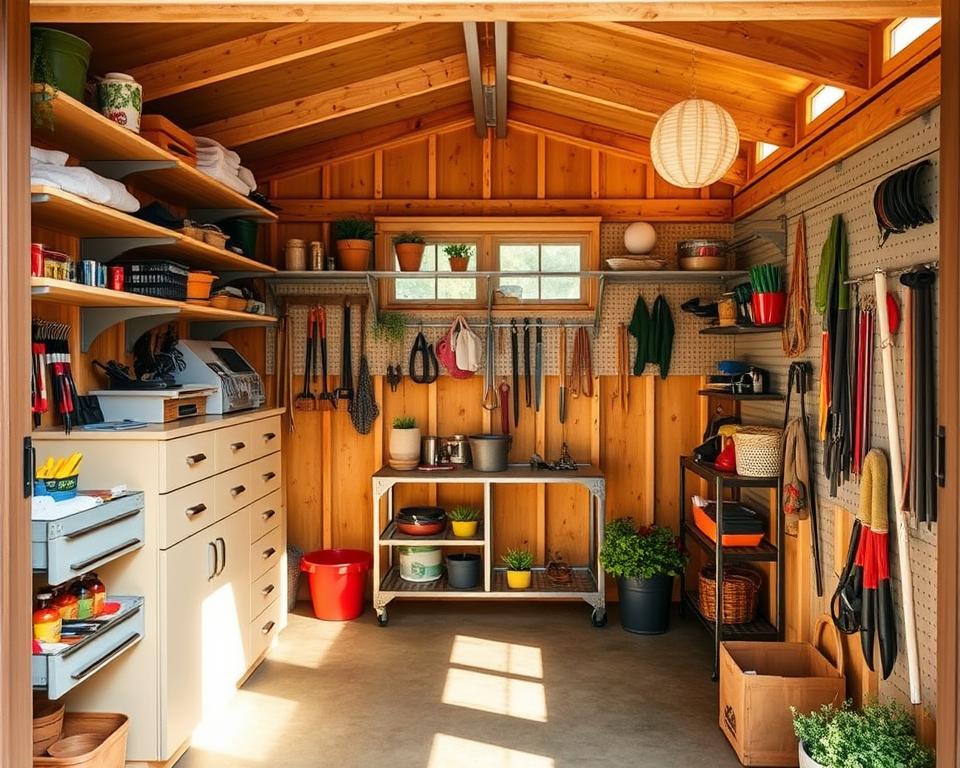
Choose galvanised pegboards shed panels for hand tools that might get damp. Metal pegboards resist warping and work well with hooks and small baskets. For heavier spades and rakes, fit aluminium or steel rails into studs or reinforced battens.
Integrating pegboards, rails and slatwall panels
Slatwall panels accept a wide range of hooks, shelves and baskets. They make it simple to rearrange storage for pots, gloves and small equipment. Pair slatwall panels with rail systems to separate light items from bulky tools.
Mount rails into solid timber or masonry where possible. That prevents pull-out and keeps load-rated hooks secure. Use galvanised fixings in damp sheds to reduce corrosion over time.
Using modular cabinet systems for flexibility
Modular cabinet systems let you reconfigure layouts as needs change. Stack modules, swap drawers and add tall cupboards without major work. Brands such as Hafele and Elfa offer proven options for garage and shed use.
Consider lockable modules for valuable items and modules with built-in cable access for charging battery tools. Modular units are easier to repair or replace compared with one-piece fitted cupboards.
Optimising vertical space with overhead storage
Overhead storage shed UK solutions free floor space for workbenches and bikes. Use roof racks rated for light, infrequent loads like seasonal decor or camping gear. Spread weight across rafters and secure with lag bolts into solid timber.
For bulky items, install a pulley-assisted hoist to lift bicycles or kayaks safely. Check rafter spacing and use multiple fixings to avoid concentrated loads on a single point.
| Storage Type | Best Use | Load Guidance | Maintenance Tip |
|---|---|---|---|
| Metal pegboards | Hand tools, small baskets | Light–medium; check hook ratings | Wipe dry and use galvanised hooks |
| Slatwall panels | Mixed items: pots, gloves, tools | Medium; distribute weight across panels | Use corrosion-resistant fixings |
| Steel rails | Heavy garden tools and long-handled items | Heavy; mount into studs or battens | Inspect anchors annually |
| Modular cabinet systems | Flexible storage and charging bays | Varies by module; follow manufacturer | Keep vents clear for battery modules |
| Overhead racks / hoists | Bulky, infrequent-use items | Light–medium; distribute across rafters | Check fixings and hoist ropes periodically |
Hanging systems: rails, hooks and magnetic organisers
A practical hanging systems shed scheme keeps tools visible, safe and quick to reach. Start with a clear plan that matches tools to anchor points, then choose durable components that suit your shed walls and workflow.

Selecting heavy-duty rails and load-rated hooks
Pick heavy-duty rails with published load ratings and corrosion-resistant finishes such as galvanised steel or powder coat. Fit rails to studs or to solid timber battens. For brick or block walls, use quality masonry fixings from trusted suppliers like Rawlplug or Fischer.
Space rails so long-handled tools hang without overlapping. Use load-rated hooks to minimise the chance of failure and check fixing torque after fitting. Label safe load limits near the rail for clarity.
Magnetic strips for small metal tools and accessories
Magnetic tool strips suit screwdrivers, pliers and metal bits. Choose rare-earth magnet strips for stronger grip. Mount strips at eye level by the workbench for easy reach.
Fix magnetic strips to a wooden sub-board or metal pegboard to spread load and reduce stress on fixings. Add small magnetic bowls for nails and screws to keep fasteners tidy.
Customisable hook layouts for quick access
Create hook layouts shed UK residents will find intuitive by combining single hooks, multi-prong hooks and shaped holders. Use shaped holders for forks and rakes so tines do not slip.
Mark each position with labels or tool silhouettes on pegboard to encourage return and maintain order. Consider retractable or fold-away hooks where space is tight to reduce protrusions and improve safety.
| Component | Best use | Material / Finish | Typical load |
|---|---|---|---|
| Heavy-duty rail | Wall-organised long-handled tools | Galvanised steel / powder coat | 50–200 kg per metre |
| Load-rated hook | Hanging spades, chains, ladders | Hardened steel, zinc plated | 5–40 kg each |
| Magnetic tool strip | Screwdrivers, pliers, bits | Rare-earth magnets on steel backing | 0.5–10 kg per segment |
| Multi-prong hook | Brooms, rakes, garden tools | Powder-coated steel | 10–30 kg per hook |
| Retractable/fold-away hook | Flexible wall use, space-saving | Alloy or steel with spring mechanism | 2–15 kg when deployed |
Space-saving accessories and smart storage solutions
Small changes add up when you want to reclaim floor space and improve access. Choose compact, well-built items that fold away or stack neatly. Aim for durable finishes and secure fixings so accessories last in British gardens and damp sheds.
Fold-down benches, collapsible shelving and stackable bins
A wall-mounted fold-down bench gives a solid workspace that disappears when not in use. Seek models with safety brackets or gas struts for smooth operation and reliable support. Pair the bench with collapsible shelving to expand storage only when needed.
Stackable bins save space and simplify seasonal rotation. Choose heavy-duty polypropylene boxes with lids to resist damp. Use modular stacking systems and anti-slip mats between layers to keep stacks stable. Brands such as Really Useful Box and Keter are widely stocked across the UK.
Labelled containers and transparent storage for visibility
Label all containers to speed up finding things. Use adhesive labels, a Brother P-touch label printer or colour-coded lids to create a simple system. Clear boxes let you spot contents at a glance and cut down on wasted time.
Keep small parts in compartmentalised organisers. Store trays in drawers or hang them on a pegboard for quick access. Reserve opaque bins for compost, fertilisers and items that degrade in light to protect their contents.
Specialist holders for long-handled tools and bikes
Vertical racks and pivoting tool holders are ideal for spades, rakes and hoes. Choose holders with rubberised grips to protect wooden and fibreglass handles. Fix them to studs or use heavy-duty panel systems for a secure fit.
For bike storage shed UK solutions, wall hooks and ceiling hoists keep cycles off the floor and free up space. Fit rated hoists for e-bikes and use secure fixings to the building structure. A mix of wall hooks and freestanding racks helps with awkward items like ladders and long poles.
Use these space saving accessories shed ideas with sensible organisation to transform a cluttered shed into an efficient workshop and store. Combine a fold-down bench, collapsible shelving and labelled containers shed with robust tool holders long-handled tools and bike storage shed UK options for a tidy, usable space.
Installation, maintenance and safety tips
Start every project with a clear plan and the right tools. Use a stud finder and mark positions before you drill. Check load ratings for shelves and roof racks to avoid surprises during installation. These shed installation tips reduce the risk of damage to frames and stored items.
Fixings, wall studs and load-bearing checks
Locate wall studs and use timber screws or bolts for wooden frames. For masonry, fit chemical anchors or heavy-duty plugs and follow the manufacturer torque guidance from brands such as Rawlplug and Fischer. Carry out load-bearing checks shed by verifying the capacity of each fixing and spreading heavy loads across several points.
If attachments feel uncertain, add internal timber battens fixed into studs to create a stronger mounting substrate. This simple reinforcement makes it safer to hang cabinets, rails and overhead stores without stressing a single anchor point.
Regular maintenance to prevent corrosion and rot
Inspect metal cabinets, rails and fixings for signs of surface rust. Treat any rust promptly using a wire brush and rust-inhibiting primer or a wipe-on galvanising product. Routine shed maintenance corrosion checks prolong the life of metal fittings.
Re-treat timber annually with a preservative suited to outdoor conditions and look for woodworm or rot. Keep ventilation paths clear and repair water ingress from roof or door seals. Replace worn thresholds and lubricate hinges and runners to keep moving parts working smoothly.
Safe storage of chemicals, fuels and sharp tools
Store garden chemicals, fertilisers and petrol in a locked, ventilated cabinet away from heat and ignition sources. Follow COSHH guidance for domestic storage and label containers clearly. Using original packaging helps prevent dangerous mix-ups.
Maintain an inventory of hazardous substances and dispose of old or contaminated chemicals at council hazardous-waste sites. For petrol-powered kit, drain fuel for long-term lay-up and use approved jerry cans with clear labelling.
Keep sharp tools sheathed or in designated holders and out of reach of children and pets. Protective gloves are essential when handling blades and pruning gear. Prioritising safe chemical storage shed UK practices and routine checks improves safety for the household and the garden.
Conclusion
To maximise shed space conclusion, start with a clear assessment: measure floor area, wall height and access, and make a detailed inventory of tools and seasonal items. Choose durable cabinets suited to the UK climate—metal with rust-resistant finishes, treated timber or weatherproof plastic—and pair them with load-rated rails and hooks to secure heavy items.
This practical cabinets hanging tips summary highlights design priorities: create defined zones for gardening, DIY and storage, combine wall and base cabinets for an efficient workflow, and integrate modular systems for flexibility. Prioritise ventilation and damp prevention, use correct fixings into studs, and select materials that resist moisture and rot to prolong the life of fittings and stored items.
Safety and maintenance are central: perform regular checks, anchor heavy fixtures, and store chemicals and fuels in lockable units. For electrical or structural work, consult qualified tradespeople and source components from reputable UK suppliers such as Screwfix, B&Q, Wickes, Toolstation and Keter. As a final nudge, begin with a simple upgrade—a set of wall rails or a lockable cabinet—and expand the system over time to achieve the garden shed storage final tips UK goal of protecting tools and enhancing outdoor usability.
FAQ
What are the main benefits of using practical cabinets and hanging systems in a garden shed?
Practical cabinets and hanging systems increase usable storage, preserve tools and improve safety. They make tools easier to find, reduce damage from damp and contact, and speed up gardening or DIY tasks. Well-chosen storage can also add value to a property and create tidy auxiliary space for hobbies such as potting or bicycle maintenance.
How do I assess my shed before buying cabinets?
Start by measuring internal length, width and wall height, plus door and window positions. Inventory all tools and bulky items, noting frequency of use. Check for damp, condensation and ventilation needs and assess lighting and electrical requirements. These steps help you choose cabinet sizes, mounting locations and suitable materials for the UK climate.
Which cabinet material is best for a UK shed: metal, timber or plastic?
Each material has strengths. Metal cabinets (steel or aluminium) are robust and good for heavy items but need powder-coating or galvanising to resist rust. Timber looks attractive and breathes better but requires preservative treatment. Plastic (polyethylene) resists rot and many chemicals and needs UV-stabilised variants for prolonged sun exposure. Choose based on load requirements, appearance and exposure to damp.
What security features should I consider for outdoor cabinets?
Use weatherproof locks and hasps, ideally Sold Secure-rated padlocks for higher-risk items. Anchor cabinets to the floor or wall where possible. Consider lockable metal tool cabinets for power tools and petrol equipment. Motion-sensing lights, a basic alarm or a Ring or Yale camera add extra deterrence.
How can I design an efficient shed layout with cabinets and a workbench?
Apply a compact work triangle: position storage, workbench and large equipment to minimise movement. Place the workbench near natural light and sockets. Use base cabinets for heavy tools and wall cabinets to free floor space. Stagger cabinet depths and create clear zones for gardening, DIY, seasonal and bulky items.
Which hanging systems work best for garden tools?
Galvanised pegboards, heavy-duty rails and slatwall panels are effective. Use galvanised or powder-coated finishes to resist damp. Fit aluminium or steel rails into studs or timber battens and select load-rated hooks. Magnetic strips are useful for small metal tools and should be securely fixed near the workbench.
How do I safely install rails and heavy cabinets on shed walls?
Locate studs with a stud finder and fix into solid timber using appropriate timber screws or bolts. For masonry, use heavy-duty masonry plugs or chemical anchors and follow manufacturer torque guidelines. Distribute loads across multiple fixings and, where necessary, add internal timber battens to create continuous mounting substrate.
What precautions should I take against damp and condensation?
Inspect for mould, rot and rust. Improve ventilation with passive vents, ridge vents or small extractor fans, and keep vents above doors where possible. Raise cabinets on plinths or adjustable feet and seal cabinet bases and seams with silicone or rubber gaskets. Use galvanised steel or UV-stabilised plastic and treat timber annually.
How should I store chemicals, fuels and sharp tools in the shed?
Store chemicals and petrol in a locked, ventilated cabinet away from heat and ignition sources. Use original labelled containers and follow COSHH guidance for domestic storage. Keep sharp tools sheathed or in designated holders out of reach of children. Maintain an inventory and dispose of hazardous waste through local council services.
What space-saving accessories are most useful for sheds?
Fold-down workbenches, collapsible shelving and stackable polypropylene bins save space. Use labelled containers and clear boxes for visibility. Vertical racks and pulley-assisted hoists work well for long-handled tools and bicycles. Choose Really Useful Box, Keter or similar robust products for damp-prone conditions.
Can modular cabinet systems adapt as my needs change?
Yes. Modular systems from suppliers such as Elfa-style ranges, Häfele and some Screwfix collections allow reconfiguration, stacking and swapping of drawers and lockable modules. They make it straightforward to add a charging station or extra lockable storage as requirements evolve.
Are there specific fixings or brands recommended for UK sheds?
Use reputable fixings and anchors such as Rawlplug or Fischer for masonry and trusted timber screws for framed sheds. For tools and storage hardware, consider Stanley, Draper, Keter and Hafele. When adding electrics, always hire a qualified NICEIC electrician to fit sockets, RCD protection and lighting safely.
How often should I maintain cabinets and hanging systems?
Inspect metal fittings and cabinets periodically for rust and treat promptly. Recoat timber annually with a preservative like Cuprinol Garden Shades. Check seals, hinges, drawer runners and padlocks and lubricate moving parts. Ensure ventilation paths remain clear and repair any roof or door leaks immediately.
What load ratings should I look for with rails and overhead racks?
Choose rails and racks with clear load ratings suited to intended items. Distribute heavy loads across multiple fixings and rafters. For overhead storage, ensure hoists and racks are rated for the weight of bikes or bulky gear and use lag bolts into solid timbers or multiple rafters for safety.
Where can I buy reliable cabinets and accessories in the UK?
Reputable UK suppliers include Screwfix, B&Q, Wickes, Toolstation and specialist brands such as Keter, Stanley and Häfele. For fixings and anchors, look to Rawlplug and Fischer. For security, Yale and Master Lock offer suitable locks and alarm options.