What Is a Garden Room Foundation Frame And Why Do You Need One?
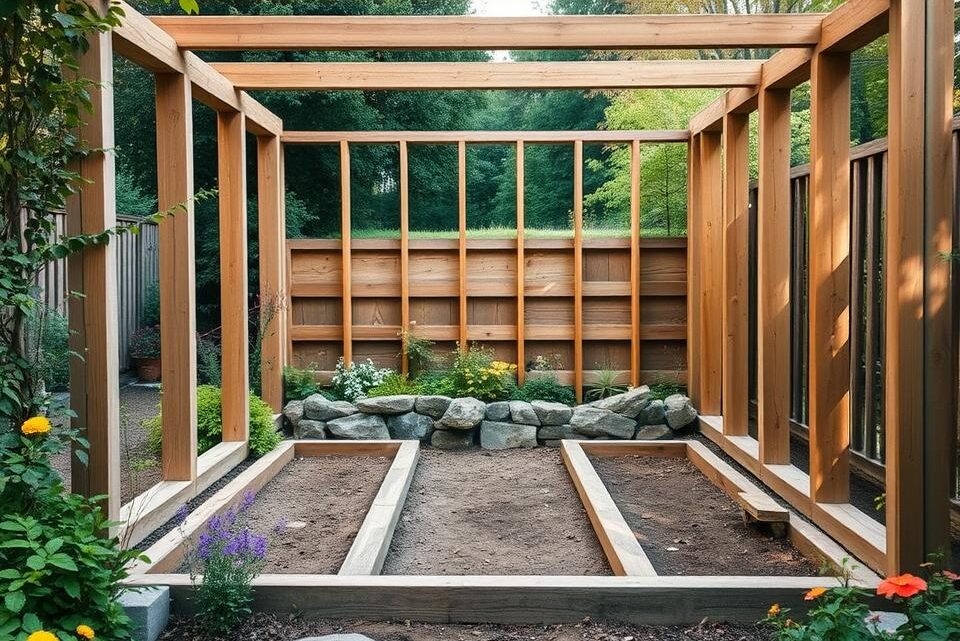
A well-built garden room offers endless possibilities—whether it’s a home office, gym, or creative retreat. However, its durability relies on a solid foundation. Without a proper base, even the most beautiful structure can suffer from shifting, dampness, or insulation problems.
In the UK, unpredictable weather makes a robust foundation essential. Heavy rain, frost, and wind can weaken poorly supported buildings. Professional timber bases, like those from Cabin Master, ensure stability and compliance with local regulations.
Choosing the right base depends on soil type, building weight, and drainage needs. Investing in quality materials now prevents costly repairs later, keeping your garden rooms safe and functional for years.
Inhaltsverzeichnis
Key Takeaways
- A strong foundation prevents structural damage and moisture issues.
- UK weather demands durable solutions for long-term stability.
- Professional timber bases offer reliability and legal compliance.
- Soil type and drainage impact the choice of base.
- Quality materials save money on future repairs.
Introduction to Garden Room Foundations
A staggering 94% of structural issues in garden buildings trace back to poor foundations, according to Cabin Master case studies. Whether it’s a sleek home office or a cosy studio, the base determines long-term stability.
Outdoor spaces now serve as offices, gyms, and creative hubs. But without proper planning, even the most stylish designs risk sinking or warping. Scotts’ summer houses, for example, mandate custom base plans to withstand UK weather.
Cutting corners during the construction phase leads to costly repairs. Dampness, uneven settling, and insulation gaps often stem from rushed groundwork. Investing in a tailored solution saves both time and money over decades.
Planning your project involves three steps:
- Site assessment: Check soil type, drainage, and load-bearing needs.
- Material selection: Timber, concrete, or screws? Match to your structure’s weight.
- Professional input: Ensure compliance with local building regulations.
A well-planned foundation isn’t just a base—it’s the backbone of your outdoor retreat.
Understanding Garden Room Foundation Frames and Their Importance
The longevity of any outdoor structure hinges on its underlying support system. A robust base ensures your retreat withstands seasonal shifts while keeping interiors dry and warm. Let’s explore why these frames are non-negotiable for UK properties.
Why Stability and Safety Matter
Concrete slabs, like those in the Hoover Dam, showcase a 100-year lifespan—far exceeding timber’s 15-20 years. This stability prevents subsidence, crucial for heavier structures.
Timber offers flexibility but requires regular checks. For sloped gardens, ground screws provide adjustable support without extensive groundwork.
Protecting Against Moisture and Damp
UK rainfall demands bases that combat moisture. Paving slabs allow water runoff, while ground screws elevate structures above damp soil.
- Concrete: Resists water penetration but needs proper sealing.
- Timber: Requires pressure treatment to avoid rot.
Thermal Efficiency and Comfort
Insulated foundations slash energy bills by up to 20%. A well-sealed base prevents drafts, making walls and floors warmer year-round.
Meeting Legal and Building Regulations
Structures over 15m² need compliant foundations. Bases under 0.3m height often fall under permitted development, but always consult local regulations.
Professional installations guarantee adherence, avoiding fines or rebuilds. For peace of mind, opt for certified materials like BBA-approved concrete.
Types of Garden Room Foundations
Different terrains demand tailored solutions for stable garden structures. Whether your plot is flat or sloped, choosing the right base ensures longevity and compliance with UK building standards. Below, we explore four common types and their ideal applications.
Concrete Slab Foundations
Concrete slabs excel in durability, supporting heavier builds like garden offices. They require a 7-day curing period but last decades with minimal upkeep. MOT Type 1 aggregate is recommended for the sub-base to enhance drainage.
Pros include frost resistance and load-bearing capacity. However, they’re less adaptable for sloping sites compared to ground screws.
Timber Frame Bases
Timber frames, like Cabin Master’s designs, feature built-in ventilation to prevent dampness. Treated wood resists rot, making it ideal for eco-conscious projects. Installation is quicker than concrete, though annual inspections are advised.
Ground Screw Foundations
For uneven ground, ground screws offer adjustable support in just one day. The Ground Screw Centre provides tools to calculate precise placements. Scotts’ partnership with them ensures reliable installations for sloped gardens.
Paving Slab Bases
Paving slabs suit lightweight structures, such as storage sheds. They’re cost-effective and easy to install but lack the thermal efficiency of timber or concrete. Composite decking is a modern alternative, blending aesthetics with durability.
“A well-planned foundation adapts to both your garden’s needs and local climate challenges.”
Pros and Cons of Each Foundation Type
Selecting the right base for your outdoor space requires weighing practical benefits against potential drawbacks. Each solution suits different needs, from budget to long-term durability. Below, we break down key strengths and weaknesses to guide your choice.
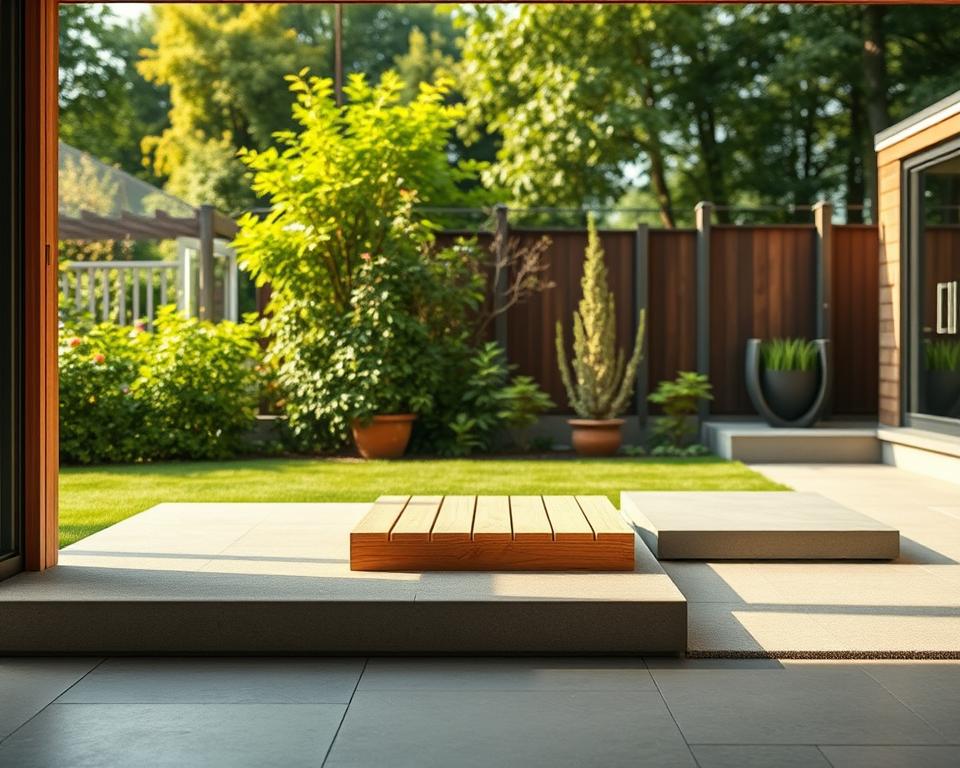
Concrete Slab: Strengths and Weaknesses
A concrete base offers unmatched permanence, ideal for heavy structures like garden offices. At £150/m², it’s costlier than timber but resists frost and subsidence for decades. However, its rigidity makes adjustments impossible once poured.
Ground screws, by contrast, allow relocation—useful for temporary setups. Scotts’ installation data shows concrete slabs add 20% to property value, but planning permissions may apply.
Timber Frame: Advantages and Drawbacks
Timber frames cost roughly £80/m², blending affordability with natural aesthetics. Treated wood resists rot, though annual inspections are needed. Unlike composite materials, timber may fade or warp over time without upkeep.
For eco-conscious projects, recycled plastic posts offer a low-maintenance alternative. Cabin Master’s designs include built-in ventilation, reducing damp risks common in UK climates.
Ground Screws: Flexibility vs. Cost
These provide instant stability on slopes without extensive groundwork. Though pricier upfront (£120/m²), their adjustability saves money long-term. The Ground Screw Centre notes a 48-hour installation time—far quicker than concrete’s week-long curing.
Paving Slabs: Ease vs. Longevity
Perfect for lightweight sheds, slabs blend seamlessly with patios. However, they lack insulation and may shift in freeze-thaw cycles. For a utilitarian look, concrete outperforms, but slabs win on DIY-friendliness.
“The right foundation balances immediate costs with decades of reliability—never compromise on groundwork.”
How to Choose the Right Foundation for Your Garden Room
Picking the perfect base for your outdoor retreat isn’t just about stability—it’s about smart planning. The right choice balances your garden’s unique conditions with long-term savings. Let’s break down the key factors to consider.
Assessing Your Garden’s Soil and Drainage
Clay soils, common in the UK, require deeper foundations to prevent shifting. A simple jar test reveals your soil type: mix soil and water, then observe layer separation after 24 hours. Sandy soils drain quickly but may need extra compaction.
Poor drainage leads to damp issues. Opt for elevated bases like ground screws in waterlogged areas. For sloped gardens, stepped concrete or adjustable screw piles maintain level support.
Matching the Foundation to Your Garden Room’s Weight
A garden building’s purpose dictates its base. Lightweight BBQ cabins suit paving slabs, while gyms need reinforced concrete. Calculate weight by adding furniture and equipment loads—typically 150kg/m² for offices vs 50kg/m² for storage sheds.
Cabin Master’s project calculator simplifies this, factoring in wall materials and roof types. Remember: over-engineering wastes money, but undersizing risks cracks.
Budgeting for Installation and Maintenance
DIY concrete slabs cost ~£50/m² but demand labour. Professional timber frames start at £80/m², including warranties. Ground screws, though pricier (£120/m²), save on long-term adjustments.
- Financing: Providers like Hitachi Capital offer 0% plans for larger projects.
- Maintenance: Annual checks for timber rot or screw corrosion prevent surprises.
“Invest 20% of your total budget in the foundation—it’s the cheapest insurance against future repairs.”
Step-by-Step Guide to Installing a Garden Room Foundation
Preparing the groundwork correctly ensures your garden building stands the test of time. A well-executed construction phase prevents uneven settling and moisture damage. Follow these steps to create a stable base for your outdoor space.

Site Clearing and Ground Levelling
Begin by removing debris and vegetation from the site. Use a mini-digger for large areas or manual tools for smaller plots. Ensure the ground is level—laser levels offer precision, while string lines suit budget projects.
Avoid tree roots within 3 metres to prevent future upheaval. Excavate 15–20cm of topsoil to reach stable subsoil. For sloped gardens, consider stepped foundations or ground screws.
Laying a Weed Membrane
Terram or similar branded membranes block weeds without compromising drainage. Overlap sheets by 30cm and secure with pegs. This protects the space beneath your structure from invasive growth.
Compacting the Soil for Stability
Use a Wacker plate to achieve 95% Proctor density—critical for load-bearing. Poor compaction leads to sinking under weight. For heavy structures like offices, add MOT Type 1 aggregate before compacting.
| Machinery Option | Cost (Daily Hire) | Best For |
|---|---|---|
| Mini-digger | £120–£180 | Large sites, deep excavation |
| Wacker Plate | £40–£60 | Soil compaction |
| Manual Tools | £20–£50 | Small areas, budget projects |
“A level ground and proper compaction are the unsung heroes of foundation work.”
Installing a Concrete Slab Foundation
Laying a durable concrete slab ensures your garden building remains stable for decades. This method suits heavy structures like offices, offering frost resistance and load-bearing strength. Proper installation prevents cracks and uneven settling.
Preparing the Sub-Base and Formwork
Start with 150mm of compacted MOT Type 1 aggregate (20mm crushed). This base layer improves drainage and stability. Use timber formwork braced at 1m intervals to contain the concrete.
- DIY tip: Spray the formwork with water to prevent absorption during pouring.
- Check levels with a laser tool—deviations over 5mm risk structural issues.
Mixing and Pouring Concrete
Opt for C30 mix for garden rooms. Ready-mix costs ~£100/m³ but ensures consistency. For smaller projects, bagged materials (e.g., Hanson’s Postcrete) work but require precise water ratios.
Pour in layers, vibrating each to remove air pockets. Aim for 100mm thickness—anything less compromises durability. Embed steel mesh or fibre reinforcement to minimise cracking.
Finishing and Curing the Slab
Smooth the surface with a float, then cover with polythene. Ideal curing time is 28 days, though foot traffic is safe after 48 hours. In cold weather, use insulating blankets to maintain 10°C+.
“Rushing the curing process weakens the slab—patience here pays off in longevity.”
Building a Timber Frame Base
Timber frames bring warmth and versatility to garden structures, blending natural aesthetics with practical strength. Unlike cold concrete, wood creates inviting spaces while supporting substantial loads. Proper construction ensures decades of service, even in Britain’s damp climate.
Selecting and Treating Timber
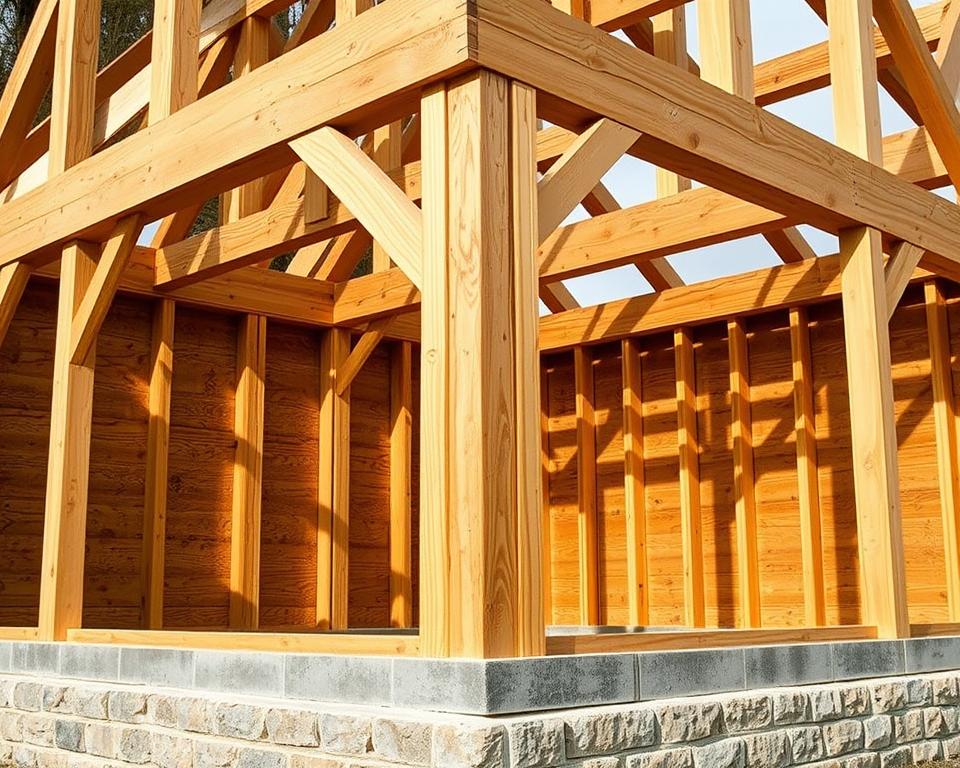
Opt for C24 pressure-treated spruce as your primary material—its superior strength-to-weight ratio suits most building projects. Tanalised treatments penetrate deeper than creosote, offering 15+ years of rot protection without toxic odours. Always check for the BS 8417 mark, indicating proper preservative penetration.
For coastal areas, specify double-treated timber with waterborne preservatives. These resist salt corrosion better than traditional oil-based solutions. Scotts’ treatment guides recommend reapplying protective stains every 3-5 years for optimal performance.
Assembling the Frame and Joists
Space joists at 400mm centres for standard garden rooms, reducing to 300mm for heavy-use spaces like gyms. Coach screws outperform nails, allowing future adjustments without compromising stability. Their ribbed shafts prevent loosening over time.
Corner bracing is critical—install 45° angle brackets or lap joints secured with 10mm galvanised bolts. This prevents racking in high winds. Refer to Scotts’ assembly diagrams for load-bearing wall configurations matching your project size.
Securing the Frame to Ground Posts
Galvanised post anchors provide the most reliable connection between timber and ground. Their adjustable bases compensate for minor level variations up to 15mm. Embed them 300mm into concrete footings or screw piles for permanent installations.
“A well-braced frame outlasts the building it supports—never skip corner reinforcements.”
For temporary structures, M16 threaded rods allow disassembly. Coat all ground-contact wood with bituminous paint, extending 150mm above soil level to prevent capillary moisture rise.
Using Ground Screws for a Minimal-Impact Foundation
Ground screws revolutionise garden building foundations by offering a swift, eco-friendly alternative to traditional methods. These steel piles eliminate the need for concrete, reducing both installation time and environmental disruption. Ideal for sloped or sensitive sites, they provide adjustable support while complying with UK building regulations.
Driving and Adjusting Ground Screws
Manual installation suits small projects—a torque wrench ensures each 1.5m screw reaches its load capacity (typically 2–5kN). For larger works, hydraulic drivers complete the job in hours, with real-time monitoring for precision. Always scan for underground services before drilling.
- Torque matters: 300–500 Nm is standard for residential builds.
- Adjustability: Brackets allow height corrections post-installation.
- Resources: Scotts’ video guides demonstrate best practices for tricky terrains.
Attaching the Timber Frame
Galvanised brackets bridge the gap between screw heads and timber beams. Unlike concrete piles, this solution permits minor adjustments during seasonal ground movement. Use M12 bolts for secure connections, and treat all contact points with anti-corrosion spray.
“Ground screws cut foundation labour by 70%—perfect for projects where speed and sustainability matter equally.”
Compared to traditional piles, screws minimise soil disturbance and can be reused. For permanent structures, opt for hot-dipped galvanised models to withstand decades of British weather.
Laying a Paving Slab Base
Paving slabs offer a simple yet effective solution for lightweight garden structures. Ideal for sheds or summer houses, they blend seamlessly with outdoor spaces while providing a stable base. Proper installation ensures longevity and prevents shifting over time.
Preparing the Sub-Base with MOT Type 1
A solid foundation starts with the right aggregate. MOT Type 1, a crushed limestone mix, compacts tightly for load-bearing support. Unlike Type 3 (granite-based), it’s cheaper and suits most residential projects.
| Aggregate Type | Best For | Cost per Tonne |
|---|---|---|
| MOT Type 1 | General use, budget-friendly | £25–£30 |
| MOT Type 3 | High-traffic areas, drainage | £35–£40 |
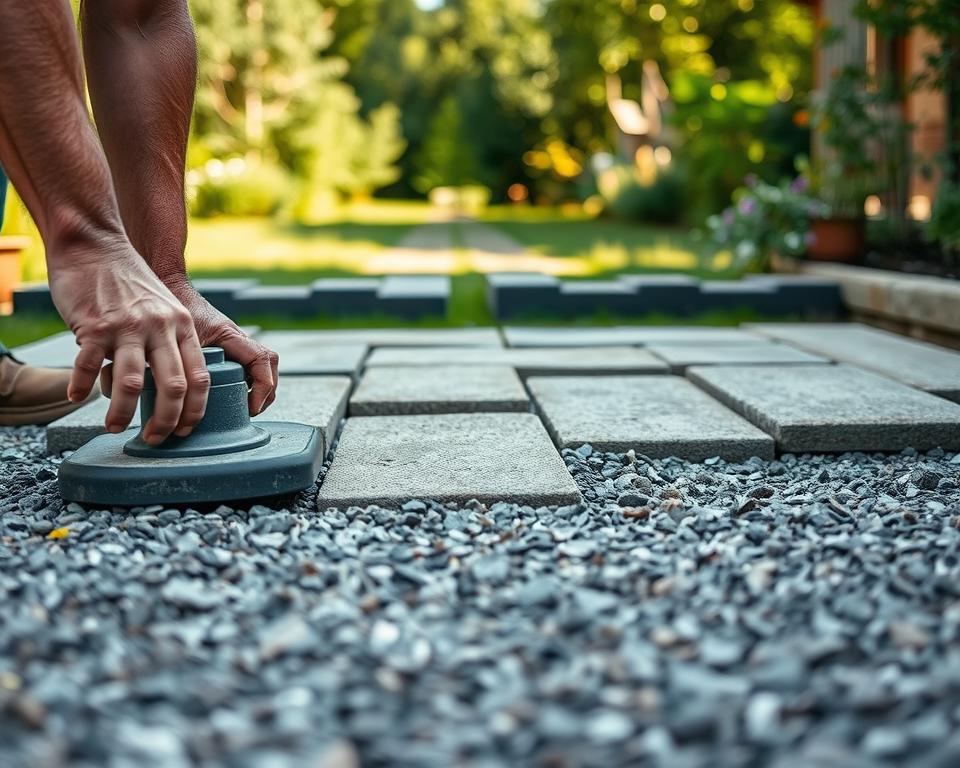
Lay 75–100mm of compacted aggregate, using a Wacker plate for even density. Skip this step, and slabs may sink under weight.
Setting and Levelling the Slabs
Use 600x600mm slabs minimum for stability. A 10mm joint gap allows for slight movement and drainage. Tap each slab with a rubber mallet to level—check with a spirit level every 3–4 slabs.
- Pointing options: Brush in kiln-dried sand (easy) or resin mortar (durable).
- Avoid textured slabs: Their uneven surfaces trap dirt and complicate levelling.
“A well-laid slab base outlasts the building it supports—invest time in perfecting the sub-base.”
For a cohesive look, match slab colours to existing patios. Composite decking edges can hide uneven cuts neatly.
Maintaining Your Garden Room Foundation
Regular upkeep keeps your outdoor retreat standing strong for years. Foundations face constant stress from weather, soil shifts, and moisture. A simple annual check ensures longevity, saving costly repairs down the line.
Inspecting for Movement or Subsidence
Catch early signs of trouble with this checklist:
- Door jams: Sticking doors signal uneven settling.
- Cracks: Hairline fractures in walls or floors need monitoring.
- Level checks: Use a spirit level on beams annually.
For concrete slabs, measure gaps with a feeler gauge. Gaps over 3mm warrant professional assessment.
Managing Drainage and Moisture
UK rains demand proactive solutions. A French drain costs £50–£80/m and redirects water away from your base. Install it 300mm deep with a gravel backfill.
Clear gutters biannually—blocked downpipes flood foundations. Extend downspouts 1.5m from the structure.
Treating Timber Bases to Prevent Rot
Pressure-treated timber lasts longer but needs refreshing. Compare popular preservatives:
| Product | Active Ingredient | Reapplication |
|---|---|---|
| Cuprinol 5-Year | Copper salts | Every 5 years |
| Ronseal Ultra | Alkyd resin | Every 3 years |
“A stitch in time saves nine—timely treatments double your frame’s longevity.”
For heavy-use areas, Scotts’ maintenance packages include bi-annual inspections and treatments.
Common Mistakes to Avoid When Building a Foundation
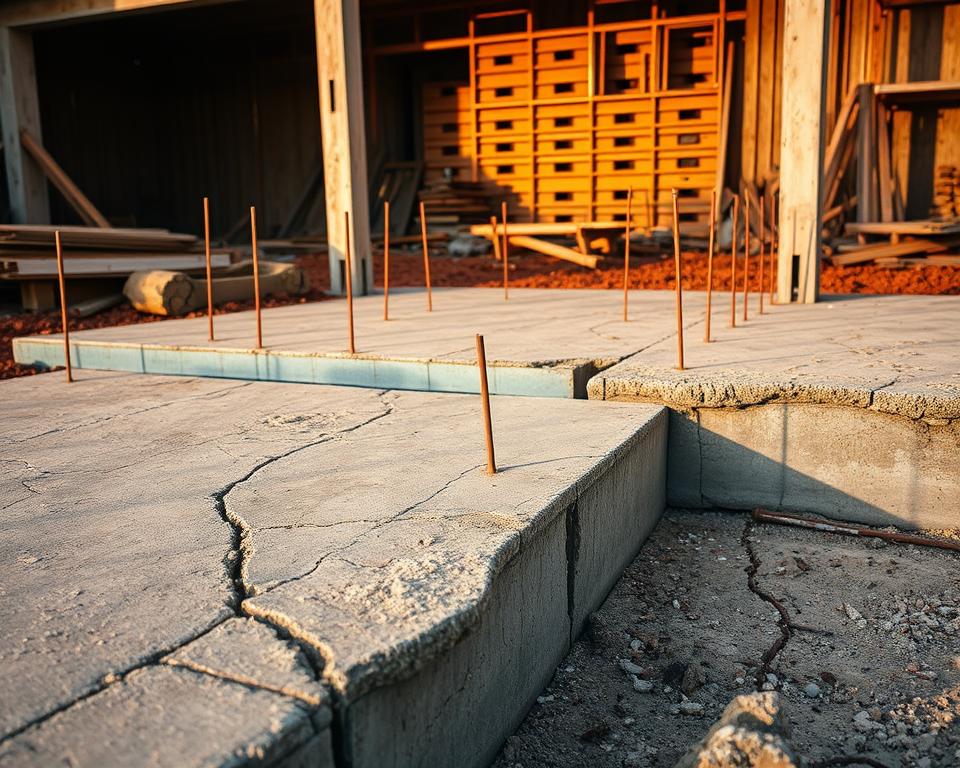
Building a solid foundation seems straightforward, but even seasoned DIYers often stumble into costly pitfalls. A Cabin Master survey reveals 63% underestimate base dimensions, leading to instability. Here’s how to sidestep the most frequent mistakes.
Undersized Bases create a domino effect. A shed requiring a 3m² base on a 2.5m² slab will warp within months. Always add 10% to calculated sizes for safety margins.
Skipping weed membranes invites trouble. Roots lift slabs, while moisture seeps into materials. Terram fabric costs £15/roll—a pittance compared to redoing groundwork.
Over-compaction is equally risky. Excess force fractures aggregate, reducing load-bearing capacity. Aim for 95% Proctor density, verified with a plate compactor gauge.
“Quick-setting concrete claims save time, but cure rates under 24 hours weaken structural integrity by 40%.”
Ignoring planning permissions risks demolition orders. One Surrey homeowner faced £8,000 fines for a 20m² studio on unauthorised footings.
| Mistake | Consequence | Fix |
|---|---|---|
| Cheap aggregates | Subsidence in 2 years | Use MOT Type 1 (£25/tonne) |
| No damp-proof course | Rot in timber frames | Install polyethylene sheet |
Measure twice, pour once—rushed construction often doubles project timelines. Consult professionals if unsure; rectifying errors costs thrice the initial outlay.
Professional Installation vs. DIY: What’s Best for You?
NHBC statistics show professionally installed bases outlast DIY efforts by 200–300%. While rolling up your sleeves saves money initially, long-term reliability often justifies hiring experts. Let’s break down the trade-offs.
Cost Comparison: Upfront vs. Lifetime Value
A professional concrete slab installation averages £1,500 for a 10m² space. DIY cuts this to £500 but risks improper curing or reinforcement. Hidden costs like tool rentals add up:
| Expense | Professional | DIY |
|---|---|---|
| Materials | Included | £300–£400 |
| Equipment Hire | N/A | £120/day (Wacker plate, mixer) |
| Warranty | 10–25 years | None |
Warranty and Compliance Perks
Opting for professional work brings peace of mind:
- Guaranteed compliance: Builders handle Building Regs approvals.
- Insurance-backed warranties cover subsidence or rot.
- Post-install checks included (like dental check-ups for your base).
DIY Realities: Time and Skill Demands
Weekend warriors face steep learning curves. Ground screws require torque wrenches (£80+), while concrete demands precise mixing ratios. Cabin Master’s surveys reveal 42% of DIYers redo work within two years.
“A DIY foundation takes 3x longer than estimated—professionals complete it between school runs.”
For a stress-free solution, Cabin Master offers a 15-year guarantee on installed bases. Their teams handle everything from soil tests to final inspections, ensuring your retreat stands firm.
Conclusion
A sturdy foundation transforms your garden room from temporary to timeless. Soil type, structure weight, and budget all shape the ideal base—prioritise these to avoid costly fixes.
Quality groundwork delivers longevity, adding value to your home. Cabin Master’s free consultations help tailor solutions, while Scotts’ downloadable plans simplify DIY projects.
Ready to build with confidence? Book a professional assessment today—your future self will thank you.
FAQ
What’s the best foundation for a garden room?
The ideal choice depends on soil type, budget, and project needs. Concrete slabs offer durability, while timber frames suit lightweight structures. Ground screws work well for uneven terrain.
Can I build a garden room without a foundation?
No. A solid base prevents subsidence, moisture damage, and ensures longevity. Even lightweight summer houses need proper support.
How long does a concrete base take to cure?
Typically 24–48 hours to set, but full curing takes 28 days. Avoid heavy loads during this period.
Are ground screws better than concrete?
They’re quicker to install and eco-friendly but cost more upfront. Concrete wins for permanent, heavy-duty projects.
Do I need planning permission for the foundation?
Usually not if the garden room meets permitted development rules. Check local regulations for height and placement limits.
How do I stop timber frames from rotting?
Use pressure-treated wood, install a damp-proof membrane, and ensure good drainage around the base.
Can paving slabs support a garden office?
Yes, for smaller buildings. Ensure a compacted sub-base and level slabs to avoid movement over time.
What’s the cheapest foundation option?
Paving slabs or a basic timber frame are budget-friendly, but may need more maintenance long-term.
How deep should a concrete foundation be?
At least 100mm thick with a 150mm compacted hardcore sub-base for stability.
Will a garden room foundation damage my lawn?
Ground screws minimise disruption. Concrete and timber bases may require some excavation but can be landscaped around.